When Your Tuckahoe Home Smells Like Last Night's Fire
Soot sets in fast and in a village where most homes were built before 1970, the damage hiding behind your walls may be worse than what you can see. We respond quickly, work directly with your insurance, and don’t leave until the job is done right.
I needed a professional consultation explanation of procedure for safe removal of Asbestos in my apartment complex. Without having an account yet, I was very impressed with the caring, knowledgeable and generous advice offered by Jessica, and will look forward to doing business in the future. Thank you so much! I feel much more informed about a sometimes scary endeavor. Peace. Nancy Silva Mineola, NY.
Mia Munoz
Used this company to clean up some water flood in my house. They were fast and easy to work with.very professional, Would recommend to anyone!
Nini Valle
Great company, had a flood and they responded quickly and efficiently. Billed my insurance company directly. I highly recommend this company!
joe colapietro, jr
I had pipe freeze in my basement right before a snow storm and they made to within an hour to help start the clean up process. They we by our side throughout the entire process and even helped with the insurance company. They did such a great job with the cleanup, repair, remidiation, I contracted them to perform the repairs and finishes in the basement. They came with enough manpower and material to get the job done. Leo and Jessica were nothing but a pleasure to deal with!!
Cristian Arredondo c
I had some water damage in my home and Green Island was able to take care of my issue quickly and effectively. I am very pleased with the work they did. They responded quickly and were very professional.
Michael M
Outstanding service! From the office to the field crew everyone was friendly, helpful and responsive. I highly recommend Green Island Group.
After a fire, the visible damage is only part of the story. Smoke moves through wall cavities, settles into HVAC systems, and embeds itself in materials you can’t see from the hallway. In Tuckahoe’s older housing stock where the median home was built around 1967 that smoke has a lot of places to go. If it’s not pulled out completely, you’ll still smell it six months from now.
Water is the other half of the problem most people don’t think about until it’s too late. The hoses that put out your fire push hundreds of gallons into your floors, framing, and walls. In a village as compact and dense as Tuckahoe, where apartment buildings and multi-unit homes are common, that water doesn’t stay in one unit it travels down. Mold can start growing within 48 hours if the structure isn’t properly dried.
What you’re getting back when this is done right isn’t just a cleaned-up room. It’s a home that’s safe to breathe in, structurally sound, and cleared for your insurance company. That’s the outcome worth focusing on and it’s what we’re built to deliver.
We’re a locally owned restoration company serving the New York metro area, including Westchester County communities like Tuckahoe. When you call, you’re not reaching a national call center that dispatches whoever is available. You’re getting a team that knows Tuckahoe, understands Westchester County’s contractor licensing requirements, and knows how to work with your insurance adjuster from day one.
Our customers specifically name Leo and Jessica in reviews not because they were asked to, but because those are the people who actually picked up the phone, showed up, and followed through. In a village of under 7,000 people, that kind of accountability isn’t optional. It’s the only way to stay in business.
From the Bronx River Parkway corridor to the older apartment buildings near Tuckahoe Station, our team has worked in the building types and conditions specific to this village. We understand what pre-1980 construction means for a fire restoration job and we’re equipped to handle it.
From the First Call to the Final Walkthrough Here's What Actually Happens
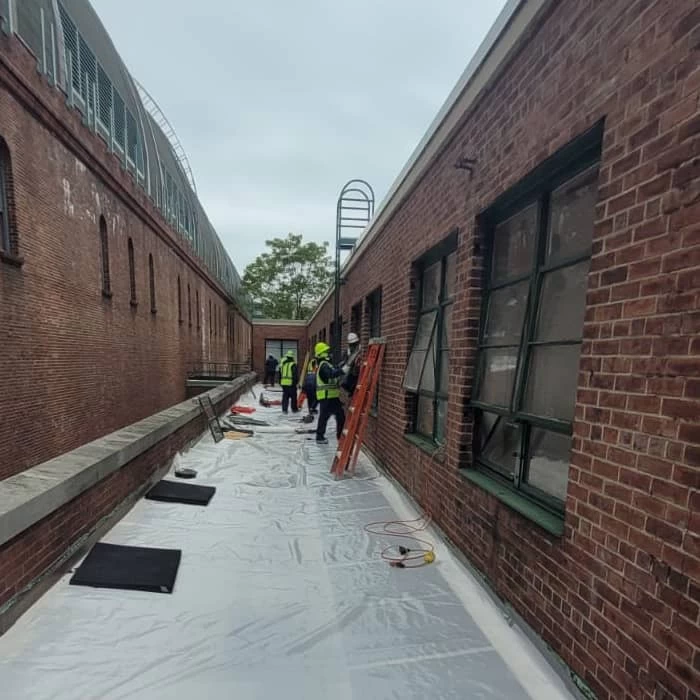
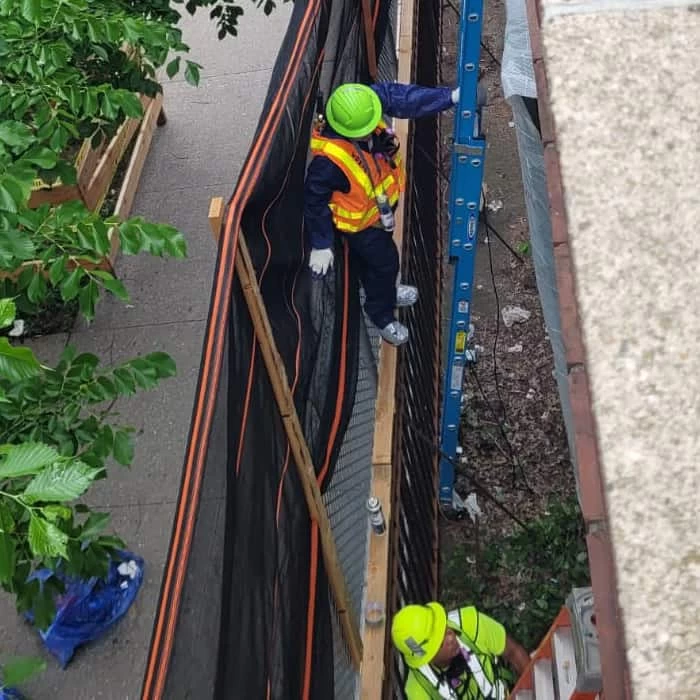
The first thing that happens when you call is an emergency assessment. We get eyes on the full scope of damage not just the charred wall, but the smoke migration, the water saturation, and anything that may have been disturbed behind the surface. In Tuckahoe, that often includes checking for asbestos-containing materials in older insulation, floor tiles, or pipe wrapping, because disturbing those without proper protocols creates a second problem on top of the first.
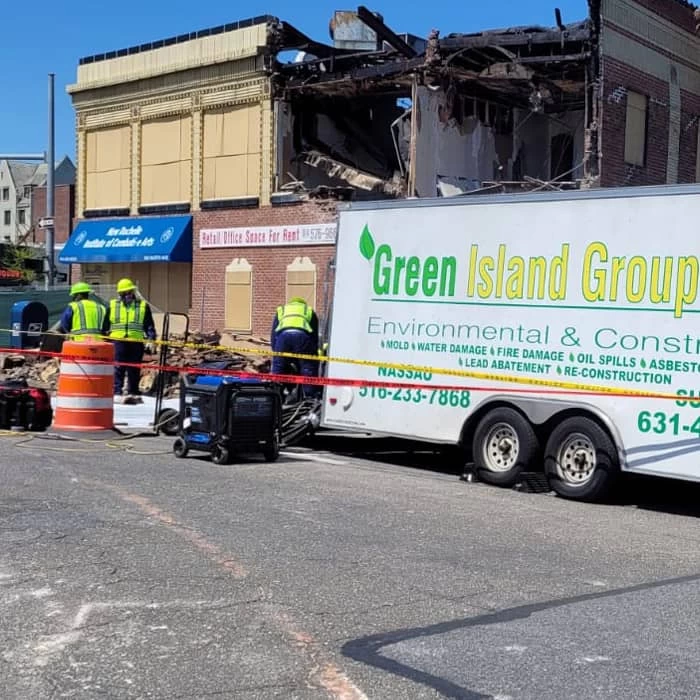
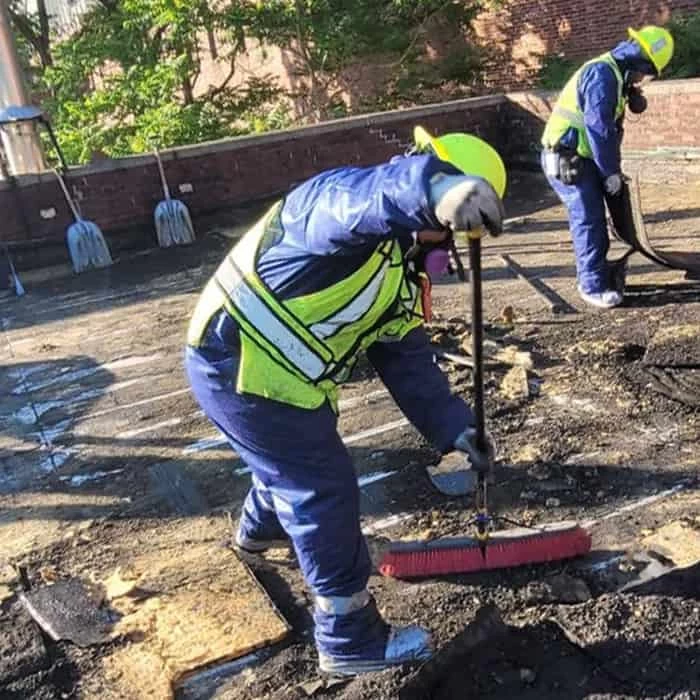
Once the assessment is complete, we handle stabilization and containment boarding up openings, extracting standing water, and setting up drying equipment to stop the clock on mold growth. Smoke and soot remediation follows, using methods that go beyond surface cleaning: thermal fogging and hydroxyl treatment to reach the embedded odor compounds that wipes and sprays can’t touch.
If structural repairs or reconstruction are needed, we pull the necessary permits through the Village of Tuckahoe’s Building Department and handle the rebuild under the same roof no handing you off to a separate contractor. Throughout all of it, we’re documenting everything your insurance company needs, so you’re not left trying to reconstruct a damage log while you’re displaced from your home.
The Full Scope, Not Just the Surface Built for Tuckahoe's Older Homes
Fire damage restoration in Tuckahoe isn’t a one-size job. The village’s housing stock skews old a lot of it pre-1970 which means any serious fire restoration work has to account for hazardous materials that weren’t a concern in newer construction. We hold the environmental remediation certifications to handle asbestos abatement legally and safely, which matters in a county where Westchester’s own health authorities confirm that pre-1980 homes commonly contain asbestos in steam pipes, boilers, floor tiles, and roofing materials. Most fire-only restoration companies can’t legally touch that. We can.
The full scope of what we include covers emergency response and stabilization, smoke and soot removal, odor elimination, water extraction and structural drying, mold prevention and remediation, asbestos and environmental hazard handling, and complete structural repairs and reconstruction. This is a start-to-finish service not a cleanup crew that leaves you to figure out the rebuild on your own.
For Tuckahoe’s apartment and condo owners, that matters even more. A fire in one unit creates damage in others. We have the capacity to work across multiple units in a building and coordinate with property managers, landlords, and multiple insurance policies simultaneously which is exactly the kind of situation that smaller or less-experienced operators aren’t set up to handle.
Does fire damage restoration in Tuckahoe require a building permit?
Yes if the restoration work involves any structural repairs, reconstruction, or significant alterations, you’ll need a building permit from the Village of Tuckahoe’s Building Department, located at 65 Main Street. All contractors working in Tuckahoe are also required to be licensed through Westchester County, which is a separate requirement from general contractor licensing in other parts of New York.
Most homeowners dealing with fire damage have never been through this process, and navigating the permit application system while you’re displaced and managing an insurance claim is genuinely difficult. We handle the permitting process as part of the job we apply for the necessary permits, ensure all work meets the NYS Fire Prevention and Building Code, and keep the project moving so you’re not stuck waiting on approvals you didn’t know you needed.
How quickly does smoke damage become permanent after a fire?
The window is shorter than most people expect. Soot begins chemically bonding to surfaces walls, ceilings, countertops, fixtures within 24 to 72 hours of a fire. After that point, what was removable becomes a stain, and what was a stain becomes a permanent discoloration that requires replacement rather than cleaning. The faster a professional crew gets in to assess and begin remediation, the more of your home’s original materials can actually be saved.
This is especially relevant in Tuckahoe’s older buildings, where original hardwood floors, plaster walls, and period trim are common. Those materials are worth saving and they can be, if the response is fast enough. Waiting even a few extra days while you sort out insurance or try to manage cleanup yourself significantly narrows your options and raises the total cost of the job.
Should I be worried about asbestos after a fire in my Tuckahoe home?
If your home was built before 1980, it’s a legitimate concern not a worst-case scenario, but something that needs to be assessed before restoration work begins. Westchester County’s own health department has confirmed that pre-1980 homes throughout the county commonly contain asbestos in steam pipe insulation, boiler wrapping, resilient floor tiles, ceiling tiles, and certain roofing materials. Asbestos is generally safe when it’s intact and undisturbed. A fire changes that. The heat, structural movement, and subsequent restoration work can disturb those materials and release fibers into the air.
A restoration company that isn’t certified for asbestos abatement has two options when they encounter it: stop work, or proceed without proper protocols. Neither is good for you. We hold the environmental remediation certifications required by New York State to identify, contain, and safely remove asbestos-containing materials as part of the restoration process so the work doesn’t stop, and the hazard doesn’t get left behind.
Will my homeowner's insurance cover the full cost of fire damage restoration?
Most standard homeowner’s insurance policies do cover fire damage restoration, including smoke damage, water damage from firefighting suppression, and temporary displacement costs. But what gets covered and how much depends heavily on how the damage is documented and how the claim is filed. Insurance companies work from the scope of damage that’s presented to them. If the secondary damage (smoke in the HVAC, water in the floor framing, soot in wall cavities) isn’t documented and included in the claim, it often doesn’t get paid for.
We work directly with your insurance adjuster throughout the process. We use the same estimating standards that insurance companies use, document the full scope of damage from the start, and make sure the claim reflects what the job actually requires not just what’s visible on the surface. For Tuckahoe homeowners dealing with property values in the $625,000 to $700,000+ range, that documentation process can make a significant difference in the final settlement.
What causes most residential fires in Tuckahoe during winter months?
Heating equipment is the leading cause. Westchester County’s own cold weather advisories specifically call out improper use of space heaters placed too close to furniture or curtains, gas stoves used as supplemental heat sources, unvented fireplaces, and aging boilers and furnaces that haven’t been serviced. In a village like Tuckahoe where a significant portion of the housing stock is over 50 years old and many buildings still rely on steam heating systems older equipment running harder during cold snaps creates real risk.
The other factor is electrical systems. Homes built in the 1950s and 1960s sometimes still have outdated wiring that wasn’t designed for modern electrical loads. When those systems are stressed during peak winter usage, the risk of an electrical fire goes up. If you’ve had any concerns about your heating system or electrical panel, getting them inspected before winter is a much cheaper problem to solve than dealing with the aftermath.
How long does fire damage restoration typically take from start to finish?
It depends on the scope, but a realistic timeline for a single-family home with moderate fire and smoke damage runs anywhere from two to six weeks. A more significant fire involving structural damage, environmental hazards like asbestos, or multi-unit involvement in an apartment building can extend that timeline to several months. The biggest variable is usually scope discovery what gets found once the walls are opened and the full extent of damage becomes visible.
In Tuckahoe specifically, the permitting process through the Village Building Department adds a step that can affect the timeline if it’s not anticipated from the start. Contractors who know Westchester County’s licensing and permit requirements can move through that process more efficiently than those who are unfamiliar with local procedure. We keep the project moving by handling permits proactively, maintaining clear communication throughout, and not handing the rebuild off to a separate contractor once the remediation is done which is often where delays happen with other companies.