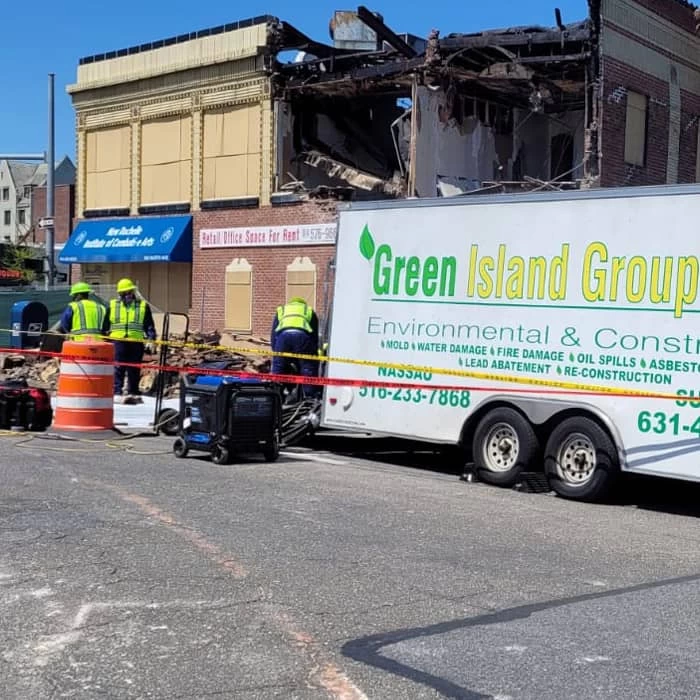
When fire hits a University Gardens home, you need fire damage restoration that understands what’s actually at stake — the architecture, the deed restrictions, and the hazards hiding inside walls built nearly a century ago.
I needed a professional consultation explanation of procedure for safe removal of Asbestos in my apartment complex. Without having an account yet, I was very impressed with the caring, knowledgeable and generous advice offered by Jessica, and will look forward to doing business in the future. Thank you so much! I feel much more informed about a sometimes scary endeavor. Peace. Nancy Silva Mineola, NY.
Mia Munoz
Used this company to clean up some water flood in my house. They were fast and easy to work with.very professional, Would recommend to anyone!
Nini Valle
Great company, had a flood and they responded quickly and efficiently. Billed my insurance company directly. I highly recommend this company!
joe colapietro, jr
I had pipe freeze in my basement right before a snow storm and they made to within an hour to help start the clean up process. They we by our side throughout the entire process and even helped with the insurance company. They did such a great job with the cleanup, repair, remidiation, I contracted them to perform the repairs and finishes in the basement. They came with enough manpower and material to get the job done. Leo and Jessica were nothing but a pleasure to deal with!!
Cristian Arredondo c
I had some water damage in my home and Green Island was able to take care of my issue quickly and effectively. I am very pleased with the work they did. They responded quickly and were very professional.
Michael M
Outstanding service! From the office to the field crew everyone was friendly, helpful and responsive. I highly recommend Green Island Group.
The fire is out. Now the real decisions start. What you do in the next 24 to 48 hours determines whether this stays a manageable restoration or turns into a months-long ordeal. Soot bonds permanently to surfaces within hours. The water used to extinguish the fire starts the mold clock the moment it hits your floors. And in a University Gardens home built before 1960, there’s a strong chance that fire just disturbed asbestos or lead paint — which changes everything about who can legally touch that property.
Most of the homes in University Gardens were built between the 1930s and 1960s. That’s not a problem — it’s just the reality of living in one of Nassau County’s most architecturally intact neighborhoods. But it does mean that fire damage here isn’t just a cleanup job. It’s a licensed remediation project that requires credentials most contractors simply don’t carry. When smoke has traveled through original plaster walls and settled into ductwork that’s been in place for 70 years, surface cleaning isn’t enough. The contamination goes deeper than what you can see.
Getting the right team on-site fast — one that can handle fire, smoke, water, hazardous materials, and reconstruction under a single Nassau County General Contractor license — means your home gets treated as the complex, high-value property it is. Not as a line item on a franchise dispatch board.
Licensed Fire Restoration Service University Gardens
Every License This Job Requires, Under One Roof
We’re a Long Island-based restoration and environmental services company with over 5,000 completed projects across New York State. We’re not a franchise. There’s no national call center routing your emergency to whoever’s available. When you call, you’re reaching a locally owned team that works across Nassau County — including University Gardens and the North Shore communities along Northern Boulevard — and holds every credential this type of work legally requires.
That means IICRC certification for fire and water damage restoration, NYS DOL Asbestos and Mold licenses, USEPA Lead/RRP certification, and General Contractor licenses covering Nassau County and New York City. For a University Gardens home — where pre-war construction and UGPOA covenants add layers that most contractors aren’t equipped to navigate — that full credential stack isn’t a bonus. It’s the baseline.
We also bill insurance directly and handle the documentation from start to finish. You’re already dealing with enough.
From the Night of the Fire to Moving Back Into Your University Gardens Home
The first call triggers an emergency response — 24 hours a day, seven days a week. A crew arrives on-site within an hour, assesses the full scope of damage, and begins immediate stabilization: board-up, tarping, water extraction, and air quality control. In University Gardens, that first assessment also includes a hazardous materials evaluation. Given the age of the housing stock here, we treat asbestos and lead paint as a presumed presence until testing confirms otherwise. That’s not overcaution — it’s the legally correct approach for pre-1960 construction in Nassau County.
Once the emergency phase is stabilized, we move into documented remediation. Every affected surface, cavity, and system gets addressed — not just what’s visible. Smoke travels through HVAC systems and embeds in plaster walls in ways that only professional-grade air scrubbers, thermal foggers, and ozone treatment can fully resolve. We document every step in insurance-standard language, which matters when you’re filing a claim on a home worth well over $800,000.
Reconstruction follows remediation, and because we hold a Nassau County General Contractor license, there’s no handoff to a second crew. We pull the required permits from the Town of North Hempstead’s Building Department and ensure that any structural work aligns with UGPOA covenant requirements — so the rebuilt portions of your home stay consistent with the architectural standards University Gardens has maintained since 1927.
Fire and Smoke Damage Restoration University Gardens NY
What's Actually Included When We Take Your Call
Fire damage restoration in University Gardens covers a wider scope than most homeowners expect when they first call. The visible burn damage is only part of it. Smoke and soot contamination typically affects two to three times more of the structure than the fire itself — traveling through wall cavities, settling into insulation, and coating every surface in a thin acidic film that continues corroding metal fixtures and finishes long after the fire is out. We address all of it: structural drying, soot removal, odor neutralization, content cleaning, and full air quality restoration using Microtrap air scrubbers and NADCA-standard HVAC cleaning.
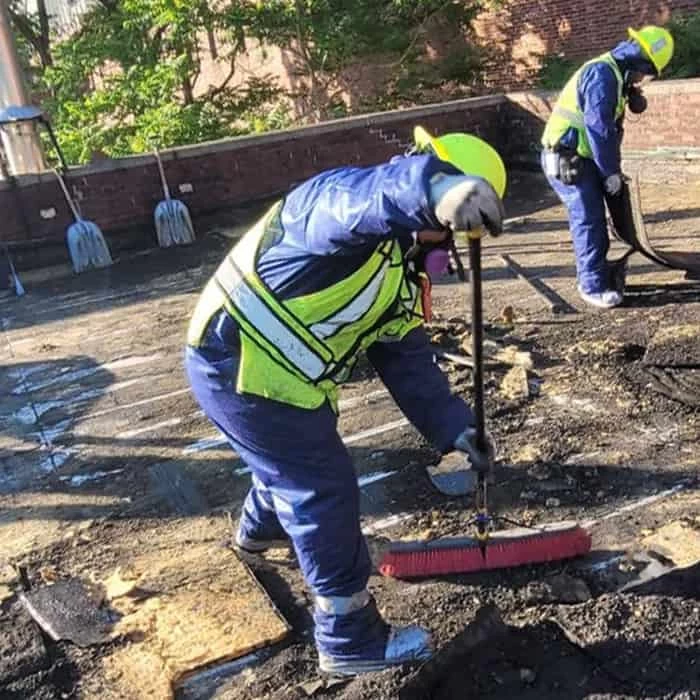
For University Gardens homes specifically, the scope almost always includes a hazardous materials component. Asbestos-containing floor tiles, pipe insulation, and joint compound are common in the pre-war and mid-century construction that defines this neighborhood. Lead paint is equally prevalent. We’re licensed by the NYS Department of Labor to handle asbestos abatement and mold remediation, and EPA-certified for lead-safe work practices — meaning we can legally address whatever the fire uncovered without stopping the project to bring in a separate subcontractor.
The final phase is reconstruction. Whether that means repairing a single room or rebuilding a significant portion of the structure, we handle it under our Nassau County General Contractor license. We coordinate North Hempstead building permits, work within UGPOA architectural guidelines, and manage the full material selection process so the finished result matches the character of your home — not just the minimum code requirement.
Does fire damage in University Gardens homes typically involve asbestos or lead paint?
In most cases, yes — and it’s worth understanding why before any work begins. University Gardens was established in 1927, and the majority of homes in the community were built between the 1930s and 1960s. Construction materials used during that era — floor tiles, pipe and boiler insulation, joint compound, ceiling tiles — routinely contained asbestos. Lead-based paint was standard on interior and exterior surfaces through the late 1970s.
When a fire damages one of these homes, it doesn’t just burn through drywall. It disturbs materials that have been sealed in place for decades. That disturbance can release asbestos fibers and lead dust into the air and throughout the structure. Under New York State law, only contractors holding NYS DOL Asbestos licensure and USEPA Lead/RRP certification can legally perform restoration work that involves these materials. If your contractor doesn’t carry both credentials, they cannot legally touch the affected areas — and any work they do perform creates liability for you as the homeowner. This is one of the most important questions to ask before signing anything with a restoration company in University Gardens.
How quickly does fire damage need to be addressed before it becomes worse?
The damage timeline after a fire moves faster than most people realize. Soot — which is acidic — begins permanently bonding to walls, ceilings, and metal surfaces within hours of the fire being extinguished. Within 24 to 48 hours, the water used by the fire department to suppress the fire creates conditions for mold growth, particularly in structures like University Gardens’ older homes where original subfloor materials and plaster walls absorb moisture deeply.
The longer the property sits untreated, the more the restoration scope — and cost — expands. What starts as a fire and smoke cleanup can become a combined fire, water, and mold remediation project if response is delayed. That makes having a restoration team ready to mobilize immediately after the fire is out even more important. Every hour of delay has a real cost.
Will my homeowners insurance cover fire damage restoration in University Gardens, NY?
Standard homeowners insurance policies cover fire damage restoration, including smoke damage, water damage from firefighting suppression, and structural repairs — but the outcome of your claim depends heavily on how the damage is documented and communicated to your carrier. On a University Gardens home valued at $800,000 to well over $1 million, the difference between a well-documented claim and a poorly documented one can easily run into the tens of thousands of dollars.
Insurance carriers recognize IICRC-certified documentation. When a restoration company holds IICRC certification and produces a scope of work in insurance-standard language, adjusters process it more efficiently and disputes are less common. We bill insurance directly and manage the documentation process throughout the project — from the initial damage assessment through final reconstruction. You won’t need to translate contractor reports into insurance language or chase down line items. That administrative burden is handled on your behalf, which matters when you’re displaced and managing everything else that comes with a house fire.
Does fire damage restoration in University Gardens require permits from the Town of North Hempstead?
Yes — and this is a detail that catches a lot of homeowners off guard. University Gardens falls under the jurisdiction of the Town of North Hempstead’s Building Department, not the Town of Hempstead, which governs most of the rest of Nassau County. Any structural repair or reconstruction following fire damage requires building permits from North Hempstead before work can proceed. Skipping that step can result in fines, failed inspections, and serious complications if you ever go to sell the property.
University Gardens adds a second layer on top of the permitting requirement. The community’s deed restrictions — in place since 1927 and actively enforced by the University Gardens Property Owners Association — require that any reconstruction maintain the neighborhood’s architectural character. A contractor unfamiliar with UGPOA covenants can inadvertently propose reconstruction that violates those standards, triggering enforcement action from the Association. Working with a contractor who holds a Nassau County General Contractor license and understands both North Hempstead’s permitting process and the UGPOA’s architectural requirements means those compliance layers are handled as part of the project, not discovered as problems after the fact.
How do I know if smoke damage has spread beyond the rooms that were visibly burned?
Smoke doesn’t stay in the room where the fire started. It migrates — through HVAC systems, wall cavities, gaps in framing, and any path of least resistance through the structure. In University Gardens’ older homes, where dense plaster walls, original ductwork, and pre-modern vapor barriers are common, smoke can travel and settle in areas that look completely untouched. The smell that seems to fade in the first week after a fire often returns months later because the underlying contamination was never fully addressed.
The only reliable way to assess the true extent of smoke damage is a professional inspection that goes beyond visible surfaces — testing air quality, inspecting ductwork, and checking wall cavities in areas adjacent to the fire. Thermal imaging can also identify moisture pockets left by firefighting water that aren’t visible on the surface. This kind of thorough assessment is what separates a restoration that holds up over time from one that leaves you dealing with odor and air quality problems a year later. If a contractor gives you a scope of work after a 20-minute walkthrough, that’s worth questioning.
How long does fire damage restoration typically take for a home in University Gardens?
The timeline depends on the scope of damage, but most residential fire restoration projects in University Gardens fall somewhere between two weeks and three months from initial response to move-back-in. A contained kitchen fire with smoke damage limited to one or two rooms might be resolved in two to three weeks. A fire that involved structural damage, significant smoke migration through original ductwork, and the discovery of asbestos-containing materials during demolition will take longer — not because the process is inefficient, but because each phase has to be completed correctly and in sequence before the next one can begin.
The permitting process through the Town of North Hempstead adds time to the reconstruction phase, and it’s not something that can be rushed. What does make a meaningful difference in overall timeline is starting the emergency response immediately — before soot bonds, before mold establishes, and before secondary damage compounds the scope. Homeowners who call within the first few hours of the fire being extinguished consistently see faster overall timelines than those who wait a day or two to figure out next steps. The restoration process itself is predictable. The damage that accumulates while you’re deciding what to do is not.