Gold Coast Homes Deserve More Than a Generic Restoration Crew
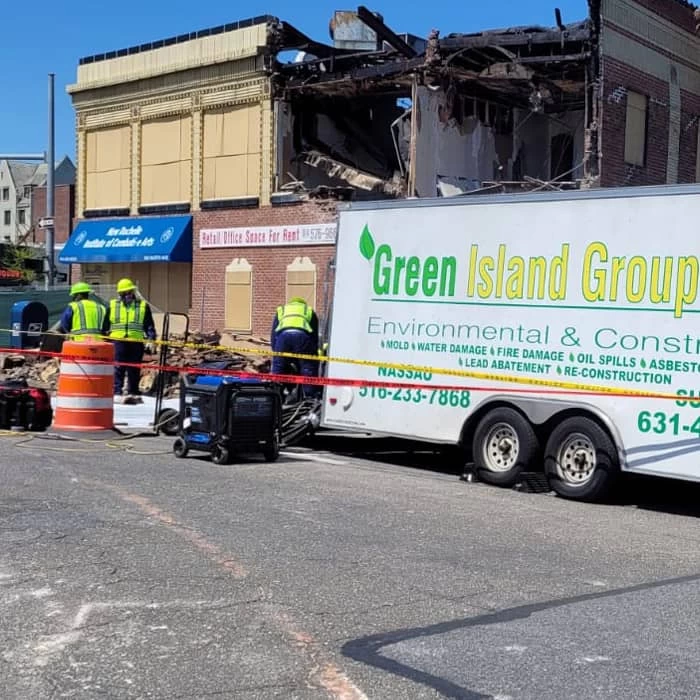
When a fire hits a property on the North Shore, the stakes are different. We handle fire damage restoration in Upper Brookville from emergency response through full rebuild — one licensed team, no handoffs.
I needed a professional consultation explanation of procedure for safe removal of Asbestos in my apartment complex. Without having an account yet, I was very impressed with the caring, knowledgeable and generous advice offered by Jessica, and will look forward to doing business in the future. Thank you so much! I feel much more informed about a sometimes scary endeavor. Peace. Nancy Silva Mineola, NY.
Mia Munoz
Used this company to clean up some water flood in my house. They were fast and easy to work with.very professional, Would recommend to anyone!
Nini Valle
Great company, had a flood and they responded quickly and efficiently. Billed my insurance company directly. I highly recommend this company!
joe colapietro, jr
I had pipe freeze in my basement right before a snow storm and they made to within an hour to help start the clean up process. They we by our side throughout the entire process and even helped with the insurance company. They did such a great job with the cleanup, repair, remidiation, I contracted them to perform the repairs and finishes in the basement. They came with enough manpower and material to get the job done. Leo and Jessica were nothing but a pleasure to deal with!!
Cristian Arredondo c
I had some water damage in my home and Green Island was able to take care of my issue quickly and effectively. I am very pleased with the work they did. They responded quickly and were very professional.
Michael M
Outstanding service! From the office to the field crew everyone was friendly, helpful and responsive. I highly recommend Green Island Group.
The first 24 to 48 hours after a fire are the most important. Soot starts bonding to surfaces within hours. The water East Norwich Fire Company pumped through your home to stop the fire starts creating mold risk before the smoke even clears. What happens in that window — and who responds to it — determines how much of your home can actually be restored versus gutted and replaced.
Upper Brookville’s estate homes add a layer of complexity that most restoration companies aren’t built for. A 7,000-square-foot property with custom millwork, multi-zone HVAC, a finished lower level, and a detached guest house isn’t a one-crew job. Smoke travels through ductwork and wall cavities well beyond the burn zone, which means a contained kitchen fire can contaminate every room in the house if the HVAC system isn’t addressed properly. Getting that wrong doesn’t just delay your return — it compounds the damage.
When the process is handled correctly, the outcome looks like this: your home is stabilized fast, the full scope of damage is documented to insurance-carrier standards, hazardous materials are identified and handled legally, and the restoration moves forward without you juggling multiple contractors or chasing approvals. You get back into your home. Your claim gets paid properly. And the work holds up.
Licensed Fire Restoration Service Upper Brookville NY
Every License This Job Requires — Under One Roof
We’re a locally owned Long Island restoration company — not a franchise, not a call center. We hold a Nassau County General Contractor license, IICRC certification for fire and smoke damage restoration, a NYS DOL Asbestos License, a NYS DOL Mold License, and USEPA Lead/RRP certification. That combination matters in Upper Brookville, where mid-century estate construction often means asbestos insulation, lead paint, and aging electrical systems are part of what fire disturbs. A contractor without those credentials can’t legally touch those materials — which means your restoration stalls, or worse, gets done wrong.
With over 5,000 completed restoration projects across New York State and direct insurance billing on every job, we’ve handled the full range of what fire damage looks like in Nassau County’s most demanding residential market. From properties near Planting Fields Arboretum to estates along Pine Valley Road, we know what’s at stake in Upper Brookville — and we’re equipped to protect it.
From Emergency Call to Move-Back-In — Here's the Honest Walkthrough
It starts the moment you call. We respond 24/7 and can be on-site in Upper Brookville within an hour. The first priority is stabilization — boarding up compromised openings, tarping the structure, and beginning water extraction from firefighting suppression before mold takes hold. Wolver Hollow Road at 2 a.m. in January is not a problem. We’re built for it.
Once the property is secured, the full damage assessment begins. Every affected surface, material, and system gets documented — not just what’s visibly burned, but what smoke has reached through ductwork, wall cavities, and HVAC zones throughout the home. This documentation is built to insurance-carrier standards from the start, which matters when your policy covers a multi-million dollar property and the adjuster is reviewing a detailed claim. If asbestos or lead-containing materials are disturbed — common in Upper Brookville’s older estate construction — those are identified and handled under the appropriate NYS DOL and EPA licenses before any demolition moves forward.
From there, remediation runs in parallel: soot removal, structural drying, NADCA-certified HVAC cleaning, odor neutralization, and mold prevention. Once the environment is clean and cleared, reconstruction begins under our Nassau County General Contractor license — the same team, the same standards, through to completion. No handoff to a separate builder. No gap in accountability.
Built for the Scale and Complexity of North Shore Estate Properties
Fire damage restoration in Upper Brookville isn’t a one-size job. The homes here — many of them 7,000 to 10,000 square feet on two-acre lots, with finished basements, wine cellars, multi-zone HVAC, and custom interiors — require a restoration scope that most companies simply aren’t licensed or staffed to deliver. We cover the full arc: emergency stabilization, hazardous materials abatement, soot and smoke remediation, structural drying, HVAC decontamination, odor elimination, and complete reconstruction.
Oil heat is standard across the North Shore, and Upper Brookville is no exception. That means puff-back events — where an oil burner backfires and coats every surface in fine black soot — are a real and recurring risk here. In a 9,000-square-foot estate, a puff-back isn’t a minor cleanup. It’s a comprehensive soot remediation project that touches custom finishes, fabric, ductwork, and air quality throughout the entire home. We handle puff-back remediation at that scale with the same IICRC-certified process used for structural fire events.
Every job includes direct insurance billing and claims documentation built to support a full recovery — not a lowball settlement. Our team has guided Upper Brookville homeowners through the claims process from first call to final walkthrough, including attending material selection appointments to ensure replacements match what was lost. In a community where the finishes inside a home can represent decades of investment, that level of involvement isn’t optional — it’s the job.
Is my Upper Brookville home safe to re-enter after a fire?
Not always — and the answer depends on more than whether the fire is out. Structural integrity, air quality, and the presence of hazardous materials all factor in. In Upper Brookville’s older estate homes, a fire can disturb asbestos-containing materials in floor tiles, pipe insulation, or ceiling finishes, as well as lead paint in pre-1978 construction. Both create serious health risks that aren’t visible to the eye.
Before re-entry, a licensed professional should assess the structure for stability, test air quality, and identify any hazardous material exposure. We can walk you through what’s safe and what isn’t based on what we find on-site — not a generic checklist. If your home needs to be secured and ventilated before anyone goes back in, we’ll tell you that directly and explain why.
How quickly does fire damage need to be addressed before it gets worse?
That window is shorter than most people expect. Soot begins bonding permanently to walls, ceilings, and custom surfaces within hours of a fire. Smoke odor embeds into fabric, insulation, and HVAC systems quickly — and the longer it sits, the harder it is to remove without replacing materials entirely. On top of that, the water used to suppress the fire starts creating mold conditions within 24 to 48 hours.
In a large Upper Brookville estate with thousands of square feet of finished space, that timeline matters even more. The more square footage involved, the more surface area is affected — and the faster secondary damage compounds. Calling within the first few hours gives our restoration team the best shot at preserving custom finishes, salvaging contents, and keeping your total claim from growing unnecessarily.
Will my homeowners insurance actually cover the full cost of fire restoration?
It depends on how the damage is documented and how the claim is submitted. Most high-value homeowners policies in Upper Brookville include replacement cost coverage, but that doesn’t mean the adjuster automatically approves everything. Insurers look closely at the scope of damage, the materials involved, and whether the restoration work is being performed by a certified contractor. Gaps in documentation — or a contractor who doesn’t know how to build an insurance-standard damage report — can result in a settlement that doesn’t reflect the actual cost of restoring a custom estate.
We document every element of the damage from day one, bill insurance directly, and have a track record of helping Nassau County homeowners navigate the full claims process. That includes going beyond the paperwork — our team has accompanied Upper Brookville homeowners to material selection appointments to make sure replacements actually match what was lost. For a property where the kitchen alone might represent a six-figure investment, that advocacy makes a real difference.
What happens to my HVAC system after a fire or puff-back event?
Smoke and soot don’t stop at the walls — they travel through your ductwork and embed throughout the entire HVAC system. In a large Upper Brookville home with multi-zone heating and cooling serving 7,000 or more square feet, that means toxic particulates and odor can circulate through every room long after the visible damage is cleaned up. An oil burner puff-back — which is common in North Shore homes that rely on heating oil — can push fine black soot through the entire duct system in seconds.
Proper HVAC decontamination requires NADCA-certified cleaning, not just a filter swap. We use professional duct cleaning equipment combined with air scrubbers and appropriate odor treatment to restore indoor air quality at estate scale. Skipping this step means your home may look restored but still smell and test like it isn’t — which affects habitability, insurance compliance, and long-term air quality for your family.
Does fire restoration in Upper Brookville require permits or village approvals?
Yes. The Village of Upper Brookville administers and enforces the New York State Uniform Fire Prevention and Building Code through its own Building Department, with a local Building Inspector overseeing permit approvals. Any structural repairs, demolition, or reconstruction following fire damage requires a building permit issued by the village — not just a Nassau County permit. That’s a step some out-of-area contractors miss, which can create delays, stop-work orders, or compliance issues mid-project.
We hold a Nassau County General Contractor license and are experienced with the local permit process in North Shore villages. We handle the permit coordination as part of the project — you don’t need to manage that separately while you’re already dealing with displacement. For a restoration that involves structural work on a multi-million dollar property, having a contractor who knows the Village of Upper Brookville’s approval process isn’t a minor detail. It’s what keeps the project moving.
How do I know if a fire restoration company is actually qualified for a large estate property?
The credentials to look for are specific, not general. IICRC certification for fire and smoke damage restoration is the industry standard that insurance carriers recognize — it requires formal training, testing, and annual renewal, and it’s verifiable through the IICRC’s public directory. A Nassau County General Contractor license is required to legally perform structural reconstruction after fire damage in this area. And if the property has any pre-1980 construction, NYS DOL Asbestos licensing and USEPA Lead/RRP certification are legal prerequisites for handling materials that fire commonly disturbs.
Beyond credentials, the right question is whether the company can manage the full scope — from emergency stabilization through reconstruction — without handing you off to a separate builder halfway through. In Upper Brookville, where estate homes can involve detached structures, finished lower levels, custom interiors, and complex HVAC systems, a restoration-only company that stops at remediation leaves you to manage the rebuild on your own. We’re licensed and staffed to take the project from the first call to the final walkthrough, which is what a property of this scale actually requires.