When Your Valley Stream Home Takes a Hit, Every Hour Counts
Soot bonds to surfaces within hours. Water from the suppression soaks into subfloors overnight. In a flood-zone village like Valley Stream, that timeline matters more than most people realize — and we’re on-site within the hour, any time you call.
I needed a professional consultation explanation of procedure for safe removal of Asbestos in my apartment complex. Without having an account yet, I was very impressed with the caring, knowledgeable and generous advice offered by Jessica, and will look forward to doing business in the future. Thank you so much! I feel much more informed about a sometimes scary endeavor. Peace. Nancy Silva Mineola, NY.
Mia Munoz
Used this company to clean up some water flood in my house. They were fast and easy to work with.very professional, Would recommend to anyone!
Nini Valle
Great company, had a flood and they responded quickly and efficiently. Billed my insurance company directly. I highly recommend this company!
joe colapietro, jr
I had pipe freeze in my basement right before a snow storm and they made to within an hour to help start the clean up process. They we by our side throughout the entire process and even helped with the insurance company. They did such a great job with the cleanup, repair, remidiation, I contracted them to perform the repairs and finishes in the basement. They came with enough manpower and material to get the job done. Leo and Jessica were nothing but a pleasure to deal with!!
Cristian Arredondo c
I had some water damage in my home and Green Island was able to take care of my issue quickly and effectively. I am very pleased with the work they did. They responded quickly and were very professional.
Michael M
Outstanding service! From the office to the field crew everyone was friendly, helpful and responsive. I highly recommend Green Island Group.
Most of the damage after a house fire isn’t from the flames — it’s from what happens in the hours that follow. Acidic soot starts permanently etching into walls, ceilings, and fixtures almost immediately. The water used to put the fire out soaks into subfloors and wall cavities, and in Valley Stream’s low-lying South Shore geography, that water doesn’t drain the way it would in an elevated inland community. Mold can start within 24 hours. That’s not a worst-case scenario — that’s just how it works here.
For a home in the Gibson section or Valley Stream Woods — likely built somewhere between the 1930s and 1960s — that timeline is compounded by what’s already inside the walls. Older construction means there’s a real chance of asbestos in the floor tiles, pipe insulation, or ceiling materials. A fire disturbs all of it. What looks like a smoke cleanup job can quickly become a multi-hazard remediation situation, and not every restoration company is licensed to handle what they uncover.
When you have a team that can address the fire damage, extract the water, prevent the mold, and manage the hazardous materials — all under one roof, all on the same visit — you’re not just cleaning up a fire. You’re protecting a home that’s worth well over $600,000 and the equity you’ve spent years building into it.
Licensed for Everything Valley Stream's Older Homes Can Throw at You
We’re a locally owned restoration company serving all of Nassau County, including Valley Stream and its neighboring communities like Elmont, Lynbrook, and Franklin Square. With over 5,000 completed restoration projects across New York State and a team that holds a Nassau County General Contractor license, IICRC certification for fire and smoke damage, NYS DOL Asbestos and Mold licenses, and USEPA Lead/RRP certification — there’s nothing in a Valley Stream home that requires a second call to a second contractor.
That matters here specifically. Valley Stream’s housing stock is predominantly mid-century construction, and the Gibson section contains homes that are approaching 100 years old. These aren’t just older homes — they’re homes with aging electrical systems, oil heat, and materials that require licensed abatement when disturbed by fire. A company without the right credentials can legally clean up the visible damage and walk away from the rest. We don’t.
We bill insurance directly, stay involved through the claims process, and handle everything from emergency board-up through full reconstruction. One call. One company. No handoffs.
From the Night of the Fire to the Day You Move Back In
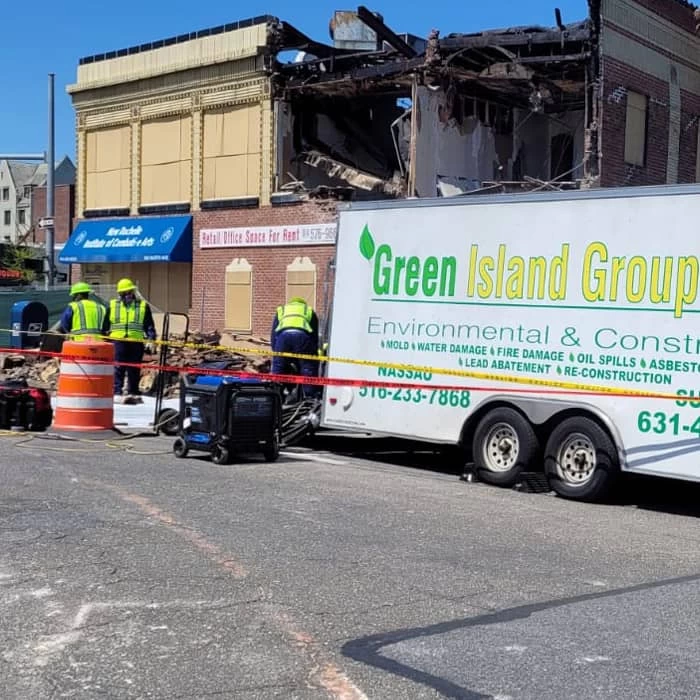
The first call triggers an emergency response. We arrive on-site within one hour — via Sunrise Highway or the Southern State Parkway depending on where you are in the village — to assess the damage, secure the property, and stop the secondary damage clock from running any further. That means board-up if needed, water extraction if firefighting water is present, and an immediate assessment of what’s in the walls.
From there, the full scope gets documented — every surface, every system, every material that was affected. In Valley Stream, that documentation step often includes testing for asbestos and lead, because the age of the housing stock makes it a real possibility rather than a remote one. That documentation also becomes the foundation of your insurance claim, and our team knows how to build a file that holds up with adjusters.
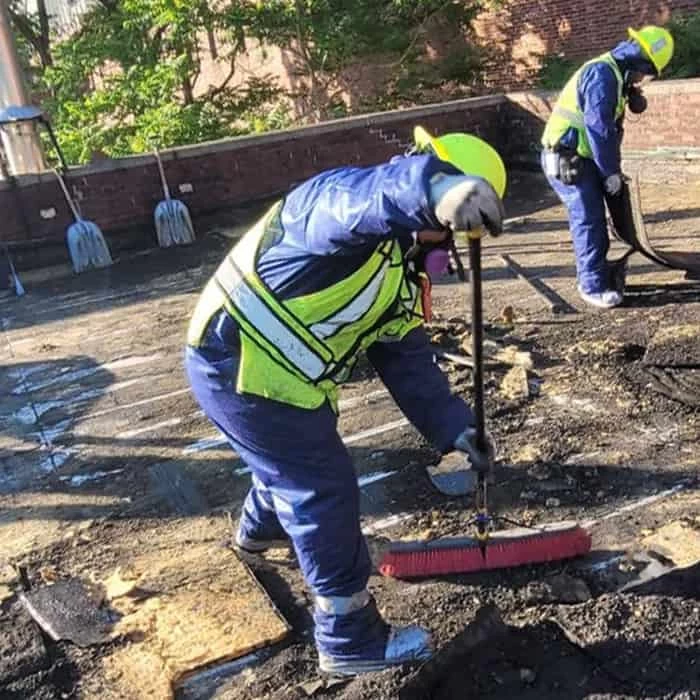
Once the hazardous materials are cleared under the appropriate NYS DOL licenses, the remediation begins — smoke and soot removal, odor elimination, structural drying, and mold prevention. After remediation, the reconstruction phase starts. Because we hold a Nassau County General Contractor license, we can pull Valley Stream building permits directly, without subcontracting that work to someone else. The process moves faster, the accountability stays in one place, and you’re not managing a relay race of contractors while you’re displaced from your home.
Fire and Smoke Damage Restoration, Valley Stream NY
Built for the Specific Hazard Profile of South Shore Homes
Fire damage restoration in Valley Stream isn’t a single-service job. It’s fire, smoke, soot, water, potential mold, and — in most homes built before 1978 — hazardous materials that require licensed handling. Our service covers all of it. Emergency response and property securing. Full damage assessment with insurance documentation. Smoke and soot remediation using IICRC-standard protocols. Water extraction and structural drying. Mold prevention and, where needed, full NYS DOL-licensed mold remediation. Asbestos and lead abatement under NYS DOL and USEPA certifications. And complete reconstruction under a Nassau County General Contractor license, including pulling permits directly from the Village of Valley Stream Building Department.
For Valley Stream homeowners with oil heat — which is common throughout Nassau County’s South Shore — that service scope also includes puff-back cleanup. When an oil burner misfires and sends soot through the heating system and into your living spaces, it creates the same contamination profile as smoke damage from a fire. It’s not a fire, but it requires the same professional remediation, and we handle it with the same thoroughness.
Everything is billed directly to your insurance carrier. We stay involved through material selection, scope review, and adjuster communication — because in a community where nearly 41% of residents were born outside the United States, navigating a complex insurance claim shouldn’t fall entirely on your shoulders.
What should I do immediately after a house fire in Valley Stream, NY?
The first thing to do is make sure everyone is out and the structure has been cleared by the fire department before anyone re-enters. Once it’s safe, your next call should be to your insurance company to report the loss — and then to a licensed restoration contractor who can get to the property quickly and begin stopping the secondary damage.
In Valley Stream specifically, the urgency around water is real. The village sits in a designated flood zone, which means the thousands of gallons used to suppress a fire don’t drain as quickly as they would in a more elevated community. Every hour that water sits in your subfloors or wall cavities increases the mold risk. Our 24/7 emergency response and one-hour on-site arrival is designed around exactly that window — because waiting until morning isn’t a neutral decision. It costs you more damage, more remediation time, and a harder insurance conversation.
Does homeowners insurance typically cover fire damage restoration costs in Nassau County?
In most cases, yes — standard homeowners insurance covers fire damage restoration, including smoke and soot cleanup, water damage from suppression efforts, and structural repairs. What varies is how the claim is documented and whether the restoration company you hire can build a file that holds up with your adjuster.
In Nassau County, where home values routinely exceed $600,000, the gap between a well-documented claim and a poorly documented one can be significant. We bill insurance directly and handle the documentation throughout the entire restoration process — from the initial damage assessment through the final reconstruction. That means your adjuster receives a complete, IICRC-standard record of every phase of work, which reduces disputes and speeds up the settlement. If your home in Valley Stream contains asbestos or lead — which is likely if it was built before 1978 — those abatement costs are also typically coverable, but they need to be properly identified and documented by a licensed contractor to be included in the claim.
How long does fire damage restoration take for a typical Valley Stream home?
It depends on the extent of the damage, but for a typical mid-century home in Valley Stream, a moderate fire affecting one or two rooms usually takes two to four weeks from initial remediation through reconstruction. A more significant fire with structural damage can run six to twelve weeks or longer, particularly if hazardous materials testing and abatement are required.
The age of Valley Stream’s housing stock adds steps that newer construction doesn’t have. If asbestos or lead is discovered during the damage assessment — which is common in pre-1978 homes throughout the Gibson section and other older neighborhoods — that abatement has to be completed before reconstruction can begin. It’s not optional, and it’s not something to rush. Our NYS DOL Asbestos license means we can handle that phase in-house rather than waiting on a third-party subcontractor, which keeps the overall timeline as tight as possible given what the work actually requires.
Can fire damage in Valley Stream cause asbestos or lead hazards in my home?
Yes, and it’s more common than most homeowners expect. The majority of Valley Stream’s residential housing was built between the 1920s and the 1960s, which means a large percentage of homes contain asbestos in vinyl floor tiles, ceiling materials, pipe insulation, and textured paint — and lead paint on interior and exterior surfaces. A fire doesn’t just damage these materials. It disturbs them, which under New York State law creates a regulated hazard that requires licensed abatement before any reconstruction work can begin.
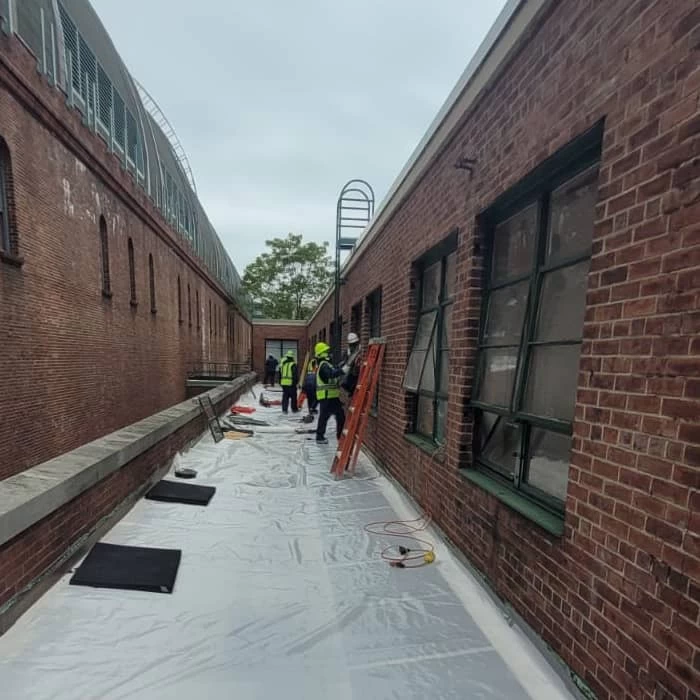
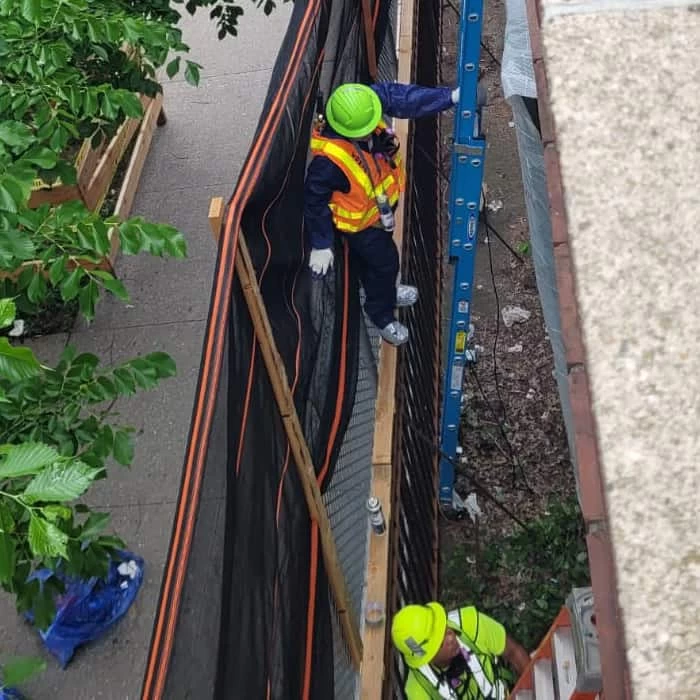
This is one of the most important reasons to hire a restoration contractor who holds NYS DOL Asbestos certification and USEPA Lead/RRP certification — not just a general remediation company. A contractor without those licenses cannot legally perform the full scope of work in an older Valley Stream home. They’ll either skip the abatement (which creates liability for you when you sell), or they’ll bring in a subcontractor, which delays the project and adds a coordination layer you shouldn’t have to manage during an already difficult situation. We hold all required licenses and handle abatement in-house.
What is a puff-back, and does it need professional cleanup in Valley Stream?
A puff-back happens when an oil burner misfires and forces a backflow of soot through the furnace and into the living spaces of your home. It’s not a fire, but the result looks similar — fine, oily soot coating ceilings, walls, furniture, window treatments, and HVAC ducts throughout the affected areas. It can happen in any oil-heated home, and Nassau County’s South Shore — including Valley Stream — has a high concentration of oil-heated homes, which makes puff-backs a common service call in this area.
Professional cleanup is absolutely necessary. The soot from a puff-back is oily and fine-particulate, which means it penetrates fabrics, gets into HVAC systems, and bonds to surfaces in a way that standard cleaning products can’t address. If it’s not properly remediated, the odor and residue will persist and can affect indoor air quality long-term. We handle puff-back cleanup using the same protocols as smoke damage restoration — surface remediation, HVAC cleaning, odor elimination, and content restoration where needed.
How does Green Island Group handle fire restoration differently for Valley Stream's diverse homeowner community?
Valley Stream has one of the most diverse populations in Nassau County — nearly 41% of residents were born outside the United States, with large Haitian, Jamaican, Guyanese, and Latino communities that have deep roots here. For many homeowners in this village, a house fire isn’t just a property crisis — it’s a financial emergency that involves navigating an insurance system that can feel opaque, especially if English isn’t your first language or if you’ve never filed a major claim before.
We bill insurance directly and stay actively involved in the claims process from start to finish. That means attending material selection appointments, reviewing the adjuster’s scope, and advocating for full coverage of everything the restoration actually requires — including hazardous materials abatement, which adjusters sometimes push back on if it isn’t properly documented upfront. The goal is to make sure you’re not absorbing costs that your policy should cover, and that you’re not making decisions under pressure without someone in your corner who understands both the technical scope of the work and how insurance companies approach these claims in Nassau County.