When Your West Hempstead Home Takes a Hit, Every Hour Counts
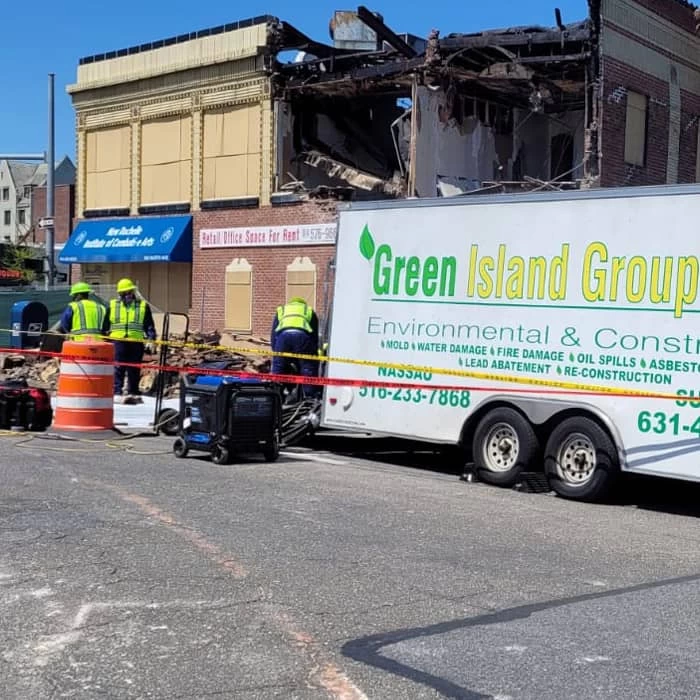
Soot spreads. Smoke seeps into walls. Water from the hose soaks through plaster before the fire trucks leave your street. We arrive on-site within an hour — and we don’t leave until your West Hempstead home is fully restored.
I needed a professional consultation explanation of procedure for safe removal of Asbestos in my apartment complex. Without having an account yet, I was very impressed with the caring, knowledgeable and generous advice offered by Jessica, and will look forward to doing business in the future. Thank you so much! I feel much more informed about a sometimes scary endeavor. Peace. Nancy Silva Mineola, NY.
Mia Munoz
Used this company to clean up some water flood in my house. They were fast and easy to work with.very professional, Would recommend to anyone!
Nini Valle
Great company, had a flood and they responded quickly and efficiently. Billed my insurance company directly. I highly recommend this company!
joe colapietro, jr
I had pipe freeze in my basement right before a snow storm and they made to within an hour to help start the clean up process. They we by our side throughout the entire process and even helped with the insurance company. They did such a great job with the cleanup, repair, remidiation, I contracted them to perform the repairs and finishes in the basement. They came with enough manpower and material to get the job done. Leo and Jessica were nothing but a pleasure to deal with!!
Cristian Arredondo c
I had some water damage in my home and Green Island was able to take care of my issue quickly and effectively. I am very pleased with the work they did. They responded quickly and were very professional.
Michael M
Outstanding service! From the office to the field crew everyone was friendly, helpful and responsive. I highly recommend Green Island Group.
What Happens When Fire Damage Gets Handled Right in West Hempstead
Most of the homes in West Hempstead were built between the 1920s and 1950s. That matters more than people realize when a fire happens. Older plaster walls, original hardwood floors, and uninsulated basement spaces absorb smoke and soot faster than modern construction — and they hold onto it longer. If the response isn’t fast and the cleanup isn’t thorough, you’re not just dealing with fire damage. You’re dealing with a home that smells, stains, and deteriorates for months after the fact.
There’s also the water problem. The firefighting effort that saved your home can leave thousands of gallons behind — soaking into walls, saturating subfloors, pooling in basements. In an older Cape Cod or split-level in West Hempstead, that moisture doesn’t just dry on its own. Without proper extraction and drying, mold follows within 24 to 48 hours. That’s a second disaster layered on top of the first.
When fire damage restoration is done right, you get your home back — not a patched version of it. Smoke odor gone. Soot removed from every surface. Structure dried, assessed, and rebuilt to current Nassau County code. The goal isn’t just to make it livable. It’s to make it exactly what it was before, or better.
We’re a locally owned restoration and contracting company serving all of Nassau County, including West Hempstead. What separates us from most companies you’ll find in a post-fire search is simple: we hold a Nassau County General Contractor License alongside our IICRC fire and smoke restoration certification. That combination means we can legally handle everything — emergency response, hazardous material abatement, structural repairs, and full reconstruction — without handing your project off to someone else halfway through.
For West Hempstead homeowners, that matters in a very specific way. The Town of Hempstead Building Department handles all permits for reconstruction work in this unincorporated hamlet — and navigating that process while displaced from your home is genuinely difficult. We pull the permits, manage the inspections, and keep the project moving so you’re not stuck waiting on paperwork while living out of a hotel.
With over 5,000 completed restoration projects across New York State and credentials that include NYS DOL Asbestos and Mold licenses and USEPA Lead/RRP certification, we’ve handled the exact conditions West Hempstead homes present — older construction, oil heat systems, pre-1980 materials — more times than we can count.
From the Night of the Fire to the Day You Walk Back Into Your West Hempstead Home
The process starts the moment you call — any hour, any day. We arrive on-site within one hour, assess the damage, and immediately begin emergency stabilization: boarding up openings, securing the structure, and starting water extraction if firefighting suppression soaked the interior. In older West Hempstead homes where plaster walls and wood framing absorb moisture quickly, that extraction step isn’t optional — it’s what prevents a mold problem from developing before the real restoration work even begins.
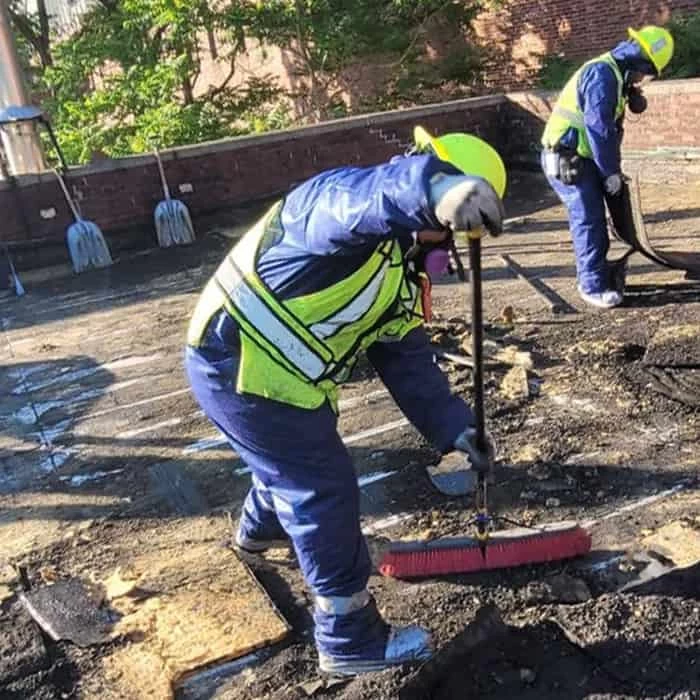
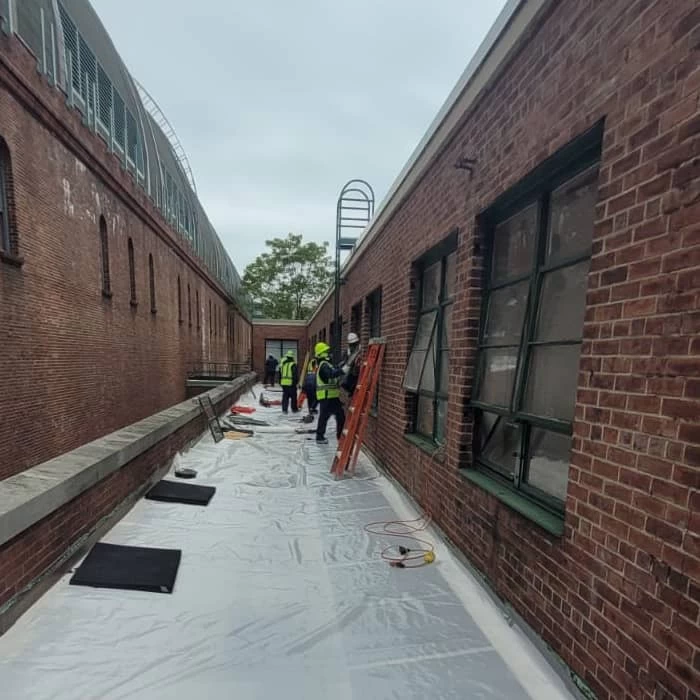
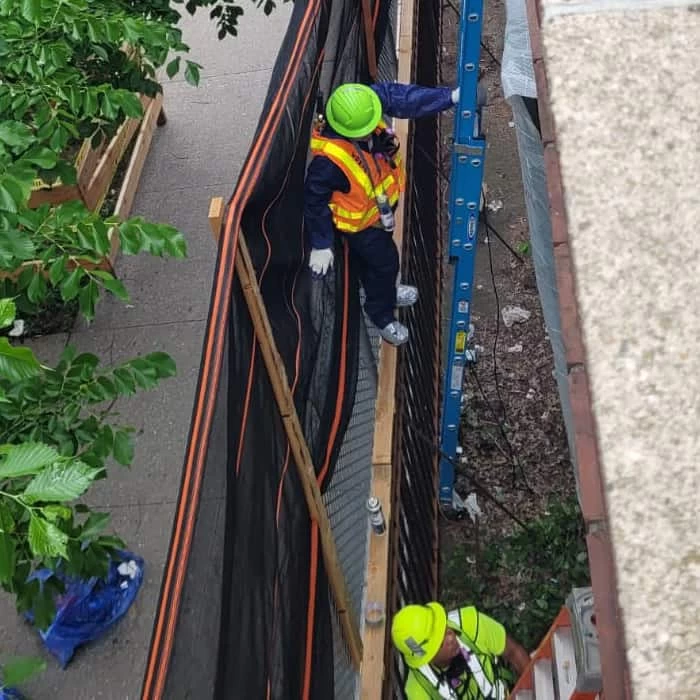
From there, our team works through soot and smoke removal, odor elimination using ozone treatment and air scrubbing, and HVAC cleaning to clear out contamination that traveled through your duct system. If your home was built before 1980 — which covers a significant portion of West Hempstead’s housing stock — asbestos testing is conducted before any demolition or structural work begins. If asbestos-containing materials are present, they’re handled by our own licensed abatement team, not a subcontractor.
Once the structure is clean, dry, and cleared, reconstruction begins under our Nassau County General Contractor License. Every repair is permitted through the Town of Hempstead Building Department and completed to current code. The last step is a final air quality test — so you’re not moving back into a home that looks fine but still has hidden contamination. You get documentation of everything, which also supports your insurance claim from start to finish.
Built for West Hempstead Homes — Not a Generic Checklist
Fire damage restoration in West Hempstead isn’t one-size-fits-all, and the age and character of this community’s housing stock is exactly why. Our scope of work is built around what these homes actually contain and what Nassau County law actually requires — not a templated service menu copied from a national franchise playbook.
That means puff-back soot cleanup is a standard part of what we address. West Hempstead has a high concentration of oil-heated homes, and oil burner puff-backs — where a misfiring sends soot and residue blasting through the entire HVAC system — are one of the most common fire-related insurance claims in this area. It’s not a fire in the dramatic sense, but it contaminates every room, every duct, and every surface just the same. Most homeowners’ policies cover it, and we handle it completely, including NADCA-certified HVAC cleaning.
For homes built before 1978, lead paint disturbance is addressed under USEPA Lead/RRP protocol. For homes with asbestos-containing materials — floor tiles, pipe insulation, joint compound — abatement is handled under our NYS DOL Asbestos License. Insurance documentation is produced to IICRC standards, which is what Nassau County adjusters recognize and what speeds up claim approval. From emergency board-up through final reconstruction, everything is covered under one contract, one point of contact, and one company that’s accountable to you from day one.
Does homeowners insurance cover fire damage restoration in West Hempstead, NY?
In most cases, yes — standard homeowners insurance policies cover fire damage restoration, including smoke and soot cleanup, water damage from firefighting suppression, and structural repairs. What varies is how much your insurer pays out and how smoothly the claim process goes. That part depends heavily on documentation.
West Hempstead homes, with their older construction and higher property values — median home values are close to $858,000 — can produce restoration scopes that run into six figures. The more detailed and thorough your damage documentation is, the less room an adjuster has to undervalue the claim. We produce IICRC-standard documentation throughout the restoration process, bill insurance companies directly, and have worked through enough Nassau County claims to know where gaps typically appear. You don’t have to navigate that alone.
What is a puff-back, and is it covered by my West Hempstead homeowners policy?
A puff-back happens when an oil burner misfires and sends a blast of soot, smoke, and oily residue back through the combustion chamber and into your HVAC system. From there, it spreads through every duct and vent in the house — coating walls, ceilings, furniture, clothing, and kitchen surfaces in a layer of black, oily soot. It happens fast, it smells like a fire, and it looks like one too.
West Hempstead has a high density of oil-heated homes, many of them running older boiler systems that haven’t been serviced consistently. Puff-backs are one of the most common fire-related claims in this area, and most standard homeowners policies do cover them. The key is acting quickly — oily soot bonds to surfaces and becomes significantly harder to remove the longer it sits. We handle puff-back remediation completely, including full HVAC cleaning to remove contamination from the duct system, so the problem doesn’t keep circulating through your home after the visible cleanup is done.
My West Hempstead home was built in the 1940s — does that affect fire restoration?
Yes, and it’s one of the most important things to understand before any restoration work begins. Homes built before 1980 commonly contain asbestos in floor tiles, pipe insulation, joint compound, and ceiling materials. Homes built before 1978 almost certainly contain lead-based paint. A fire disturbs these materials — heat, structural movement, and the cleanup process itself can release asbestos fibers and lead dust if the work isn’t handled by a licensed contractor.
Under New York State law, only contractors holding a NYS DOL Asbestos License and USEPA Lead/RRP certification can legally handle these materials. We carry both. Before any demolition or structural work begins in a pre-1980 West Hempstead home, we conduct proper testing and follow the required abatement protocols. This protects your family’s health, keeps the project legally compliant, and protects you from liability down the road. It’s not an upsell — it’s a legal requirement that many local mitigation-only companies simply aren’t licensed to fulfill.
How long does fire damage restoration typically take in West Hempstead?
The honest answer is that it depends on the scope of damage — but most residential fire restoration projects in West Hempstead fall somewhere between three weeks and three months from initial response to final walkthrough. A contained kitchen fire with smoke damage to adjacent rooms is on the shorter end. A fire that involved structural damage, required asbestos abatement, and triggered significant water intrusion from suppression efforts is on the longer end.
What affects the timeline most in this area is the age of the housing stock. Older Cape Cods and colonials often reveal additional issues once walls are opened — outdated wiring, deteriorated insulation, original plumbing that needs to be brought to current code before reconstruction can close up. The Town of Hempstead Building Department permit and inspection process also adds time that some homeowners don’t anticipate. We manage that entire process — pulling permits, scheduling inspections, and keeping the project on track — so delays don’t compound on your end while you’re waiting to move back home.
Can smoke damage affect parts of my home that weren't near the fire?
Absolutely, and this is one of the most commonly underestimated aspects of fire damage. Smoke travels through every connected space in a home — through HVAC ducts, wall cavities, plumbing chases, and attic spaces. A fire that starts in the kitchen of a West Hempstead Cape Cod can deposit soot and odor throughout the entire house within minutes, including bedrooms, closets, and finished basement spaces that never had visible flames or heat exposure.
In older homes with forced hot air or steam systems — common in this part of Nassau County — the HVAC system can carry smoke contamination to every room simultaneously. That’s why a thorough fire smoke damage restoration scope always includes duct cleaning, not just surface cleaning of the affected rooms. Skipping that step means the odor comes back every time the heat runs. Our NADCA-certified HVAC cleaning is included in our restoration process for exactly this reason — because in a West Hempstead home with an older heating system, it’s not optional.
Do I need permits to repair fire damage in West Hempstead, and who handles that?
Yes — any structural repair or reconstruction work following fire damage in West Hempstead requires permits through the Town of Hempstead Building Department. Because West Hempstead is an unincorporated hamlet, there’s no village building department to deal with — everything goes through the Town of Hempstead directly, and the contractor performing the work must hold a Nassau County General Contractor License to pull those permits legally.
This is a step that catches a lot of homeowners off guard, especially when they’re already displaced and overwhelmed. Some mitigation companies will clean up the damage and then leave you to find a separate licensed contractor to handle the reconstruction and permitting — which means starting over with a new company, new contracts, and new timelines. We hold the Nassau County GC license and manage the full permit process in-house, from application through final inspection. You don’t have to coordinate between two companies or track down paperwork while you’re living out of a hotel. One call, one team, handled.