Your 1950s South Shore Home Deserves a Complete Recovery
Most West Islip homes were built before 1970 and a fire in one of them creates problems that go well beyond what you can see. We handle fire damage restoration from the first call to the finished home, including the work most contractors aren’t even licensed to touch.
I needed a professional consultation explanation of procedure for safe removal of Asbestos in my apartment complex. Without having an account yet, I was very impressed with the caring, knowledgeable and generous advice offered by Jessica, and will look forward to doing business in the future. Thank you so much! I feel much more informed about a sometimes scary endeavor. Peace. Nancy Silva Mineola, NY.
Mia Munoz
Used this company to clean up some water flood in my house. They were fast and easy to work with.very professional, Would recommend to anyone!
Nini Valle
Great company, had a flood and they responded quickly and efficiently. Billed my insurance company directly. I highly recommend this company!
joe colapietro, jr
I had pipe freeze in my basement right before a snow storm and they made to within an hour to help start the clean up process. They we by our side throughout the entire process and even helped with the insurance company. They did such a great job with the cleanup, repair, remidiation, I contracted them to perform the repairs and finishes in the basement. They came with enough manpower and material to get the job done. Leo and Jessica were nothing but a pleasure to deal with!!
Cristian Arredondo c
I had some water damage in my home and Green Island was able to take care of my issue quickly and effectively. I am very pleased with the work they did. They responded quickly and were very professional.
Michael M
Outstanding service! From the office to the field crew everyone was friendly, helpful and responsive. I highly recommend Green Island Group.
What Your West Islip Home Looks Like When the Job Is Actually Done
A fire doesn’t just burn what it touches. Smoke travels fast through HVAC ductwork, into wall cavities, through the plaster walls and original hardwood floors that define so many West Islip homes. What looks like a contained kitchen fire can quietly contaminate every room in the house within minutes. The visible damage is only part of what needs to be addressed.
Then there’s the water. Firefighting hoses push roughly 250 gallons per minute, and that water doesn’t disappear on its own. Without proper extraction and drying, mold can begin forming within 24 to 48 hours a secondary problem that compounds the original one fast. In a West Islip home that may also have older insulation and unfinished basement spaces, moisture hides in places that aren’t obvious at first glance.
What you’re left with after a proper restoration isn’t just a cleaned-up version of what burned. It’s a home that has been fully assessed smoke, soot, water, air quality, structural integrity, and any hazardous materials that a fire may have disturbed. You move back in knowing the job was done completely, not just visibly. That’s what a real recovery looks like.
We’re a locally owned and operated restoration company based on Long Island, serving West Islip and the surrounding South Shore communities of Suffolk County. There’s no national franchise behind our name just a local team that knows this area, knows the housing stock, and has a direct stake in the outcome of every job.
West Islip’s neighborhoods from the canal-front homes near the Great South Bay to the post-war ranches and Cape Cods north of Sunrise Highway present specific restoration challenges that a company dispatching crews from a regional office simply won’t anticipate. The age of the homes here, the materials they were built with, and the Town of Islip’s permitting requirements all factor into how a restoration job needs to be handled from day one.
When you call, you reach real people Leo and Jessica, by name who will walk you through exactly what comes next. No call centers, no handoffs to a crew you’ve never spoken to. Just a team that treats your home like the significant investment it is.
From Emergency Call to Move-In Day Here's the Full Picture
The first call triggers an emergency response. We move fast documented response times on Long Island run under an hour because the window between a fire and permanent damage is short. Soot begins etching and staining surfaces within 24 to 72 hours. The sooner our team is on-site, the smaller the total scope of damage, and the lower the final cost.
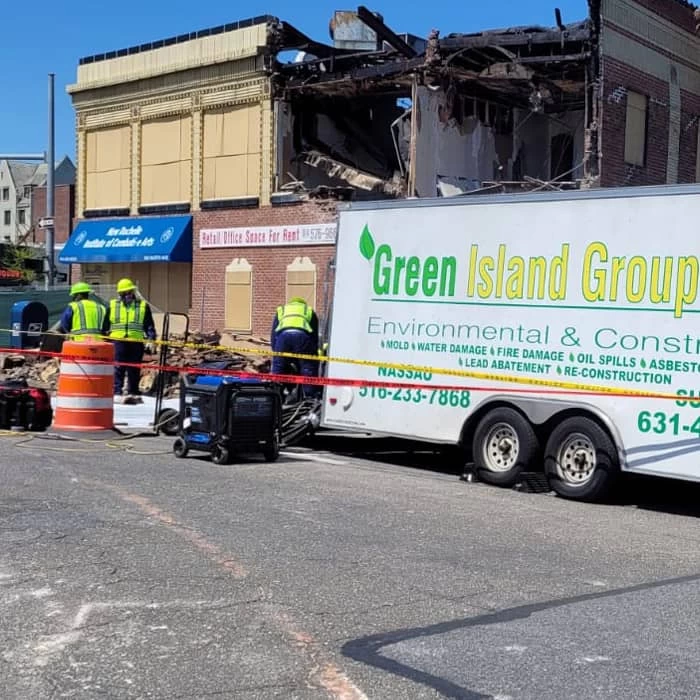
Once on-site, our first priority is stabilization: board-up, tarping, water extraction from firefighting efforts, and a full assessment of what the fire actually affected not just what’s visibly charred. For the majority of West Islip homes built before 1970, that assessment includes a mandatory asbestos inspection. The Town of Islip Building Division requires asbestos survey documentation before renovation or demolition permits are issued, and New York State’s ICR 56 mandates that any abatement work be performed by licensed contractors. We carry those credentials, which means the job doesn’t stall waiting for a separate abatement company to come in.
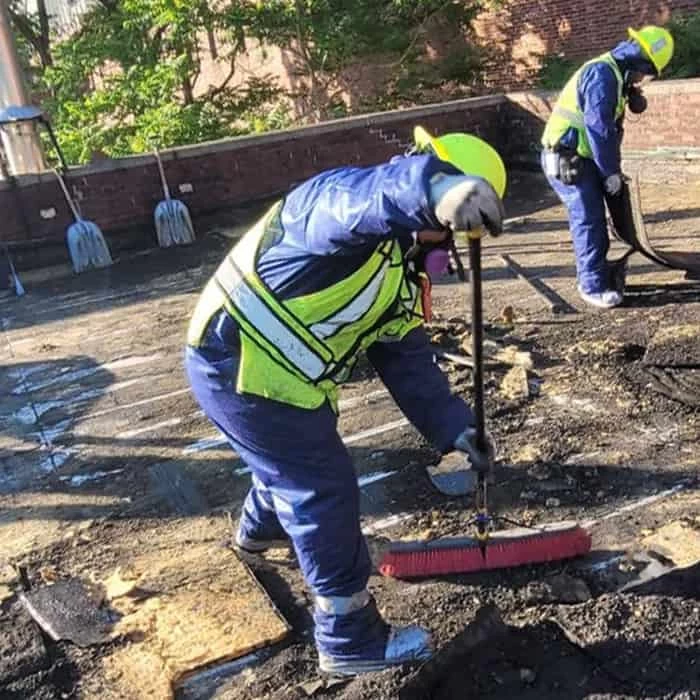
From there, the process moves through smoke and soot remediation, odor elimination, structural drying, and where needed full reconstruction back to pre-loss condition. Throughout all of it, we work directly with your insurance adjuster, documenting damage and keeping the claim on track so you’re not left managing that process on your own.
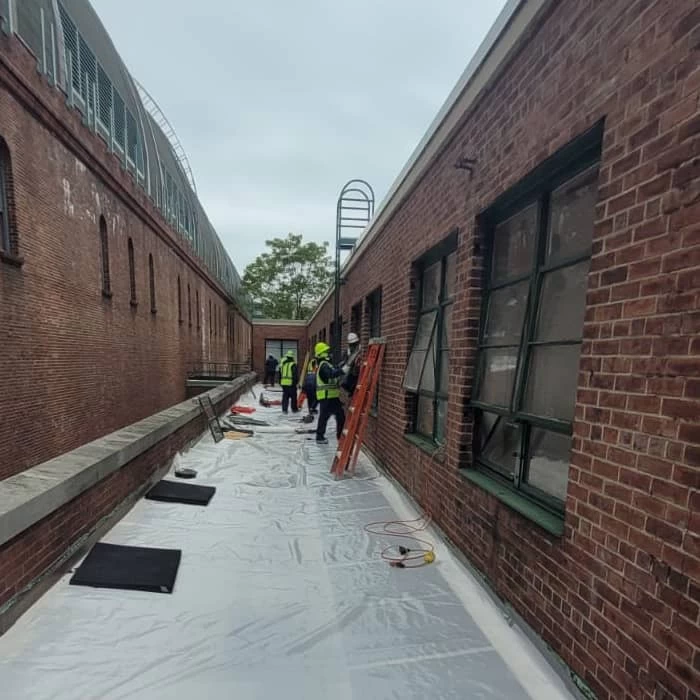
Fire damage restoration in West Islip isn’t a single-trade job. It’s emergency response, water extraction, smoke and soot remediation, asbestos abatement, mold prevention, odor elimination, structural repair, and full reconstruction often all in the same project. Hiring separate contractors for each phase creates delays, coordination problems, and gaps in accountability. We handle the full scope, start to finish.
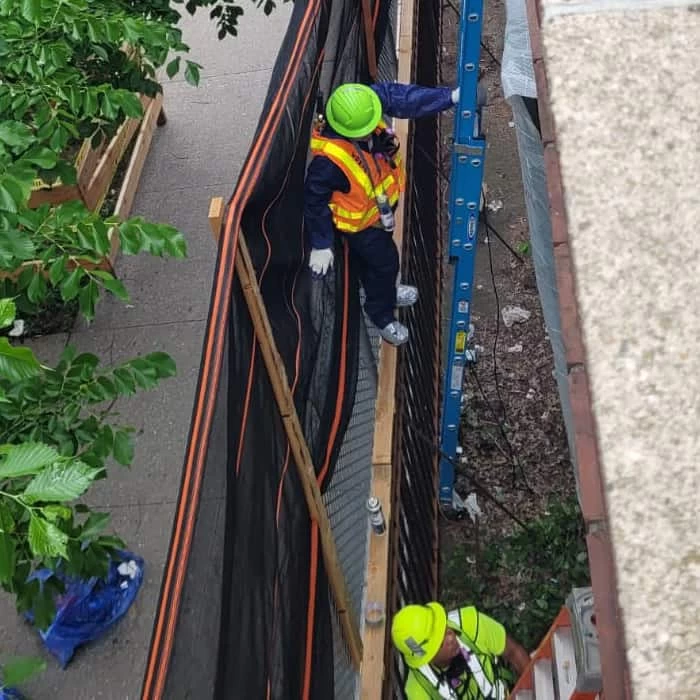
The environmental piece matters more here than in newer construction markets. With roughly 80% of West Islip’s housing stock built before 1970, the probability that a fire has disturbed asbestos-containing materials floor tiles, pipe insulation, joint compound, ceiling tiles is high. A contractor without state environmental credentials has to stop work the moment that risk surfaces. We don’t. That keeps your project moving and keeps you from being stuck in limbo while permits and abatement approvals stack up at the Town of Islip Building Division.
Odor elimination goes beyond surface cleaning. Thermal fogging, hydroxyl treatment, or ozone treatment depending on what the situation calls for addresses smoke molecules embedded in the materials themselves, not just on top of them. The goal isn’t a home that smells like it was cleaned. It’s a home that smells like nothing happened. That standard applies to every job, whether it’s a canal-front property in West Islip South or a ranch home north of Sunrise Highway.
Does a house fire in West Islip, NY likely involve asbestos concerns?
For most West Islip homes, yes and it’s not a fringe concern. Approximately 80% of the housing stock here was built before 1970, when asbestos was a standard component in floor tiles, ceiling tiles, pipe insulation, roofing materials, and drywall joint compound. A fire and the demolition work that follows can disturb those materials and release fibers that are a serious health hazard.
New York State Industrial Code Rule 56 requires that any contractor performing asbestos removal hold NYS DOL licensing, and the Town of Islip Building Division requires an asbestos survey as part of the documentation before renovation or demolition permits are approved. That means if your restoration contractor isn’t certified for asbestos abatement, the project legally cannot move forward until a separate licensed contractor is brought in. That creates delays, extra coordination, and added cost. Working with us a company that handles both fire restoration and environmental remediation under one roof eliminates that problem entirely.
How quickly does smoke damage spread through a home after a fire?
Faster than most people expect. Smoke doesn’t stay in the room where the fire started it travels through HVAC ductwork, seeps into wall cavities, and penetrates porous materials throughout the entire home within minutes of a fire. In older West Islip homes with plaster walls, original hardwood floors, and natural fiber insulation, those materials absorb smoke deeply. A fire in the kitchen can leave smoke residue in every bedroom, in the basement, and embedded in the HVAC system before the fire department leaves.
Soot begins permanently etching and staining surfaces within 24 to 72 hours. Once that etching sets in, the damage is harder sometimes impossible to reverse without replacing the affected material entirely. That’s why response time matters so much. The sooner remediation begins, the more of your home’s original materials can be saved, and the lower the overall restoration cost ends up being.
Will my homeowners insurance cover the full cost of fire damage restoration?
Most standard homeowners insurance policies do cover fire damage restoration, including smoke damage, water damage from firefighting efforts, and often temporary housing while the work is being completed. But what the policy covers and what the adjuster initially offers aren’t always the same number and the gap can be significant on a major restoration project.
The documentation process matters enormously here. Insurance adjusters work from detailed damage assessments, and a restoration company that knows how to document scope thoroughly including hidden damage, environmental remediation requirements, and full reconstruction costs gives you a much stronger foundation for a fair settlement. In West Islip, where home values regularly exceed $695,000 and a full restoration can run well into six figures, having someone in your corner during the claims process isn’t optional. We work directly with adjusters throughout the project so you’re not navigating that process alone while also trying to figure out where your family is staying.
How long does fire damage restoration typically take in West Islip?
It depends on the scope, but most residential fire restoration projects run anywhere from a few weeks for smoke and soot remediation to several months for projects involving structural damage, asbestos abatement, and full reconstruction. The timeline is shaped by a few factors that are particularly relevant in West Islip.
First, the permitting process through the Town of Islip Building Division adds time especially for projects that require asbestos survey documentation before permits can be issued. Second, the age and construction type of most homes here means that once walls are opened up, additional issues sometimes surface: outdated wiring, compromised insulation, or water damage that had been hidden before the fire. A realistic timeline is one that accounts for what might be found, not just what’s visible on day one. The best way to get an accurate estimate is a thorough on-site assessment early in the process not a ballpark number given over the phone before anyone has seen the damage.
What's the difference between fire damage cleanup and full fire damage restoration?
Cleanup is the removal of debris, soot, and surface residue. Restoration is returning your home to its pre-loss condition structurally, cosmetically, and from an air quality standpoint. They’re not the same job, and not every company that offers one is equipped to deliver the other.
A cleanup-only approach leaves behind problems that compound over time: smoke odor embedded in wall materials, moisture from firefighting water that wasn’t fully extracted, soot residue in the HVAC system, and potential hazardous material exposure that was never addressed. In West Islip’s older housing stock, those hidden issues are especially common. True restoration means the home is assessed at every level not just cleaned on the surface and that the work is completed to a standard where you can move back in with confidence, not just move back in because the visible damage is gone.
Can fire damage affect my West Islip home's resale value if not properly restored?
Yes, and in a market like West Islip, the financial stakes are real. Homes here sell quickly often going to pending in under 20 days and median sale prices run close to $695,000. A home with incomplete fire restoration carries problems that show up during inspection: lingering smoke odor, residual moisture, compromised structural elements, or evidence of damage that wasn’t fully addressed. Those issues either kill deals or force significant price reductions.
Beyond resale, there’s the livability question. Smoke residue left in HVAC systems, wall cavities, and insulation continues to affect indoor air quality long after the visible damage is cleaned up. In a home where a family lives year-round which describes nearly every property in West Islip, given the 95% owner-occupancy rate that’s not a minor inconvenience. It’s a health concern. A complete restoration, done to the standard where no trace of the damage remains in the materials or the air, protects both the value of the home and the people living in it.