When a South Shore Home Burns, the Clock Starts Immediately
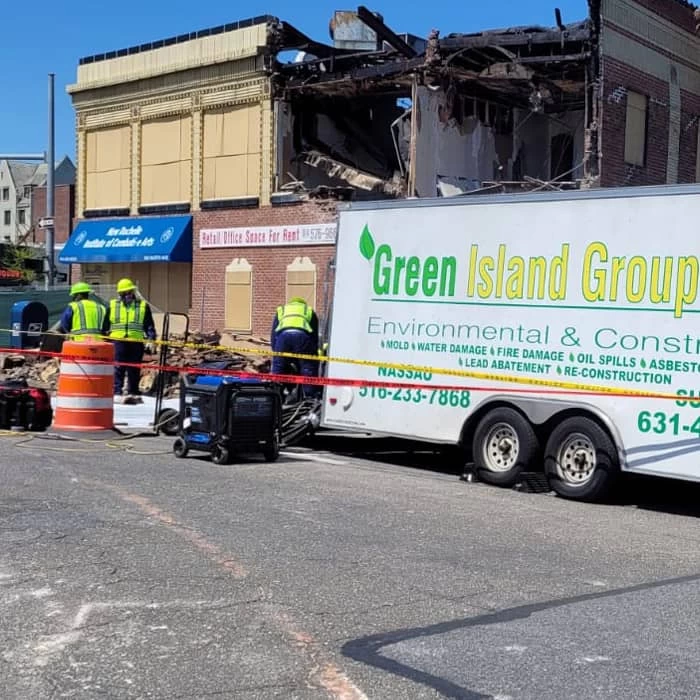
Soot sets in within hours. Water from suppression soaks into your floors and walls. We respond fast to fire damage in West Sayville and handle everything from emergency stabilization to full restoration.
I needed a professional consultation explanation of procedure for safe removal of Asbestos in my apartment complex. Without having an account yet, I was very impressed with the caring, knowledgeable and generous advice offered by Jessica, and will look forward to doing business in the future. Thank you so much! I feel much more informed about a sometimes scary endeavor. Peace. Nancy Silva Mineola, NY.
Mia Munoz
Used this company to clean up some water flood in my house. They were fast and easy to work with.very professional, Would recommend to anyone!
Nini Valle
Great company, had a flood and they responded quickly and efficiently. Billed my insurance company directly. I highly recommend this company!
joe colapietro, jr
I had pipe freeze in my basement right before a snow storm and they made to within an hour to help start the clean up process. They we by our side throughout the entire process and even helped with the insurance company. They did such a great job with the cleanup, repair, remidiation, I contracted them to perform the repairs and finishes in the basement. They came with enough manpower and material to get the job done. Leo and Jessica were nothing but a pleasure to deal with!!
Cristian Arredondo c
I had some water damage in my home and Green Island was able to take care of my issue quickly and effectively. I am very pleased with the work they did. They responded quickly and were very professional.
Michael M
Outstanding service! From the office to the field crew everyone was friendly, helpful and responsive. I highly recommend Green Island Group.
Your West Sayville Home Fully Restored Not Just Cleaned Up
A fire doesn’t just burn what it touches. Smoke travels through HVAC systems, settles into wall cavities, and embeds itself in insulation, drywall, and wood framing in rooms that never saw a flame. The smell that comes back three weeks after a surface wipe-down isn’t a cleaning failure. It’s what happens when the invisible damage gets left behind. Real restoration means addressing all of it, not just what’s visible on the day the crew shows up.
West Sayville’s housing stock adds another layer to this. A lot of the homes in this hamlet especially south of Montauk Highway were built in the 1940s, 50s, and 60s. When a fire disturbs materials in a home that age, there’s a real chance asbestos-containing floor tiles, pipe insulation, or ceiling texture is now in the air. That’s not something a standard cleanup crew is certified to handle. It requires environmental remediation, and we bring those capabilities to every job in this area.
Then there’s the water. The West Sayville Fire Department delivers significant water volume to suppress a structure fire, and in a coastal community sitting just 13 feet above the Great South Bay, ambient humidity is already elevated. Suppression water soaks into subfloors and wall cavities fast and in those conditions, mold can begin growing within 24 to 48 hours. A company that only handles fire cleanup and leaves the water damage for someone else isn’t finishing the job. We handle water extraction, drying, mold remediation, and full reconstruction under one roof, so you’re not managing three different contractors through an already exhausting situation.
Independent, Long Island–Based, and Accountable to West Sayville
We’re a locally owned, independent restoration company serving Nassau and Suffolk Counties not a national franchise with a 1-800 number and a rotating crew. When you call, you’re reaching real people who know West Sayville and the surrounding South Shore, understand the Town of Islip’s permitting requirements, and have worked in communities like Oakdale, Sayville, and Great River for years.
Customers consistently name Leo and Jessica by name in their reviews not because it’s a talking point, but because those are the actual people who answer the phone, manage the project, and stay involved from the first emergency call through the final walkthrough. In a hamlet of just over 5,000 people, that kind of accountability isn’t optional. It’s the standard.
We also do something most restoration companies don’t: we actively help you navigate the insurance claim. Not just perform the work and hand you a bill we stand beside you through the documentation, the adjuster conversations, and the parts of the process that most homeowners have never dealt with before. That’s been documented in real customer reviews, and it’s one of the clearest reasons people choose us over the bigger franchise names competing for the same work.
From Emergency Call to Finished Home Here's What to Expect
The first step is stabilization. Once the West Sayville Fire Department releases the scene, the clock is already running on secondary damage. We respond 24 hours a day, seven days a week and a real customer has documented our arrival within one hour of an emergency call. That first response includes emergency board-up, temporary roof covering if needed, and an initial assessment of the full damage scope. The goal at this stage is simple: stop the damage from getting worse while you figure out what comes next.
From there, we conduct a thorough inspection not just of the burn area, but of every space smoke may have traveled through. In West Sayville’s older ranch homes and Cape Cods, that often means checking the ductwork, the wall cavities, and the subfloor. If the home was built before 1980, materials testing may be warranted before any demolition begins, because disturbing asbestos-containing materials without proper certification isn’t legal and isn’t safe. We hold the environmental remediation capabilities to handle that scope directly, without bringing in a separate contractor.
Once the assessment is complete and the insurance documentation is in order something we help you build from the start the remediation and reconstruction phase begins. Water extraction, structural drying, soot and smoke cleanup, odor elimination, and full reconstruction through to final finishes. The job isn’t considered done until your home is genuinely clean, safe, and livable not just patched and painted. That’s not a slogan. It’s a stated satisfaction guarantee, and it’s on our website.
Fire Smoke Damage Restoration Services, West Sayville
Full Scope Restoration Built for Older South Shore Homes
Fire damage restoration in West Sayville isn’t a one-size scope. The age of the housing stock, the coastal humidity, the proximity to the Great South Bay, and the Town of Islip’s permitting requirements all shape what a complete restoration actually involves here. We cover the full range: emergency response and board-up, soot and smoke remediation, HVAC cleaning, water extraction and structural drying, mold remediation, environmental remediation including asbestos abatement for pre-1980 homes, and complete reconstruction through to finished surfaces.
Every contractor performing home improvement or restoration work in West Sayville is required to hold a Suffolk County Home Improvement Contractor License under Chapter 563 of the Suffolk County Code a requirement that includes proof of general liability insurance, workers’ compensation, a written exam, and a background check. We meet these requirements. That matters when you’re comparing us against the lead-generation aggregators and out-of-area companies that show up in search results but have no verified local presence or licensure in Suffolk County.
For homes along Cherry Avenue, Colony Drive, or anywhere south of Montauk Highway where construction dates to the mid-20th century, the service scope routinely extends into environmental remediation territory. That’s not an upsell it’s the reality of what fire uncovers in older homes. Having one company that can legally and competently handle all of it, from the initial emergency call through the final inspection, is the difference between a clean resolution and a project that stalls out when someone discovers something they’re not equipped to address.
What should I do immediately after a house fire in West Sayville?
The most important thing you can do in the first hour is make sure your family is safe and call a certified restoration company not tomorrow, right now. Soot begins permanently bonding to surfaces within 24 to 72 hours, and suppression water from the fire department starts creating mold conditions almost immediately. The longer that window stays open, the more damage compounds.
Once the West Sayville Fire Department releases the scene, a restoration team can begin emergency stabilization board-up, roof tarping if needed, and a full damage assessment. Don’t try to clean anything yourself before that assessment happens. Disturbing soot or debris in an older West Sayville home can spread materials that require certified handling, and premature cleaning can actually make odor removal harder later. Document everything with photos before anything is moved or touched, and call your insurance company to open a claim. We help you with that process from the start.
How long does fire damage restoration typically take in West Sayville, NY?
The honest answer is that it depends heavily on the scope of damage and in West Sayville specifically, the age of the home often extends the timeline in ways homeowners don’t anticipate. A contained kitchen fire in a newer home might be fully remediated and restored in two to four weeks. A more significant structure fire in a 1950s Cape Cod south of Montauk Highway, where asbestos testing, environmental abatement, and full reconstruction are involved, can run two to four months or longer.
The insurance process also affects the timeline. Scope-of-work disputes, adjuster scheduling, and documentation requirements can add weeks if they’re not managed proactively. We work alongside you through the insurance process from day one, which typically keeps things moving faster than if you’re navigating that separately. The key is starting the right way with a thorough initial assessment that accounts for the full scope, not just the visible damage.
Does homeowners insurance cover fire damage restoration costs in New York?
In most cases, yes standard homeowners insurance policies in New York cover fire damage restoration, including smoke cleanup, water damage from suppression, temporary housing if your home is uninhabitable, and reconstruction costs. But the coverage details matter, and so does how the claim is documented and submitted.
Insurance adjusters work for the insurance company, not for you. Their initial scope assessment may not capture everything particularly hidden smoke damage in ductwork, water saturation in subfloors, or environmental remediation costs for asbestos-containing materials disturbed by the fire. Those are real costs that belong in your claim, and they can be missed if the documentation isn’t thorough. We help homeowners build that documentation from the start and have a track record verified by real customer reviews of actively supporting clients through the claims process, not just handing over a bill and leaving them to figure out the rest.
My West Sayville home was built in the 1950s should I be worried about asbestos after a fire?
Yes, and it’s worth taking seriously. Homes built before 1980 which includes a significant portion of West Sayville’s housing stock, particularly in the neighborhoods south of Montauk Highway commonly contain asbestos in floor tiles, pipe insulation, ceiling textures, and joint compounds. A fire that disturbs any of those materials can release asbestos fibers into the air, and any subsequent demolition or cleanup work that disturbs them further requires certified asbestos abatement under New York State Department of Labor regulations.
This is one of the most common ways a fire restoration project in an older West Sayville home gets complicated. A standard cleanup crew is not legally permitted to handle asbestos-containing materials and if they do it anyway, you’re exposed to both a health risk and a liability issue. Our environmental remediation capabilities include NYSDOL-compliant asbestos abatement, which means we can handle the full scope of what a fire uncovers in a pre-1980 home without stopping the project to bring in a separate contractor.
Can smoke damage spread beyond the room where the fire started?
Absolutely and in most residential fires, it does. Smoke is not contained by walls or doors the way flames are. It travels through HVAC ductwork, penetrates wall cavities, and settles into every porous surface in the home: drywall, insulation, wood framing, flooring, upholstery, and clothing. Rooms that never saw a flame can require full remediation because of smoke infiltration alone.
This is especially relevant in West Sayville’s older ranch-style homes and Cape Cods, where original ductwork and construction gaps give smoke more pathways to travel. The odor that returns weeks after a surface cleaning is almost always the result of smoke molecules embedded in materials that were never properly treated not a cleaning failure, but a scope failure. A thorough restoration addresses the HVAC system, the wall cavities, and every surface smoke reached, not just the area of origin. That’s the difference between a home that smells fine on move-back day and one that still has an odor problem six months later.
Why should I choose Green Island Group over a national franchise like SERVPRO for fire restoration in West Sayville?
The practical difference comes down to accountability and scope. National franchise operators like SERVPRO are locally franchised, which means the quality and responsiveness you get depends entirely on which franchise picks up the call and in West Sayville, you’re in the coverage overlap between at least two different SERVPRO territories. That’s not a knock on those businesses, but it’s worth understanding what you’re dealing with.
We’re independently owned and operated on Long Island. There’s no corporate layer between you and the people doing the work. Customers name Leo and Jessica specifically in their reviews because those are the actual people managing your project not a call center routing your job to whoever is available. Beyond that, our ability to handle environmental remediation, asbestos abatement, mold remediation, and full reconstruction under one roof is a real operational advantage in a community like West Sayville, where older homes and coastal conditions routinely push fire restoration projects beyond what a fire-only operator can legally complete. In a hamlet this size, that kind of end-to-end capability and personal accountability is what earns repeat business and referrals and it shows in the reviews.