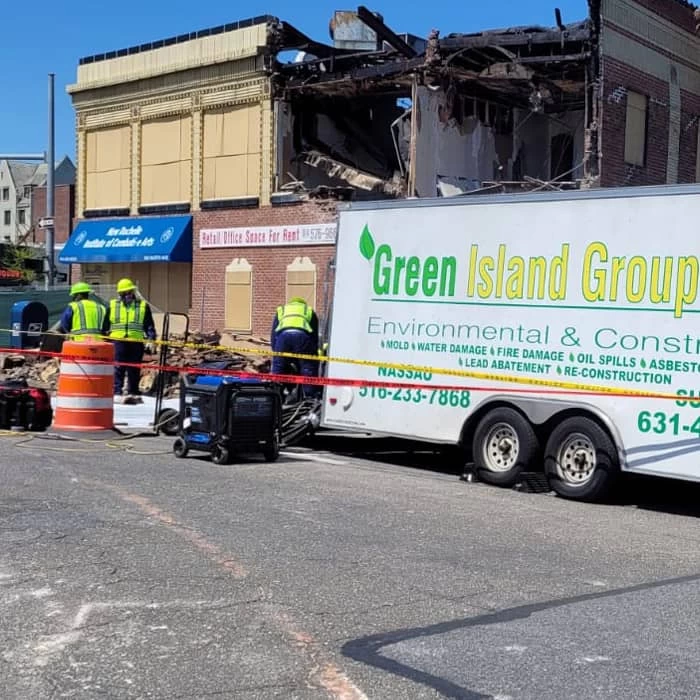
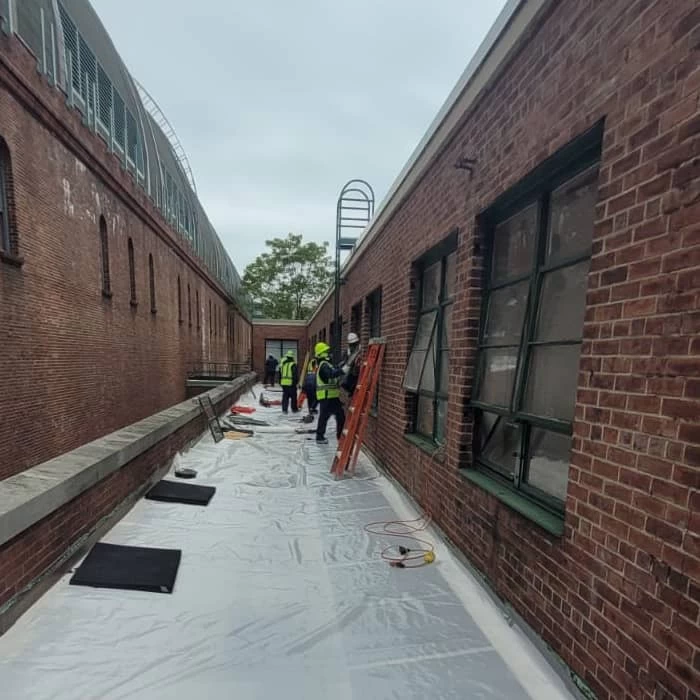
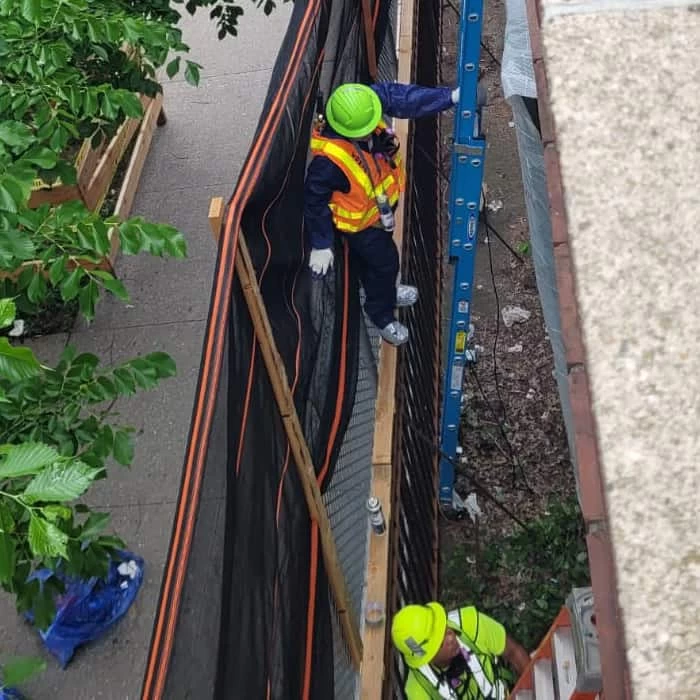
From Dune Road oceanfront properties to Oneck Lane estates, fire damage in Westhampton Beach carries stakes that most restoration companies aren’t equipped to handle. We manage everything emergency response through full reconstruction so you’re not left coordinating three contractors during the worst week of your life.
I needed a professional consultation explanation of procedure for safe removal of Asbestos in my apartment complex. Without having an account yet, I was very impressed with the caring, knowledgeable and generous advice offered by Jessica, and will look forward to doing business in the future. Thank you so much! I feel much more informed about a sometimes scary endeavor. Peace. Nancy Silva Mineola, NY.
Mia Munoz
Used this company to clean up some water flood in my house. They were fast and easy to work with.very professional, Would recommend to anyone!
Nini Valle
Great company, had a flood and they responded quickly and efficiently. Billed my insurance company directly. I highly recommend this company!
joe colapietro, jr
I had pipe freeze in my basement right before a snow storm and they made to within an hour to help start the clean up process. They we by our side throughout the entire process and even helped with the insurance company. They did such a great job with the cleanup, repair, remidiation, I contracted them to perform the repairs and finishes in the basement. They came with enough manpower and material to get the job done. Leo and Jessica were nothing but a pleasure to deal with!!
Cristian Arredondo c
I had some water damage in my home and Green Island was able to take care of my issue quickly and effectively. I am very pleased with the work they did. They responded quickly and were very professional.
Michael M
Outstanding service! From the office to the field crew everyone was friendly, helpful and responsive. I highly recommend Green Island Group.
What Full Restoration Actually Looks Like in Westhampton Beach
A fire in your Westhampton Beach home doesn’t just damage what burned. Smoke moves through your HVAC system and settles into every porous surface the hardwood floors, the custom millwork, the upholstery long before the fire department clears the scene. What looks like a contained kitchen fire can mean smoke contamination in rooms that never saw a flame.
Then there’s the water. Fire hoses push roughly 250 gallons per minute, and that water saturates wall cavities, subfloors, and crawlspaces. In a coastal community like Westhampton Beach where humidity off Moniebogue Bay is already elevated mold can take hold in those wet spaces within 24 to 48 hours. A restoration company that only handles the visible fire damage is leaving the real problem behind.
What genuine recovery looks like is a home that’s structurally sound, environmentally clean, and fully rebuilt to the standard it was at before the fire or better. No lingering odor. No hidden moisture. No asbestos disturbed and left unaddressed in a pre-1978 home. Just a finished result you can actually live in again.
We’re a locally owned Long Island restoration company not a franchise, not a call center dispatch operation. When you call, you reach people who work in Suffolk County, understand the south shore’s coastal conditions, and have direct experience with the older housing stock that makes up a significant portion of Westhampton Beach’s neighborhoods.
We handle every phase of recovery under one roof emergency stabilization, smoke and soot remediation, water extraction, environmental work including asbestos and mold when present, and complete reconstruction. That matters because a fire at a Hamptons property, whether it’s your primary residence or a seasonal home you manage from the city, shouldn’t require you to become a general contractor.
Multiple customers have specifically called out our insurance claim guidance as what made the difference. In a market where a fire loss can mean a six-figure claim, having someone in your corner who understands how to document damage and communicate with adjusters isn’t a bonus it’s essential.
The first call triggers an emergency response. We arrive to stabilize the property boarding up openings, tarping the roof if needed, and stopping any active water intrusion from firefighting efforts. In Westhampton Beach, where a vacant seasonal home might sit exposed for hours before the owner is even notified, that immediate stabilization is what prevents a manageable fire loss from becoming a full gut renovation.
From there, the remediation phase begins. Smoke and soot are addressed throughout the entire home not just the burn zone using thermal fogging, hydroxyl treatment, and HEPA air scrubbing. Water extraction and structural drying follow, with moisture mapping to find what’s hiding in the walls. If the home was built before 1978, which is common in Westhampton Beach given the median construction year, we test for asbestos-containing materials before any demo work begins. New York State requires certified abatement if those materials are disturbed and we handle that in-house.
Reconstruction comes last. Because Westhampton Beach is an incorporated village with its own Building Department and Architectural Review Board, permitted work requires navigating village-level approvals not just standard Suffolk County process. We manage that too, so the project doesn’t stall at the permit stage while your home sits unfinished.
Everything the Job Requires Nothing Left Unfinished
Fire damage restoration in Westhampton Beach isn’t a single service it’s a sequence of interconnected work that has to be done in the right order by people who know what they’re doing at each phase. We cover the full sequence: emergency board-up and stabilization, smoke and soot remediation, water extraction and structural drying, mold assessment and remediation, asbestos testing and abatement when required, and complete reconstruction and finishing.
The coastal environment here adds layers that inland jobs don’t carry. Salt air and elevated humidity along the South Shore mean that moisture left behind after firefighting water can turn into a mold problem faster than it would in a drier climate. We use moisture mapping and thermal imaging to find water that’s already migrated into structural cavities because what you can’t see is usually what causes the most expensive problems down the line.
For seasonal and investment property owners managing a loss remotely, we provide thorough documentation throughout every phase photos, moisture readings, scope of work records everything your insurance adjuster needs and everything you need to stay informed without being on-site every day. The satisfaction guarantee is straightforward: the job isn’t closed until the work meets the standard your property deserves.
How quickly does fire damage get worse if I wait to call someone?
Faster than most people expect. Soot begins permanently etching and staining surfaces within 24 to 72 hours of a fire. It’s not just discoloration soot is acidic, and it actively breaks down finishes, fabrics, and materials the longer it sits. The custom finishes and high-end materials common in Westhampton Beach homes are no more resistant to that process than anything else.
The water from firefighting efforts compounds the problem quickly too. In Westhampton Beach’s coastal humidity, wet wall cavities and subfloors can begin growing mold within 24 to 48 hours. Every day without professional drying and remediation is a day that secondary damage the kind that’s often more expensive than the fire itself is getting worse. Calling as early as possible isn’t just about peace of mind. It’s about limiting the total scope and cost of the recovery.
Does fire damage restoration in Westhampton Beach require a building permit?
For anything structural or exterior, yes and in Westhampton Beach specifically, the process has an additional layer that homeowners often don’t anticipate. Because Westhampton Beach is an incorporated village with its own Building Department, fire prevention permit requirements, and an Architectural Review Board, restoration work that involves structural repair or exterior changes may require ARB review on top of a standard building permit. That’s different from unincorporated hamlets in the Town of Southampton, where only town-level approvals apply.
This matters practically because ARB review adds time to the approval process, and a contractor who doesn’t know to account for it can create costly delays while your home sits mid-restoration. Our familiarity with Westhampton Beach’s village-level requirements means permits are filed correctly and the project doesn’t stall at a step that was entirely avoidable with the right local knowledge from the start.
My Westhampton Beach home is older does that affect the restoration process?
It can, and it’s something worth knowing before any demo work begins. Westhampton Beach has a median construction year of 1978, and roughly 11 percent of homes in the village were built before 1940. Homes built before 1978 commonly contain asbestos-containing materials in insulation, floor tiles, popcorn ceilings, and drywall joint compound. When a fire damages those materials or when restoration work disturbs them New York State law requires certified asbestos abatement before the work can continue.
This isn’t a technicality. Disturbing asbestos without proper containment and removal creates a genuine health risk and a legal liability. A fire-only contractor who isn’t certified to handle environmental hazards will either skip this step or stop work and hand you off to someone else. We handle asbestos testing and abatement in-house, so the project doesn’t get handed off mid-stream and the work is done in full compliance with New York State Department of Labor requirements.
Can smoke damage really spread beyond the room where the fire started?
Yes and it often spreads further than people expect. Smoke doesn’t respect walls. It travels through HVAC systems, migrates into wall cavities through gaps and penetrations, and settles into every porous material it reaches including flooring, furniture, insulation, and the structural framing itself. A fire that started in one room of a Westhampton Beach home can mean smoke contamination throughout the entire structure, including rooms that never showed any visible signs of damage.
This is why a thorough inspection matters before any scope of work is finalized. Surface cleaning in the affected room only addresses what’s visible. The odor that returns weeks later after the insurance claim is closed and the contractor is gone almost always traces back to smoke that was never fully addressed in the cavities and systems where it settled. Our remediation process includes the full home, not just the burn zone, using thermal fogging and hydroxyl treatment to eliminate smoke contamination at the source.
I own a seasonal home in Westhampton Beach how do I manage this from out of town?
This is one of the more common situations in Westhampton Beach, where a significant portion of properties are seasonal or second homes owned by people who live in Manhattan or elsewhere. Learning about a fire at your Hamptons property while you’re in the city is a specific kind of stressful you can’t just drive over and assess the situation yourself, and you need to trust that whoever responds is actually managing the project the way you would if you were there.
We handle remote-owner situations regularly. We document every phase of the work photos, moisture readings, scope records and communicate clearly throughout the process so you’re never left guessing. We can coordinate with your property manager, work with your insurance adjuster directly, and keep the project moving without requiring you to be on-site for every decision. The goal is to make sure your property is in capable hands while you figure out how to get there not to wait until you arrive to start protecting it.
How does the insurance claim process work for fire damage in Westhampton Beach?
The insurance process after a fire is where a lot of homeowners get shortchanged not because their policy doesn’t cover the damage, but because the damage wasn’t documented thoroughly enough to support the full scope of the claim. Insurance adjusters work for the insurance company. Their job is to assess the loss accurately, but “accurately” from their perspective doesn’t always mean the same thing as “completely” from yours.
In Westhampton Beach, where fire damage claims on high-value properties can reach well into six figures, the gap between a well-documented claim and an underpaid one can be significant. We help homeowners document damage comprehensively from the start before anything is cleaned, moved, or repaired and communicate directly with adjusters throughout the process. Multiple customers have specifically named this insurance guidance as the most valuable part of working with us, separate from the restoration work itself. You don’t need to become an expert in insurance claims. You just need someone in your corner who already is.