When the Pine Barrens Burn, Westhampton Homes Pay the Price
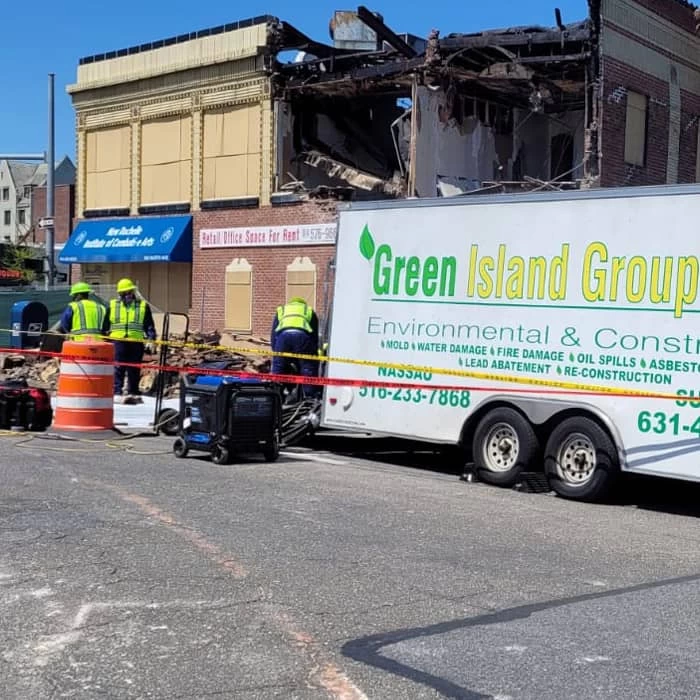
Smoke, soot, and water don’t wait and in Westhampton, neither do we. We provide fire damage restoration from emergency response through full reconstruction, so you’re never managing this alone.
I needed a professional consultation explanation of procedure for safe removal of Asbestos in my apartment complex. Without having an account yet, I was very impressed with the caring, knowledgeable and generous advice offered by Jessica, and will look forward to doing business in the future. Thank you so much! I feel much more informed about a sometimes scary endeavor. Peace. Nancy Silva Mineola, NY.
Mia Munoz
Used this company to clean up some water flood in my house. They were fast and easy to work with.very professional, Would recommend to anyone!
Nini Valle
Great company, had a flood and they responded quickly and efficiently. Billed my insurance company directly. I highly recommend this company!
joe colapietro, jr
I had pipe freeze in my basement right before a snow storm and they made to within an hour to help start the clean up process. They we by our side throughout the entire process and even helped with the insurance company. They did such a great job with the cleanup, repair, remidiation, I contracted them to perform the repairs and finishes in the basement. They came with enough manpower and material to get the job done. Leo and Jessica were nothing but a pleasure to deal with!!
Cristian Arredondo c
I had some water damage in my home and Green Island was able to take care of my issue quickly and effectively. I am very pleased with the work they did. They responded quickly and were very professional.
Michael M
Outstanding service! From the office to the field crew everyone was friendly, helpful and responsive. I highly recommend Green Island Group.
A fire leaves more than what you can see. Smoke travels through every duct, every wall cavity, every corner of a house including rooms that never saw a flame. Soot starts permanently staining surfaces within 24 to 72 hours. If firefighting water was involved, mold can begin growing in as little as 48 hours after that. The visible damage is almost never the whole story, and treating only what’s visible is how restoration jobs fall apart weeks later.
For Westhampton homeowners, the stakes are unusually high. With median listing prices around $2 million and a housing stock that includes luxury waterfront estates, custom millwork, and high-end finishes, a rushed or incomplete restoration doesn’t just leave a bad result it can affect your property’s value and your ability to sell. Getting this right the first time matters here in a way it simply doesn’t in other markets.
There’s also a risk in Westhampton that most restoration companies aren’t equipped to address: wildfire and brush fire smoke. The 2025 Westhampton Pines Fire and the 1995 Sunrise Wildfire both demonstrated that Pine Barrens fires can send smoke and ash into home interiors even when the structure itself was never directly threatened. That type of damage particulate contamination of HVAC systems, ash infiltration through gaps in the building envelope, exterior surface degradation requires a different approach than a standard kitchen fire cleanup. We understand the difference.
We’re a locally owned, Long Island-based restoration company not a national franchise dispatching whoever’s available. When you call, you reach a real team with a real stake in the outcome. Our customers consistently name Leo and Jessica by name in their reviews, not because it’s a talking point, but because those are the people actually doing the work and managing the communication. That kind of accountability is rare in this industry.
We serve the full South Fork corridor Westhampton, Westhampton Beach, Quogue, East Quogue, Hampton Bays, Southampton, and the surrounding communities which means we understand what restoration looks like in this specific part of Long Island. Older homes near the pine barrens interface, seasonal properties that sit vacant through the winter, high-value estates with premium finishes this is the housing stock we work in regularly.
From emergency stabilization to final reconstruction, everything stays under one roof. You don’t coordinate between a cleanup crew and a separate contractor. You make one call, and the project gets handled from start to finish.
The first step is stabilization and it starts the moment we arrive. That means boarding up openings, tarping the roof if needed, and making sure the structure is secure before anything else happens. In Westhampton, where many properties are seasonal and may not have someone on-site daily, this step is especially critical. An unsecured structure after a fire is a liability, and the longer it sits exposed, the more secondary damage compounds.
From there, the focus shifts to assessment and documentation. Every area of damage visible and hidden gets documented thoroughly. This isn’t just for the scope of work; it’s the foundation of your insurance claim. We work directly with adjusters using Xactimate, the same estimating platform your insurance carrier uses, which means the documentation holds up and the claim reflects the actual cost of restoring a Westhampton property including appropriate replacement costs for premium finishes and materials.
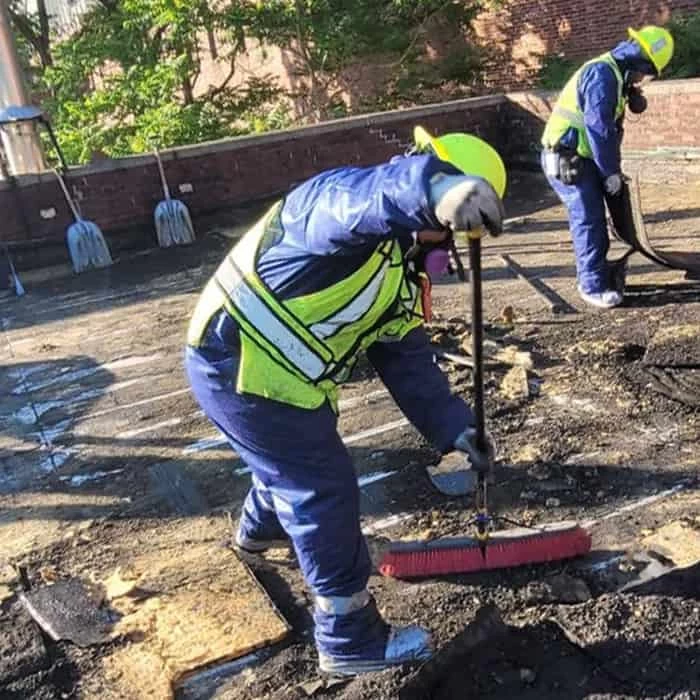
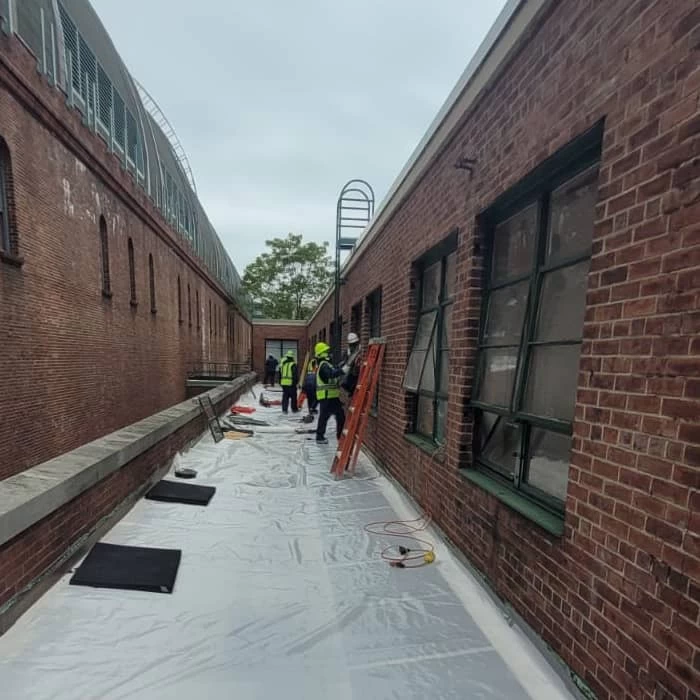
Remediation comes next: smoke and soot removal, HEPA air scrubbing, thermal fogging for odor elimination, moisture mapping, and water extraction from firefighting suppression. For older homes in Westhampton roughly 10% of the housing stock was built before 1940 this phase may also involve asbestos abatement, which requires specific New York State certification and can’t be handled by a standard cleanup crew. Once remediation is complete and verified, reconstruction begins. Structural repairs, drywall, flooring, cabinetry, finishes everything needed to bring the home back to what it was, or better.
Full-Scope Restoration Built for Westhampton Properties
Fire damage restoration in Westhampton isn’t a single service it’s a sequence of specialized work that has to be done in the right order by people who know what they’re doing at each stage. We cover the full sequence: emergency response and structural stabilization, smoke and soot remediation, water damage mitigation, environmental hazard removal, and complete reconstruction through finished surfaces.
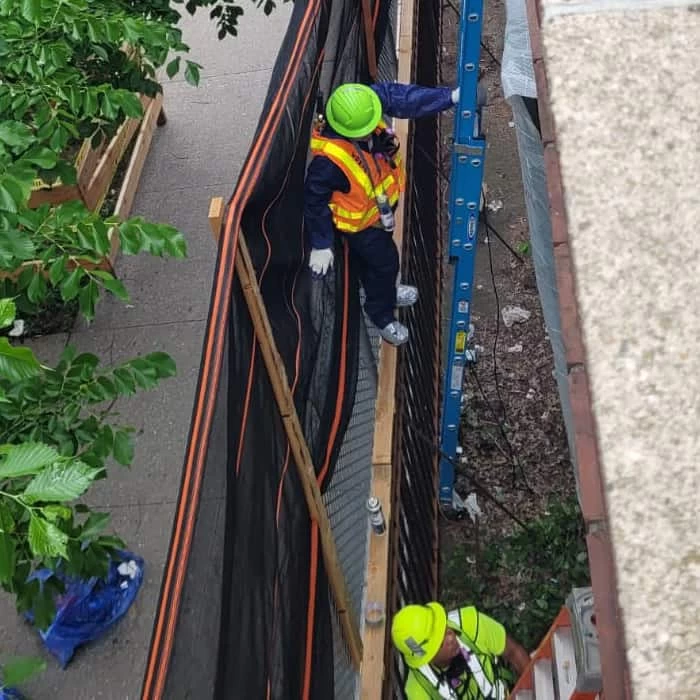
The environmental piece matters more here than in most markets. Westhampton’s older housing stock particularly homes built before 1960 frequently contains asbestos-containing materials that get disturbed during a fire. Floor tiles, pipe insulation, ceiling textures, roof shingles these materials were standard construction in that era, and improper handling during cleanup is both dangerous and illegal in New York State without proper NYSDOL certification. We hold the credentials to handle this legally and completely, so you’re not left with a remediation job that’s only half-finished.
For seasonal and second-home owners a significant portion of Westhampton’s property base there’s also the matter of working without the owner on-site. We regularly coordinate with property managers and caretakers, providing detailed photo documentation and written updates throughout the project so the homeowner stays fully informed regardless of where they are. All restoration work in Westhampton requires building permits through the Town of Southampton’s Building and Zoning Division, and for structures built before 1941, additional review is required against the Town Assessor’s records. We manage that permitting process on your behalf.
Does smoke from a Pine Barrens brush fire actually damage the inside of my Westhampton home?
Yes and this is one of the most misunderstood aspects of wildfire-adjacent damage. You don’t need direct structural fire contact for your home’s interior to be seriously affected. During events like the 2025 Westhampton Pines Fire, smoke and fine ash particles travel significant distances and infiltrate homes through HVAC intakes, gaps around windows and doors, attic vents, and other openings in the building envelope. Once inside, those particles settle into ductwork, insulation, soft goods, and wall cavities and the odor and contamination don’t go away on their own.
The specific chemistry of Pine Barrens wildfire smoke is also different from interior structure fire smoke. Pitch pine and scrub oak combustion produces a particular mix of particulates and volatile organic compounds that can linger in HVAC systems and porous materials for months if not properly addressed. If your Westhampton home was near the fire perimeter especially on the northern or western edge near the pine barrens interface it’s worth having the interior air quality and HVAC system assessed even if the structure looks fine from the outside.
My Westhampton property is a seasonal home what happens if a fire occurs while it's vacant?
This is one of the most common and highest-risk scenarios in Westhampton. A significant portion of the hamlet’s housing stock consists of second homes and seasonal properties that sit unoccupied for months at a time particularly through the winter. When a fire starts in a vacant home, it may go undetected for hours or even days before a neighbor, property manager, or caretaker discovers it. Every hour of additional smoke penetration, water saturation from firefighting suppression, and potential mold growth makes the restoration more complex and more expensive.
We’re set up to work directly with property managers and caretakers, not just homeowners. If you’re the owner and you’re not on-site when something happens, your property manager can make the call and we’ll mobilize immediately providing regular photo documentation and written updates so you stay fully informed throughout the project. The response timeline matters enormously in a vacant-home scenario, and having a restoration company already familiar with the Westhampton market means no time is lost getting oriented to the property type, the local permit requirements, or the insurance documentation process.
How long does fire damage restoration typically take for a home in Westhampton?
There’s no single answer, because the timeline depends heavily on the scope of damage, the size of the property, and whether environmental hazards like asbestos are involved. For a contained fire say, a kitchen fire in a mid-size home remediation and reconstruction might take four to eight weeks. For a more significant fire in a larger Westhampton estate, or one where smoke has penetrated extensively through HVAC systems and wall cavities, the timeline can extend to several months.
A few factors specific to Westhampton can affect timing. First, properties built before 1941 require additional review under the Town of Southampton’s building permit process, which can add time to the permitting phase. Second, if asbestos abatement is required which is common in older homes in this area that work has to be completed and cleared before reconstruction can begin. Third, the insurance documentation and adjuster process for high-value Westhampton properties tends to be more involved than for lower-value claims, and getting that right upfront prevents delays later. We walk you through realistic timeline expectations at the assessment stage so you’re not left guessing.
Will my homeowner's insurance cover fire damage restoration costs in Westhampton, NY?
In most cases, yes fire damage is a covered peril under standard homeowner’s insurance policies, including smoke and soot damage and water damage from firefighting suppression. But the quality of your claim outcome depends heavily on how thoroughly the damage is documented and how the claim is presented to the adjuster. For a high-value Westhampton property, the difference between a well-documented claim and a poorly documented one can easily be tens of thousands of dollars or more, when you’re talking about premium finishes, custom millwork, or high-end appliances.
We work directly with insurance adjusters using Xactimate, the industry-standard estimating platform that insurance carriers rely on. That means the documentation we produce speaks the same language as your insurer, and the replacement costs in the estimate reflect what it actually costs to restore a Westhampton-caliber property not a generic national average that doesn’t account for the local market. Our track record of guiding homeowners through the insurance process is one of the things customers consistently highlight in independent reviews, and it’s one of the most meaningful things a restoration company can do for you beyond the physical work itself.
Does Green Island Group handle the building permits required by Southampton Town for fire restoration work?
Yes. All structural restoration and reconstruction work in Westhampton requires building permits through the Town of Southampton’s Building and Zoning Division and if your home was built before 1941, the process involves an additional review step against the Town Assessor’s records and the 2014 Southampton Historic Resources Survey. This isn’t complicated if you know the process, but it adds a layer that can slow things down if you’re working with a company that isn’t familiar with Southampton Town’s specific requirements.
We handle the permitting process as part of the project. You don’t need to figure out which forms to file, which office to contact, or what the pre-1941 review entails. This is particularly relevant in Westhampton, where a meaningful share of the housing stock dates to the 1930s, 1940s, and 1950s, and where historic preservation considerations can come into play for certain properties. Managing the regulatory side of a fire restoration project is part of what makes the end-to-end model valuable it’s one less thing you’re responsible for during an already stressful situation.
My Westhampton home has older construction should I be worried about asbestos after a fire?
If your home was built before 1980 and especially before 1960 it’s a legitimate concern worth taking seriously. Asbestos-containing materials were standard in residential construction through much of that era: floor tiles, ceiling textures, pipe insulation, roofing shingles, and joint compound all commonly contained asbestos. A fire disturbs these materials. When they’re damaged or broken apart, asbestos fibers become airborne, and at that point you have an environmental hazard that requires certified abatement not just standard cleanup.
In Westhampton, roughly 10% of the housing stock was built before 1940, and another meaningful share dates to the 1940s and 1950s. That’s a significant portion of the community’s homes where asbestos exposure is a real possibility following fire damage. New York State requires specific NYSDOL certification for any asbestos abatement work, and it cannot legally be performed by a standard restoration crew without that certification. We hold the necessary credentials and incorporate asbestos testing and abatement into the restoration scope when the age of the home warrants it so the job is handled completely and safely, without cutting corners on the environmental piece.