Your Historic Williston Park Home Needs More Than a Cleanup Crew
When fire hits a pre-war home on a Williston Park street, the damage runs deeper than what you can see. We handle fire damage restoration with the licensing, certifications, and local knowledge these homes actually require.
I needed a professional consultation explanation of procedure for safe removal of Asbestos in my apartment complex. Without having an account yet, I was very impressed with the caring, knowledgeable and generous advice offered by Jessica, and will look forward to doing business in the future. Thank you so much! I feel much more informed about a sometimes scary endeavor. Peace. Nancy Silva Mineola, NY.
Mia Munoz
Used this company to clean up some water flood in my house. They were fast and easy to work with.very professional, Would recommend to anyone!
Nini Valle
Great company, had a flood and they responded quickly and efficiently. Billed my insurance company directly. I highly recommend this company!
joe colapietro, jr
I had pipe freeze in my basement right before a snow storm and they made to within an hour to help start the clean up process. They we by our side throughout the entire process and even helped with the insurance company. They did such a great job with the cleanup, repair, remidiation, I contracted them to perform the repairs and finishes in the basement. They came with enough manpower and material to get the job done. Leo and Jessica were nothing but a pleasure to deal with!!
Cristian Arredondo c
I had some water damage in my home and Green Island was able to take care of my issue quickly and effectively. I am very pleased with the work they did. They responded quickly and were very professional.
Michael M
Outstanding service! From the office to the field crew everyone was friendly, helpful and responsive. I highly recommend Green Island Group.
What Changes When the Right Team Shows Up First in Williston Park
The homes in Williston Park weren’t built last decade. Most were built between the 1920s and 1940s — Dutch Colonial and Colonial-revival designs that define the character of this village. That history is worth protecting, but it also means a fire here isn’t a straightforward cleanup job. Behind those walls, there’s a real chance of asbestos-containing materials, lead paint, and aging electrical systems that a standard restoration crew simply isn’t equipped — or licensed — to handle.
When fire and smoke damage is addressed correctly from the start, you’re not just cleaning surfaces. You’re preventing a situation where hazardous materials go undetected, where mold takes hold in water-saturated plaster walls, or where an insurance claim gets underpaid because the documentation wasn’t there. In a community where home values regularly exceed $700,000, the difference between a thorough restoration and a rushed one isn’t minor — it’s significant.
Getting back into your home safely, with every hazard addressed and every phase documented for your insurer, is the actual goal. That’s what the process should look like from day one.
Licensed Fire Restoration Contractor Nassau County
Every License This Work Requires — We Hold It
We’re a locally owned restoration and environmental services company serving Nassau County, Suffolk County, and New York City. We hold a Nassau County General Contractor License, IICRC certification for fire and water damage restoration, a NYS DOL Asbestos License, USEPA Lead/RRP Certification, and a NYS DOL Mold License. For homeowners in Williston Park — where every home predates 1978 and most predate 1950 — those credentials aren’t optional extras. They’re what legally separates a complete restoration from one that cuts corners on hazardous materials.
We’ve completed over 5,000 restoration projects across New York State, and we work throughout North Hempstead and the surrounding Nassau County villages regularly. We know the village-level permit process in Williston Park, we know what pre-war construction looks like inside the walls, and we bill insurance companies directly so you’re not left navigating the claim alone. You get one company, one point of contact, and a team that knows exactly what your Williston Park home needs.
From Emergency Call to Move-Back-In Day — No Handoffs
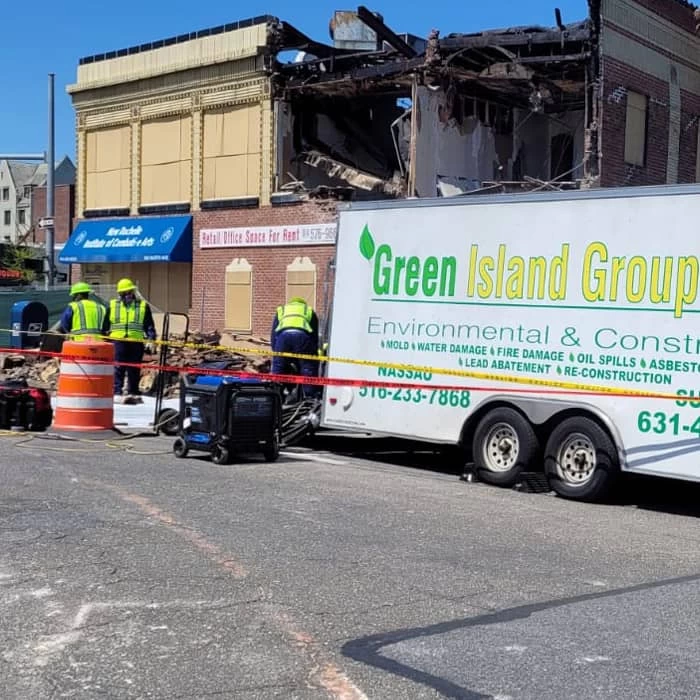
It starts the moment you call. We respond 24 hours a day, seven days a week — because soot begins bonding permanently to surfaces within hours, and mold can take hold in firefighting water within 24 to 48 hours. When we arrive, the first priority is stabilizing the property: emergency board-up, tarping, and containment to stop secondary damage before it compounds.
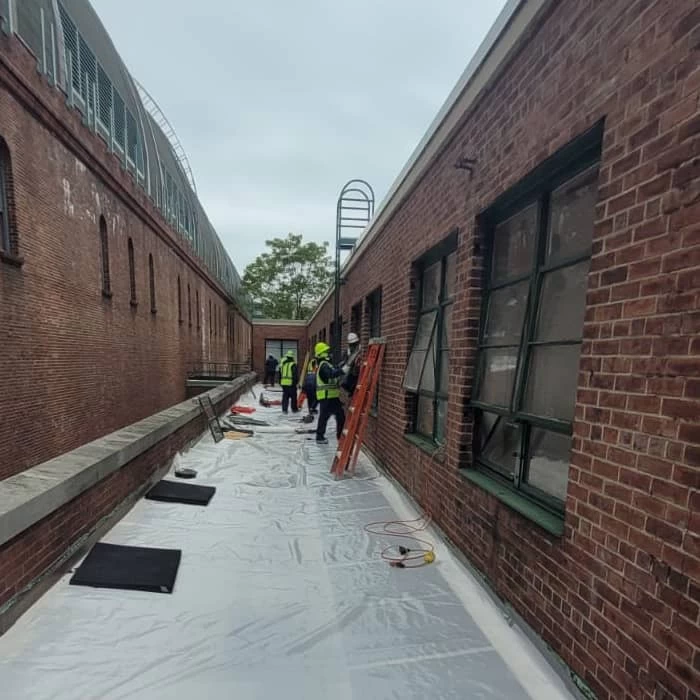
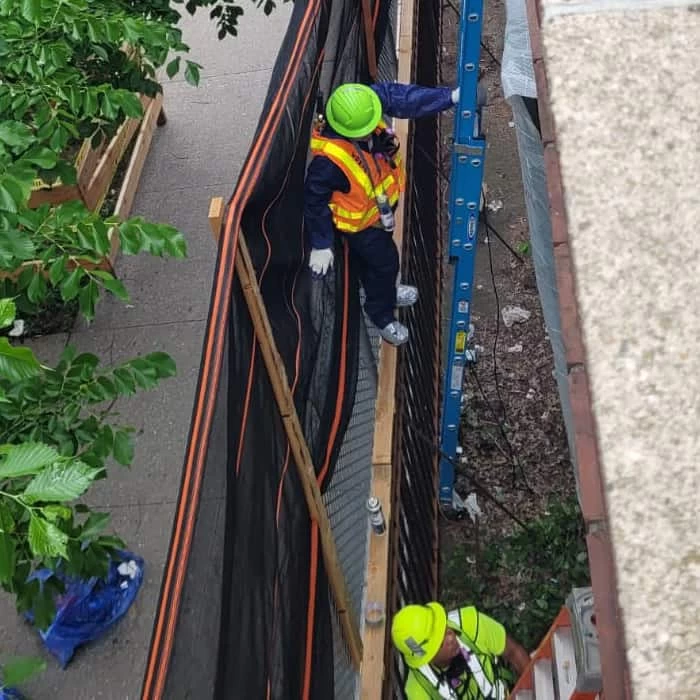
From there, we assess the full scope — not just visible fire and smoke damage, but potential asbestos-containing materials and lead paint that are almost certain to be present in any Williston Park home built in the 1920s, 30s, or 40s. If hazardous materials are identified, we handle abatement in-house under our NYS DOL Asbestos License and USEPA Lead/RRP Certification. You won’t be waiting on a second contractor to clear the site before restoration can begin.
Once the environment is safe, we move into full structural restoration. Because Williston Park is an incorporated village with its own Building Inspector, any structural work requires a building permit — and we pull it. We’re also familiar with the village’s Architectural Review requirements, which matter when you’re restoring the exterior of a home that’s part of a historically cohesive planned community. Every phase is documented to insurance standards, so your adjuster has exactly what they need to process the claim.
Smoke and Fire Restoration Services Williston Park
Built for Pre-War Homes, Not Just Any House Fire
Fire damage restoration in Williston Park covers a wider scope than it does in newer communities, and that’s not an exaggeration. Soot and smoke removal, odor elimination, structural drying, and content restoration are the baseline. But in a village where the entire housing stock predates World War II, the work almost always extends into hazardous materials abatement — asbestos in floor tiles, pipe insulation, boiler wrap, or joint compound, and lead paint on virtually every painted surface in the home.
If your Williston Park home has oil heat — and many homes in the village do, with fuel oil delivery and service companies actively working year-round — we also handle puff-back soot contamination. A boiler malfunction can coat every surface in your home with black, sticky soot in seconds without an actual fire. The remediation process is just as thorough: air scrubbing, ozone treatment, HVAC cleaning, and full surface restoration across walls, ceilings, contents, and ductwork.
Throughout every phase, we document the damage and the work to insurance-standard specifications and bill your insurer directly. We’ve guided hundreds of Long Island families through the claims process, and we know what adjusters need to approve a fair settlement on a high-value Nassau County property. From the first emergency call to the final inspection with the Williston Park Building Inspector, it’s one company handling all of it.
Does fire damage restoration in Williston Park require a building permit?
Yes — and this is something many homeowners in Williston Park don’t realize until a contractor brings it up mid-project. Williston Park is a fully incorporated village in the Town of North Hempstead with its own Village Code and Building Inspector. Under Chapter 97 of that code, a building permit is required for any structural construction, alteration, improvement, or demolition — and fire damage restoration almost always involves structural work. The only work that falls outside the permit requirement is ordinary, non-structural repairs under $500 in value, which rarely describes anything involved in a real fire restoration.
Beyond the standard building permit, Williston Park also has an Architectural Review chapter in its Village Code designed to protect the character of its historic planned community. If your restoration involves exterior changes — replacing windows, doors, roofing, or siding on one of the village’s Colonial-revival or Dutch Colonial homes — that may require an additional review step. Working with a contractor who holds a Nassau County General Contractor License and knows this process saves you from delays and compliance issues that can stall a project for weeks.
My Williston Park home was built in the 1930s — does that affect the restoration process?
It does, and significantly. Homes built in the 1920s, 30s, and 40s — which describes virtually every home in Williston Park — were constructed with materials that are now classified as hazardous. Asbestos was commonly used in floor tiles, pipe and boiler insulation, ceiling texture, joint compound, and roof underlayment during this era. Lead paint was standard on virtually every painted surface. When a fire occurs in a home like this, it doesn’t just create smoke and soot — it disturbs those materials, which then become an active health and legal issue.
Under New York State law, only a contractor holding a NYS DOL Asbestos License can legally perform asbestos abatement work, and only an USEPA Lead/RRP-certified firm can safely handle lead paint remediation. Most restoration companies operating in Nassau County don’t hold both credentials. We do. This matters because if hazardous materials aren’t properly identified and abated before restoration begins, you’re not just dealing with a safety risk — you’re potentially looking at a project that has to be torn out and redone by a licensed firm before it can pass inspection.
How does fire damage affect my homeowner's insurance claim, and will you help with it?
Your homeowner’s insurance policy covers fire damage, but what actually gets paid out depends heavily on how the damage is documented. Insurance adjusters work from documentation — photos, moisture readings, air quality testing, itemized scope of work, and material specifications. If that documentation is incomplete or doesn’t meet the insurer’s standards, claims get underpaid or disputed. For a home in Williston Park where property values regularly exceed $700,000, an underpaid claim isn’t a minor inconvenience — it’s a serious financial gap.
We bill insurance companies directly and provide documentation that meets insurance-standard specifications at every phase of the restoration. We’ve worked with adjusters on Nassau County claims enough times to know what they need and how to present it. We’ve also helped clients through material selection appointments to make sure replacement materials reflect fair market value for their specific home — not a generic substitute. You won’t be handed a packet of paperwork and left to figure it out. We stay involved in the claim process from the initial assessment through final settlement.
What is a puff-back, and is it covered under fire damage restoration services?
A puff-back happens when an oil burner or boiler has an ignition malfunction and discharges a sudden backfire of soot and combustion gases through the heating system and into the living space. In a matter of seconds, every surface in your home — walls, ceilings, furniture, clothing, HVAC ducts — can be coated in a fine, black, oily soot. There’s no actual fire, but the cleanup is just as involved as a smoke damage restoration job, sometimes more so because the soot penetrates into every room connected to the duct system.
This is a real and recurring issue in Williston Park, where oil heat has been the dominant heating system for decades and many boilers and furnaces have been running for a long time. We handle puff-back soot remediation as part of our fire and smoke damage restoration services throughout Nassau County. The process includes surface cleaning across all affected areas, air scrubbing, ozone treatment for odor, and NADCA-standard HVAC cleaning to clear the duct system. If the puff-back was caused by a covered peril under your homeowner’s policy, we document and bill accordingly.
How long does fire damage restoration typically take for a home in Nassau County?
The honest answer is that it depends on the scope, and in Williston Park specifically, the scope tends to be broader than in newer communities. A kitchen fire with limited smoke spread might be resolved in one to two weeks. A fire that involved structural damage, spread smoke through multiple rooms, and triggered hazardous materials abatement — which is a real possibility in any pre-WWII home — can take six to twelve weeks or longer, especially when you factor in the village permit process.
The permitting timeline in Williston Park adds a layer that doesn’t exist in unincorporated areas. The Building Inspector’s office needs to issue a permit before structural work begins, and depending on the scope of the exterior work, Architectural Review may also be required. These aren’t obstacles — they’re the process, and working with a contractor who knows them in advance keeps the project moving. We handle the permit applications as part of the job, so you’re not chasing paperwork while you’re displaced from your home.
Can smoke smell be fully removed from an older home with plaster walls and original woodwork?
Yes — but it takes a more thorough approach than it does in a home with drywall and modern finishes. Plaster walls, original hardwood floors, period millwork, and older insulation materials are porous in ways that modern construction isn’t. Smoke odor compounds absorb deeply into these surfaces, and a surface-level cleaning won’t reach them. If the odor isn’t fully addressed at the source, it will return — especially in humid summer months or when the heat kicks on in winter.
The process for a Williston Park home typically involves thermal fogging or ozone treatment to neutralize odor at the molecular level, air scrubbing with HEPA filtration to clear airborne particles, and targeted cleaning of all porous surfaces including walls, ceilings, and any original woodwork worth preserving. HVAC systems also need to be cleaned — if the system ran during or after the fire, smoke particles circulated through the ductwork and will continue releasing odor until the system is properly cleaned. We use NADCA-standard HVAC cleaning as part of the smoke remediation process, which is especially important in older homes where the duct system may not have been cleaned in years.