When a Historic Woodsburgh Estate Burns, the Margin for Error Is Zero
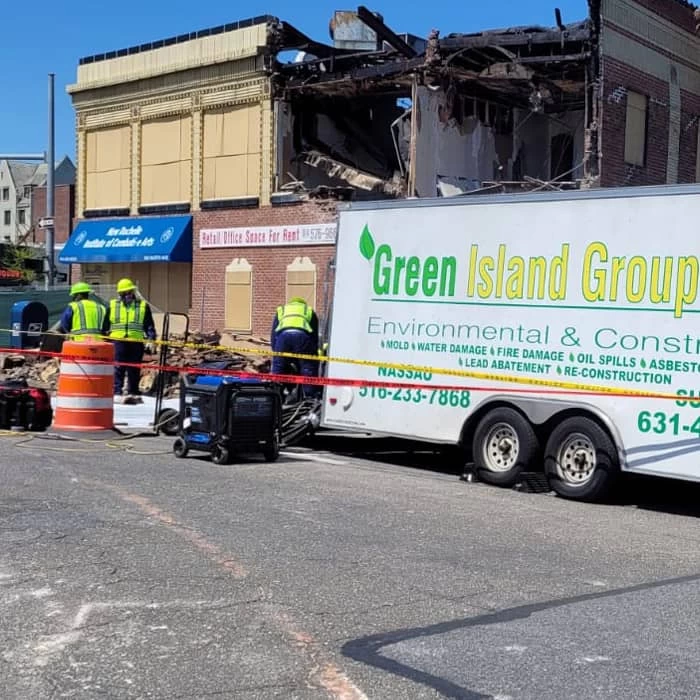
Fire damage in a century-old Woodsburgh home isn’t just a cleanup job — it’s a licensed, credentialed restoration process that most contractors aren’t equipped to handle. We are.
I needed a professional consultation explanation of procedure for safe removal of Asbestos in my apartment complex. Without having an account yet, I was very impressed with the caring, knowledgeable and generous advice offered by Jessica, and will look forward to doing business in the future. Thank you so much! I feel much more informed about a sometimes scary endeavor. Peace. Nancy Silva Mineola, NY.
Mia Munoz
Used this company to clean up some water flood in my house. They were fast and easy to work with.very professional, Would recommend to anyone!
Nini Valle
Great company, had a flood and they responded quickly and efficiently. Billed my insurance company directly. I highly recommend this company!
joe colapietro, jr
I had pipe freeze in my basement right before a snow storm and they made to within an hour to help start the clean up process. They we by our side throughout the entire process and even helped with the insurance company. They did such a great job with the cleanup, repair, remidiation, I contracted them to perform the repairs and finishes in the basement. They came with enough manpower and material to get the job done. Leo and Jessica were nothing but a pleasure to deal with!!
Cristian Arredondo c
I had some water damage in my home and Green Island was able to take care of my issue quickly and effectively. I am very pleased with the work they did. They responded quickly and were very professional.
Michael M
Outstanding service! From the office to the field crew everyone was friendly, helpful and responsive. I highly recommend Green Island Group.
The fire is out. Now the real clock starts. Soot begins permanently bonding to surfaces within hours. The water we used to save the structure is already working against you — soaking into subfloor assemblies, saturating wall cavities, and in a South Shore village like Woodsburgh, mixing with coastal humidity to create the conditions mold needs to take hold within 24 to 48 hours. What changes when a properly credentialed team responds fast is that the damage stops compounding.
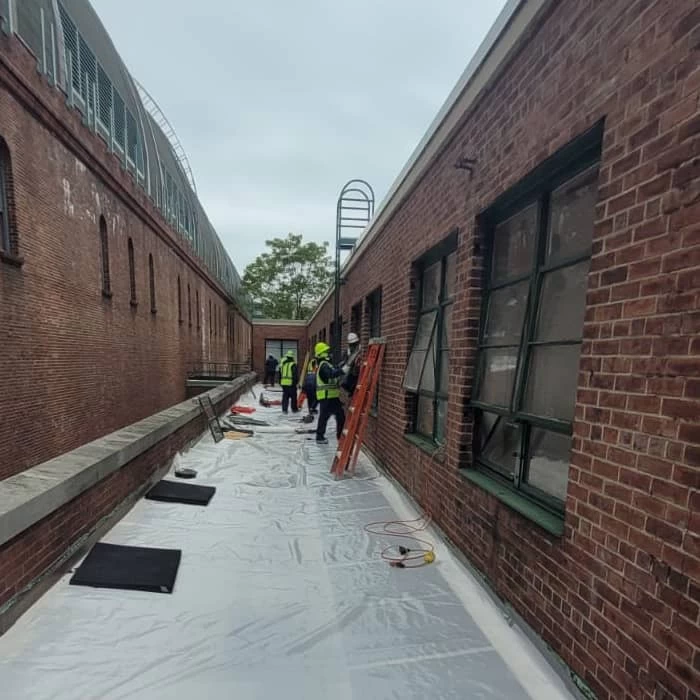
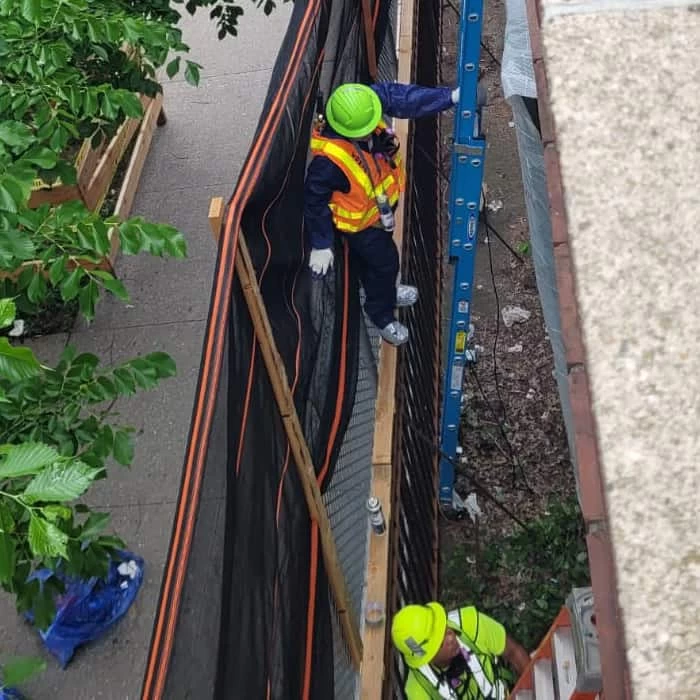
Woodsburgh’s housing stock adds a layer that most homeowners don’t think about until it’s too late. Homes built between 1912 and the mid-20th century — which describes most of this village — almost universally contain asbestos-containing materials and lead-based paint. A fire disturbs those materials. New York State law requires a licensed contractor to address them. When the team walking through your door holds the NYS DOL Asbestos License, the USEPA Lead/RRP certification, and an IICRC credential in fire and smoke restoration, you’re not just getting cleanup — you’re getting legal, documented, comprehensive remediation that protects your health, your property, and your insurance claim.
The outcome you’re after isn’t just “clean.” It’s a home that’s structurally sound, safe to occupy, and properly documented so your insurer can’t low-ball the settlement on a property worth well over a million dollars. That’s what a full-scope restoration looks like when it’s done right.
We’re a locally owned restoration and environmental services company serving Long Island and the greater New York area. With over 5,000 completed projects across New York State — including extensive work throughout Nassau County and the Five Towns communities like Woodsburgh — this isn’t a team learning the ropes on your property. We know the housing stock here, the local regulatory environment, and what Nassau County insurance adjusters expect to see in a properly documented claim.
What separates us in a market like Woodsburgh is the credential stack. IICRC-certified in fire and smoke restoration. NYS DOL licensed for asbestos and mold. USEPA Lead/RRP certified. And critically — a licensed General Contractor in Nassau County. That last piece matters more than most people realize. It means we can legally handle everything from emergency response through final reconstruction without you sourcing a second contractor for the rebuild.
We bill insurance directly, we’ve guided hundreds of Long Island homeowners through the claims process, and we operate 24 hours a day, 365 days a year. When your home off Broadway or Woodmere Boulevard takes a hit, you don’t need to make five calls. You need to make one.
From Emergency Call to Move-Back-In — No Handoffs, No Gaps
The first call triggers our response. We operate around the clock and can be on-site within an hour. In those first hours, the priority is stopping active damage — boarding up compromised openings, extracting standing water left by suppression efforts, and conducting a full structural and environmental assessment. In a Woodsburgh home with pre-1980 construction, that assessment includes identifying any asbestos or lead-containing materials that the fire may have disturbed, because remediation can’t legally proceed without that documentation in place.
Once the scope is established, the remediation work begins in sequence. Soot and smoke residue removal comes first — including HVAC ductwork, which most homeowners don’t realize carries contamination throughout the entire home after even a contained fire. Odor neutralization follows, using professional-grade equipment that addresses the molecular compounds embedded in walls, insulation, and contents — not surface sprays that mask the problem temporarily. If mold has begun developing from firefighting water, we address that concurrently under the same licensed team rather than requiring a separate contractor engagement.
The final phase is reconstruction. Because we hold a Nassau County General Contractor license, we manage the full rebuild — coordinating permits through the Village of Woodsburgh and the Town of Hempstead as required, sourcing materials appropriate to your home’s historic character, and seeing the project through to completion. One company, one point of contact, one accountable team from the first call to the day you walk back in.
Built for the Complexity of Woodsburgh's Estate-Scale Homes
Fire damage restoration in a village like Woodsburgh isn’t a standard job. The homes here are large, historic, and high-value — and the scope of a restoration reflects that. We provide comprehensive fire damage restoration services covering emergency property securing and structural assessment, complete soot and smoke removal from surfaces and HVAC systems, water extraction and structural drying, odor elimination using professional equipment, hazardous materials abatement including asbestos and lead where present, content evaluation and restoration, and full structural reconstruction under our Nassau County General Contractor license.
One service category worth calling out specifically for the Five Towns area is oil burner puffback. Long Island has one of the highest concentrations of oil-heated homes in the country, and a puffback — where a furnace backfires and releases a cloud of soot throughout the home — can contaminate thousands of square feet in a large Woodsburgh estate. It’s not a fire in the traditional sense, but the remediation process is nearly identical, and it’s a high-frequency event in communities like Woodsburgh and the surrounding Five Towns. We handle puffback cleanup comprehensively, including the HVAC system that many restoration companies leave contaminated.
Throughout every phase, we document the damage in detail for your insurance carrier, bill directly, and advocate for fair valuation. For a home worth $2 million or $3 million in a village with fewer than 300 housing units, that documentation isn’t a formality — it’s the difference between a fully funded restoration and a shortfall you absorb out of pocket.
Does fire damage in older Woodsburgh homes create asbestos or lead hazards?
Yes — and this is one of the most important things to understand before hiring any contractor for fire restoration in Woodsburgh. The village was developed primarily between 1912 and the mid-20th century, which means the overwhelming majority of homes here were built before modern building materials regulations. Asbestos-containing materials — floor tiles, pipe insulation, ceiling tiles, joint compound, roofing — were standard in construction of that era. Lead-based paint was used in virtually all pre-1978 homes. A fire disturbs these materials, creating airborne hazards that New York State law requires a licensed contractor to address.
Under NYS DOL regulations, asbestos abatement must be performed by a licensed asbestos contractor. Under USEPA RRP rules, lead disturbance in pre-1978 homes requires a certified firm and certified renovator. We hold both credentials. If you hire a restoration contractor who doesn’t, they cannot legally complete the full scope of work in your Woodsburgh home — and any disturbance of those materials without proper protocols creates health and liability exposure for you as the homeowner.
How quickly does smoke damage spread through a home after a fire?
Faster than most people expect. Smoke doesn’t stay where the fire was — it travels through HVAC systems, wall cavities, and structural gaps throughout the entire structure. In a large estate-scale home like those common in Woodsburgh, a contained kitchen fire can result in soot contamination and embedded odor in rooms far from the burn zone within hours. Smoke particles are microscopic, acidic, and adhesive. The longer they sit on surfaces — walls, ceilings, metal fixtures, fabrics — the more permanently they bond.
Within the first few hours, acidic soot begins corroding metal surfaces. Within 24 to 48 hours, secondary water damage from firefighting suppression can begin producing mold, particularly in the coastal humidity environment of the South Shore where Woodsburgh is located. This is why the response timeline matters so much. A team that can be on-site within an hour — and that has the equipment and credentials to address smoke, soot, water, and mold simultaneously — limits the compounding damage that turns a restorable loss into a much larger one.
What does fire damage restoration actually include from start to finish?
The full scope covers more than most people realize when they first make the call. It starts with emergency response — securing the property, boarding openings, and stopping active damage. From there, it moves into water extraction and structural drying from firefighting suppression, followed by a full environmental assessment to identify any hazardous materials that may have been disturbed. In Woodsburgh’s older homes, that step is not optional — it’s legally required before remediation can proceed.
The core restoration work includes soot and smoke removal from all affected surfaces and HVAC systems, odor neutralization using professional-grade equipment, content evaluation and cleaning, and mold remediation if water damage has created conditions for growth. The final phase is reconstruction — structural repairs, finishes, and systems restoration to bring the home back to pre-loss condition. For Woodsburgh homeowners, that reconstruction phase often involves restoring historic architectural details and high-end finishes that require care and expertise beyond standard contractor work. We handle all of it under one license and one contract.
Will my homeowner's insurance cover fire damage restoration in Woodsburgh, NY?
In most cases, yes — fire damage is one of the most commonly covered perils under standard homeowner’s insurance policies. But coverage and fair payment are two different things. The amount your insurer pays depends heavily on how thoroughly the damage is documented and how effectively the claim is presented. For a high-value Woodsburgh property, the gap between a well-documented claim and a poorly documented one can be significant — potentially tens of thousands of dollars on a major loss.
We bill insurance companies directly and have guided hundreds of Long Island homeowners through the claims process. Our IICRC-certified documentation is the format insurance adjusters recognize and are less likely to dispute. We’ve attended material selection appointments alongside homeowners to ensure fair valuation, and we’re familiar with how Nassau County claims tend to be handled. If you’re dealing with a loss on a property worth $1 million or more, having a restoration team that understands the insurance side of the process is not a nice-to-have — it directly affects your financial outcome.
What is an oil burner puffback, and is it common in the Five Towns area?
A puffback happens when an oil-fired furnace misfires and releases a backblast of soot, smoke, and combustion byproducts through the heating system and into the living space. It’s not a fire in the traditional sense — there’s no open flame, no structural burn — but the contamination it produces can be just as extensive. In a large home, a single puffback event can coat walls, ceilings, furniture, clothing, and HVAC ductwork throughout thousands of square feet with fine, oily, acidic soot.
Long Island has one of the highest concentrations of oil-heated homes in the country, and the Five Towns area — including Woodsburgh and the surrounding communities of Woodmere, Hewlett, Lawrence, and Cedarhurst — is no exception. Puffback cleanup is a high-frequency service need in this specific market, particularly during winter months when heating systems are running hardest. The remediation process mirrors fire and smoke restoration closely: surface cleaning, HVAC decontamination, odor neutralization, and content restoration. If your furnace has misfired and you’re seeing soot throughout your home, that’s a job for a licensed restoration team, not a general cleaning service.
How long does fire damage restoration take for a large home in Woodsburgh?
The honest answer is that timeline depends on the scope of the loss, and scope in Woodsburgh tends to be more complex than average. Emergency stabilization — water extraction, property securing, initial assessment — happens within the first 24 to 48 hours. Soot and smoke remediation, HVAC cleaning, and structural drying typically take one to two weeks depending on the size of the home and the extent of contamination. In a 4,000 or 5,000 square foot estate, that process takes longer than it would in a smaller structure.
If the loss involves asbestos abatement — which is a realistic scenario in any Woodsburgh home built before 1980 — that adds time to the process because NYS DOL protocols require specific notification procedures and clearance testing before other work can continue in affected areas. Reconstruction timelines vary widely based on structural damage, but for significant losses, a full restoration from emergency response through final rebuild can take anywhere from six weeks to several months. Permit coordination with the Village of Woodsburgh and the Town of Hempstead is part of that process, and having a contractor who already holds the Nassau County General Contractor license removes one of the most common sources of delay.