When Fire Hits a Wyandanch Home, You Need More Than a Cleanup Crew
When fire damages a home on Straight Path or South 27th Street in Wyandanch, you need someone who shows up fast, handles everything, and actually understands what’s inside a 1950s Cape Cod. We do all of it fire damage restoration from the first call to the final finish. We’re local to Wyandanch and the surrounding Suffolk County communities, and we know the specific challenges that come with restoring homes built during the post-war boom.
I needed a professional consultation explanation of procedure for safe removal of Asbestos in my apartment complex. Without having an account yet, I was very impressed with the caring, knowledgeable and generous advice offered by Jessica, and will look forward to doing business in the future. Thank you so much! I feel much more informed about a sometimes scary endeavor. Peace. Nancy Silva Mineola, NY.
Mia Munoz
Used this company to clean up some water flood in my house. They were fast and easy to work with.very professional, Would recommend to anyone!
Nini Valle
Great company, had a flood and they responded quickly and efficiently. Billed my insurance company directly. I highly recommend this company!
joe colapietro, jr
I had pipe freeze in my basement right before a snow storm and they made to within an hour to help start the clean up process. They we by our side throughout the entire process and even helped with the insurance company. They did such a great job with the cleanup, repair, remidiation, I contracted them to perform the repairs and finishes in the basement. They came with enough manpower and material to get the job done. Leo and Jessica were nothing but a pleasure to deal with!!
Cristian Arredondo c
I had some water damage in my home and Green Island was able to take care of my issue quickly and effectively. I am very pleased with the work they did. They responded quickly and were very professional.
Michael M
Outstanding service! From the office to the field crew everyone was friendly, helpful and responsive. I highly recommend Green Island Group.
Your Wyandanch Home Back Safe, Clean, and Fully Restored
A fire doesn’t just burn what you can see. Smoke moves through your HVAC system in minutes, settling into wall cavities, insulation, and ductwork well beyond the room where it started. By the time the fire trucks leave Wyandanch, the damage is already spreading to parts of your home you haven’t even looked at yet.
For homeowners in Wyandanch, that’s compounded by what’s already inside the walls. Most homes in this community were built in the post-war boom the 1940s through the 1960s and that era of construction came with asbestos in floor tiles, pipe wrap, ceiling materials, and insulation. When fire disturbs those materials, you don’t just have smoke damage. You have a hazardous material situation that most restoration companies aren’t legally certified to handle. This is exactly where cutting corners costs you the most.
Then there’s the water. Fire hoses push roughly 250 gallons per minute, and even a contained kitchen fire can leave thousands of gallons soaking into your floors, subfloor, and wall framing. Without professional extraction and drying, that water becomes mold within 24 to 48 hours. The outcome you should expect from real fire damage restoration isn’t just a clean surface it’s a home that’s genuinely safe for your family to live in again.
One Local Company Serving Wyandanch and Suffolk County Every Step of the Recovery
We’re a locally owned and operated restoration company serving Wyandanch and the surrounding communities in Suffolk County’s Town of Babylon. This isn’t a national franchise dispatching anonymous crews from a regional call center. When you call, you reach real people the same team that will be on your job from day one through the final walkthrough.
We handle the full scope: emergency response, board-up, smoke and soot remediation, water extraction, asbestos abatement, mold prevention, structural repairs, and complete reconstruction. You don’t have to find a separate contractor for each phase or worry about who’s responsible when something falls through the cracks. That single point of accountability matters a lot when you’re already dealing with displacement, insurance calls, and the stress of getting your family back home.
Customers have specifically named team members by name in their reviews not because it’s a marketing point, but because consistent, named professionals show up and follow through. In a community like Wyandanch, where reputation travels through neighbor conversations and local networks, that kind of accountability isn’t optional.
What Actually Happens From First Call to Your Family Moving Back Home
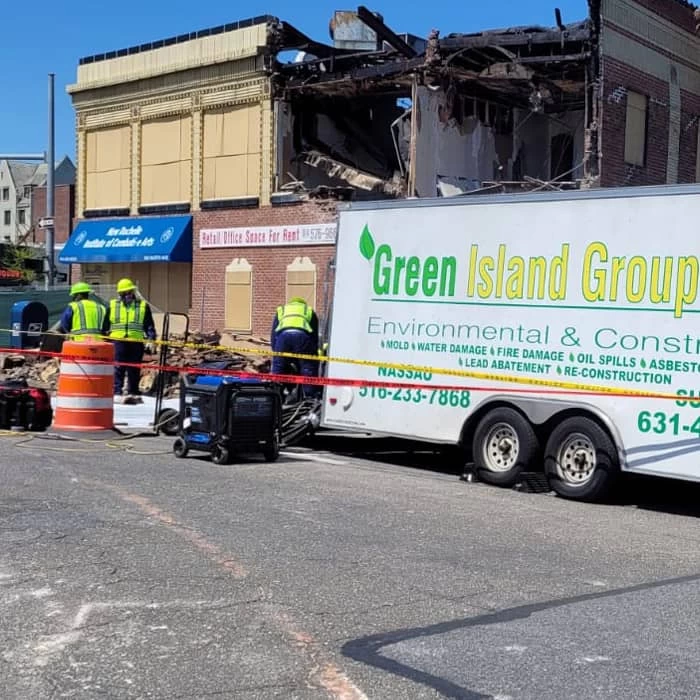
The first call triggers an emergency response. We move fast a real customer documented a sub-hour arrival time because the clock matters. Every hour after a fire, soot etches deeper into surfaces, smoke penetrates further into materials, and suppression water moves closer to becoming a mold problem. The sooner we’re on-site, the less total damage there is to reverse.
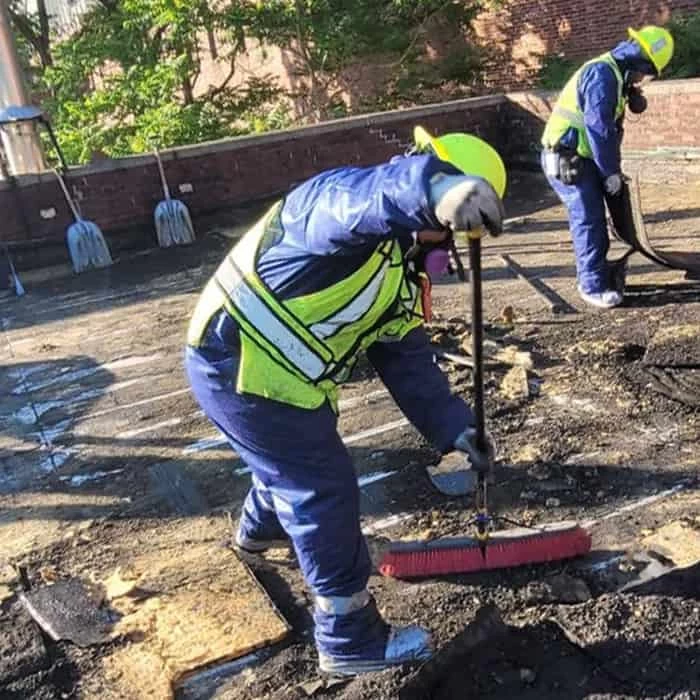
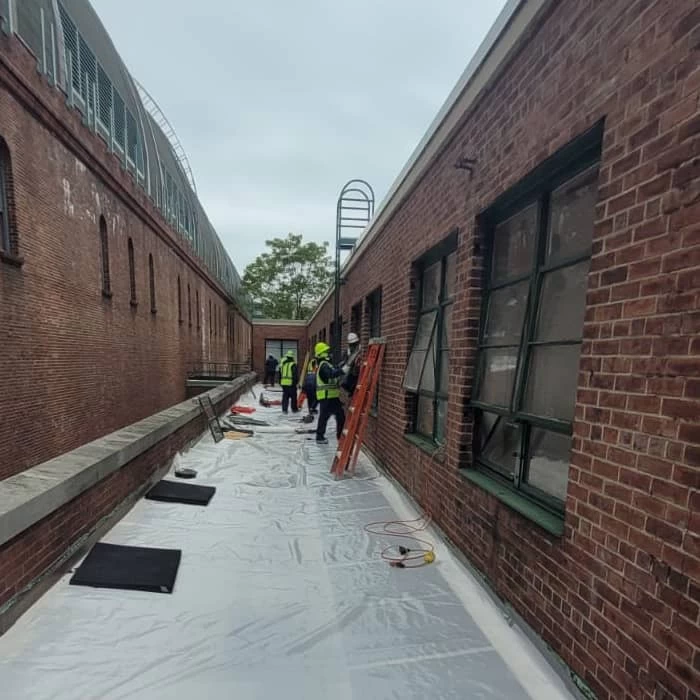
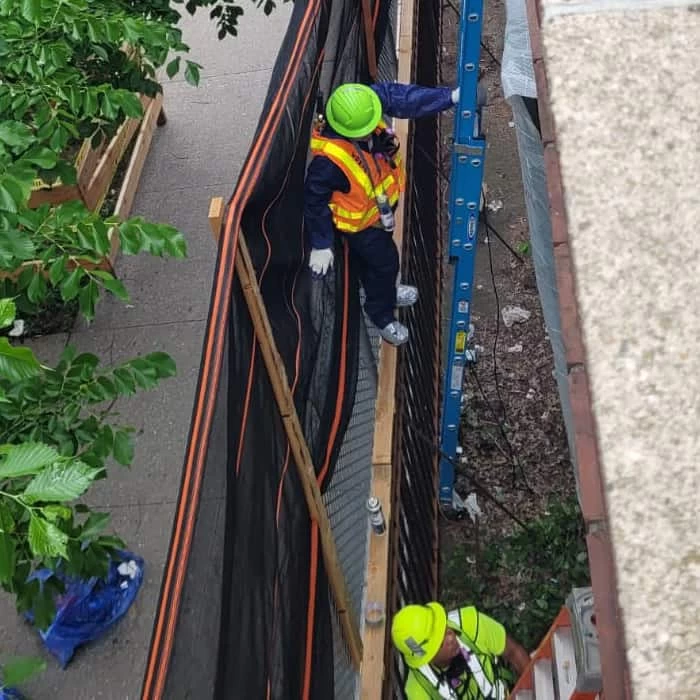
Once on-site, the priority is assessment and containment. That means identifying the full scope of damage visible and hidden and securing the property with board-up and tarping where needed. In Wyandanch’s post-war housing stock, this assessment includes checking for asbestos-containing materials before any demolition or cleaning begins. New York State requires NYSDOL-certified contractors to handle any asbestos abatement, and that work has to happen in the right sequence before the broader restoration can move forward. Skipping that step isn’t just dangerous it’s illegal.
From there, the process moves through water extraction and structural drying, smoke and soot remediation, odor elimination using HEPA air scrubbing and thermal fogging, and then into reconstruction. All permitted work is filed through the Town of Babylon’s Building Department, with licensed professionals handling electrical, plumbing, and structural repairs. When the job is done, it’s done right not just visually clean, but structurally sound and safe for your family.
Fire damage restoration isn’t one service it’s a sequence of connected work that has to happen in the right order. We cover the full sequence: emergency board-up and tarping, smoke and soot removal from surfaces and air systems, water extraction and structural drying from firefighting suppression, asbestos and environmental remediation where required, mold prevention, demolition of unsalvageable materials, full reconstruction, and final finishes. Nothing gets handed off to a second company mid-project.
For Wyandanch homes specifically, the environmental piece is non-negotiable. The majority of homes in this community were built before 1970, which means there’s a real likelihood of asbestos-containing materials in the floor tiles, insulation, roofing, or pipe wrap. We hold the environmental remediation certifications required under New York State law to legally handle this work. A contractor without those credentials cannot complete the job properly and attempting to do so creates a secondary hazard that puts your family at risk long after the fire is out.
The insurance side of this process gets just as much attention as the physical work. We’ve guided Wyandanch homeowners through the claim process documenting damage thoroughly, working with adjusters, and making sure the settlement reflects the full scope of what the fire caused. Multiple customers have specifically cited this insurance support as the reason they’d recommend us to a neighbor. When the insurance payout is the difference between full recovery and a financial shortfall, having someone in your corner who knows the process is worth a lot.
Not necessarily and the answer depends on more than just whether the flames are out. After a fire, structural integrity can be compromised in ways that aren’t visible from the outside. Smoke and soot leave behind toxic residue that coats surfaces and circulates through the air. In older Wyandanch homes built before 1970, there’s an additional concern: fire and firefighting water can disturb asbestos-containing materials in the insulation, floor tiles, or ceiling, releasing fibers into the air that are dangerous to breathe.
The safest approach is to wait for a professional assessment before re-entering. We can evaluate the structural condition of your home, identify any hazardous material concerns, and give you a clear picture of what’s safe and what needs to be addressed before your family goes back inside. Don’t rely on a visual check some of the most serious post-fire hazards are invisible.
How does fire damage affect homeowners insurance claims in Wyandanch?
Your homeowners insurance policy should cover fire damage restoration, but what you actually receive depends heavily on how the damage is documented and how the claim is filed. Insurance adjusters work from their own assessment of the damage, and that assessment doesn’t always capture the full scope especially hidden damage like smoke in the ductwork, water saturation in the subfloor, or asbestos disturbance in an older Wyandanch home.
In Wyandanch, where the median home value is approaching $400,000 and many families are depending on the insurance payout to cover the full cost of restoration, this gap matters. We work directly with adjusters, document damage using the same estimating tools insurers recognize, and advocate for a settlement that reflects what the fire actually caused not just what was visible on the day of the inspection. Multiple customers have specifically called out this insurance support in their reviews, and it’s one of the most consistent reasons Wyandanch homeowners recommend us to their neighbors.
Does fire damage restoration in older Long Island homes require asbestos removal?
In most cases, yes and it’s not optional. Homes built before 1980, which includes the majority of Wyandanch’s Cape Cod, hi-ranch, and colonial housing stock, commonly contain asbestos in floor tiles, insulation, ceiling materials, pipe wrap, and joint compound. When a fire damages these materials or when demolition is needed to complete the restoration those materials must be tested and, if positive, handled by a contractor certified by the New York State Department of Labor.
This is a legal requirement, not just a best practice. A restoration company that proceeds with demolition or cleaning without proper asbestos assessment is violating state law and potentially exposing your family to a serious health hazard. We hold the environmental remediation certifications required to handle this work legally and safely, and the asbestos assessment is built into the restoration process not treated as an afterthought or an add-on.
How long does fire damage restoration typically take in Wyandanch?
The honest answer is that it depends on the scope of damage, but most residential fire restorations in Wyandanch fall somewhere between two weeks and several months. A contained kitchen fire with limited smoke spread and no structural damage can be resolved relatively quickly. A fire that spread to the attic, disturbed asbestos-containing materials, or left significant water damage from suppression efforts will take longer because each phase of the work has to be completed in sequence before the next one can begin.
In Wyandanch specifically, the permitting process through the Town of Babylon’s Building Department adds a timeline factor for structural, electrical, and plumbing work. Licensed contractors are required for all permitted work, and inspections have to be scheduled and passed before certain phases can advance. We manage this permitting process as part of the job you don’t have to track it yourself or worry about a failed inspection delaying your return home.
What's the difference between smoke damage and soot damage after a house fire?
They’re related but not the same thing, and they require different approaches to clean up properly. Soot is the physical black residue left behind by incomplete combustion it settles on surfaces and begins permanently etching into porous materials like drywall, wood, and fabric within 24 to 72 hours. Smoke is the gaseous byproduct of the fire, and it travels through HVAC systems, into wall cavities, and through gaps in framing reaching parts of the home that were never near the fire itself.
In a Wyandanch home where the HVAC system runs through older ductwork, smoke can contaminate every room in the house within minutes of a fire starting. Surface cleaning alone won’t resolve it. Effective smoke damage restoration requires HEPA air scrubbing, thermal fogging to neutralize odor molecules at the source, and ductwork treatment to clear the system. We address both the visible soot and the invisible smoke because treating only what you can see leaves the underlying problem unresolved.
Can a neighbor's house fire cause smoke damage to my Wyandanch home?
Yes, and it happens more often than most people realize. Wyandanch’s post-war suburban neighborhoods were built with homes in close proximity to each other, and a significant structure fire on one property can push smoke, soot, and airborne particulates into adjacent homes through windows, vents, and gaps in the building envelope. Even if your home never caught fire, you may have smoke residue in your ductwork, on surfaces, or embedded in soft goods like furniture and curtains.
If a fire occurred near your home on a street like Cumberbach Street, Venedia Drive, or anywhere in a densely built Wyandanch neighborhood, it’s worth having a professional assessment done especially if you’re noticing persistent odor or your family is experiencing respiratory irritation. This type of secondary smoke damage is often covered under your homeowners insurance policy, and we can help document it and guide you through the claim process the same way we would for a direct fire loss.