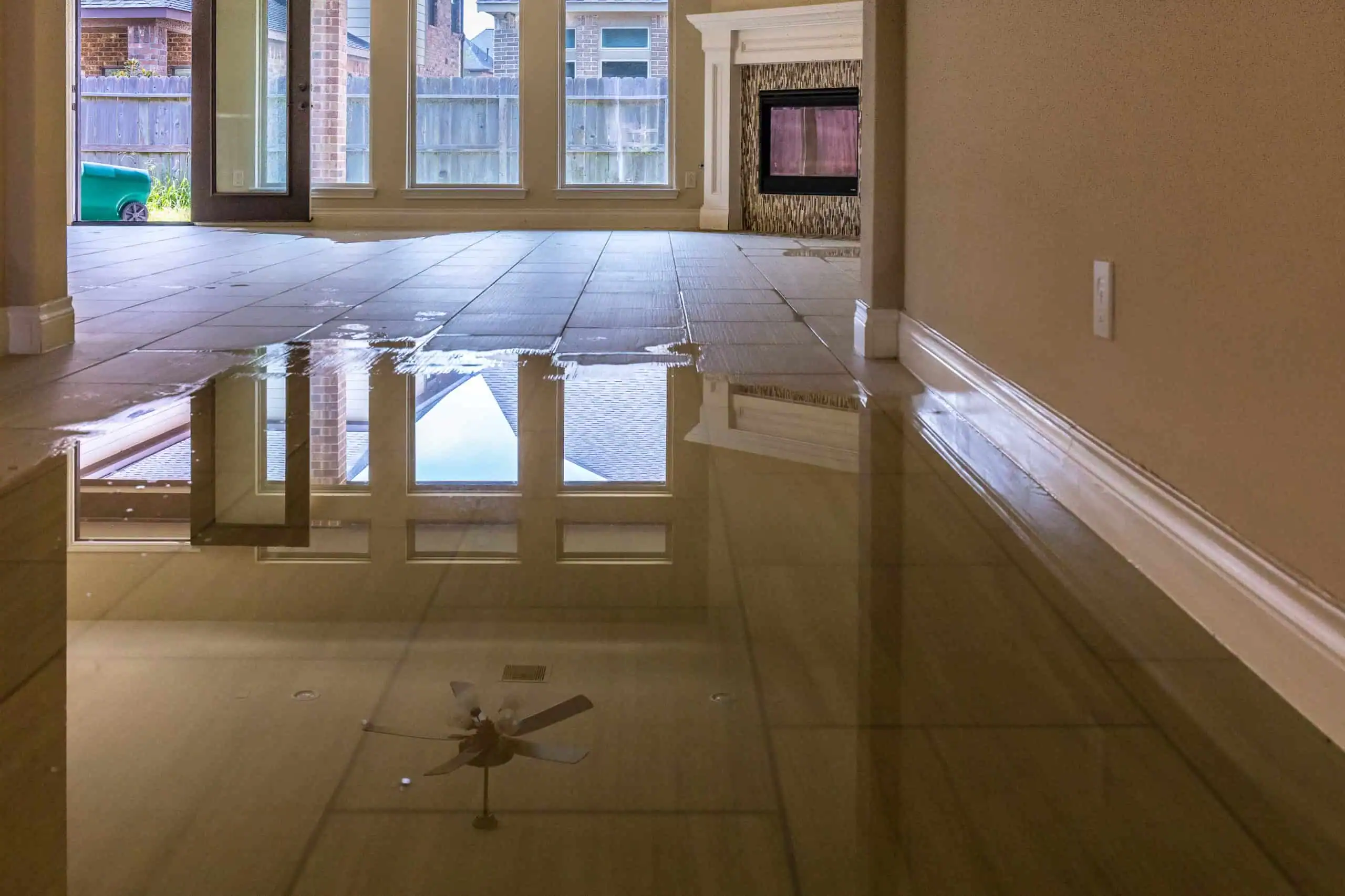
When Your Bardonia Home Floods, We're There in 60 Minutes
We’re on-site in 60 minutes, bill your insurance directly, and handle everything from water extraction to finished walls — so you’re not managing five contractors while your basement is still wet. In Bardonia, where summer storms can overwhelm residential drainage systems and groundwater seeps through foundation walls built decades ago, speed and completeness aren’t luxuries. They’re the difference between a home that’s truly restored and one that’s just cosmetically dry.
I needed a professional consultation explanation of procedure for safe removal of Asbestos in my apartment complex. Without having an account yet, I was very impressed with the caring, knowledgeable and generous advice offered by Jessica, and will look forward to doing business in the future. Thank you so much! I feel much more informed about a sometimes scary endeavor. Peace. Nancy Silva Mineola, NY.
Mia Munoz
Used this company to clean up some water flood in my house. They were fast and easy to work with.very professional, Would recommend to anyone!
Nini Valle
Great company, had a flood and they responded quickly and efficiently. Billed my insurance company directly. I highly recommend this company!
joe colapietro, jr
I had pipe freeze in my basement right before a snow storm and they made to within an hour to help start the clean up process. They we by our side throughout the entire process and even helped with the insurance company. They did such a great job with the cleanup, repair, remidiation, I contracted them to perform the repairs and finishes in the basement. They came with enough manpower and material to get the job done. Leo and Jessica were nothing but a pleasure to deal with!!
Cristian Arredondo c
I had some water damage in my home and Green Island was able to take care of my issue quickly and effectively. I am very pleased with the work they did. They responded quickly and were very professional.
Michael M
Outstanding service! From the office to the field crew everyone was friendly, helpful and responsive. I highly recommend Green Island Group.
Your Bardonia Home Restored Before the Mold Clock Runs Out
Mold can start growing within 24 hours of a flood. In Bardonia, where roughly 78% of the housing stock was built before 1980, that timeline is even more unforgiving. Older wood framing, aging insulation, and original drywall absorb water fast and hold it longer than modern materials. By the time you’ve mopped up what’s visible, there’s often moisture sitting behind walls and under floors that you can’t see and a shop vac won’t reach.
What you actually get out of a proper flood restoration isn’t just a dry basement — it’s the confidence that nothing was missed. No hidden moisture left to feed mold growth behind your walls. No guessing about whether the structure is compromised. No second contractor showing up three months later to deal with what the first one didn’t catch.
Bardonia sits right in the path of the kind of storms Rockland County sees every summer. In July 2023, the Town of Clarkstown took over five inches of rain in five hours. That event alone triggered road closures, vehicle rescues, and a Governor’s State of Emergency. If your home was affected then — or the next time a storm like that rolls through — you need a restoration that’s complete, not just cosmetically dry.
Licensed for What's Actually Behind Your Bardonia Home's Walls
We’ve been doing environmental restoration work across New York for over 12 years. That’s not a number we throw out to sound established — it means we’ve worked through enough Rockland County storm seasons to know exactly what flood damage looks like in a pre-1980 Bardonia home, and what it takes to fix it correctly.
We hold the NYS DOL Mold license, the NYS DOL Asbestos license, USEPA Lead and RRP certifications, and we’re NYS and NYC M/WBE Certified. That licensing stack matters in Bardonia specifically because homes near Germonds Park and the Lake DeForest watershed — many built in the 1960s and 70s — frequently contain asbestos in floor tiles, pipe insulation, and joint compound. When a flood disturbs those materials, you need a contractor who’s legally authorized to handle them, not one who ignores them and moves on.
We’re fully insured, carry Workers’ Compensation, and we bill your insurance carrier directly. You don’t pay out of pocket to get us there.
From the First Call to a Fully Restored Bardonia Home
When you call, we’re moving. Our 60-minute on-site response isn’t a window — it’s a commitment. The moment we arrive, we assess the full scope of the damage, not just what’s visible on the surface. We use thermal imaging and industrial moisture detection equipment to find saturation inside wall cavities, under flooring, and in areas that look dry but aren’t. In Bardonia’s older housing stock, that step isn’t optional — it’s where most of the real damage hides.
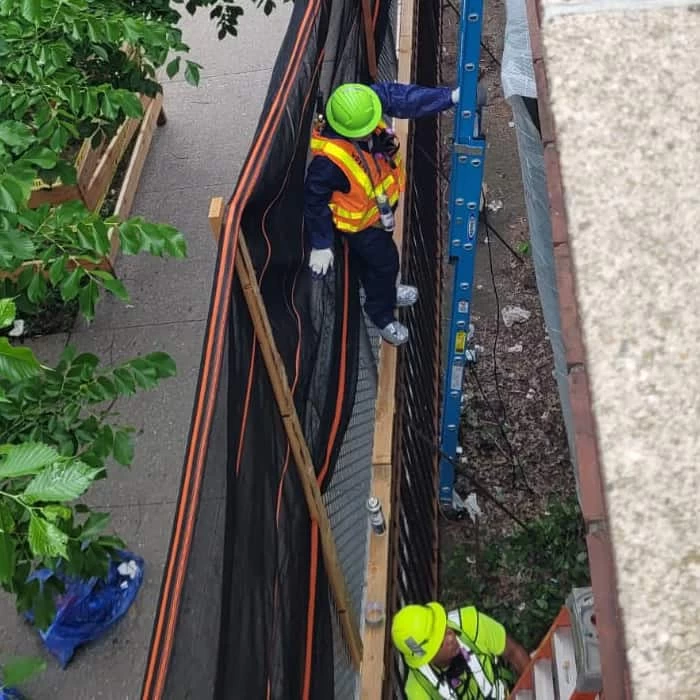
Once we know what we’re dealing with, we extract standing water, set up commercial-grade drying equipment, and begin the process of bringing your home back to a safe moisture level. If the assessment turns up asbestos-containing materials or lead paint — which is common in homes built before 1978 — we handle that in-house under our NYS DOL Asbestos and USEPA Lead certifications. No stopping the job to bring in a separate abatement contractor. No delays while you coordinate between companies.
From there, we move into structural repairs — drywall, flooring, framing, whatever the damage requires. Any work that triggers a Clarkstown building permit gets handled properly, because cutting corners on permit requirements is how a restoration job becomes a liability down the road. By the time we’re done, your home isn’t just dry. It’s documented, restored, and ready.
Flood restoration in Bardonia isn’t a single service — it’s a sequence of specialized work that has to be done in the right order by people who are licensed to do all of it. We cover the full scope: emergency water extraction, structural drying, mold remediation, asbestos abatement, lead-safe repair work, drywall and flooring replacement, and final reconstruction. You’re not handed off between companies at each stage. One team handles it start to finish.
That matters a lot in a community where the average home is worth close to $700,000 and most of the housing stock is decades old. The drainage patterns around the Lake DeForest watershed, the impervious surfaces along the Thruway corridor, and the groundwater conditions in lower-lying parts of Bardonia all contribute to the kind of flooding that doesn’t just wet your floor — it saturates your structure. Sump pump failures during power outages, stormwater backing up through floor drains, and slow seepage through foundation walls are all scenarios we handle regularly in this area.
If your insurance covers the damage, we bill them directly — no upfront cost to you. If coverage falls short or doesn’t apply, we offer financing up to $200,000 at 0% APR. No other restoration company serving Bardonia offers that. Whatever the financial situation, the answer isn’t to delay — because in a flooded home, every hour of waiting costs more than the last.
How quickly does mold start growing after a basement floods in Bardonia?
Mold can begin developing within 24 hours of water contact — and in some conditions, you’ll see visible growth within 48 hours. That timeline is especially tight in Bardonia’s older homes, where wall cavities are often filled with fiberglass batt insulation that holds moisture for days after the visible water is gone. Wood framing from the 1960s and 70s, which makes up a significant portion of the housing stock in this area, is particularly absorbent and gives mold exactly the environment it needs to take hold.
The other factor that speeds things up is temperature. During Rockland County’s summer storm season — when events like the July 2023 flooding hit Clarkstown — basements are warm and humid, which accelerates mold growth considerably. Professional extraction and drying equipment removes moisture at a rate that household fans and dehumidifiers simply can’t match, and it’s the only way to reliably stop mold before it starts.
Does homeowners insurance cover flood damage from a storm in Bardonia, NY?
It depends on the source of the water, and that distinction matters more than most people realize. Standard homeowners insurance typically covers sudden and accidental water damage — like a burst pipe or an appliance failure — but it usually excludes flooding caused by surface water, storm runoff, or groundwater intrusion. In Bardonia, where summer storms can drop five inches of rain in a few hours and overwhelm residential drainage systems, that exclusion catches a lot of homeowners off guard.
Flood insurance through the National Flood Insurance Program (NFIP) is a separate policy that covers storm-related flooding, but there’s a 30-day waiting period before it takes effect — so it can’t be purchased reactively. If you’re not sure what your current policy covers, the best move is to call your carrier and ask specifically about “surface water flooding” and “groundwater intrusion.” We work directly with insurance carriers and can help document your claim accurately from the start, which makes a real difference in how the claim is processed and what you ultimately receive.
What's the difference between water damage restoration and flood restoration?
Water damage restoration is a broad term that covers cleanup and repair from any water intrusion — leaking pipes, appliance failures, roof leaks, and similar sources. Flood restoration specifically refers to damage caused by flooding, which almost always involves what the industry classifies as Category 3 water — meaning the water has been in contact with soil, sewage systems, or stormwater infrastructure and is considered contaminated. That classification changes the entire scope of the work.
With Category 3 water, you’re not just drying things out. Porous materials that absorbed the water — drywall, insulation, carpeting, wood framing — typically need to be removed rather than dried in place, because contaminated water saturates them in ways that can’t be fully remediated without removal. In Bardonia, where storm flooding often involves runoff from the Thruway corridor and drainage systems connected to the Lake DeForest watershed, the water entering a flooded basement is rarely clean. That’s why flood restoration requires a higher level of licensing, more protective protocols, and a more thorough remediation process than a standard water damage job.
My Bardonia home was built in the 1970s — does that affect the restoration process?
Yes, significantly. Homes built before 1980 in Bardonia — and that’s the majority of the housing stock here — frequently contain asbestos in floor tiles, pipe insulation, textured ceilings, joint compound, and roofing materials. Homes built before 1978 are also presumed to contain lead-based paint under EPA regulations. When a flood damages these homes and restoration work begins, there’s a real chance that demolition and repair activities will disturb those materials.
Under New York State law, any company performing mold remediation must hold a NYS DOL Mold license. Asbestos abatement requires a separate NYS DOL Asbestos license and pre-notification to the Department of Environmental Protection before work begins. Lead-related work in pre-1978 homes requires USEPA Lead and RRP certification. We hold all of these credentials. If you hire a contractor who doesn’t — even if they’re cheaper or faster to respond — you’re taking on a health and legal liability that can follow you long after the restoration is done. In a home worth close to $700,000, that’s not a risk worth taking.
How much does flood restoration typically cost, and what affects the final price?
The range is wide because the variables are significant. A straightforward water extraction and drying job in a finished basement might fall in the $1,500 to $4,000 range. Once you add structural repairs, mold remediation, or the removal of contaminated materials, costs can climb to $10,000 or more — and complex jobs involving asbestos abatement or extensive reconstruction can go higher. The national average insurance payout for water damage claims is around $13,954, which gives you a rough sense of what insurers expect these jobs to cost.
In Bardonia specifically, a few factors tend to push costs upward: the age of the housing stock (older materials are more expensive to remediate safely), the likelihood of encountering asbestos or lead during demolition, and the fact that storm flooding involves Category 3 contaminated water, which requires more thorough removal protocols than clean-water events. We bill insurance directly, so the cost conversation starts with your carrier, not your checking account. For anything not covered, financing up to $200,000 at 0% APR is available.
How do I know if my basement is fully dry after a flood, or if moisture is still hiding inside the walls?
You can’t tell by looking — and that’s the core problem with relying on visual inspection alone. A basement can appear completely dry within a day or two of a flood while wall cavities, subfloor assemblies, and insulation remain saturated for weeks. In Bardonia’s older homes, the combination of fiberglass batt insulation, original drywall, and wood framing creates a moisture-trapping environment that holds water long after the surface feels dry to the touch.
We use thermal imaging cameras and calibrated moisture meters to detect saturation inside structural components without tearing into walls unnecessarily. These tools identify exactly where moisture is concentrated, which allows for targeted drying rather than guesswork. Industry standards — specifically the IICRC S500 — define the moisture thresholds that materials need to reach before a structure is considered properly dry. We follow those standards and document the readings throughout the drying process, so you have a verifiable record that the job was completed correctly. That documentation also matters for insurance purposes and for protecting your home’s resale value down the road.