Bedford's Historic Homes Deserve More Than a Shop Vac
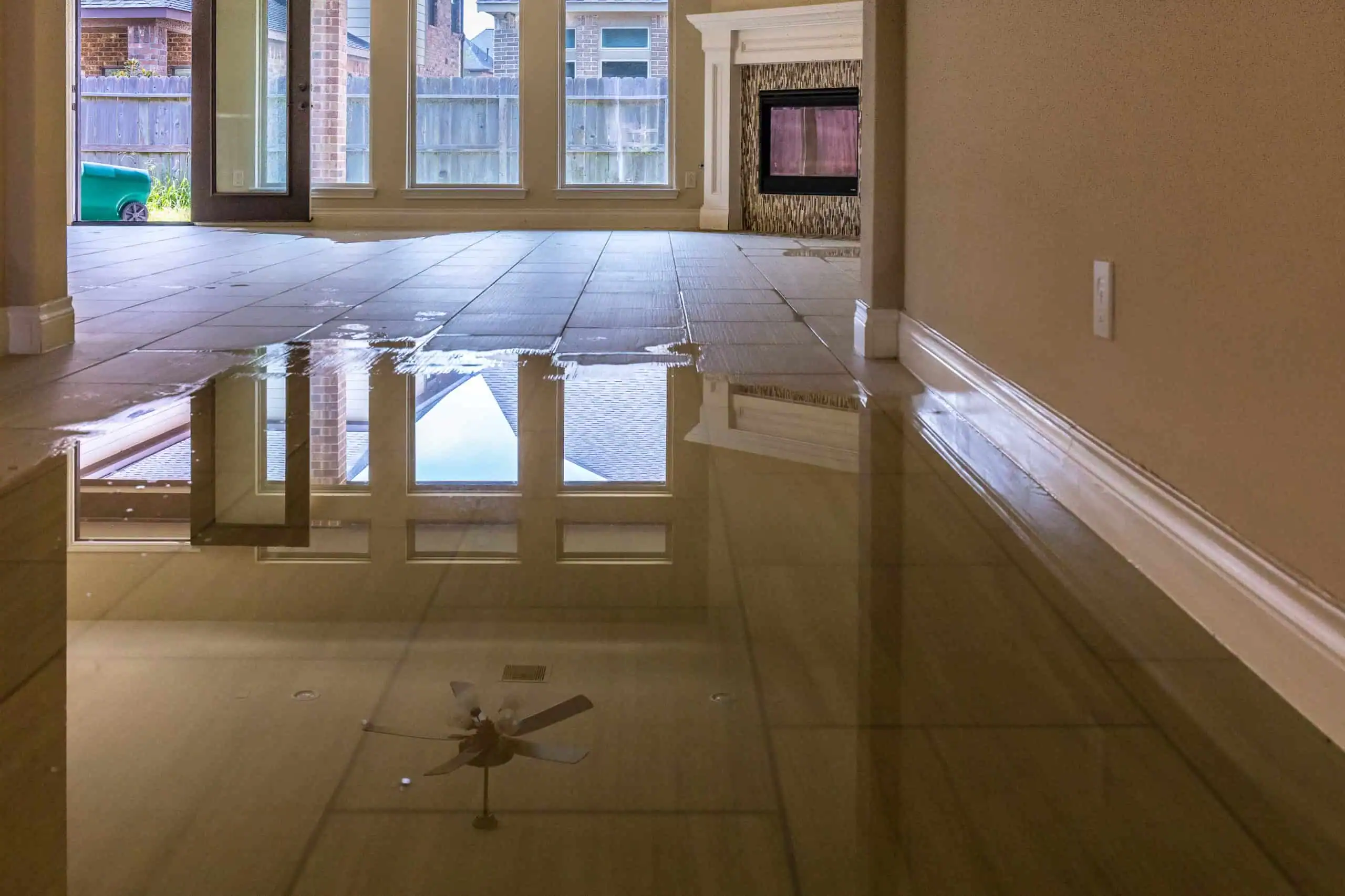
When water gets into a Bedford property — whether it’s a colonial-era estate off Route 22 or a farmhouse near the Mianus River corridor — the clock starts immediately. We’re on-site within 60 minutes, handle your insurance claim directly, and carry every license required to restore a home this old the right way.
I needed a professional consultation explanation of procedure for safe removal of Asbestos in my apartment complex. Without having an account yet, I was very impressed with the caring, knowledgeable and generous advice offered by Jessica, and will look forward to doing business in the future. Thank you so much! I feel much more informed about a sometimes scary endeavor. Peace. Nancy Silva Mineola, NY.
Mia Munoz
Used this company to clean up some water flood in my house. They were fast and easy to work with.very professional, Would recommend to anyone!
Nini Valle
Great company, had a flood and they responded quickly and efficiently. Billed my insurance company directly. I highly recommend this company!
joe colapietro, jr
I had pipe freeze in my basement right before a snow storm and they made to within an hour to help start the clean up process. They we by our side throughout the entire process and even helped with the insurance company. They did such a great job with the cleanup, repair, remidiation, I contracted them to perform the repairs and finishes in the basement. They came with enough manpower and material to get the job done. Leo and Jessica were nothing but a pleasure to deal with!!
Cristian Arredondo c
I had some water damage in my home and Green Island was able to take care of my issue quickly and effectively. I am very pleased with the work they did. They responded quickly and were very professional.
Michael M
Outstanding service! From the office to the field crew everyone was friendly, helpful and responsive. I highly recommend Green Island Group.
Bedford isn’t a town of tract homes. The properties here have original wide-plank floors, plaster walls, stone foundations, and in many cases, materials that haven’t been touched since before World War II. When flood water reaches those materials, the damage isn’t just surface-level — it moves into wall cavities, beneath original flooring, and through the porous stone that makes up so many foundations in this part of northern Westchester. Industrial moisture meters and thermal imaging locate what a visual inspection will miss.
What you’re left with after a proper restoration is a home that’s actually dry — not just visually dry. No hidden moisture sitting behind plaster waiting to feed mold six months from now. No corners cut on asbestos or lead just because it slowed the job down. In a town where the median home value is over $1.3 million, the cost of a failed remediation isn’t an inconvenience — it’s a serious financial and structural threat.
The Mianus River runs directly through Bedford Village, and properties along that corridor face a specific kind of flooding that comes from below as much as above. When the water table rises during a heavy storm, it saturates foundations from the ground up. That’s a different problem than a burst pipe, and it requires a different approach — one that starts with understanding what actually caused the water intrusion before deciding how to dry it out.
12 Years, 5,000 Projects, Every License That Matters
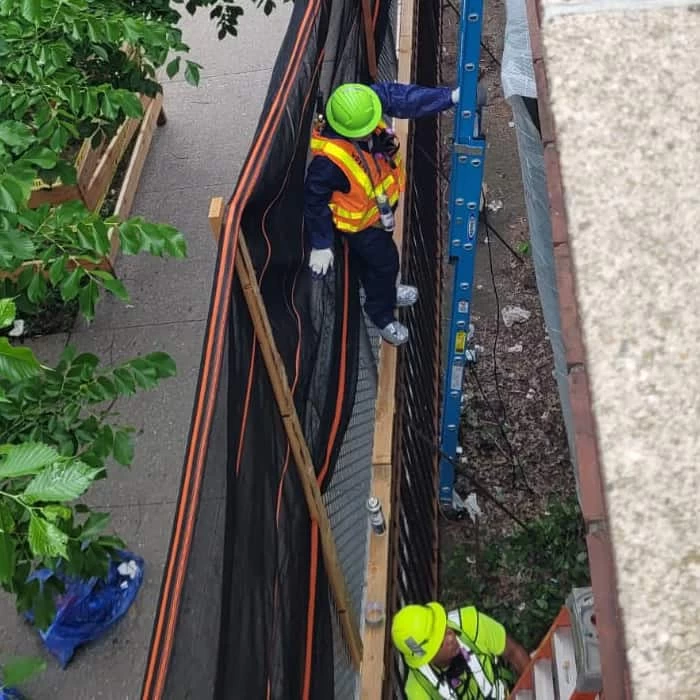
We’ve been doing environmental restoration work across New York State for over 12 years. More than 5,000 completed projects. Fully insured — liability and workers’ compensation both. And a credential stack that’s directly relevant to the kind of homes that exist in Bedford: NYS DOL Mold License, NYS DOL Asbestos License, USEPA Lead Certification, USEPA RRP Certification, and IICRC Water Damage Certification.
That last part matters more here than it does in most towns. Bedford’s housing stock — particularly in Bedford Village and along the older corridors near Katonah — includes a significant number of pre-1940 structures where asbestos and lead paint aren’t a remote possibility, they’re a near-certainty. Any contractor who doesn’t hold those licenses isn’t just cutting corners — they’re operating outside New York State law the moment they disturb those materials.
We’re also a certified NYS and NYC M/WBE contractor and an approved vendor for the NYS Office of General Services. That means the State of New York has vetted our company. Your insurance adjuster and your attorney will know what that means.
From Standing Water to Structurally Dry — Here's the Process
The first call triggers a 60-minute on-site response. When we arrive, the priority is stopping the damage from spreading — that means industrial water extraction, identifying the water source, and getting the right containment in place before anything else. In Bedford homes with stone foundations and original plaster, this first phase is more involved than it is in modern construction. Water doesn’t behave the same way in a 19th-century farmhouse as it does in a 2005 subdivision build.
Once extraction is complete, the drying phase begins — and this is where most contractors fall short. We use thermal imaging cameras and calibrated moisture meters to locate saturation that has no visible sign. Inside wall cavities. Under original hardwood. Behind stone. Industrial air movers and dehumidifiers are placed based on what the equipment actually shows, not where the water looked worst. Every reading is documented throughout the drying process.
If the scope involves mold, asbestos, or lead — which it frequently does in homes of this age — we handle those in-house under the appropriate state and federal licenses, not subcontracted out to a third party. Once the structure is confirmed dry and any hazardous materials have been addressed, reconstruction begins. One company, one point of contact, start to finish. Bedford’s Town of Flood Damage Prevention ordinance (Chapter 62) governs structural work in designated flood hazard areas, and we address all permitting requirements as part of the process.
Flood restoration in Bedford covers a wider range of work than most homeowners expect when they first make the call. Water extraction and structural drying are the starting point, but in a town where a large portion of the housing stock predates 1978, the job almost always involves more. Asbestos-containing materials — pipe insulation, floor tiles, ceiling tiles, roofing compounds — were standard in homes built before 1980. Lead paint was standard before 1978. When flood water disturbs those materials, New York State law requires a licensed contractor to handle them. We hold both the NYS DOL Asbestos License and the USEPA Lead/RRP Certification to do exactly that.
Mold is the other piece that Bedford homeowners consistently underestimate. In a home with plaster walls, original wood framing, and stone foundation — all of which are highly porous — mold can establish itself within 24 hours of a flood event. We hold the NYS DOL Mold License required by state law for all mold remediation work, and mold prevention is built into the drying phase, not added as an afterthought after visible growth appears.
For homeowners whose standard insurance policy doesn’t cover flood damage — which is more common than most people realize — we offer financing up to $200,000 at 0% APR. Insurance claims are billed directly, with no upfront costs to you. Whether the source is a Mianus River overflow, a saturated septic field, a burst pipe in an uninsulated carriage house, or a Category 3 sewage backup, we handle the scope completely — extraction, drying, hazmat, and full reconstruction.
How quickly does mold start growing after a flood in an older Bedford home?
Mold can begin developing within 24 hours of a flood event — and in a Bedford home with plaster walls, original wood framing, and stone foundation, it has far more porous surface area to colonize than it would in a modern build. The materials that give these homes their character are the same ones that hold moisture longest and give mold the conditions it needs to establish quickly.
That’s why the drying process matters as much as the extraction. Pulling standing water out of a basement is the easy part. Finding the moisture that has wicked into a plaster wall or settled beneath original hardwood flooring — and actually eliminating it before mold takes hold — requires thermal imaging and calibrated moisture meters, not a visual check and a few fans. The goal isn’t to make the home look dry. It’s to confirm it is dry, with documentation to back it up.
Does my homeowner's insurance cover flood damage from a storm in Bedford, NY?
Standard homeowner’s insurance policies typically exclude flood damage caused by weather events — rising groundwater, storm surge, and overland flooding are not the same as a burst pipe or an appliance leak in the eyes of most insurers. Separate flood insurance through FEMA’s National Flood Insurance Program or a private carrier is required to cover those events. Bedford has formally mapped Special Flood Hazard Areas under FEMA Community Number 360903, and properties in those zones — particularly along the Mianus River corridor — are most likely to carry flood coverage.
If you’re unsure what your policy covers, we can help you document the damage thoroughly and communicate directly with your carrier during the claims process. For situations where coverage falls short or doesn’t apply, we offer financing up to $200,000 at 0% APR so that a gap in your policy doesn’t mean a gap in your restoration.
Does flood restoration in a pre-1978 Bedford home require asbestos or lead testing?
In most cases, yes — and this is one of the most important questions to ask any contractor before work begins. Homes built before 1978 commonly contain lead paint, and homes built before 1980 frequently contain asbestos in pipe insulation, floor tiles, ceiling tiles, roofing materials, and joint compound. Bedford’s housing inventory includes a significant number of pre-war and colonial-era structures where both materials are present.
When flood water disturbs those materials — or when the restoration process requires opening walls, removing flooring, or cutting into mechanical systems — New York State law requires a licensed contractor to test and, if necessary, abate them. Asbestos abatement requires a NYS DOL Asbestos License and advance notification to the relevant regulatory authority. Lead paint disturbance requires USEPA RRP Certification. A contractor who doesn’t hold those licenses cannot legally complete a full restoration in most Bedford homes. We hold both, along with the NYS DOL Mold License — all three credentials under one roof.
Can you handle the insurance claim directly so I don't have to manage it myself?
Yes. We bill your insurance carrier directly and handle the documentation and communication throughout the claims process. You don’t need to learn adjuster terminology or figure out how to present a scope of loss during the most stressful week of the year. We document the damage thoroughly from the moment we arrive — moisture readings, thermal imaging results, photographic records, and a detailed scope of work — and submit that to your carrier on your behalf.
This matters particularly in Bedford, where high-value homeowner’s policies and separate flood insurance riders are common, and where the scope of a restoration often extends beyond what a standard adjuster initially expects. Historic materials, multi-building properties, and complex structural systems require thorough documentation to ensure the full scope is covered. Having a contractor who has done this thousands of times across New York State in your corner makes a real difference in the outcome.
Why does my Bedford basement keep flooding even after it's been dried out before?
In many Bedford properties, the issue isn’t just the water that came in — it’s the pathway it used to get there. Stone foundations, which are common throughout Bedford Village and the older estate areas of the town, are not waterproof. They allow groundwater to seep through, especially when the water table rises during heavy rain events. Properties near the Mianus River corridor face this particularly acutely — when the river rises, so does the surrounding groundwater, and that pressure works against the foundation from the outside in.
If a previous restoration only addressed the visible water without identifying and documenting the source, the conditions that caused the flooding are still in place. A proper assessment includes not just drying the space but identifying whether the intrusion is coming from above-grade water entry, groundwater table rise, drainage failure, or septic system saturation — each of which has a different solution. Getting the diagnosis right the first time is what prevents the second call.
How does flood restoration work for equestrian properties and multi-building estates in Bedford?
Bedford has over 130 miles of equestrian trails and a significant number of working horse farms and multi-building estates — properties that include carriage houses, barns, outbuildings, and guest structures in addition to the main residence. Flood events on these properties aren’t contained to one building, and the restoration scope reflects that. Each structure needs to be assessed independently, because moisture behaves differently in a stone carriage house than it does in a wood-frame barn or a finished basement in the main house.
We handle multi-structure properties as a single coordinated project — not a series of separate jobs handed off between different crews. Outbuildings on Bedford estates frequently have uninsulated crawl spaces, exposed plumbing, and minimal weatherproofing, making them particularly vulnerable to burst pipes in winter and groundwater intrusion in spring. The same licensing requirements apply across every structure on the property: if asbestos or lead materials are present in a carriage house built before 1980, they have to be handled properly regardless of how the building is used. One team, one scope, one standard of work across the entire property.