When the Saw Mill River Comes Inside, Here's What Happens Next
We respond in 60 minutes — handling everything from water extraction to full structural rebuild for Chappaqua homeowners with too much at stake to gamble on the wrong contractor.
I needed a professional consultation explanation of procedure for safe removal of Asbestos in my apartment complex. Without having an account yet, I was very impressed with the caring, knowledgeable and generous advice offered by Jessica, and will look forward to doing business in the future. Thank you so much! I feel much more informed about a sometimes scary endeavor. Peace. Nancy Silva Mineola, NY.
Mia Munoz
Used this company to clean up some water flood in my house. They were fast and easy to work with.very professional, Would recommend to anyone!
Nini Valle
Great company, had a flood and they responded quickly and efficiently. Billed my insurance company directly. I highly recommend this company!
joe colapietro, jr
I had pipe freeze in my basement right before a snow storm and they made to within an hour to help start the clean up process. They we by our side throughout the entire process and even helped with the insurance company. They did such a great job with the cleanup, repair, remidiation, I contracted them to perform the repairs and finishes in the basement. They came with enough manpower and material to get the job done. Leo and Jessica were nothing but a pleasure to deal with!!
Cristian Arredondo c
I had some water damage in my home and Green Island was able to take care of my issue quickly and effectively. I am very pleased with the work they did. They responded quickly and were very professional.
Michael M
Outstanding service! From the office to the field crew everyone was friendly, helpful and responsive. I highly recommend Green Island Group.
There’s a difference between a company that pulls water out and leaves, and one that actually sees the job through. In Chappaqua, where the average home was built in 1955 and a large portion of the housing stock predates 1950, flood damage rarely stops at wet drywall. It reaches pipe insulation, floor tiles, and wall materials that were installed decades before anyone regulated what went into them. The outcome you need isn’t just dry — it’s safe, documented, and structurally sound.
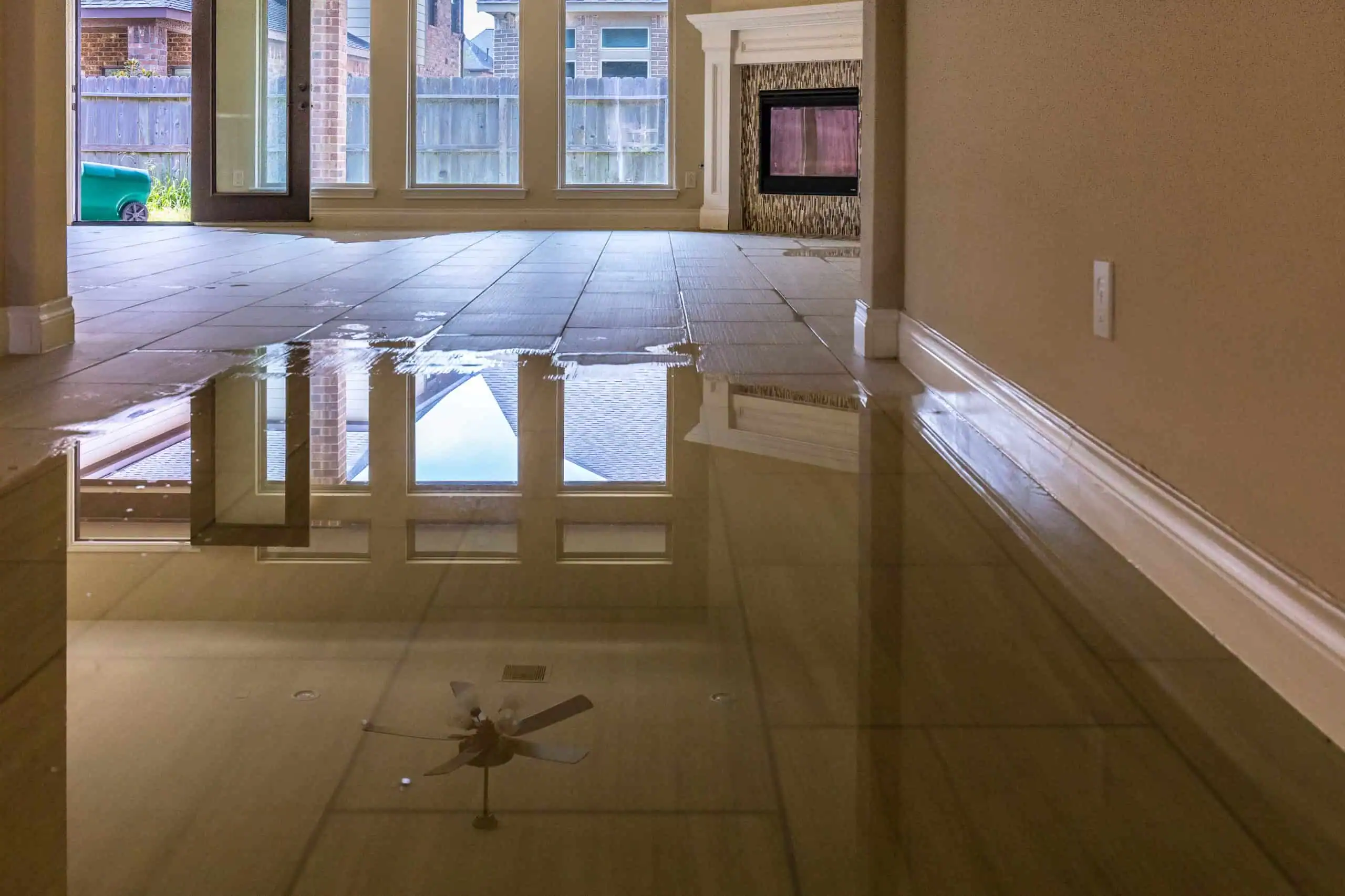
When the Saw Mill River backs up behind a property and the sewer system decides to follow suit — which has happened on more than one Chappaqua street during heavy storms — you’re not dealing with clean water. That’s a contamination event. And the restoration process has to reflect that. We carry the environmental licenses to handle what most water damage companies legally cannot, which means you don’t get halfway through a job only to be told a second contractor needs to come in.
For a home worth over a million dollars, the stakes of doing this wrong are real. Hidden moisture left inside walls becomes a mold problem that surfaces during a home inspection. A mold problem that wasn’t disclosed becomes a legal problem. The right outcome here isn’t just that your basement looks dry — it’s that your home is genuinely, verifiably restored, with moisture readings to back it up.
Every License That Chappaqua's Older Homes Actually Require
We’ve been doing environmental restoration work in New York for over 12 years and have completed more than 5,000 projects across the state, including properties throughout Westchester County and Chappaqua. We hold the full credential stack that flood restoration in this area demands: IICRC Water Damage certification, NYS DOL Mold License, NYS DOL Asbestos License, USEPA Lead and RRP certification, and NYS and NYC M/WBE certification. These aren’t supplementary credentials — in a community like Chappaqua, where nearly half the housing stock predates 1950, they’re the baseline for doing the job safely and legally.
We’re also an approved contractor with the NYS Office of General Services, fully insured with General Liability and Workers’ Compensation coverage, and we offer direct insurance billing alongside financing up to $200,000 at 0% APR. Whether you’re a few blocks from Horace Greeley High School or backing up to the Saw Mill River corridor, the process is the same: one company, full scope, no handoffs.
From the First Call to the Final Walkthrough — No Gaps
When you call, we’re on-site within 60 minutes. That window matters because mold can begin establishing in saturated materials within 24 hours — and in a finished basement or a home with original mid-century construction, that timeline moves fast. The first step on arrival is a full assessment using thermal imaging and industrial moisture detection equipment, not just a visual scan. Water hides inside walls, under subfloors, and in insulation long after the surface looks dry, and finding it early is what separates a drying job from a full mold remediation.
Once the scope is clear, extraction and drying equipment goes in immediately. Industrial air movers and dehumidifiers run continuously until moisture readings reach safe levels — not until the space looks dry. If the assessment turns up materials that require licensed abatement, whether that’s asbestos pipe insulation disturbed by the water event or lead paint on original woodwork, that work is handled in-house under our NYS DOL credentials. There’s no pause while you track down a separate contractor. The Town of New Castle Building Department requires permits for structural repairs and reconstruction, and we manage that process as part of the job.
After remediation, the rebuild phase covers whatever the water damaged — framing, drywall, insulation, flooring, and finish work — until the space is back to its pre-loss condition. Every job ends with documented moisture readings, not just a handshake. That documentation matters for your insurance carrier, and it matters if you ever sell.
Full Restoration Coverage Built for Chappaqua's Specific Risk Profile
Flood restoration in Chappaqua isn’t a single-service call. The Saw Mill River and Tertia Brook create a documented, recurring flood risk that the NYSDEC has maintained an active flood protection project for since 1981. The federal Army Corps of Engineers has been involved in this watershed. That’s not background information — it’s the reason some homes in this area have flooded more than once, and it’s why the restoration approach here has to account for more than a burst pipe scenario.
We provide emergency water extraction, industrial drying, thermal moisture detection, mold prevention and remediation, asbestos abatement where required, lead-safe work practices in pre-1978 homes, structural repairs, and full reconstruction including drywall, flooring, and finish work. For properties near the Saw Mill River corridor where a storm event can produce both surface water intrusion and sewage backup simultaneously, we also cover Category 3 black water contamination — the highest-risk classification, requiring licensed environmental handling that most general restoration companies are not equipped or certified to perform.
We handle insurance billing directly with your carrier, meaning you don’t pay upfront while the claim is in process. For situations where coverage falls short — which is common when flooding originates from a storm event rather than an internal pipe failure — financing up to $200,000 at 0% APR is available. Chappaqua homeowners dealing with a flood event shouldn’t have to choose between acting fast and managing the cost. Both are covered here.
Does homeowners insurance cover flooding from the Saw Mill River in Chappaqua?
This is one of the most important questions to get right before a flood event happens, not after. Standard homeowners insurance policies in New York generally cover sudden and accidental water damage from internal sources — a burst pipe, an overflowing appliance, a failed sump pump. What they typically do not cover is flooding caused by an external water source, including a river overflowing its banks. The Saw Mill River is an external source. If the river backs up into your yard and water enters your home as a result, that event is likely classified as a flood under your policy’s definitions, which means it falls under flood insurance — a separate policy administered through FEMA’s National Flood Insurance Program or a private carrier.
If you don’t carry a separate flood policy, you may be responsible for the full cost of restoration out of pocket. That’s a significant exposure for a Chappaqua property. We bill insurance directly and will work with your adjuster to document the scope accurately, but it’s worth reviewing your coverage now rather than at 11 PM during a storm. For uninsured or underinsured situations, the 0% APR financing option up to $200,000 exists specifically for this scenario.
How quickly does mold start growing after a basement flood in an older Chappaqua home?
Mold can begin to establish in wet organic materials — drywall, wood framing, insulation, carpet backing — within 24 hours of a flood event. In 48 hours, visible growth may appear. In a Chappaqua home built in the 1950s or earlier, those materials are often original, which means they’ve been absorbing moisture through foundation walls and seasonal humidity for decades before any flood event occurred. They’re already primed. A single water event in that kind of environment can accelerate mold growth faster than it would in a newer home with modern building materials.
This is why the 60-minute response time matters. The faster water is extracted and drying equipment is running, the smaller the window for mold to get started. But speed alone isn’t enough — the drying process has to be verified with moisture readings, not just visual inspection. Mold grows where you can’t see it: inside wall cavities, under subfloors, behind original plaster. We use thermal imaging to locate that hidden saturation before it becomes a remediation job on top of a restoration job.
My Chappaqua home was built in the 1950s — does flood damage mean I have an asbestos problem?
Not automatically, but the risk is real and worth taking seriously. Asbestos was commonly used in residential construction through the late 1970s — in pipe insulation, floor tiles, ceiling tiles, joint compound, and roofing materials. A home built in Chappaqua in the 1950s has a meaningful probability of containing asbestos in one or more of those locations. When a flood event saturates those materials — particularly pipe insulation in a basement mechanical room or original 9×9 floor tiles — it can disturb fibers that were previously stable and contained.
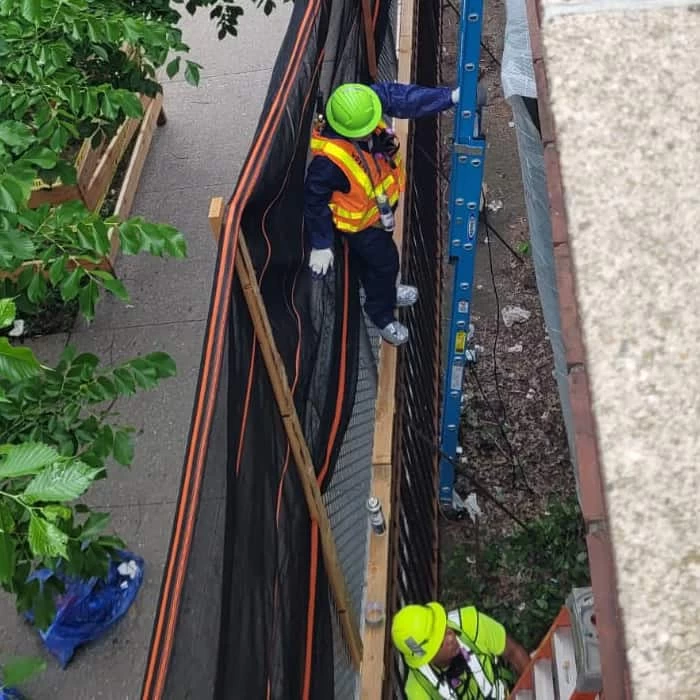
Disturbing asbestos without proper protocols is a health risk and a legal liability. New York State requires a licensed asbestos contractor for any abatement work, and that license is separate from a general contractor’s license or a mold remediation license. We hold the NYS DOL Asbestos Contractor License, which means if the restoration assessment turns up asbestos-containing materials, the work continues under the same company without stopping to locate and schedule a separate abatement contractor. That continuity matters both for the timeline and for the quality of the final result.
What's the difference between water damage restoration and flood restoration?
The terms get used interchangeably, but there’s a meaningful distinction in how the work is scoped and how insurance treats it. Water damage restoration typically refers to events caused by internal sources — a pipe that burst, a water heater that failed, a washing machine that overflowed. These are sudden, accidental events that standard homeowners policies generally cover. The water is usually clean or lightly contaminated, and the restoration process focuses on extraction, drying, and repair.
Flood restoration refers to events caused by external water intrusion — rising groundwater, storm runoff, a river overflowing. The water is often heavily contaminated, especially when it carries sewage from a backed-up municipal system, which has been documented in parts of Chappaqua during heavy rain events near the Saw Mill River corridor. The restoration process for a flood event is more complex: it requires contamination assessment, licensed handling of black water if present, more extensive material removal, and a longer drying and verification process. Insurance coverage is also handled differently, which is why understanding the source of the water matters from the first call.
Can I stay in my house while flood restoration is happening?
It depends on the scope of the damage and what the assessment turns up. For minor water events — a contained area, clean water source, no indication of mold or hazardous materials — staying in the home during restoration is often possible. The work is loud and disruptive, but it’s not necessarily unsafe. For more significant events, particularly those involving sewage backup, confirmed mold growth, or the need for asbestos abatement, temporary relocation is typically recommended and sometimes required by the abatement protocols themselves.
In Chappaqua, where a storm event can produce both river overflow and sewer backup simultaneously, the contamination level of the water matters a great deal. Category 3 black water — which includes sewage — carries bacteria and pathogens that make the affected area genuinely unsafe to occupy during cleanup. We’ll give you a clear assessment of what was found and what the safety implications are, so you can make an informed decision rather than guessing. Your insurance policy may also cover temporary housing costs during a displacement caused by a covered loss — worth checking with your carrier.
How do I know the flood restoration job was actually done correctly?
The honest answer is that you can’t tell by looking. A space can appear completely dry and still have moisture levels inside wall cavities or under flooring that will produce mold within weeks. This is one of the most common ways flood restoration jobs fail — not because the contractor was dishonest, but because visual inspection isn’t a reliable measure of dryness in older construction with original materials.
We document moisture readings throughout the drying process and provide a final verification report before the job is closed. That report shows the moisture levels at multiple points in the affected area, measured with calibrated equipment, not estimated by eye. This documentation serves two purposes: it confirms the work was done correctly, and it creates a paper trail that protects you if a moisture-related issue is ever raised during a future home inspection or insurance claim. In a community like Chappaqua, where homes sell at significant values and buyers conduct thorough due diligence, having that documentation on file is a practical protection for your property’s long-term value — not just a formality.