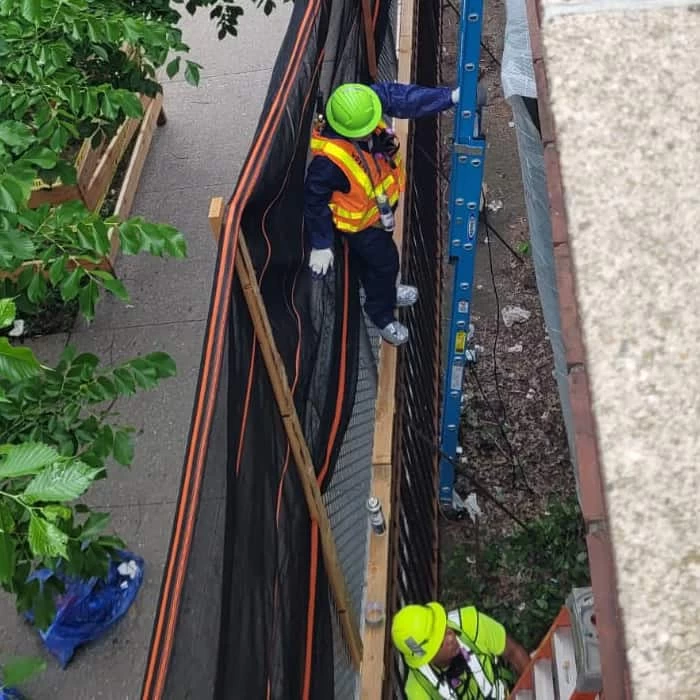
I needed a professional consultation explanation of procedure for safe removal of Asbestos in my apartment complex. Without having an account yet, I was very impressed with the caring, knowledgeable and generous advice offered by Jessica, and will look forward to doing business in the future. Thank you so much! I feel much more informed about a sometimes scary endeavor. Peace. Nancy Silva Mineola, NY.
Mia Munoz
Used this company to clean up some water flood in my house. They were fast and easy to work with.very professional, Would recommend to anyone!
Nini Valle
Great company, had a flood and they responded quickly and efficiently. Billed my insurance company directly. I highly recommend this company!
joe colapietro, jr
I had pipe freeze in my basement right before a snow storm and they made to within an hour to help start the clean up process. They we by our side throughout the entire process and even helped with the insurance company. They did such a great job with the cleanup, repair, remidiation, I contracted them to perform the repairs and finishes in the basement. They came with enough manpower and material to get the job done. Leo and Jessica were nothing but a pleasure to deal with!!
Cristian Arredondo c
I had some water damage in my home and Green Island was able to take care of my issue quickly and effectively. I am very pleased with the work they did. They responded quickly and were very professional.
Michael M
Outstanding service! From the office to the field crew everyone was friendly, helpful and responsive. I highly recommend Green Island Group.
Your New Hempstead Home Restored Before the Hidden Damage Wins
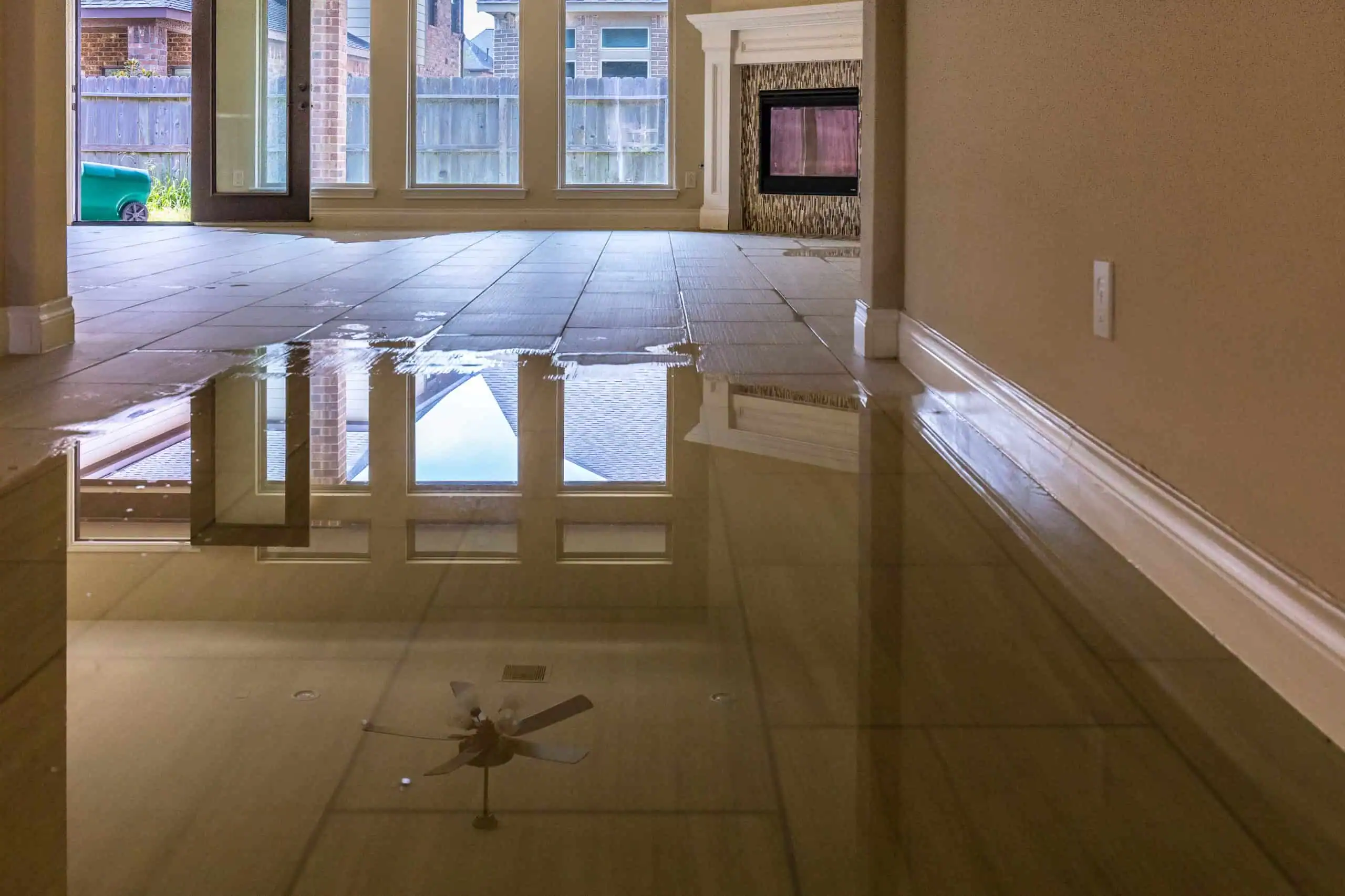
The water you can see is rarely the whole problem. After a flood event — whether it’s a spring sump pump failure during snowmelt season or a summer storm like the one that dropped up to eight inches of rain across Rockland County in July 2023 — moisture moves fast. It wicks into wall cavities, soaks into subfloor framing, and settles into insulation long before you notice anything on the surface. By the time visible mold appears, it’s already been growing for 24 to 48 hours.
New Hempstead homes face a specific combination of risks that most restoration companies aren’t equipped to handle in full. The clay-heavy soils throughout the Ramapo area drain slowly, which means water continues pressing against your foundation long after the rain stops. And if your home was built in the 1960s or 1970s — common in this village — there’s a real chance that flooded walls or floors contain asbestos-containing materials or lead paint that can’t legally be disturbed without a licensed abatement contractor on-site.
That’s where the difference between a complete restoration and a partial one becomes very clear. When every part of the job — water removal, structural drying, mold remediation, asbestos and lead abatement, and full reconstruction — is handled by one company under one roof, nothing falls through the cracks. You get your home back. Not most of it.
We’ve been completing environmental restoration work across New York State for over 12 years, with more than 5,000 projects behind us. We hold the IICRC Water Damage Certification, NYS DOL Mold License, NYS DOL Asbestos License, USEPA Lead and RRP certifications, and we’re NYS and NYC M/WBE Certified — credentials that are government-verified, not self-declared. We also work directly with the NYS Office of General Services, which means the State of New York has vetted and approved us for public infrastructure work.
We serve New Hempstead and the broader Town of Ramapo because we know this area. We understand the Ramapo River watershed flooding patterns, the drainage challenges that come with the region’s clay soils, and the permit environment that comes with working in an incorporated village within Ramapo’s jurisdiction. When you call us, you’re not getting a national franchise applying a generic checklist to your home. You’re getting a New York-based team that has handled exactly this kind of damage, in exactly this community, many times over.
From First Call to Final Walkthrough — Here's What Happens When You Call Us
When you call, we move. Our 60-minute on-site response guarantee means a trained crew with industrial-grade equipment arrives at your New Hempstead home before the damage has time to compound. The first thing we do is assess — not just what’s visible, but what isn’t. We use thermal imaging and moisture detection equipment to map every pocket of hidden saturation behind walls, under floors, and inside structural cavities. That documentation also goes directly to your insurance company, so the claim reflects the full scope of damage from the start.
Once we know what we’re dealing with, extraction and structural drying begin immediately. Industrial dehumidifiers and air movers are positioned based on the moisture map — not guesswork. If your home was built before 1980, we test for asbestos-containing materials and lead paint before any demolition work begins. This is a legal requirement in New York State, and it’s one that many contractors quietly skip. We don’t. If abatement is needed, we handle it in-house with our NYS DOL Asbestos License and USEPA Lead certifications — no waiting on a subcontractor, no gap in the timeline.
After drying is confirmed and any hazardous materials are properly handled, reconstruction begins. Drywall, flooring, insulation, finish work — all of it. We pull the necessary permits through the Village of New Hempstead and coordinate with the Town of Ramapo building department where required, so the work is code-compliant and your Certificate of Occupancy isn’t at risk. When we do a final walkthrough with you, the job is done. Not mostly done.
Everything the Flood Left Behind Gets Handled Here
Flood restoration in New Hempstead isn’t a single service — it’s a sequence of interconnected work that has to be done in the right order by people who are licensed to do all of it. We cover the full scope: emergency water extraction, structural drying, mold prevention and remediation, asbestos abatement, lead abatement, HVAC cleaning, and complete reconstruction including drywall, flooring, and finish work. That’s not a list of add-ons. It’s the actual job.
Storm floodwater is classified as Category 3 Black Water — the most contaminated category, carrying bacteria, sewage, and debris that require full protective protocols during cleanup. If your basement flooded during a Rockland County storm event, that water is not just water. It needs to be treated accordingly, and the surfaces it touched need to be properly cleaned, dried, and in some cases replaced. Our mold remediation work is performed under a valid NYS DOL Mold Contractor License — a state-issued credential that New York law requires for any company performing this work. Many companies operating in this market do not hold it.
For homeowners dealing with a major loss, we offer financing up to $200,000 at 0% APR — and we bill your insurance directly, handling the documentation and adjuster communication so you’re not stuck in the middle. The 100% Satisfaction Guarantee backs every job we complete. If something isn’t right, we make it right.
How fast does mold actually grow after a basement flood in New Hempstead?
Mold can begin growing within 24 hours of a flood event — and visible patches can appear within 24 to 48 hours. In New Hempstead specifically, the risk is compounded by the clay-heavy soils throughout the Ramapo area. Clay doesn’t drain quickly. After a heavy rain event — like the July 2023 storm that dropped up to eight inches across Rockland County and directly affected communities in the Town of Ramapo — moisture continues pressing against foundation walls and infiltrating basement spaces long after the storm passes. That sustained moisture exposure is exactly the kind of condition that accelerates mold growth behind walls and under floors, in places you won’t see until the damage is already significant. Speed of response is the single most important factor in preventing a water damage event from becoming a mold remediation job.
Does homeowners insurance cover flood damage to my New Hempstead home?
Standard homeowners insurance typically covers sudden and accidental water damage — like a burst pipe or an appliance failure — but it generally does not cover flooding from external storm water or rising groundwater. That type of coverage usually requires a separate flood insurance policy, often through the National Flood Insurance Program (NFIP).
That said, the line between what’s covered and what isn’t isn’t always obvious, and it often comes down to how the damage is documented and how the claim is submitted. We bill insurance companies directly and handle the documentation process on your behalf — including the moisture mapping and scope reports that adjusters need to evaluate a claim accurately. If you’re unsure what your policy covers, the best first step is to call us. We’ll assess the damage, document it properly, and work with your insurer to make sure the full scope of the loss is represented in your claim. The average insurance payout for water damage nationally runs around $13,954 — but that number depends heavily on how well the claim is supported from the start.
My New Hempstead home was built in the 1970s — does that affect the restoration process?
Yes, and it’s one of the most important questions a homeowner in this village can ask. Homes built before 1980 — which make up a meaningful portion of New Hempstead’s housing stock — may contain asbestos in floor tiles, pipe insulation, joint compound, ceiling tiles, and other common building materials. They may also have lead-based paint on walls, trim, and windows. When a flood event saturates those materials and they need to be removed or disturbed during cleanup, New York State law requires a licensed abatement contractor to handle the work.
Many restoration companies will begin demolition without testing first — either because they don’t have the license to perform abatement or because they’re moving fast and skipping steps. That creates a serious health hazard for your family and a legal liability for you as the homeowner. We hold the NYS DOL Asbestos License and USEPA Lead and RRP certifications required to handle these materials safely and legally. We test before we demo, and if abatement is needed, we handle it in-house — no waiting on a separate subcontractor, no gap in the timeline, no corner cutting.
What's the difference between water damage restoration and flood restoration?
The terms are often used interchangeably, but there’s a meaningful distinction in how the water is classified — and that classification affects everything from the cleanup protocol to the cost to what your insurance will cover.
Water damage from a burst pipe or appliance leak is typically classified as Category 1 (clean water) or Category 2 (gray water, which may contain some contaminants). Flood damage from storm water, sewer backup, or rising groundwater is classified as Category 3 — Black Water — which contains bacteria, sewage byproducts, and other hazardous contaminants. Category 3 requires full protective protocols, complete removal of porous materials that were saturated, and thorough disinfection of all affected surfaces. In Rockland County, where storm events can push significant volumes of water into basements quickly, Category 3 scenarios are common after major rainfall. The Ramapo River watershed’s quick-responding hydrology means water levels can rise fast — and when that water gets into your home, it brings everything the drainage system has collected with it. The restoration process for that kind of event is more involved than a standard water damage job, and it needs to be treated that way from the start.
How long does flood restoration take for a typical home in New Hempstead?
The honest answer is that it depends on the extent of the damage, the category of water involved, and whether any hazardous materials need to be abated before reconstruction can begin. For a straightforward basement flooding event with no structural damage and no asbestos or lead concerns, the drying and remediation phase typically takes three to five days, with reconstruction following shortly after. For more extensive damage — saturated wall cavities, affected framing, flooring that needs full replacement — the timeline extends accordingly.
In New Hempstead homes built in the 1960s and 1970s, the pre-demolition testing and any required abatement work adds time to the process. New York State requires that asbestos abatement notifications be filed with the Department of Environmental Protection at least seven days before work begins in certain situations. That’s a regulatory step that can’t be skipped or rushed, and any contractor who tells you otherwise is cutting a corner that puts your family at risk. We’ll give you a realistic timeline during the initial assessment — not an optimistic estimate designed to get you to sign a contract.
Can I stay in my house while flood restoration is being done in New Hempstead?
It depends on where the damage is, what materials are involved, and what phase of the restoration is underway. For minor water damage limited to a basement or single room, staying in the home during the drying phase is often feasible. Industrial drying equipment is loud and runs continuously, but it doesn’t necessarily make the rest of the house uninhabitable.
If the damage is more extensive — affecting multiple rooms, HVAC systems, or structural components — or if asbestos abatement or lead remediation is required, temporary displacement is typically necessary for the safety of everyone in the home, especially children. New Hempstead households tend to be family-heavy, with a significant portion of the village’s population under 18. When hazardous materials are being handled, that’s not a situation where you want kids in the building. We’ll give you a clear, straightforward answer about whether your home is safe to occupy at each stage of the process — and if you need to be out, we’ll tell you upfront so you can make arrangements without scrambling.