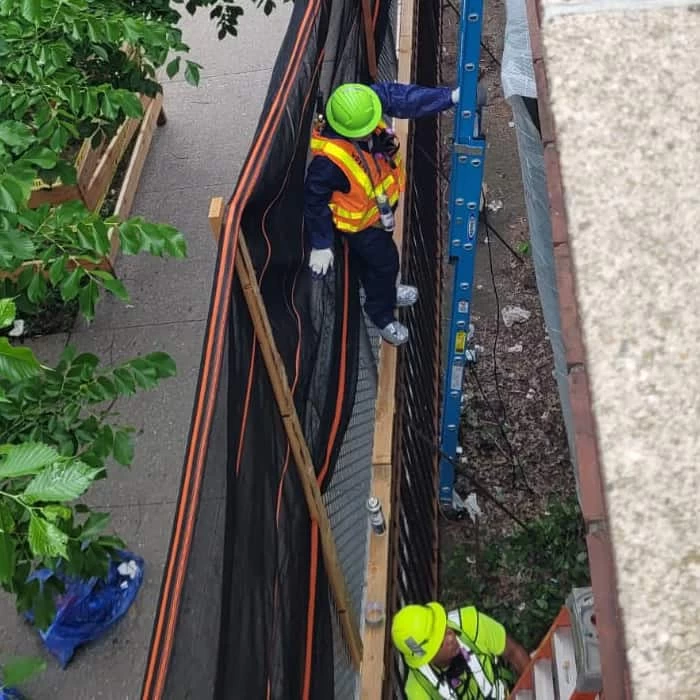
I needed a professional consultation explanation of procedure for safe removal of Asbestos in my apartment complex. Without having an account yet, I was very impressed with the caring, knowledgeable and generous advice offered by Jessica, and will look forward to doing business in the future. Thank you so much! I feel much more informed about a sometimes scary endeavor. Peace. Nancy Silva Mineola, NY.
Mia Munoz
Used this company to clean up some water flood in my house. They were fast and easy to work with.very professional, Would recommend to anyone!
Nini Valle
Great company, had a flood and they responded quickly and efficiently. Billed my insurance company directly. I highly recommend this company!
joe colapietro, jr
I had pipe freeze in my basement right before a snow storm and they made to within an hour to help start the clean up process. They we by our side throughout the entire process and even helped with the insurance company. They did such a great job with the cleanup, repair, remidiation, I contracted them to perform the repairs and finishes in the basement. They came with enough manpower and material to get the job done. Leo and Jessica were nothing but a pleasure to deal with!!
Cristian Arredondo c
I had some water damage in my home and Green Island was able to take care of my issue quickly and effectively. I am very pleased with the work they did. They responded quickly and were very professional.
Michael M
Outstanding service! From the office to the field crew everyone was friendly, helpful and responsive. I highly recommend Green Island Group.
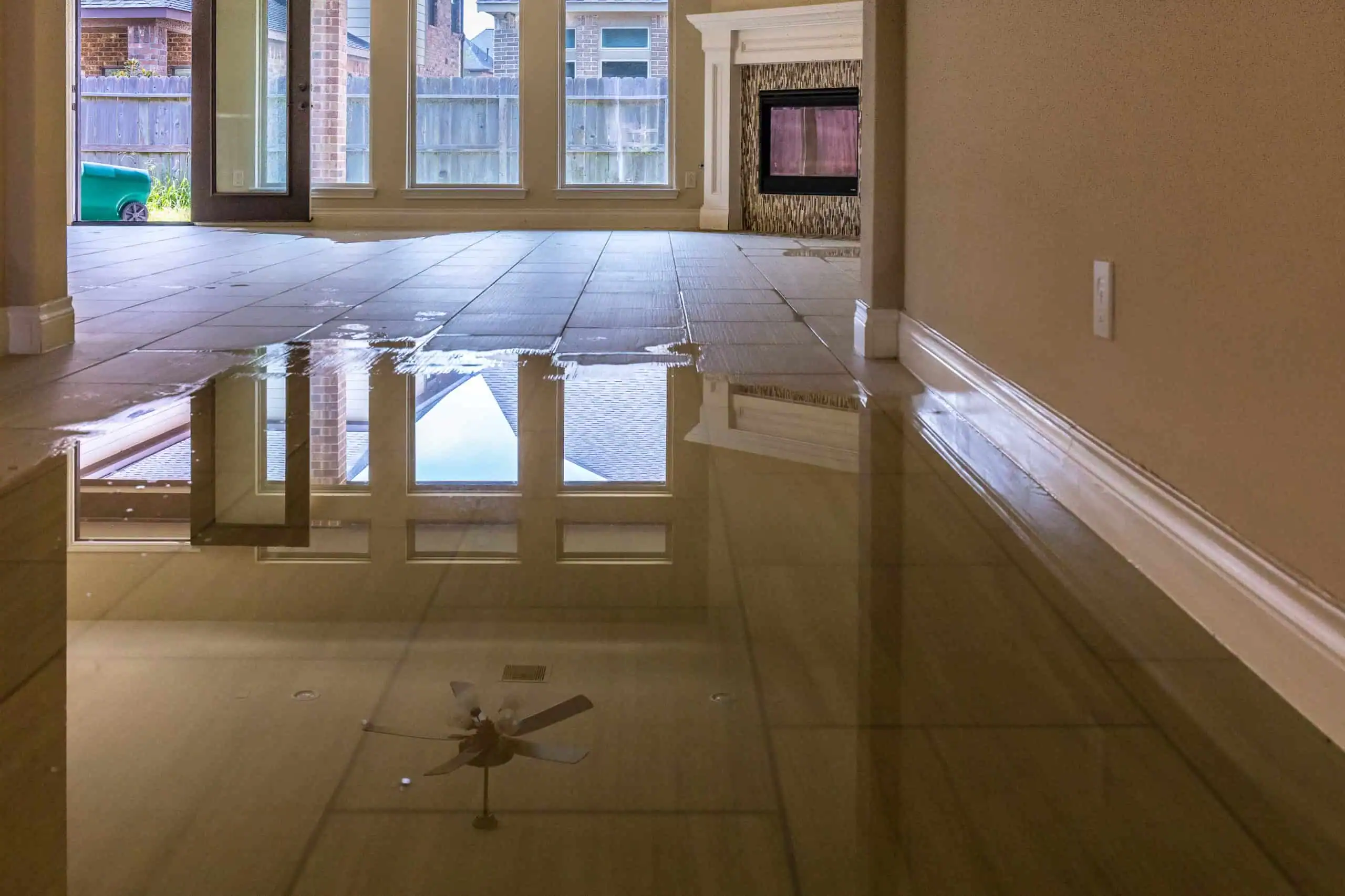
Standing water is the obvious problem. What most Peekskill homeowners don’t realize is what comes next — moisture trapped inside plaster walls, under original hardwood floors, behind the lathe-and-plaster construction common in the city’s Victorian-era and early 20th-century homes. That hidden saturation is what causes mold to grow, and mold can start developing in as little as 24 hours after a flood event. By the time you see it, it’s already been there a while.
When restoration is done right, you’re not just dry — you’re actually safe. No moisture pockets behind the walls. No mold quietly spreading through the structure of a 100-year-old craftsman bungalow on Highland Avenue. No asbestos-containing floor tiles or pipe insulation disturbed without the proper licensed protocols that New York State law requires. The job is finished when the building is genuinely restored, not just when the fans get packed up.
For Peekskill specifically, that means accounting for what the city’s flood profile actually looks like. This isn’t a community that floods from one direction. Annsville Creek, Peekskill Creek, and the Hudson River itself all converge at the city’s western edge — and when a storm system stalls over the Hudson Valley, the way it did on July 9, 2023 when the National Weather Service issued a rare Flash Flood Emergency naming Peekskill directly, the result is the kind of damage that a half-measure restoration job simply can’t fix.
Licensed Flood Restoration Contractor Peekskill NY
The Credentials That Actually Matter in an Older City
We’ve been doing environmental restoration work across Westchester County and the Hudson Valley for over 12 years, with more than 5,000 completed projects across New York State. That includes homes and buildings throughout the northern Westchester corridor — Peekskill, Cortlandt, Buchanan, Montrose, and the surrounding communities that share the same flood exposure and the same aging building stock.
What makes us different isn’t just experience — it’s the specific credentials that Peekskill’s housing stock actually demands. NYS DOL Mold License. NYS DOL Asbestos License. USEPA Lead/RRP Certification. IICRC Water Damage Certification. NYS and NYC M/WBE Certified. These aren’t extras — in a city where a significant portion of homes predate 1980, they’re legal requirements for doing the work safely and correctly. Most restoration companies operating in the Peekskill market don’t hold all of them.
We also work with the NYS Office of General Services, carry full liability insurance and Workers’ Compensation, and back every job with a 100% Satisfaction Guarantee. You’re not taking a risk on an unknown operator — you’re working with a company that New York State has vetted and trusted with public infrastructure.
From the First Call to a Fully Restored Home — Here's the Real Process
When you call, the clock starts. Our 60-minute on-site response guarantee means a crew is at your door within an hour — not “as soon as possible,” not “within the business day.” Within the hour. The first priority is stopping the damage from getting worse: water extraction, identifying the source if it’s still active, and getting industrial-grade drying equipment in place immediately.
From there, the process moves into moisture detection. In Peekskill’s older homes — the Victorian colonials near the Riverfront District, the craftsman bungalows in the hillside residential areas, the converted loft buildings in the Artists’ District downtown — moisture doesn’t just sit on the surface. We use thermal imaging cameras and calibrated moisture meters to locate saturation inside walls, under floors, and in structural cavities that you’d never find with a visual inspection. That step is what separates a real restoration from a job that looks done until mold shows up three months later.
If the building predates 1980, materials testing may be required before any demolition or reconstruction begins — New York State law requires licensed asbestos abatement and lead-safe protocols in older structures, and we handle both in-house. Once the structure is fully dry and cleared, reconstruction begins — framing, drywall, flooring, painting — all under one roof, with permits pulled directly through Peekskill’s Building Department at 840 Main Street. You don’t manage multiple contractors. One call, one company, one finished job.
Everything Peekskill Homes Actually Need After a Flood
Flood restoration in Peekskill isn’t a one-size-fits-all job. The city’s mix of Victorian-era single-family homes, early 20th-century multi-family buildings, and former industrial spaces converted into artist lofts and condos means every job carries its own set of considerations. Our scope covers the full range: emergency water extraction, structural drying, mold remediation, asbestos abatement, lead paint handling, sewage backup cleanup, and complete reconstruction. No subcontractors. No handoffs. No gaps in the chain.
Sewage backup deserves a specific mention here. Parts of Peekskill operate on a combined sewer system — the kind common in older industrial cities — which means heavy rain events can push sewage-contaminated water back into basements. That’s classified as Black Water, or Category 3 contamination, and it requires full environmental decontamination protocols. It’s not a job for a general cleanup crew. We hold the environmental contractor credentials to handle it correctly and safely.
On the financial side: zero upfront costs, direct billing to your insurance carrier, and financing up to $200,000 at 0% APR for situations where insurance doesn’t cover the full scope — which is more common than most Peekskill homeowners realize, especially for properties in flood-prone areas near Annsville Creek or the Route 9A corridor that may carry limited or no flood coverage on a standard homeowners policy.
Does homeowners insurance cover flood damage from Peekskill Creek or Annsville Creek overflow?
Standard homeowners insurance policies typically do not cover flood damage caused by external water sources — meaning water that enters your home from rising creeks, overflowing rivers, or storm surge. For Peekskill properties near Annsville Creek, Peekskill Creek, or the Hudson River waterfront, this is a critical distinction. The flooding that triggered the July 2023 Flash Flood Emergency — where roughly 9 inches of rain fell and Governor Hochul called it a “1,000-year event” — is exactly the type of event that standard homeowners policies exclude.
Separate flood insurance through FEMA’s National Flood Insurance Program (NFIP) or a private flood policy is required to cover that kind of damage. If you don’t have flood coverage and your home sustained water damage from an external source, we offer 0% APR financing up to $200,000 specifically for that situation. You won’t be left choosing between a safe home and a manageable financial outcome.
How quickly does mold start growing after a basement flood in Peekskill?
Mold can begin developing in as little as 24 hours after a flood event — and in Peekskill’s older housing stock, where plaster walls, original hardwood floors, and aging insulation absorb and hold moisture readily, that timeline is not theoretical. The Hudson Valley’s humidity levels during spring and summer compound the risk further. By the time mold becomes visible, it has typically been growing behind surfaces for days.
This is the core reason the 60-minute response time matters. The faster water is extracted and industrial drying begins, the narrower the window for mold to establish. If you’re dealing with a post-event situation — meaning the flooding happened and you’re now noticing a musty smell or discoloration — don’t wait. We use thermal imaging and calibrated moisture meters to locate hidden saturation before it becomes a mold problem, or to assess the extent of mold growth if it’s already started.
My Peekskill home was built before 1980 — does that affect how flood restoration is handled?
Yes, significantly. Homes built before 1980 in Peekskill — which includes a large portion of the city’s Victorian-era colonials, craftsman bungalows, and early 20th-century multi-family buildings — commonly contain asbestos in pipe insulation, floor tiles, ceiling tiles, and textured wall coatings, as well as lead paint in window frames, doors, and trim. When flood damage disturbs these materials, New York State law requires that remediation be performed by specifically licensed contractors.
We hold both the NYS DOL Asbestos License and the USEPA Lead/RRP Certification — the two credentials required by law to handle these materials safely. Most restoration companies operating in the Peekskill market do not hold both. Hiring an unlicensed contractor to do flood restoration in a pre-1980 home isn’t just a quality risk — it creates real legal and health liability for you as the homeowner. Before any demolition or reconstruction begins in an older Peekskill home, materials testing is conducted and proper protocols are followed.
What is Black Water contamination, and is it common after Peekskill flooding events?
Black Water — also called Category 3 contamination — refers to water that contains sewage, bacteria, or other hazardous materials. It’s the most dangerous and most expensive category of water damage to remediate, and it requires full environmental decontamination rather than standard drying and cleanup procedures. It’s not uncommon in Peekskill.
Parts of the city operate on a combined sewer system, which is standard for older industrial cities of Peekskill’s age and character. During significant rain events — the kind that overwhelm the system — sewage can back up into basements and lower floors through floor drains and sewer connections. This happens in the same storm events that cause creek and surface flooding, meaning a single flood event can involve both clean water intrusion and sewage backup simultaneously. We hold the environmental contractor credentials to handle Category 3 contamination safely, and the process involves full decontamination, antimicrobial treatment, and proper disposal of all affected materials — not just drying the space out.
How long does flood restoration typically take for a home in Peekskill?
The honest answer is that it depends on the scope of damage and the age of the home — both of which vary considerably across Peekskill’s neighborhoods. For a straightforward basement flooding situation with no structural damage and no hazardous materials involvement, structural drying typically takes three to five days with industrial equipment, followed by reconstruction that can range from a few days to a few weeks depending on what needs to be replaced.
For older Peekskill homes where materials testing is required before demolition can begin, the timeline extends accordingly. Asbestos abatement, for example, requires a seven-day notification filing with the state before work can commence — that’s a New York State regulatory requirement, not a scheduling preference. We manage that process directly and pull all necessary permits through Peekskill’s Building Department, so you’re not responsible for navigating the regulatory side. The goal is always to move as fast as the job safely allows, because every day of displacement or business closure has a real cost.
Does Green Island Group handle the insurance claim process, or is that left to the homeowner?
We bill your insurance carrier directly, which means you’re not fronting the cost of restoration while waiting for a reimbursement check. We work with your adjuster, provide the documentation the claim requires, and handle the billing on the back end. For most Peekskill homeowners — many of whom are also managing Metro-North commutes, work schedules, and the general disruption of being displaced from part of their home — not having to manage the insurance process themselves is a meaningful difference.
Where insurance doesn’t cover the full scope — which happens more often than people expect, particularly for properties with limited flood coverage near the Hudson River corridor or in FEMA-designated flood zones — we offer 0% APR financing up to $200,000 to cover the gap. Peekskill’s economic diversity is real, and not every homeowner has the cash reserves to absorb a major restoration bill while waiting for a partial insurance payout. The financing option exists to make sure the quality of your restoration isn’t limited by what you happen to have available on the day the flood happens.