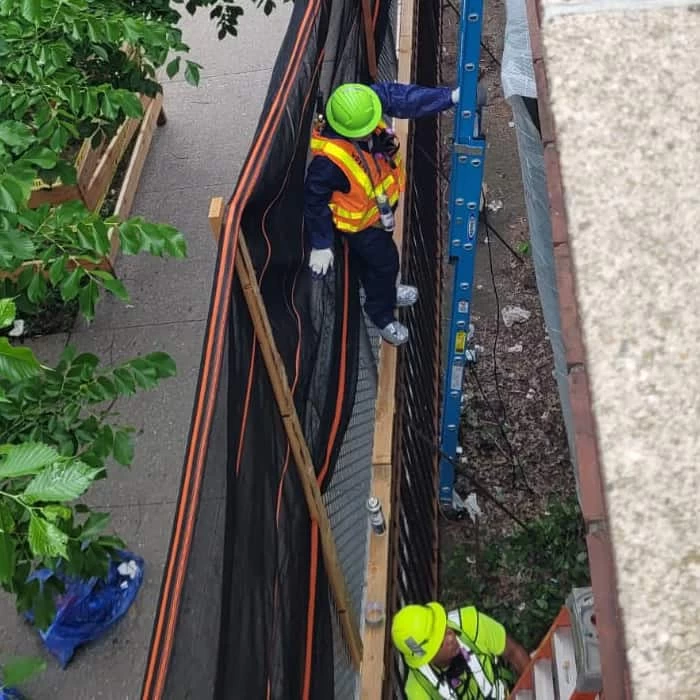
I needed a professional consultation explanation of procedure for safe removal of Asbestos in my apartment complex. Without having an account yet, I was very impressed with the caring, knowledgeable and generous advice offered by Jessica, and will look forward to doing business in the future. Thank you so much! I feel much more informed about a sometimes scary endeavor. Peace. Nancy Silva Mineola, NY.
Mia Munoz
Used this company to clean up some water flood in my house. They were fast and easy to work with.very professional, Would recommend to anyone!
Nini Valle
Great company, had a flood and they responded quickly and efficiently. Billed my insurance company directly. I highly recommend this company!
joe colapietro, jr
I had pipe freeze in my basement right before a snow storm and they made to within an hour to help start the clean up process. They we by our side throughout the entire process and even helped with the insurance company. They did such a great job with the cleanup, repair, remidiation, I contracted them to perform the repairs and finishes in the basement. They came with enough manpower and material to get the job done. Leo and Jessica were nothing but a pleasure to deal with!!
Cristian Arredondo c
I had some water damage in my home and Green Island was able to take care of my issue quickly and effectively. I am very pleased with the work they did. They responded quickly and were very professional.
Michael M
Outstanding service! From the office to the field crew everyone was friendly, helpful and responsive. I highly recommend Green Island Group.
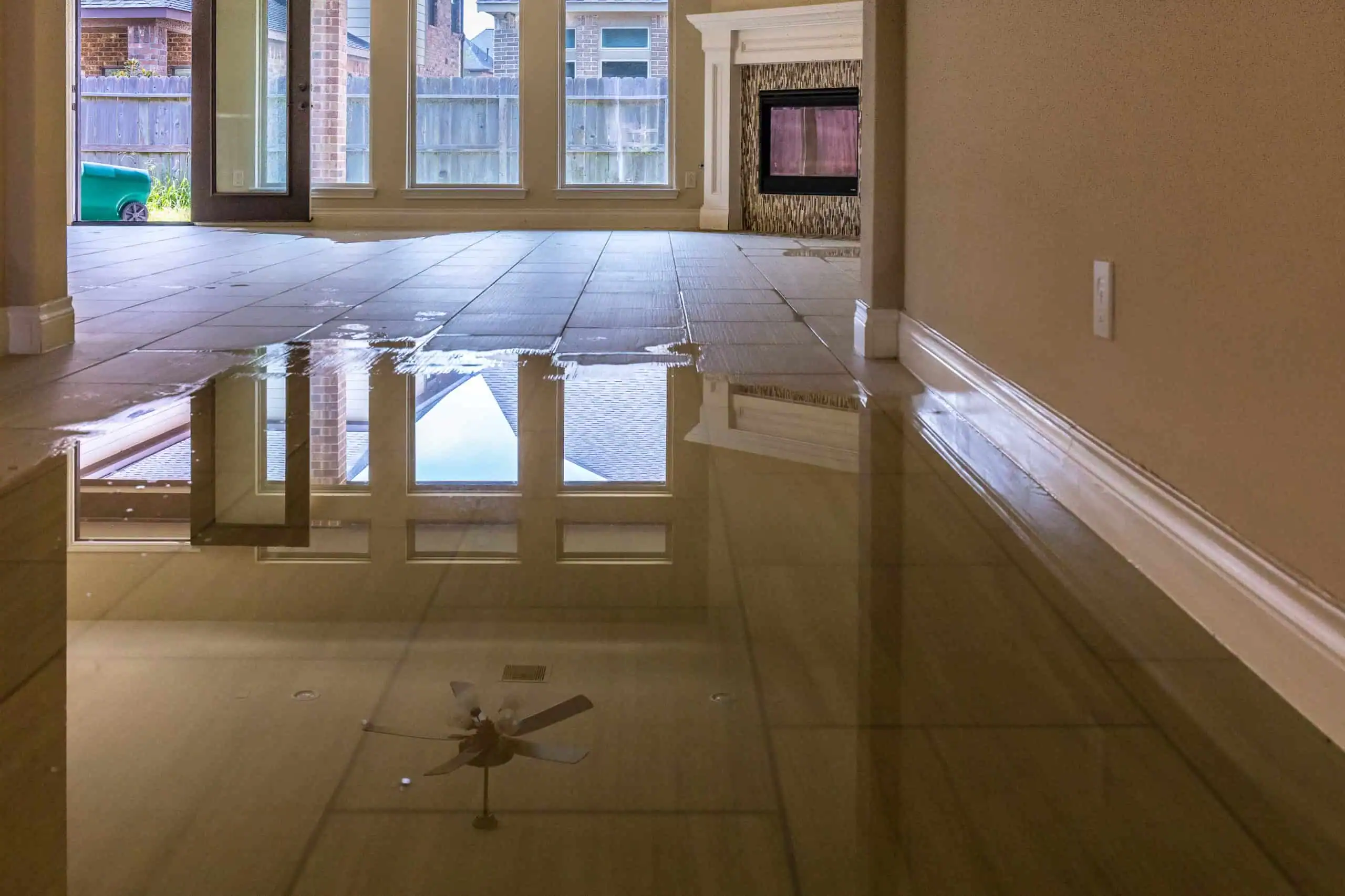
Flooding in Philipstown doesn’t happen gently. When Foundry Brook overflows or the Hudson pushes water up West Street, it happens fast — and the damage it leaves behind goes deeper than what you can see. Water wicks into original plaster walls, soaks through century-old framing, and pools in basement corners that haven’t seen daylight in decades. By the time the water recedes, the real work is just beginning.
The homes along Cold Spring’s historic streets and up into Garrison were built in a different era. That’s part of what makes this town worth living in. It’s also what makes flood restoration here more complicated than in a newer suburb. Pre-WWII construction almost always means asbestos-containing materials and lead paint are present — and when those materials get wet and disturbed, you’re no longer dealing with just a water damage job. You’re dealing with a licensed abatement situation that most restoration companies aren’t equipped to handle legally.
What you get when this is done right is a home that’s fully dried, tested, and cleared — not just mopped up and left to develop a mold problem three months later. No hidden moisture behind the walls. No unaddressed contamination. No second round of repairs because someone missed something the first time.
Licensed for the Real Challenges of Philipstown's Historic Homes
We’ve been doing environmental restoration work across New York State for over 12 years and more than 5,000 completed projects. That’s not a number pulled from a brochure — it’s the kind of track record that comes from showing up in Philipstown after Tropical Storm Ida, after the July 2023 storm that swept bridges off roads and shut down the Hudson Line, and after every nor’easter and spring flood in between.
The credentials matter here more than in most places. We hold a NYS DOL Mold license, a NYS DOL Asbestos license, USEPA Lead and RRP certification, IICRC Water Damage certification, and are a NYS and NYC M/WBE Certified Contractor with active standing through the NYS Office of General Services. In a town where the majority of homes predate World War II, those licenses aren’t optional extras — they’re what separates a company that can legally complete the job from one that can’t.
We bill insurance directly, including NFIP flood policies, and offer financing up to $200,000 at 0% APR for situations where coverage falls short. Every job is backed by a 100% Satisfaction Guarantee and full liability and Workers’ Compensation insurance.
From First Call to Final Clearance — Here's What Happens
When you call, the clock starts. We commit to on-site arrival within 60 minutes. That response window matters in Philipstown specifically — Route 9D is a two-lane road that can close during and after major storms, and our team accounts for access conditions that a company unfamiliar with this area wouldn’t think to plan for.
Once on-site, the first priority is assessment. We use industrial thermal imaging and moisture detection equipment to map exactly where water has traveled — including behind plaster walls, under original-growth wood floors, and inside wall cavities that a visual inspection would miss entirely. In Philipstown’s older homes, this step is non-negotiable. Moisture that goes undetected becomes mold. Mold in a pre-WWII home often means disturbing building materials that require licensed abatement before any reconstruction can begin.
From there, extraction and structural drying begin immediately using commercial-grade equipment. If the water source is stormwater or river overflow — which is Category 3 contaminated water — the remediation protocol is more intensive than a standard pipe burst. Foundry Brook and Hudson River flooding both fall into that category. If mold is present, or if asbestos or lead materials are disturbed during the process, those phases are handled in sequence by our licensed team. No handoffs to subcontractors. No gaps in accountability. The job isn’t finished until clearance testing confirms the space is safe.
One Team Handles the Water, the Mold, and Everything Behind the Walls
Flood restoration in Philipstown covers more ground than it does in most towns, and our full-service model is built for exactly that. Water extraction and structural drying are the starting point — but in a community where homes along West Street, lower Main Street, and the Foundry Brook corridor sit in FEMA Zone AE, the work rarely stops there.
Category 3 water — which is what you get from Hudson River overflow, Foundry Brook flooding, or stormwater backup — requires a decontamination protocol well beyond what a standard water damage job involves. That means antimicrobial treatment, proper disposal of saturated materials, and documentation that satisfies both your insurance adjuster and any applicable local floodplain compliance requirements under Cold Spring’s waterfront construction code.
For Philipstown’s second-home owners and weekend residents — a significant part of this community — the full-service model matters in a different way. If you’re discovering flood damage after days away, mold is likely already developing. We handle mold remediation under our NYS DOL Mold license, asbestos abatement under our NYS DOL Asbestos license, and lead-safe repairs under USEPA Lead/RRP certification — all under one roof, without you coordinating multiple contractors from a distance. From the initial extraction through final reconstruction, it’s one company, one point of contact, and one job done completely.
How quickly does mold start growing after a flood in my Philipstown home?
Mold can begin developing within 24 to 48 hours of a water intrusion event — and that timeline doesn’t pause for weekends, insurance adjusters, or the time it takes you to drive up from the city. In Philipstown, where a significant portion of homeowners are part-time residents or commuters on the Metro-North Hudson Line, flood damage often sits undiscovered for longer than it would in a town where everyone is home full-time. That gap is exactly when mold gets its foothold.
In Cold Spring’s pre-WWII homes, the risk compounds quickly. Original plaster, horsehair insulation, and old-growth wood framing absorb and hold moisture in ways that modern materials don’t. Standard drying timelines don’t always apply. Industrial moisture detection is the only reliable way to confirm that drying is complete — and if mold is already present by the time remediation begins, that work requires a licensed contractor under New York State law. We hold the NYS DOL Mold license required to perform that work legally and completely.
Does homeowners insurance cover flooding from the Hudson River or Foundry Brook in Philipstown?
Standard homeowners insurance does not cover flooding from external water sources — including river overflow, stormwater, and brook flooding. That type of damage falls under the National Flood Insurance Program, which is a separate federal policy entirely. Properties in FEMA Zone AE along Cold Spring’s riverfront and the Foundry Brook corridor are required to carry NFIP coverage if they have a federally backed mortgage, but many Philipstown properties — particularly second homes and properties outside the mapped flood zone — are uninsured or underinsured for this type of event.
After the July 2023 storm and Tropical Storm Ida in 2021, a number of Philipstown homeowners found themselves navigating the NFIP claims process for the first time. It’s slower and more document-intensive than a standard homeowners claim. We handle insurance billing directly — including NFIP documentation — so you’re not managing that process on top of everything else. For properties without flood coverage, financing up to $200,000 at 0% APR is available so restoration can begin immediately rather than waiting on out-of-pocket funds to come together.
My Cold Spring home was built in the 1920s — does that affect the flood restoration process?
Yes, significantly. Homes built before 1940 — which describes the majority of Cold Spring’s residential housing stock — almost certainly contain asbestos-containing materials and lead paint. That’s not a worst-case scenario; it’s simply what was used in construction during that era. Under normal conditions, those materials are stable. But when a flood saturates drywall, insulation, floor tiles, or pipe insulation, those materials become disturbed — and at that point, New York State law requires licensed abatement before any reconstruction can proceed.
We hold both the NYS DOL Asbestos license and USEPA Lead/RRP certification required for this work. Most restoration companies operating in Putnam County hold neither. If a contractor begins tearing out wet materials in a pre-WWII Cold Spring home without those credentials, they’re not just cutting corners — they’re creating a health hazard and a legal liability. The restoration process in an older Philipstown home is sequenced carefully: water extraction and drying first, then testing for hazardous materials, then licensed abatement if needed, then reconstruction. Skipping any of those steps creates problems that are far more expensive to fix later.
What is Category 3 water damage and does it apply to Philipstown flooding?
Water damage is classified on a scale from Category 1 (clean water from a supply line break) to Category 3 (grossly contaminated water that poses serious health risks). Category 3 — often called black water — includes floodwater from rivers, streams, stormwater runoff, and sewage backups. It contains bacteria, pathogens, and contaminants that don’t disappear when the water dries.
In Philipstown, most flood events that originate from the Hudson River, Foundry Brook, Clove Creek, or Indian Brook are Category 3 events by definition. The July 2023 storm, the January 2024 Hudson River flooding, and Tropical Storm Ida in 2021 all produced Category 3 water intrusion in affected properties. That classification changes the entire remediation protocol — affected materials typically cannot be dried in place and must be removed, the space requires antimicrobial treatment, and documentation of the decontamination process is necessary for both insurance purposes and compliance with Cold Spring’s floodplain management requirements. Our team is trained and certified to handle Category 3 remediation correctly from the start.
Can I stay in my house while flood restoration is being done?
It depends on the scope of the damage and what’s found during the initial assessment. For minor water intrusion — a contained basement flood from a sump pump failure, for example — it’s often possible to remain in the home while drying equipment runs. The equipment is loud and the space will be disrupted, but it’s manageable for most people.
For more significant flood events — particularly anything involving Category 3 water from the Hudson River or Foundry Brook, or any situation where mold or hazardous materials are identified — temporary relocation is usually the safer and more practical choice. Mold remediation and asbestos abatement require containment procedures that make the affected areas uninhabitable during the work. In those situations, your insurance policy may cover temporary housing costs — something we can help you document as part of the claims process. If you’re a weekend or part-time resident, the timing often works in your favor: work can be scheduled and completed during the week while you’re back in the city, with the property ready for your return.
How do Philipstown homeowners typically find out they have flood damage if they weren't home?
This comes up more in Philipstown than in most towns. A meaningful share of properties here — particularly in Garrison and the hillside areas above Cold Spring — are owned by people who commute to New York City during the week or use the property primarily on weekends. When a storm hits on a Tuesday and you don’t return until Friday, you’re potentially arriving to several days of standing water, saturated walls, and mold that’s already established.
The most common discovery scenarios are: a neighbor notices water coming from under a door or down a driveway and calls; a smart home sensor or water alarm triggers a notification; or the homeowner simply arrives to find the damage themselves. In any of these cases, the response timeline from that point forward matters enormously. We can mobilize within 60 minutes of your call regardless of when you discover the damage — and for second-home owners managing the situation remotely, the full-service model means you don’t need to be physically present to coordinate the job. One call sets the process in motion, and you’ll have a single point of contact from extraction through final clearance.