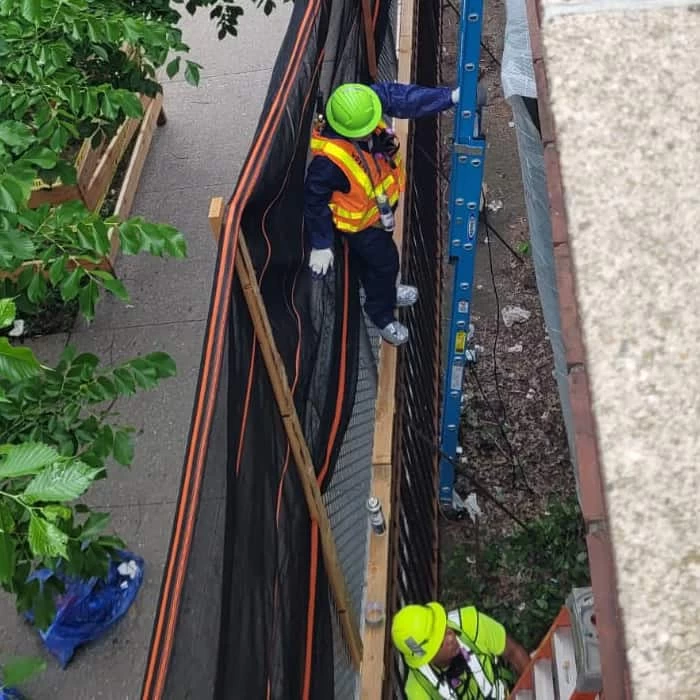
I needed a professional consultation explanation of procedure for safe removal of Asbestos in my apartment complex. Without having an account yet, I was very impressed with the caring, knowledgeable and generous advice offered by Jessica, and will look forward to doing business in the future. Thank you so much! I feel much more informed about a sometimes scary endeavor. Peace. Nancy Silva Mineola, NY.
Mia Munoz
Used this company to clean up some water flood in my house. They were fast and easy to work with.very professional, Would recommend to anyone!
Nini Valle
Great company, had a flood and they responded quickly and efficiently. Billed my insurance company directly. I highly recommend this company!
joe colapietro, jr
I had pipe freeze in my basement right before a snow storm and they made to within an hour to help start the clean up process. They we by our side throughout the entire process and even helped with the insurance company. They did such a great job with the cleanup, repair, remidiation, I contracted them to perform the repairs and finishes in the basement. They came with enough manpower and material to get the job done. Leo and Jessica were nothing but a pleasure to deal with!!
Cristian Arredondo c
I had some water damage in my home and Green Island was able to take care of my issue quickly and effectively. I am very pleased with the work they did. They responded quickly and were very professional.
Michael M
Outstanding service! From the office to the field crew everyone was friendly, helpful and responsive. I highly recommend Green Island Group.
Your Home Dried, Documented, and Protected — Completely
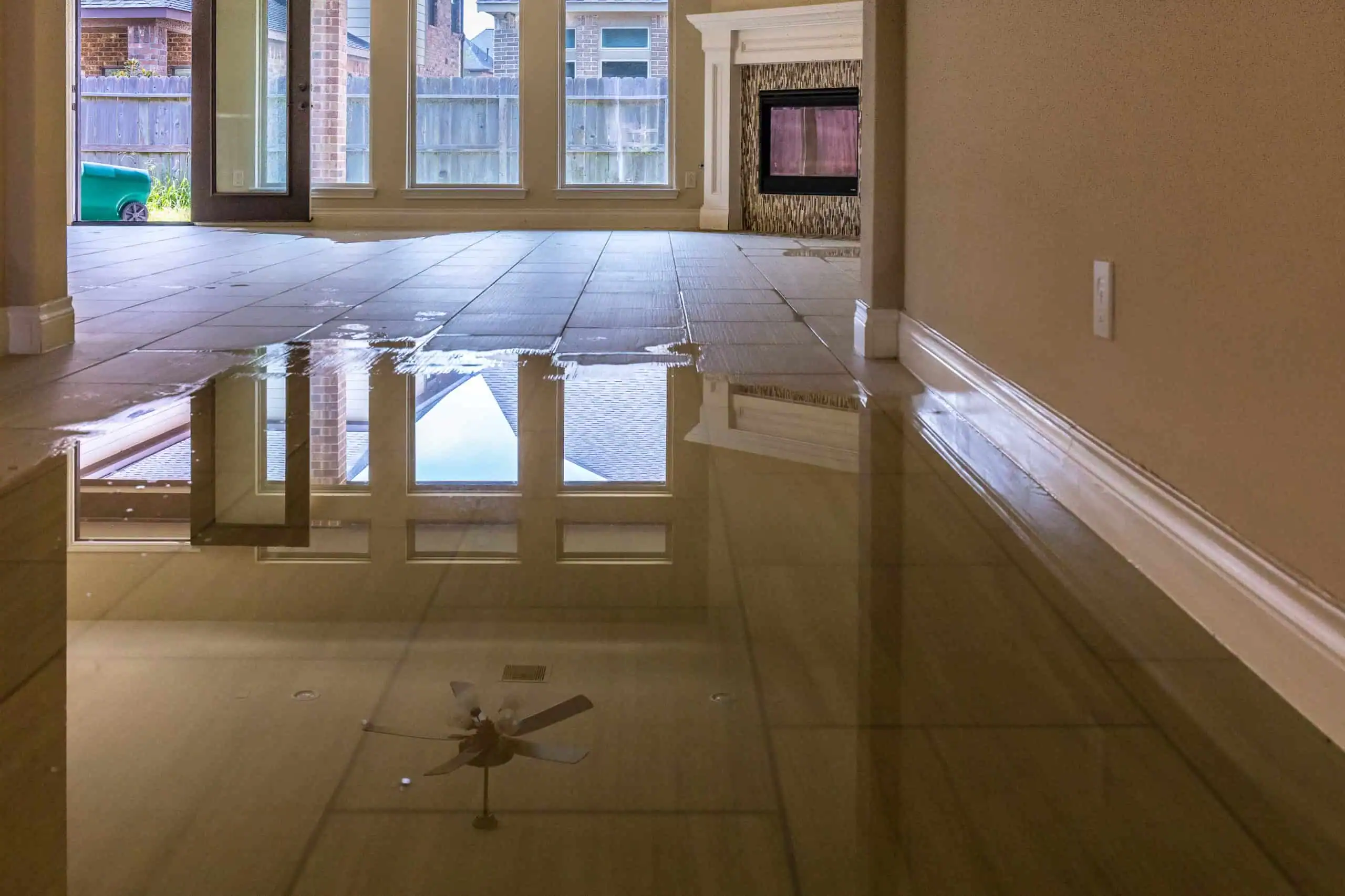
When Tropical Depression Ida dropped over six inches of rain on Scarsdale in just a few hours on September 1, 2021, hundreds of basements flooded within minutes — including homes on streets that had never seen a drop of standing water before. Brookby, Rugby, and Greendale were impassable for days. Residents near the Sheldrake River on Cayuga Road reported six-figure losses. That kind of flooding doesn’t give you time to research options. It gives you about an hour before the damage compounds.
The outcome you’re after isn’t just dry floors. It’s knowing the moisture is completely gone — from behind the walls, under the subfloor, inside the insulation — before mold gets a foothold. Mold can begin growing in as little as 24 hours after a flood event. In a Greenacres Tudor built in the 1920s or a Heathcote Colonial from the 1950s, that moisture hides in places a shop vac will never reach. We use thermal imaging and industrial moisture meters to find every pocket of hidden saturation before any drying begins. That step alone is what separates a clean restoration from a mold problem you discover three months later.
For Scarsdale homeowners, the stakes are higher than most. With median property values at $1.8 million and a school district that directly affects resale, a botched restoration isn’t just inconvenient — it’s a financial liability. You need documentation, licensed professionals, and a complete scope of work that holds up to scrutiny. That’s exactly what we deliver.
Licensed Flood Restoration Contractor near Scarsdale
The Credentials Scarsdale's Older Homes Actually Require
We’ve been completing restoration work across New York State for over 12 years and have finished more than 5,000 projects. That’s not a marketing number — it means we’ve worked through every type of water damage scenario Westchester County produces, including the Sheldrake River overflows that regularly impact Scarsdale, aging infrastructure failures, and the kind of storm-driven basement flooding that the village has experienced repeatedly since the 2007 floods that prompted Scarsdale to commission its own stormwater management plan.
What separates us from most restoration companies operating in the 10583 ZIP code is our credential stack. We hold IICRC Water Damage Certification, a NYS DOL Mold License, a NYS DOL Asbestos License, USEPA Lead and RRP Certifications, and both NYS and NYC General Contractor licenses. In a village where Greenacres homes date to the early 1900s and Quaker Ridge homes were built through the 1970s, those asbestos and lead credentials aren’t background details — they’re legal requirements for doing the job correctly. Most competitors serving Scarsdale don’t hold them.
We’re also NYS and NYC M/WBE Certified and an approved contractor with the NYS Office of General Services. We carry full liability insurance and Workers’ Compensation coverage, and back every job with a 100% Satisfaction Guarantee.
From Standing Water to Finished Walls — Here's the Full Picture
The first call triggers a 60-minute response. Our crew arrives with extraction equipment, industrial air movers, dehumidifiers, and thermal imaging cameras — not a single technician with a moisture meter and a handshake. The immediate priority is stopping the damage from spreading. Water moves fast through finished basements, and in Scarsdale’s older housing stock, it moves into materials that require careful handling.
Before any drying equipment gets placed, we do a full moisture assessment using thermal imaging to map exactly where water has traveled inside wall cavities, under flooring, and into structural framing. This step matters more in Scarsdale than in most places because so many homes here have finished basements with layers of drywall, insulation, and flooring that absorb water silently. If your home was built before 1980 — which covers most of Greenacres, Fox Meadow, and Quaker Ridge — the assessment also includes a check for asbestos-containing materials before any demolition begins. In New York State, disturbing those materials without a NYS DOL Asbestos License is illegal. We hold that license, so the process never has to stop while you find a second contractor.
Once moisture mapping is complete, the drying phase begins. Industrial equipment runs until every reading is within acceptable limits — not until it looks dry, but until it measures dry. From there, mold prevention treatment is applied, and reconstruction begins: drywall, flooring, painting, whatever the scope requires. Insurance documentation is handled throughout, and we bill your carrier directly. If there’s a coverage gap, financing up to $200,000 at 0% APR is available. One company, one call, one invoice.
Full-Scope Restoration Built for Scarsdale's Specific Risks
Flood restoration in Scarsdale isn’t a one-size-fits-all job. The village’s stormwater infrastructure was designed for a different era of rainfall intensity, and the housing stock spans over a century of construction — each decade carrying its own set of materials, risks, and regulatory requirements. Our service is built around that reality.
The full scope includes emergency water extraction, structural drying with industrial-grade equipment, thermal imaging moisture detection, mold prevention treatment, asbestos abatement where required by New York State law, lead paint containment and remediation under USEPA RRP protocols, and complete reconstruction through finished surfaces. For Scarsdale homes in FEMA-designated flood zones — the Village Engineering Department maintains floodplain maps and flood elevation certificates for specific streets — restoration work may also require coordination with the village’s Building Department for permits covering structural, plumbing, electrical, and mechanical work. We navigate that process as part of the job.
Sewage backup cleanup is also part of our service. When Scarsdale’s storm sewers back up during intense rainfall events — as they did during Ida and during the 2007 flooding that prompted the village’s stormwater management study — the water entering your basement isn’t clean. Category 3 contaminated water requires a different protocol than a burst pipe, including full containment, antimicrobial treatment, and proper disposal. That full range of water categories is handled here, with 24/7 emergency availability every day of the year.
Does homeowners insurance cover basement flood damage in Scarsdale, NY?
This is one of the most common questions after a flooding event in Scarsdale, and the answer depends on what caused the water. Standard homeowners insurance typically covers sudden and accidental water damage — a burst pipe, a failed water heater, an appliance leak. What it usually does not cover is flooding from overland water, storm surge, or a backed-up municipal storm sewer. That type of damage requires a separate flood insurance policy through FEMA’s National Flood Insurance Program, which Scarsdale participates in.
The confusion tends to hit hardest after events like Tropical Depression Ida, when storm sewers backed up and groundwater infiltrated basements across Scarsdale. Many homeowners assumed their standard policy would respond and discovered a coverage gap after the fact. We document the cause of loss thoroughly from the moment we arrive — that documentation matters when your adjuster is determining coverage. We also bill your insurance carrier directly and offer financing up to $200,000 at 0% APR for situations where coverage falls short.
How quickly does mold start growing after a flooded basement in Scarsdale?
Mold can begin growing in as little as 24 hours after a flood event — and in some conditions, visible patches can appear within 24 to 48 hours. That timeline is not an exaggeration, and it’s the reason response speed matters so much. In Scarsdale’s older homes, where finished basements often have multiple layers of drywall, insulation, and wood framing, moisture gets trapped in cavities that don’t dry on their own. The surface might feel dry while the wall cavity behind it is still saturated.
The critical factor isn’t just how fast the standing water gets removed — it’s how thoroughly the hidden moisture gets found and eliminated. We use thermal imaging cameras and industrial moisture meters to map every pocket of saturation before drying equipment is placed. If mold is already present when we arrive, the NYS DOL Mold License we hold is what allows us to legally remediate it in New York State. Most water damage companies operating in the Scarsdale area do not hold that license, which means they can dry the space but cannot legally address active mold growth.
My Scarsdale home was built in the 1930s — is asbestos a concern during flood restoration?
Yes, and it’s something most restoration companies won’t tell you upfront. Homes built before 1980 — which includes the majority of Greenacres and significant portions of Fox Meadow and Heathcote — commonly contain asbestos in pipe insulation, floor tiles, ceiling tiles, joint compound, roofing materials, and boiler wrap. When a basement floods and restoration work begins, those materials get disturbed. In New York State, disturbing asbestos-containing materials without a NYS DOL Asbestos License is illegal, and doing so without proper containment creates a genuine health hazard for your family.
We hold the NYS DOL Asbestos License, which means we can assess, contain, and abate asbestos-containing materials as part of the restoration process — without stopping the job to bring in a separate licensed contractor. For a home on Greenway Road or in the Bramlee Heights section of Greenacres, this isn’t a hypothetical concern. It’s a standard part of what a complete flood restoration job requires. If the company you’re considering can’t show you an asbestos license, they cannot legally complete the full scope of work your home needs.
How long does flood restoration typically take for a Scarsdale home?
The honest answer is that it depends on the extent of the damage, the water category involved, and whether hazardous materials like asbestos or lead paint are present. For a straightforward water extraction and structural drying job — a burst pipe in a finished basement with no contamination and no hazardous materials — the drying phase alone typically takes three to five days with industrial equipment running continuously. Reconstruction adds time on top of that depending on what was damaged.
For the kind of flooding Scarsdale experienced during Ida, where basements took on several feet of contaminated storm water, the timeline is longer. Category 3 water — which includes backed-up sewage and storm drain overflow — requires full containment, antimicrobial treatment, and proper disposal of affected materials before drying can even begin. In homes with asbestos-containing materials, abatement adds additional time and requires specific sequencing. A realistic range for a moderate-to-severe basement flood in a pre-1980 Scarsdale home, including reconstruction, is two to four weeks. We provide a detailed scope of work and timeline at the start of every job so you’re not guessing.
What causes recurring basement flooding in Scarsdale neighborhoods near the Sheldrake River?
The Sheldrake River, which runs through the village and feeds into the Mamaroneck River, is the primary driver of recurring flood damage in several Scarsdale neighborhoods — particularly in the Cayuga Road area and surrounding streets. During intense rainfall events, the Sheldrake overflows its banks and storm drains in the surrounding area back up, forcing water into basements faster than sump pumps can handle. The Bronx River along the village’s western edge creates similar conditions in other parts of town.
The deeper issue is infrastructure. Scarsdale’s stormwater system was not designed for the rainfall intensity that the region now regularly experiences. After the historic 2007 flooding, the village commissioned a Village-Wide Comprehensive Storm Water Management Plan in 2009 — but even with those improvements underway, Ida in 2021 still overwhelmed the system and flooded hundreds of basements. The village has ongoing engineering studies focused on the Catherine, Leatherstocking, Oneida, and Cayuga Road areas. For homeowners in those neighborhoods, recurring flooding isn’t a matter of if — it’s a matter of when. Having our number already saved, and knowing your insurance situation before the next event, is the most practical preparation you can do.
Can Green Island Group handle the permits and reconstruction after flood damage in Scarsdale?
Yes — and this is where the single-contractor model makes a real difference. Scarsdale’s Building Department requires permits for structural alterations, plumbing, electrical, and mechanical work that results from flood restoration. If your home is in a FEMA-designated flood zone, there may be additional requirements coordinated through the Village Engineering Department, including flood elevation certificates and compliance with the village’s flood damage prevention regulations. Navigating that process while also managing a water extraction company, a mold remediator, and a general contractor is a significant burden on top of an already stressful event.
We hold both NYS and NYC General Contractor licenses, which means we can pull permits, manage inspections, and complete full reconstruction — drywall, flooring, painting, and everything in between — under one contract. For Scarsdale homeowners who are used to working with professionals who handle the full scope of a project without constant hand-holding, this is how the job should work. You make one call. We handle the extraction, the drying, the abatement if needed, the permits, and the rebuild. When we leave, your home is restored — not just dried out.