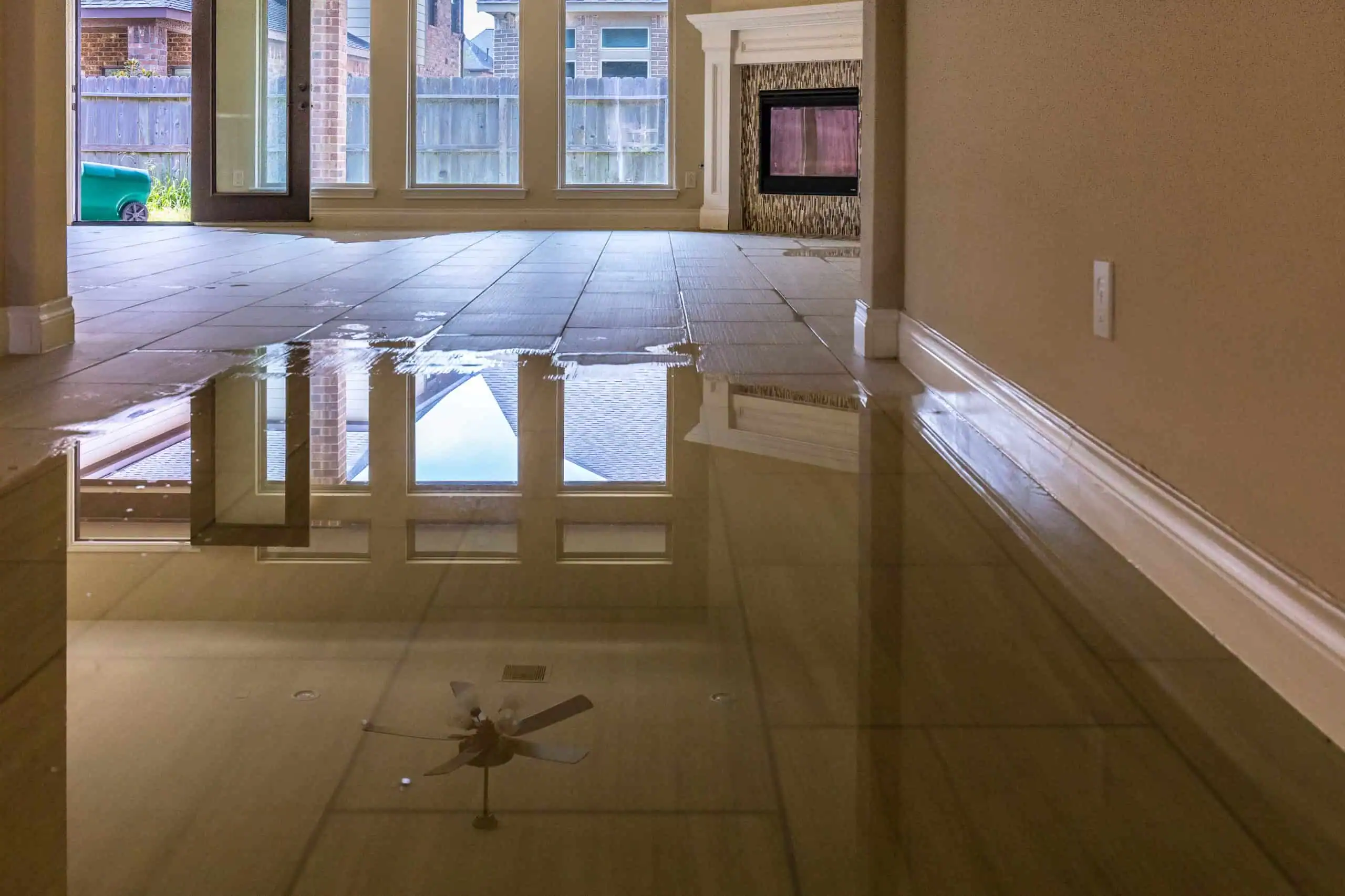
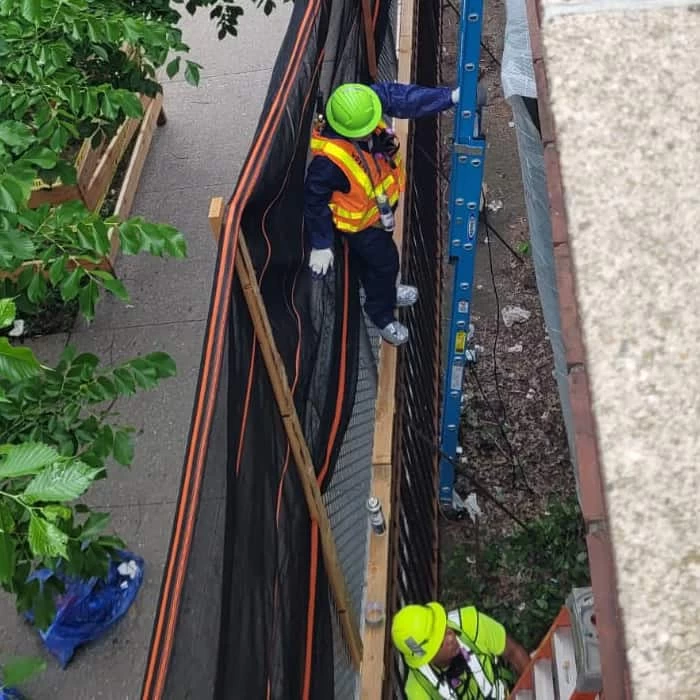
When the Pocantico Rises, We're There in 60 Minutes
Flood damage in Sleepy Hollow moves fast — and in a village where most homes predate 1940, every hour of standing water is an hour closer to mold, structural damage, and hidden hazards most contractors aren’t even licensed to touch.
We operate 24/7 with a 60-minute on-site response commitment. When the Pocantico River rises or a Hudson River surge event pushes water into your home, the clock starts immediately. We show up, we assess, and we begin extraction — no waiting for a quote, no waiting for an adjuster.
I needed a professional consultation explanation of procedure for safe removal of Asbestos in my apartment complex. Without having an account yet, I was very impressed with the caring, knowledgeable and generous advice offered by Jessica, and will look forward to doing business in the future. Thank you so much! I feel much more informed about a sometimes scary endeavor. Peace. Nancy Silva Mineola, NY.
Mia Munoz
Used this company to clean up some water flood in my house. They were fast and easy to work with.very professional, Would recommend to anyone!
Nini Valle
Great company, had a flood and they responded quickly and efficiently. Billed my insurance company directly. I highly recommend this company!
joe colapietro, jr
I had pipe freeze in my basement right before a snow storm and they made to within an hour to help start the clean up process. They we by our side throughout the entire process and even helped with the insurance company. They did such a great job with the cleanup, repair, remidiation, I contracted them to perform the repairs and finishes in the basement. They came with enough manpower and material to get the job done. Leo and Jessica were nothing but a pleasure to deal with!!
Cristian Arredondo c
I had some water damage in my home and Green Island was able to take care of my issue quickly and effectively. I am very pleased with the work they did. They responded quickly and were very professional.
Michael M
Outstanding service! From the office to the field crew everyone was friendly, helpful and responsive. I highly recommend Green Island Group.
What Handled Right Actually Looks Like in Sleepy Hollow
When flood restoration is done properly, you’re not just drying out a basement — you’re protecting everything that makes your home worth what it’s worth. In Sleepy Hollow, where the median home value sits above $765,000 and a large share of the housing stock dates back to before 1939, the stakes are higher than in most places. Water that gets into plaster walls, original hardwood subfloors, or century-old foundation masonry doesn’t behave the way it does in newer construction. It hides. It lingers. And if it’s not found with the right equipment, it becomes mold — sometimes within 24 hours.
The Pocantico River runs directly through the Philipse Manor neighborhood before emptying into the Hudson. That means residents here face flooding from two directions: the river to the south and the Hudson to the west. After a proper restoration, that flooded basement becomes a dry, documented, professionally cleared space — with moisture readings on paper, not guesswork. Your insurance claim is supported. Your walls aren’t harboring anything. And if your home was built before 1970, the asbestos and lead risks that a flood event can disturb have been handled by someone actually licensed to handle them.
That’s what handled right looks like. Not just dry — actually safe.
Licensed Flood Restoration Contractor Westchester County
12 Years In. Every Certification That Matters.
We’ve been doing environmental restoration work across New York State for over 12 years and more than 5,000 completed projects. That’s not a number pulled from a brochure — it’s the volume of real jobs, real homes, and real families in communities like Sleepy Hollow who needed someone to show up and actually fix the problem.
In Westchester County, and specifically in Sleepy Hollow where the housing stock is some of the oldest in the country, credentials aren’t optional. We hold NYS DOL Mold, NYS DOL Asbestos, and USEPA Lead and RRP certifications — the full set required to safely restore a pre-1939 home where flood water may have disturbed materials that were never meant to be disturbed. We’re NYS and NYC M/WBE Certified, fully insured including liability and workers’ compensation, and have been vetted as a contractor for the NYS Office of General Services.
Our 100% Satisfaction Guarantee isn’t a footnote. It’s the standard every job is held to.
From Standing Water to Cleared and Documented — Here's How We Do It
The first call triggers a response. We operate 24/7 with a 60-minute on-site response commitment — because in a flood event, especially one driven by the Pocantico River watershed or a surge off the Hudson, the clock starts the moment water enters your home. A crew arrives, assesses the scope, and begins water extraction immediately. No waiting for a quote. No waiting for an adjuster. The work starts.
Once the water is out, the real work begins. We use industrial moisture detection equipment — including thermal imaging — to map every pocket of saturation inside your walls, under your floors, and behind your foundation. This step is what separates a proper restoration from a surface-level dry-out that leaves hidden moisture behind. In Sleepy Hollow’s older homes, where thick plaster walls and rubble-fill foundations are common, this isn’t a formality — it’s the difference between a finished job and a mold problem six weeks later.
From there, structural drying, dehumidification, and any required mold, asbestos, or lead protocols are handled in sequence by the same team. In New York State, mold remediation requires a NYS DOL Mold Contractor license — a legal requirement that not every company operating in this market actually holds. We do. The job closes with full documentation for your insurance claim, so you’re not left assembling paperwork on your own.
Full-Scope Restoration Built for Sleepy Hollow's Older Homes
Flood restoration in Sleepy Hollow isn’t a single service — it’s a sequence of decisions that depends entirely on what your home is made of, how old it is, and what the water touched. For a village where roughly 75% of homes were built before 1970, that sequence almost always involves more than just drying. We handle water extraction, structural drying, dehumidification, mold remediation, sewage backup cleanup, asbestos abatement, lead paint protocols, and full reconstruction under one contract. You’re not managing multiple contractors or explaining the situation five different times.
Sewage backup is a specific risk worth naming here. Sleepy Hollow’s older neighborhoods sit on aging combined sewer infrastructure that can surcharge during heavy rain — pushing Category 3 black water into basements across the village. That’s a contamination event, not just a water event, and it requires a different level of remediation than a burst pipe. We’re equipped and certified for it.
For Sleepy Hollow homeowners whose insurance doesn’t cover the full scope, or who are navigating a gap between what the policy pays and what full restoration actually costs, we offer financing up to $200,000 at 0% APR. And for everyone else, we bill insurance directly — zero upfront cost, no out-of-pocket during the emergency.
How quickly can flood restoration begin at my Sleepy Hollow home?
We maintain a 60-minute on-site response commitment, 24 hours a day, seven days a week. That means from the moment you call, a crew is moving toward your property — not a scheduler, not a callback queue. In Sleepy Hollow, where flooding from the Pocantico River or a Hudson River surge event can escalate quickly, that response window matters more than it does in areas without direct riverfront exposure.
The reason speed is so critical comes down to biology. Mold can begin colonizing wet materials within 24 hours of a flood event. In a pre-1939 home with plaster walls, original wood framing, and masonry foundations — the kind of construction that defines most of the Philipse Manor and Sleepy Hollow Manor neighborhoods — moisture moves into materials in ways that extend drying timelines significantly. Getting a crew on-site fast doesn’t just reduce damage. It compresses the window in which secondary problems like mold, structural softening, and hidden contamination can take hold.
Does homeowners insurance cover flood restoration costs in Sleepy Hollow, NY?
Standard homeowners insurance typically covers sudden and accidental water damage — a burst pipe, an appliance failure, or a roof leak. It generally does not cover flooding from an external water source, which is what happens when the Pocantico River overtops its banks or when a heavy storm event pushes water through the aging stormwater infrastructure in Sleepy Hollow’s older neighborhoods. For that type of flooding, you would need a separate flood insurance policy, typically through the National Flood Insurance Program.
That said, a significant portion of flood-related calls involve internal sources — sump pump failures, backed-up drains, sewage surcharge — that may fall under your standard policy depending on your coverage. We bill insurance directly and work with your adjuster to document the damage accurately, which matters because underdocumented claims frequently result in underpayment. If your coverage falls short or doesn’t apply, we offer financing up to $200,000 at 0% APR so the work doesn’t stall while you sort out the financial side.
My Sleepy Hollow home was built before 1940 — does that change how restoration works?
Yes, and significantly. Homes built before 1940 — which account for nearly half of all housing units in Sleepy Hollow, one of the highest concentrations of pre-1939 housing stock in the entire country — commonly contain asbestos in floor tiles, pipe insulation, roofing materials, and textured surfaces. They also frequently contain lead-based paint, which was not federally banned until 1978. When flood water saturates these materials, they can become friable or damaged in ways that release fibers or lead particles into the air and surrounding surfaces.
A contractor without NYS DOL Asbestos licensing and USEPA Lead and RRP certifications cannot legally or safely address these hazards. Many restoration companies operating in the Sleepy Hollow market do not hold these credentials — which means they either ignore the risk or stop work and leave you to find a second contractor. We hold all three certifications and handle the full scope in sequence, so the restoration doesn’t get interrupted by a hazmat discovery midway through the job.
What's the difference between water damage and flood damage for insurance purposes?
Insurance companies draw a clear line between these two categories, and the distinction directly affects what your policy will pay. Water damage typically refers to internal, sudden, accidental events — a pipe that bursts in the middle of winter, a washing machine line that fails, or a water heater that gives out. Flood damage refers to water that originates outside the structure and enters due to rising water levels, storm surge, or overland flow. In Sleepy Hollow, the Pocantico River and the Hudson River are both documented flood sources, and events like Hurricane Floyd in 1999 and the remnants of Hurricane Ida in 2021 caused exactly this type of external flooding in the village.
The practical implication is that if your basement filled because the Pocantico rose and water came in through your foundation, your standard homeowners policy likely won’t cover it — you’d need NFIP flood coverage. If your basement filled because your sump pump failed during the same storm, that may be covered under a separate sump pump rider. These distinctions matter when it comes to filing the claim, which is why having a restoration company that documents damage thoroughly and communicates clearly with your adjuster is worth more than one that just shows up with a pump.
How do I know if there's mold growing after a flood, even if I can't see it?
Visible mold is actually a late indicator, not an early one. By the time you see patches on a wall or smell that distinctive musty odor, mold has typically been colonizing behind surfaces for days. In Sleepy Hollow’s older housing stock — thick plaster walls, wood subfloors, rubble-fill foundation walls — moisture can persist inside building materials long after the surface feels dry to the touch. A fan running in the corner of a wet basement does not reach the moisture inside a plaster wall cavity.
The only reliable way to know is professional moisture detection. We use thermal imaging and calibrated moisture meters to map saturation levels inside walls, under floors, and behind foundation surfaces. If moisture is present above safe thresholds in any of those locations, it gets documented and addressed before the job is closed. This step is what prevents the call three weeks later where a homeowner says the basement smells strange and there are spots on the wall — a situation that is both more expensive and more disruptive to fix after the fact than it would have been to prevent during the original restoration.
Does Green Island Group handle sewage backup cleanup in addition to flood restoration?
Yes, and in Sleepy Hollow this comes up more than people expect. The village’s older neighborhoods — particularly those built before 1940 along the Beekman Avenue corridor and near the riverfront — sit on aging combined sewer systems that were designed for a different era of rainfall intensity. During heavy storm events, those systems can surcharge, meaning the pressure from overloaded municipal lines pushes sewage backward through floor drains and basement fixtures. That’s a Category 3 contamination event — what the industry calls black water — and it requires a meaningfully different response than a clean water flood.
Category 3 cleanup involves not just extraction and drying, but full sanitization of affected surfaces, proper disposal of contaminated materials, and air quality verification. Standard water damage protocols are not sufficient. We’re equipped and certified for Category 3 remediation, which means if you call about a flooded basement and the source turns out to be a sewage backup rather than a burst pipe, our team doesn’t stop and refer you elsewhere — the full scope gets handled in one visit, under one contract, with direct insurance billing from start to finish.