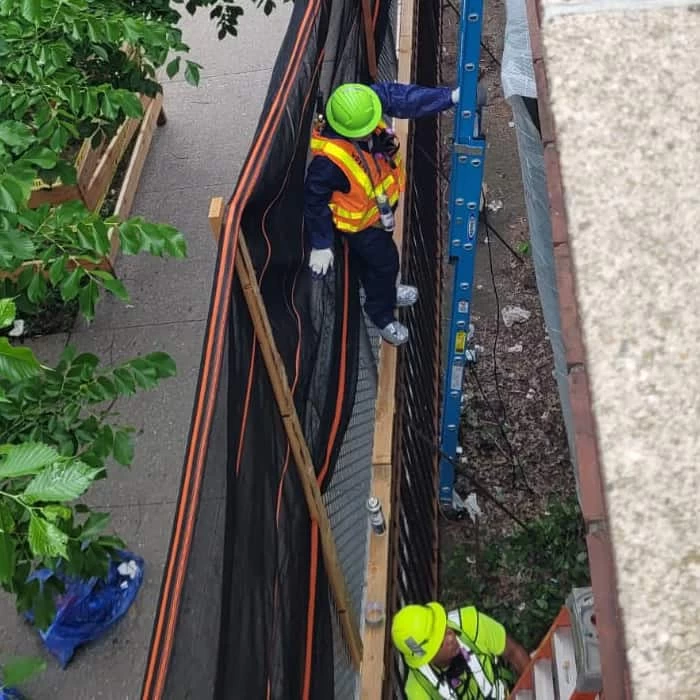
I needed a professional consultation explanation of procedure for safe removal of Asbestos in my apartment complex. Without having an account yet, I was very impressed with the caring, knowledgeable and generous advice offered by Jessica, and will look forward to doing business in the future. Thank you so much! I feel much more informed about a sometimes scary endeavor. Peace. Nancy Silva Mineola, NY.
Mia Munoz
Used this company to clean up some water flood in my house. They were fast and easy to work with.very professional, Would recommend to anyone!
Nini Valle
Great company, had a flood and they responded quickly and efficiently. Billed my insurance company directly. I highly recommend this company!
joe colapietro, jr
I had pipe freeze in my basement right before a snow storm and they made to within an hour to help start the clean up process. They we by our side throughout the entire process and even helped with the insurance company. They did such a great job with the cleanup, repair, remidiation, I contracted them to perform the repairs and finishes in the basement. They came with enough manpower and material to get the job done. Leo and Jessica were nothing but a pleasure to deal with!!
Cristian Arredondo c
I had some water damage in my home and Green Island was able to take care of my issue quickly and effectively. I am very pleased with the work they did. They responded quickly and were very professional.
Michael M
Outstanding service! From the office to the field crew everyone was friendly, helpful and responsive. I highly recommend Green Island Group.
Your Home Back to Normal — No Loose Ends Left Behind
Flooding in Upper Nyack isn’t just a weather inconvenience. The village sits directly on the tidal Hudson River, and when a storm rolls in during high tide, water doesn’t ask permission before it finds its way into your basement. The combination of storm surge, upslope runoff from the Route 9W corridor, and flash flood events that the National Weather Service names Upper Nyack in specifically — these aren’t rare occurrences. They’re the reality of living here.
What that means practically is that the damage you’re dealing with isn’t always what you can see. Water moves through wall cavities, saturates subfloors, and sits inside insulation long after the visible pooling is gone. In a village where nearly every home was built before 1978, that hidden moisture doesn’t just threaten your drywall — it threatens the original hardwood floors, the plaster walls, and the building materials underneath them that may contain asbestos or lead. A restoration that only addresses the surface leaves the real problem behind.
When the job is done right, you’re not just dry — you’re protected. No mold developing inside walls six months later. No structural damage compounding quietly while you assume everything is fine. No surprise findings from the next contractor who opens a wall and discovers what the last one missed. That’s the outcome that actually matters for a home in Upper Nyack.
Licensed Flood Restoration Contractor Rockland County
12 Years, 5,000 Projects, Every License That Matters in Upper Nyack
We’ve been doing environmental restoration work in New York for over 12 years, with more than 5,000 completed projects across the state. That’s not a number pulled from a brochure — it’s the kind of volume that means your specific situation, whatever it is, has almost certainly come up before.
What separates us in Rockland County specifically is the credential stack. We hold a NYS DOL Mold License, NYS DOL Asbestos License, USEPA Lead and RRP Certification, and IICRC Water Damage Certification — all of them. In a village like Upper Nyack, where homes along North Broadway date back to the 1800s and the majority of the housing stock predates 1978, that combination isn’t a bonus. It’s the baseline requirement for doing the job legally and safely.
We’re NYS and NYC M/WBE Certified, fully insured including liability and workers’ compensation, and are an approved contractor for the NYS Office of General Services. Every job we complete is backed by a 100% Satisfaction Guarantee.
From the First Call to the Final Walkthrough — Here's What to Expect
The moment you call, the clock starts. We dispatch a crew to Upper Nyack within 60 minutes — not a callback, not a scheduling window, an actual response. When our team arrives, the first priority is stopping ongoing damage. Industrial water extraction equipment removes standing water fast, because every hour that water sits, it’s working its way further into your floors, walls, and framing.
From there, the process moves into detection. Thermal imaging cameras and professional moisture meters map out exactly where water has traveled — including inside wall cavities and beneath flooring that looks dry on the surface. This step matters more in Upper Nyack’s older homes than it does anywhere else, because original plaster walls and century-old subfloors hold moisture differently than modern construction. Skipping this step is how mold problems get missed until they’re expensive.
Once the moisture map is complete, structural drying begins using commercial-grade dehumidifiers and air movers positioned to pull moisture out of the building envelope efficiently. If mold is already present, we handle remediation under our NYS DOL Mold License — not as a separate contractor you have to find yourself, but as part of the same job. The same applies to any asbestos or lead-containing materials disturbed by the water. We handle the required NYS DEP notifications, pull the necessary village building permits for structural repairs, and carry the work through to full reconstruction — drywall, flooring, paint — so you’re not left managing the finish line on your own.
Mold Remediation and Water Damage Repair Upper Nyack
Full Restoration Coverage Built for Rockland County's Older Homes
Flood restoration in Upper Nyack covers more ground than it does in newer suburban communities, and the scope of what we handle reflects that. Emergency water extraction and structural drying are the starting point — not the whole job. From there, the work extends into mold prevention and remediation, asbestos abatement where building materials have been disturbed, lead-safe protocols for pre-1978 homes, and complete structural reconstruction including drywall, flooring, and paint.
We bill insurance directly, which means you don’t need to front the cost while the claim is being processed. For situations where insurance doesn’t cover the full scope — which is common in Upper Nyack, where standard homeowners policies typically exclude external flood damage from storm surge or overflowing waterways — we offer financing up to $200,000 at 0% APR. That gap between what your policy pays and what the job actually costs doesn’t have to stall the restoration.
Rockland County Sewer District No. 1 serves Upper Nyack, and sewage backup events — which happen when heavy rain overwhelms the municipal system — require a different remediation protocol than clean water flooding. We provide black water decontamination as part of what’s available here, handled under the same licensed, insured umbrella as every other part of the job. One company, one point of contact, nothing handed off.
How quickly does mold start growing after a flood in Upper Nyack?
Mold can begin establishing itself within 24 to 48 hours of a flood event — and in Upper Nyack’s older housing stock, that timeline is a real concern. Homes with original plaster walls, older insulation, and wood framing that has absorbed moisture over decades provide exactly the kind of organic material mold needs to take hold quickly. The issue isn’t just speed — it’s that mold in these homes often starts inside wall cavities where you can’t see it, which means visible surface mold is usually a sign that the problem is already further along than it looks.
The practical takeaway is that waiting to call — even by a day — meaningfully increases both the remediation scope and the cost. If you’ve had water in your home after a flash flood warning or a storm surge event in Upper Nyack, getting a moisture assessment done quickly is the most important thing you can do. We use thermal imaging to find moisture that isn’t visible, which is the only reliable way to catch mold growth before it spreads behind walls.
Does homeowners insurance cover flood damage from the Hudson River in Upper Nyack?
Standard homeowners insurance policies generally do not cover flooding that originates outside the home — which includes storm surge from the Hudson River, overflowing waterways, and surface water from heavy rainfall. That type of coverage falls under separate flood insurance, typically through FEMA’s National Flood Insurance Program. If you don’t have a separate flood policy, damage from an external flood event is likely not covered by your standard policy, regardless of how severe it is.
Even with flood insurance in place, NFIP policies have coverage limits that may fall short of the actual restoration cost in a high-value Upper Nyack home. The program caps building coverage at $250,000 for residential properties, and full restoration of an older home with environmental hazards — asbestos abatement, lead-safe protocols, structural reconstruction — can exceed that in significant damage scenarios. Our 0% APR financing up to $200,000 exists specifically for situations where the insurance payout and the actual job cost don’t line up.
What makes flood restoration in older Upper Nyack homes more complicated?
The age of the housing stock is the main factor. Homes along North Broadway and throughout the village range from the early 1800s to mid-20th century construction, and nearly all of them predate 1978 — the year lead paint was banned for residential use. Many also contain asbestos in insulation, floor tiles, pipe coverings, and ceiling materials. When flood water penetrates these homes, it doesn’t just wet the drywall. It can saturate asbestos-containing materials and disturb lead paint during the remediation process itself, which creates a legal and health obligation that goes well beyond basic water extraction.
New York State requires a NYS DOL Mold License for any mold remediation work, a NYS DOL Asbestos License for any asbestos abatement, and USEPA RRP Certification for work that disturbs lead paint in pre-1978 homes. A restoration company that doesn’t hold all three of those credentials cannot legally complete the full scope of work in most Upper Nyack homes. We hold all of them, which means the job doesn’t have to stop partway through because a separate licensed contractor needs to be brought in.
What should I do immediately after my basement floods in Upper Nyack?
The first thing to do is make sure it’s safe to enter the space. If there’s any chance the water has reached electrical outlets, panels, or appliances, don’t go in until the power to that area has been shut off. Water and live electricity in the same space is the most immediate danger in a basement flood scenario, and it’s one that’s easy to overlook when you’re focused on the damage itself.
Once it’s safe, call for professional water extraction as quickly as possible. Don’t wait to see if the water recedes on its own — every hour it sits, it’s migrating further into your flooring, framing, and walls. Document everything with photos before any cleanup begins, because your insurance adjuster will need that documentation. Avoid using household fans or a shop vac as a substitute for industrial drying equipment — they move surface air but don’t pull moisture out of building materials, which is where the real damage happens in Upper Nyack’s older homes. We can be on-site within 60 minutes of your call, and our team will handle documentation, extraction, and the full assessment from there.
How do you handle sewage backup cleanup differently from regular flood water?
Sewage backup — what the industry classifies as black water — is a Category 3 contamination event, which means it carries bacteria, pathogens, and waste that require a completely different remediation protocol than clean water flooding. You can’t simply extract the water and dry the space. Any porous materials that came into contact with sewage — drywall, insulation, carpet, wood framing — typically need to be removed and disposed of properly, not dried in place. The space also needs to be disinfected and treated before reconstruction begins.
In Upper Nyack, sewage backups are a real risk during heavy rain events because the municipal system — served by Rockland County Sewer District No. 1 — can become overwhelmed when significant rainfall hits in a short period. Flash flood events, which the National Weather Service has specifically warned about in Upper Nyack as recently as July 2025, are exactly the kind of scenario that can push sewage back through floor drains and basement fixtures. We handle black water remediation under the same licensed, insured framework as all other restoration work, with the proper containment, removal, and decontamination protocols required for this category of damage.
How does Green Island Group handle the insurance claim process for Upper Nyack homeowners?
We bill insurance carriers directly, which means you’re not writing a check upfront and waiting to be reimbursed. Our team documents the damage thoroughly — photos, moisture readings, scope of work — in a format that insurance adjusters need to process the claim. That documentation matters, because a well-documented claim moves faster and is less likely to result in a disputed payout than one where the homeowner is trying to reconstruct the damage record after the fact.
For Upper Nyack homeowners specifically, it’s worth understanding that the type of flooding most common here — storm surge from the Hudson, surface water from flash flood events, upslope runoff from the Route 9W corridor — often falls outside standard homeowners insurance coverage. If you have a separate NFIP flood policy, that coverage applies, but it has limits. If the restoration cost exceeds what your coverage pays out, our 0% APR financing up to $200,000 covers the gap so the work doesn’t have to stop while you figure out the difference. The goal is to make sure the financial side of this doesn’t slow down the restoration — because the longer damage sits, the more expensive the eventual fix becomes.