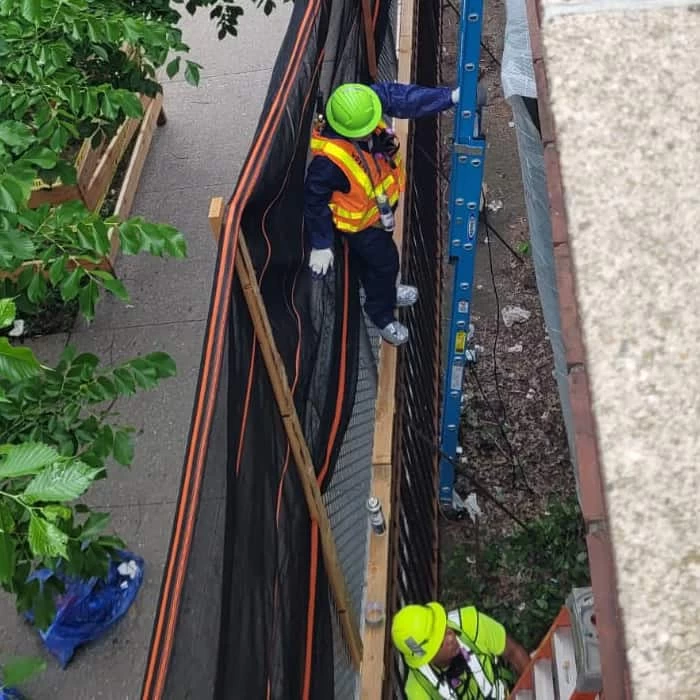
I needed a professional consultation explanation of procedure for safe removal of Asbestos in my apartment complex. Without having an account yet, I was very impressed with the caring, knowledgeable and generous advice offered by Jessica, and will look forward to doing business in the future. Thank you so much! I feel much more informed about a sometimes scary endeavor. Peace. Nancy Silva Mineola, NY.
Mia Munoz
Used this company to clean up some water flood in my house. They were fast and easy to work with.very professional, Would recommend to anyone!
Nini Valle
Great company, had a flood and they responded quickly and efficiently. Billed my insurance company directly. I highly recommend this company!
joe colapietro, jr
I had pipe freeze in my basement right before a snow storm and they made to within an hour to help start the clean up process. They we by our side throughout the entire process and even helped with the insurance company. They did such a great job with the cleanup, repair, remidiation, I contracted them to perform the repairs and finishes in the basement. They came with enough manpower and material to get the job done. Leo and Jessica were nothing but a pleasure to deal with!!
Cristian Arredondo c
I had some water damage in my home and Green Island was able to take care of my issue quickly and effectively. I am very pleased with the work they did. They responded quickly and were very professional.
Michael M
Outstanding service! From the office to the field crew everyone was friendly, helpful and responsive. I highly recommend Green Island Group.
What Staying Dry Actually Protects in Valley Cottage
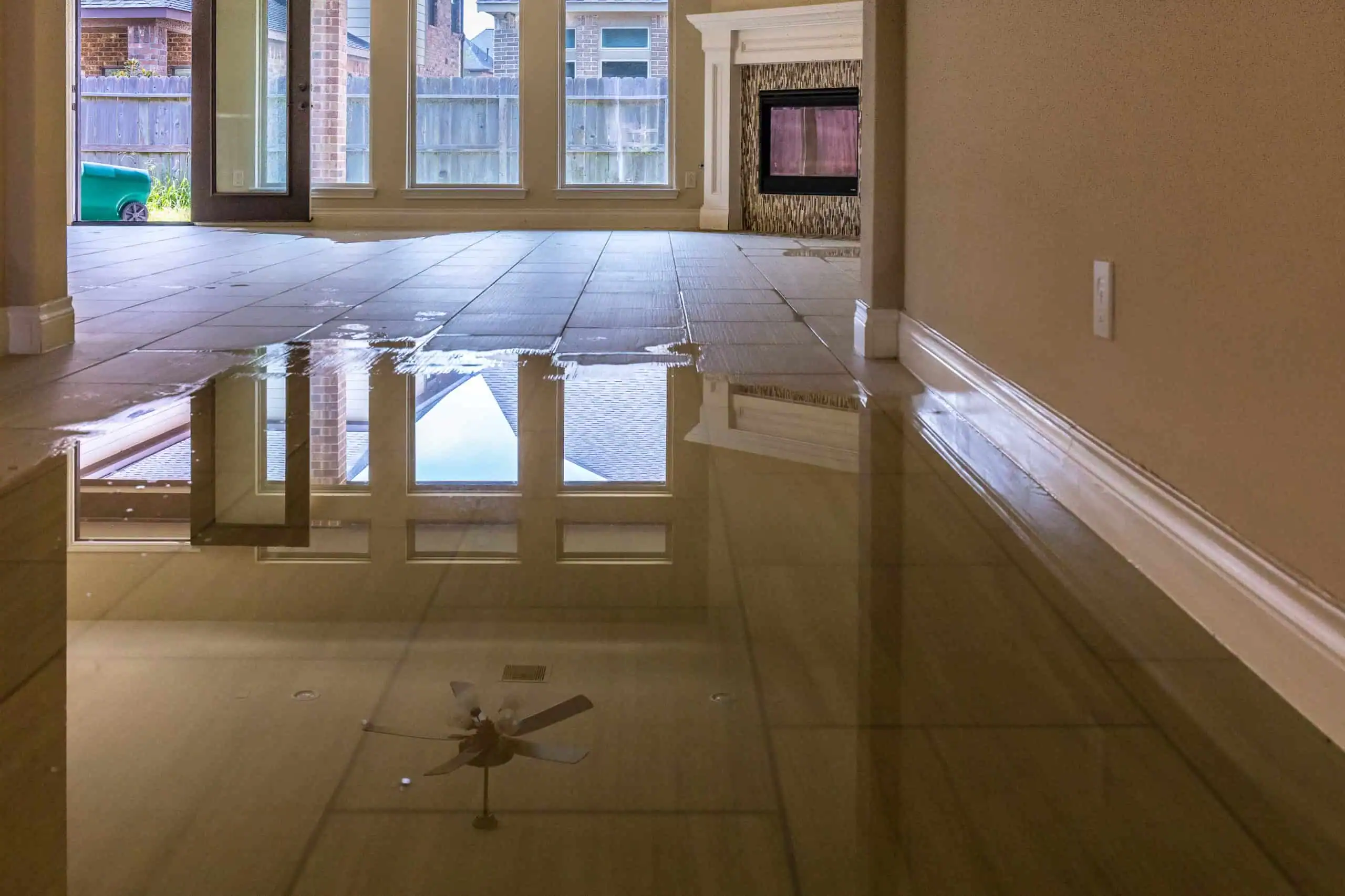
Valley Cottage homes are not cheap. With median values pushing past $512,000 and most of them built between the 1950s and 1970s, a flood event here is not just a wet floor — it’s a direct threat to your biggest asset. When water sits in a home that age, it doesn’t just damage what you can see. It moves into wall cavities, saturates wood framing, and finds its way into materials that were installed before modern waterproofing standards existed.
The hilly terrain around Rockland Lake funnels stormwater straight into residential neighborhoods when Clarkstown gets hit hard — and it does get hit hard. One summer storm dropped five inches of rain in just over five hours here, triggering 32 emergency dispatches across the county. Streets like Branchville Road felt it directly. When that kind of water enters a home, what happens in the first few hours determines whether you’re dealing with a restoration or a gut job.
Getting the water out fast matters. Getting the hidden moisture — the kind thermal imaging finds behind plaster walls and under hardwood subfloors — matters just as much. A properly dried home stops the damage clock. It stops mold before it starts. And it protects the equity you’ve spent years building in a neighborhood that doesn’t turn over easily.
Licensed for Every Risk Your Valley Cottage Home Carries
We’ve been doing this work in New York for over 12 years, with more than 5,000 completed restoration projects across the state. That includes Valley Cottage and Rockland County homes — the split-levels, the ranches, the colonials built when this hamlet was growing into what it is today. We know what those homes are made of, and we know what flood water does to them.
What separates us from most of the names you’ll find online is the credential stack. NYS DOL Mold License. NYS DOL Asbestos License. USEPA Lead/RRP Certification. IICRC Water Damage Restoration. NYC General Contractor. NYS and NYC M/WBE Certified. That last one matters — it means the State of New York has audited and verified our business, not just a website claiming to serve your area.
In Valley Cottage, where 16% of homes predate the 1940s and most were built before 1980, the odds that your flood event disturbs asbestos-containing materials or lead paint are real. Most companies handle the water and leave the rest to someone else. We handle all of it, legally and completely, under one contract.
From Your First Call to a Fully Restored Valley Cottage Home
When you call, the clock starts. We commit to being on-site within 60 minutes — not a general availability window, a specific promise. The first thing that happens is extraction. Industrial water removal equipment goes to work immediately, pulling standing water before it can migrate further into the structure.
Once the visible water is gone, the real assessment begins. Thermal imaging cameras and calibrated moisture meters map every pocket of saturation in your walls, floors, and framing. In Valley Cottage homes with plaster walls and older construction, this step is not optional — water hides in places a visual inspection will completely miss. Industrial drying equipment gets placed based on that moisture map, not guesswork, and readings are tracked until the structure reaches safe levels.
If the assessment turns up asbestos-containing materials, lead paint disturbance, or mold growth — all common in pre-1980 Valley Cottage homes — those are handled in-house under the appropriate NYS DOL and EPA certifications before reconstruction begins. The Clarkstown Building Department permit process for any structural repairs is managed as part of the job. When the work is done, you get a home that’s been dried, treated, and rebuilt to code — not handed back to you with a moisture problem waiting to surface six months later.
Full-Scope Restoration Built for Valley Cottage Homes
Flood restoration in Valley Cottage is not a single service — it’s a sequence of connected steps that have to be done in the right order by people who are licensed to do each one. We cover the entire sequence: emergency water extraction, structural drying, thermal moisture mapping, mold remediation, asbestos abatement, lead-safe work practices, HVAC cleaning, and complete reconstruction through to finished surfaces.
The homes in Valley Cottage demand that full range. A 1968 colonial near Rockland Lake State Park has different restoration challenges than a newer build — older pipe wrapping, original floor tiles, and framing that’s been absorbing humidity for decades. When water enters that structure, the response has to account for all of it. Cutting corners at any stage — leaving marginal moisture in a wall, skipping mold prevention, disturbing asbestos without proper abatement — creates a problem that shows up later and costs far more to fix.
Billing goes directly to your insurance carrier, so you’re not fronting costs while the claim processes. For homeowners without flood coverage — and standard homeowners policies in New York typically do not cover external storm flooding — we offer financing up to $200,000 at 0% APR. No other restoration company serving Valley Cottage offers that. The work gets done immediately, the damage stops spreading, and the financial piece gets structured around you.
Does homeowners insurance cover basement flooding in Valley Cottage, NY?
Standard homeowners insurance policies in New York typically do not cover flooding caused by external storm events — that requires a separate flood insurance policy, usually through the National Flood Insurance Program (NFIP). What standard policies generally do cover is sudden and accidental water damage from internal sources, like a burst pipe, a failed sump pump, or an appliance leak, depending on your specific policy language.
This is an important distinction for Valley Cottage homeowners because the flooding risk here comes from multiple directions. A summer storm that overwhelms Clarkstown’s stormwater drainage and backs water into your basement is likely an external flood event — potentially not covered without separate flood insurance. A sump pump that fails during that same storm and allows water to enter may be covered if you have sump pump failure coverage as a rider. We bill insurance companies directly and can help you understand what documentation your adjuster will need to support your claim.
How fast does mold start growing after a flood in my home?
Mold can begin developing within 24 to 48 hours of a water event under the right conditions — and the conditions in a Valley Cottage home during a warm, humid Rockland County summer are often exactly right. Drywall, wood framing, carpet padding, and the cellulose insulation common in 1960s-era construction are all materials mold colonizes quickly when they stay wet.
The part that catches homeowners off guard is that mold doesn’t need standing water to grow. It needs moisture content above a certain threshold — and surfaces that feel dry to the touch can still hold enough moisture to support growth. That’s why moisture mapping with thermal imaging matters so much after a flood. If the drying process is based on what looks dry rather than what reads dry on a calibrated meter, you can close up a wall with a mold problem already developing inside it. We don’t sign off on a job until moisture readings confirm the structure is genuinely dry — not just surface dry.
What happens if my flooded Valley Cottage home has asbestos or lead paint?
It’s a legitimate concern in Valley Cottage. The majority of this hamlet’s housing stock was built between the 1950s and 1970s, and a significant share predates the 1940s. Homes from that era commonly contain asbestos in floor tiles, pipe insulation, ceiling texture, and roofing materials — as well as lead paint on interior trim, windows, and exterior surfaces. When flood water saturates those materials or when restoration work requires cutting, removing, or disturbing them, you are legally required to have a licensed contractor handle the abatement.
New York State requires a separate NYS DOL Asbestos Contractor License for any asbestos abatement work, and the EPA’s Renovation, Repair and Painting Rule requires USEPA Lead/RRP Certification for work that disturbs lead paint in pre-1978 homes. We hold both. Most restoration companies you’ll find online do not — which means they either skip the testing, subcontract the abatement and add markup, or leave you exposed to regulatory and health risk. Having one company handle water damage, mold, asbestos, and lead under a single contract is not a luxury in Valley Cottage — it’s the practical reality of restoring an older home correctly.
How long does flood restoration typically take for a home in Valley Cottage?
The honest answer is that it depends on what the moisture mapping turns up and whether hazardous materials are involved. A straightforward basement flood from a sump pump failure — caught quickly, no mold, no asbestos — can be dried and restored in roughly five to seven days for the remediation phase, with reconstruction time added on top depending on the scope of damage. If water sat for an extended period before discovery, or if the flooding affected multiple areas of the home, the timeline extends.
In Valley Cottage specifically, a few factors can add time to the process. Homes near Rockland Lake State Park or along drainage corridors that experience groundwater intrusion sometimes require additional drying cycles because the source of moisture hasn’t been fully resolved. Older homes with plaster walls and solid wood framing dry more slowly than modern drywall construction. And if asbestos abatement is required, New York State mandates a notification period before work can begin. We’ll give you a realistic timeline after the initial assessment — not an optimistic estimate that gets revised later.
Can I stay in my house during flood restoration in Valley Cottage?
It depends on the extent of the damage and what the restoration process involves. For a contained basement flood with no mold or hazardous materials, staying in the home is often possible — the work is below grade, industrial drying equipment runs continuously, and the living areas remain accessible. It’s loud and there’s some disruption, but it’s manageable for most households.
If the flooding affected living spaces, if mold remediation is required, or if asbestos abatement is part of the scope, temporary displacement is usually necessary for that phase of the work. Asbestos abatement in particular requires the affected area to be sealed and cleared before reoccupancy is safe, per New York State DOL requirements. We’ll be straightforward with you about what the assessment reveals and what it means for your household — including whether you need to make temporary arrangements and for how long. If your insurance policy includes additional living expenses (ALE) coverage, that cost may be reimbursable under your claim.
Why does flood restoration in older Valley Cottage homes cost more than I expected?
Because older homes in Valley Cottage — built in the 1950s through 1970s — carry a risk profile that newer construction doesn’t. When you restore a home built in 1965, you’re not just drying drywall and replacing carpet. You may be dealing with plaster walls that absorb water differently, hardwood subfloors that cup and warp, block or stone foundation walls with different drying dynamics, and building materials that require licensed abatement before they can be disturbed. Each of those factors adds legitimate cost to the process.
The other variable that surprises homeowners is hidden damage. What looks like a minor basement flood on the surface can involve water that wicked into wall assemblies, traveled under flooring, and saturated insulation over a wide area. Cutting corners on the drying or skipping the moisture mapping to save money upfront typically means a mold problem or structural issue surfaces six to twelve months later — at a higher cost and with more disruption than doing it right the first time. Our direct insurance billing and 0% APR financing up to $200,000 exist specifically because flood restoration in a high-value, older housing market like Valley Cottage deserves to be done completely — not scaled back because of cost pressure.