When the Atlantic Pushes Back, Your Basement Pays First
One call gets a licensed crew moving toward Amagansett 24/7, every day of the year, with the equipment and credentials to protect what you’ve built here.
I needed a professional consultation explanation of procedure for safe removal of Asbestos in my apartment complex. Without having an account yet, I was very impressed with the caring, knowledgeable and generous advice offered by Jessica, and will look forward to doing business in the future. Thank you so much! I feel much more informed about a sometimes scary endeavor. Peace. Nancy Silva Mineola, NY.
Mia Munoz
Used this company to clean up some water flood in my house. They were fast and easy to work with.very professional, Would recommend to anyone!
Nini Valle
Great company, had a flood and they responded quickly and efficiently. Billed my insurance company directly. I highly recommend this company!
joe colapietro, jr
I had pipe freeze in my basement right before a snow storm and they made to within an hour to help start the clean up process. They we by our side throughout the entire process and even helped with the insurance company. They did such a great job with the cleanup, repair, remidiation, I contracted them to perform the repairs and finishes in the basement. They came with enough manpower and material to get the job done. Leo and Jessica were nothing but a pleasure to deal with!!
Cristian Arredondo c
I had some water damage in my home and Green Island was able to take care of my issue quickly and effectively. I am very pleased with the work they did. They responded quickly and were very professional.
Michael M
Outstanding service! From the office to the field crew everyone was friendly, helpful and responsive. I highly recommend Green Island Group.
When the water is gone and the fans stop running, what you actually want is confidence confidence that the moisture is truly out, that nothing is growing behind your walls, and that your property is the same asset it was before the storm hit. That’s the real outcome. Not just a dry floor, but a home you can trust again.
Amagansett sits at the edge of the Atlantic, and the water table here doesn’t behave the way it does twenty miles inland. During a nor’easter or a heavy surge event, groundwater can rise from below your slab before a single drop comes through the door. If you’re not in the house when it happens and most Amagansett property owners aren’t that water has hours or days to spread before anyone notices. Every hour past the first 24 compounds the damage, and mold doesn’t wait for a convenient inspection window.
The homes here aren’t cookie-cutter. Many were built long before modern building materials existed, and some contain original-construction materials that require careful, licensed handling the moment flooding disturbs them. Getting the cleanup right the first time isn’t just about drying it’s about protecting the full value of a property that took decades to build or acquire.
Licensed Basement Flooding Remediation, Suffolk County
Every License the East End Actually Requires
We’ve been handling environmental restoration and remediation across Long Island and New York City for over 12 years, with more than 5,000 completed projects across the state. Our company is led by CEO Jessica Dussan and VP Leo Torres people who are named in real customer reviews, not hidden behind a brand.
Working in Amagansett and East Hampton Town means navigating a specific regulatory environment: the Town’s Flood Hazard Overlay District, active FEMA flood zone designations, and new NYS building code requirements that took effect December 31, 2025. We hold a Suffolk County General Contractor license, NYS DOL Mold and Asbestos certifications, and USEPA Lead credentials the full stack required to legally handle what flooding in an older Amagansett home can uncover. No subcontracting, no gaps, no discovering three weeks later that something was missed.
We’re also an approved emergency response contractor for the NYS Office of General Services and a state-certified MBE/WBE credentials that are independently verified, not self-declared.
What Actually Happens From the First Call to the Final Walkthrough
The first call gets someone moving. We respond 24 hours a day, 365 days a year and because Route 27 is the only road into this part of the South Fork, response time matters more here than almost anywhere else on Long Island. When our crew arrives, the first priority is stopping active water intrusion and categorizing the source. A burst pipe is handled differently than storm surge, and storm surge is handled very differently than a sewage backup. Getting that classification right drives every decision that follows.
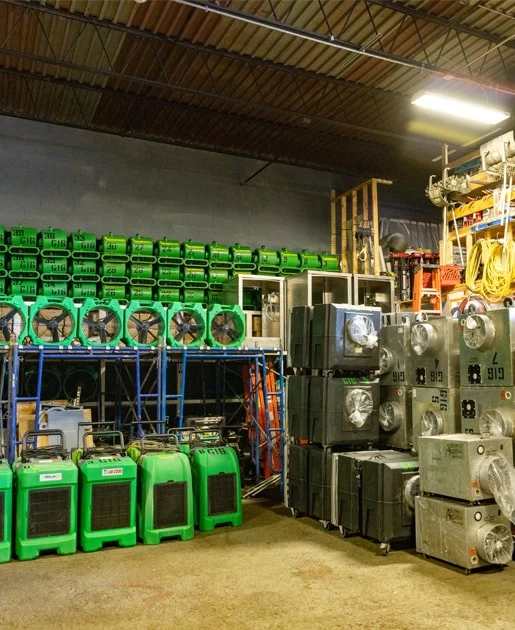
From there, industrial-grade extraction equipment pulls standing water while thermal imaging and calibrated moisture meters map exactly where water has traveled behind walls, beneath flooring, inside structural cavities. In Amagansett’s older homes, that step is especially important. Wide-plank hardwood floors and historic millwork can hold moisture invisibly for weeks if the drying phase isn’t guided by real data. Fans and dehumidifiers run until readings confirm the structure has reached safe moisture levels, not just until things look dry to the eye.
If mold is found, or if the flood disturbed materials that require licensed environmental handling, that work happens under the same contract no separate calls, no coordination between multiple vendors. Once the structure is confirmed dry and safe, full reconstruction follows, with permits pulled through East Hampton Town and all work documented for your insurance claim, whether that’s a standard homeowners policy, an NFIP flood policy, or both.
Flooded Basement Cleaning Services, East Hampton NY
Full-Scope Cleanup Built for High-Value Coastal Properties
Flooded basement cleanup in Amagansett isn’t a single service it’s a sequence of connected decisions, and each one affects the next. We cover the entire sequence: emergency water extraction, structural drying with moisture verification, antimicrobial treatment, mold assessment and remediation, hazardous material handling where applicable, and full reconstruction with permits. The goal is one contractor, one contract, and a finished property not a handoff chain where something falls through the cracks between vendors.
For properties in Amagansett’s designated flood zones including areas near Atlantic Avenue Beach, Indian Wells Beach, and the low-lying Napeague corridor documentation is as important as the physical work. NFIP flood insurance policies require thorough damage records to support a valid claim, and East Hampton Town’s permitting process for post-flood repairs requires specific documentation that a licensed General Contractor must provide. We handle both sides: the physical restoration and the paper trail your insurer and the town need to see.
If your property was built before 1980 and many in Amagansett were built long before that flooding can disturb asbestos insulation, lead paint, or other legacy materials that require NYS DOL-licensed handling. That work is included in the scope when it’s needed, not treated as an add-on that requires a separate specialist. For seasonal property owners managing the situation remotely, that single-source accountability is the difference between a resolved problem and a drawn-out ordeal.
Does homeowners insurance or NFIP flood insurance cover basement flooding in Amagansett?
It depends on the source of the water, and that distinction matters a great deal in Amagansett. Standard homeowners insurance typically covers sudden, accidental water damage a burst pipe, a failed sump pump, or an appliance leak. It generally does not cover flooding caused by storm surge, rising groundwater, or water that enters from outside the structure. That’s where a National Flood Insurance Program policy comes in.
Many Amagansett properties carry both types of coverage, especially those in FEMA-designated flood zones near the Atlantic coast. The challenge is that the two policies have different documentation requirements and different definitions of what qualifies as a covered loss. We bill insurance companies directly and provide the damage documentation each policy type requires. If you’re not sure which policy applies to your specific situation, our crew can help you understand what they’re seeing and how it’s typically categorized so you’re not navigating that conversation with your adjuster alone.
How quickly does mold start growing after a basement floods on Long Island?
Mold can begin colonizing within 24 to 48 hours of a flooding event and in Amagansett’s coastal climate, where humidity levels are naturally elevated year-round, that window can be even shorter than it would be in a drier inland environment. The Atlantic moderates temperatures here, which means there’s rarely a period where the air is too cold or too dry to support mold growth the way there might be further inland during winter months.
The more pressing concern for seasonal property owners is what happens when no one is in the house. If a nor’easter floods your basement in November and the house sits empty until Thanksgiving, mold has had weeks to establish behind walls and beneath floors before anyone sees it. Delaying professional cleanup past 72 hours routinely adds $2,000 to $8,000 or more in remediation costs on top of the original water damage. The faster the structure gets dried to verified moisture levels, the less you’re dealing with on the back end.
My Amagansett home is older does that change what's involved in a basement flood cleanup?
Yes, significantly. Amagansett has residential structures dating back to the 18th and 19th centuries, and even homes built in the mid-20th century may contain materials that require licensed environmental handling when disturbed by water. Asbestos insulation was commonly used in pipe wrap, floor tiles, and ceiling materials in homes built before 1980. Lead paint was standard in homes built before 1978. When flooding disturbs these materials or when demolition is needed to access wet structural components the work must be performed by a contractor holding the appropriate NYS Department of Labor certifications.
We hold NYS DOL Asbestos and Mold licenses, along with USEPA Lead certification. If these materials are present and affected by the flood, they’re handled under the same contract rather than requiring you to bring in a separate environmental firm. For a property owner managing the situation remotely, that matters it means one crew, one timeline, and one point of accountability from start to finish.
What permits are needed for basement flood repairs in East Hampton Town?
Any structural repairs, material removal, or reconstruction following a flood event in East Hampton Town require building permits from the town’s Building Department. For properties in designated flood zones which includes a significant portion of Amagansett given its proximity to the Atlantic additional documentation may be required, including elevation certificates and compliance with the Town’s Flood Hazard Overlay District regulations under Chapter 255, Article 3 of the town code.
It’s also worth knowing that New York State updated its minimum elevation requirements for construction in flood hazard areas, with the new standards taking effect December 31, 2025. Any permit application filed on or after that date must comply with the revised NYS Residential and Building Codes. We’re a licensed Suffolk County General Contractor and handle the permitting process directly pulling the permits, providing required documentation, and ensuring all reconstruction meets current code. You don’t need to manage that process yourself, especially if you’re not local to the area during the repair.
Can I handle flooded basement cleanup myself instead of calling a professional?
For a small, contained water event a minor appliance leak, a manageable amount of clean water from a known source some homeowners do handle initial cleanup on their own. But there are several situations where that approach creates more problems than it solves, and most basement flooding events in Amagansett fall into at least one of them.
Water travels further than it looks. Without thermal imaging and moisture meters, it’s easy to believe a space is dry when moisture is still present inside wall cavities, beneath subfloor material, or behind historic millwork. That hidden moisture is where mold establishes itself. If the flooding involves any outside water, storm surge, or sewage backup, you’re dealing with Category 3 contamination which carries health risks and requires licensed disposal protocols under OSHA and IICRC standards. If your home predates 1980, disturbing wet materials without proper assessment creates potential asbestos and lead exposure. The cost of a professional cleanup is real, but it’s consistently less than the cost of a mold remediation job that could have been avoided, or a failed insurance claim due to incomplete documentation.
How does Green Island Group handle flooded basement jobs for Amagansett homeowners who aren't on-site?
Most Amagansett property owners aren’t in the house when flooding happens that’s just the reality of a community where the majority of homes are seasonal or part-time residences. We’re set up to work this way. When you call, our crew heads to your property, assesses the situation, and communicates clearly before any significant work begins. You’ll know what we’re seeing, what the plan is, and what it will cost without needing to be standing in the basement yourself.
Throughout the job, documentation is ongoing: photos, moisture readings, material assessments, and damage records that support your insurance claim. We bill your insurance company directly, so you’re not coordinating between a contractor and an adjuster from a distance while also trying to manage everything else. Jessica Dussan and Leo Torres lead our company and are personally reachable not a call center routing you to whoever is available. For a homeowner who needs to trust a crew to work unsupervised in a property worth millions, that accountability isn’t a small thing.