When the Bay Pushes Back, Your Amityville Basement Needs More Than a Mop
Amityville sits right on the Great South Bay and when a nor’easter rolls through or the storm sewer backs up, basements flood fast. We respond 24/7 with licensed crews who know exactly what South Shore flooding leaves behind in Amityville homes.
I needed a professional consultation explanation of procedure for safe removal of Asbestos in my apartment complex. Without having an account yet, I was very impressed with the caring, knowledgeable and generous advice offered by Jessica, and will look forward to doing business in the future. Thank you so much! I feel much more informed about a sometimes scary endeavor. Peace. Nancy Silva Mineola, NY.
Mia Munoz
Used this company to clean up some water flood in my house. They were fast and easy to work with.very professional, Would recommend to anyone!
Nini Valle
Great company, had a flood and they responded quickly and efficiently. Billed my insurance company directly. I highly recommend this company!
joe colapietro, jr
I had pipe freeze in my basement right before a snow storm and they made to within an hour to help start the clean up process. They we by our side throughout the entire process and even helped with the insurance company. They did such a great job with the cleanup, repair, remidiation, I contracted them to perform the repairs and finishes in the basement. They came with enough manpower and material to get the job done. Leo and Jessica were nothing but a pleasure to deal with!!
Cristian Arredondo c
I had some water damage in my home and Green Island was able to take care of my issue quickly and effectively. I am very pleased with the work they did. They responded quickly and were very professional.
Michael M
Outstanding service! From the office to the field crew everyone was friendly, helpful and responsive. I highly recommend Green Island Group.
Dry Floors Are Just the Start Here's What Actually Changes in Your Amityville Home
Most homeowners call for help after the water’s already been sitting for hours sometimes longer. That window matters more than most people realize. Mold starts forming within 24 to 48 hours, and in Amityville, where the municipal storm sewer system has been officially identified as deficient, the flooding doesn’t always stop when the rain does. Getting the water out fast is step one. What happens after is where the real work begins.
Amityville’s housing stock is older than most people think about when they’re standing in a wet basement. The median home here was built in 1959, and a significant portion of the village’s homes predate 1950. That means disturbed walls, flooring, and pipe insulation can expose asbestos or lead materials that a standard water damage company isn’t licensed to handle. When you work with a crew that holds NYS DOL Asbestos and USEPA Lead certifications, you’re not just getting a dry basement. You’re getting a basement that’s actually safe to be in afterward.
The outcome you’re looking for isn’t just “no more standing water.” It’s knowing the walls are dry behind the drywall, the mold risk has been assessed and addressed, your insurance claim is documented properly, and someone handled the whole thing without you having to manage five different contractors. That’s what a complete flooded basement remediation looks like and that’s the standard we hold every job to.
Licensed Basement Flood Remediation, Amityville NY
5,000 Jobs In. We've Seen What South Shore Basements Hide.
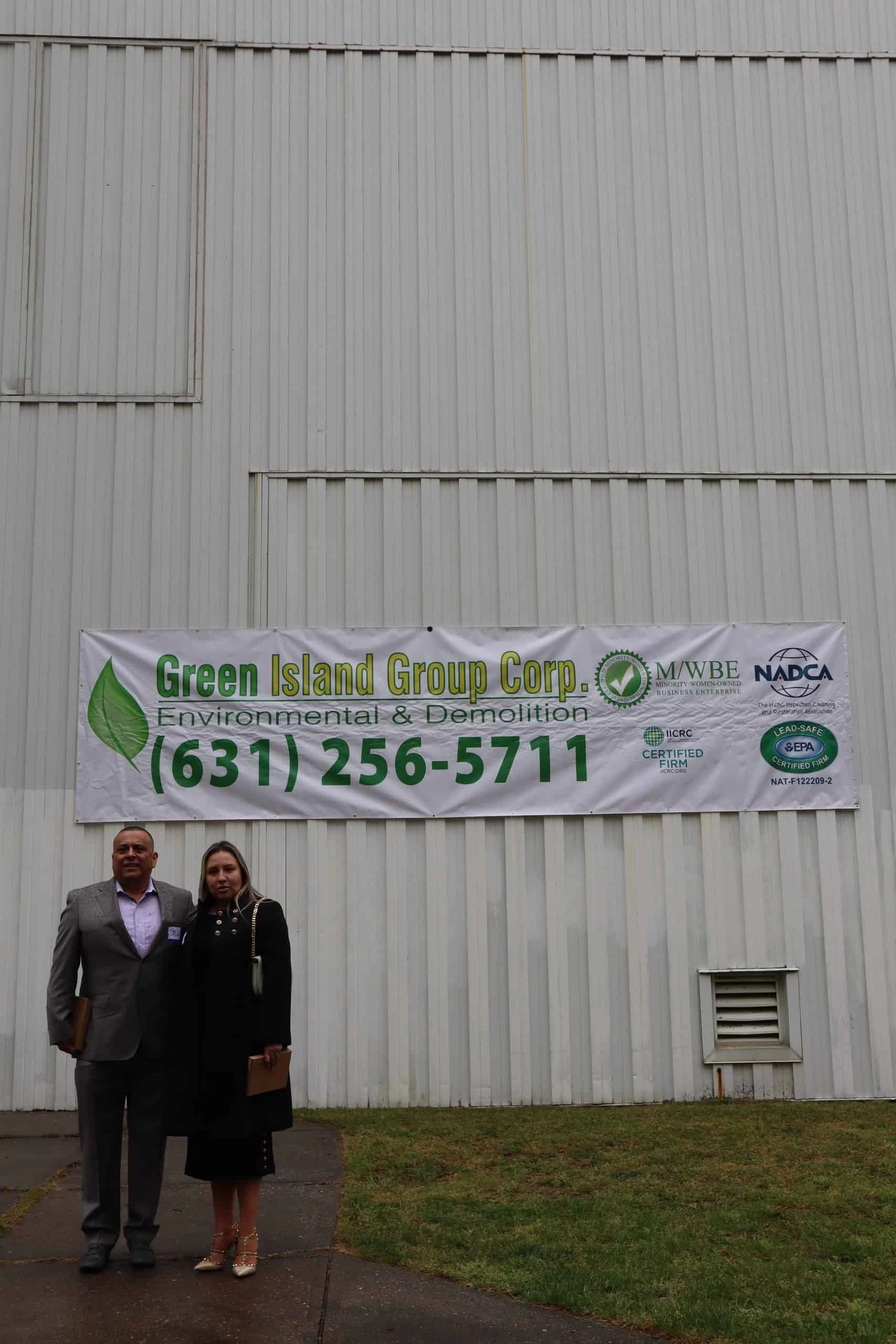
We’re an environmental restoration company based on Long Island, led by CEO Jessica Dussan and VP Leo Torres. We hold a full licensing stack Suffolk County General Contractor, NYS DOL Mold, NYS DOL Asbestos, USEPA Lead, USEPA RRP and we’re an approved emergency response contractor for the NYS Office of General Services. That’s not a credential most restoration companies can claim, because most haven’t earned it.
With more than 5,000 completed projects across New York State, our team has worked through every type of flooding scenario that hits South Shore communities storm surge from the Great South Bay, sewage backups from overwhelmed municipal systems, pipe bursts in 1950s-era plumbing, and mold remediation in finished basements that weren’t properly dried after a previous event. The crew that shows up to your Amityville home has seen what’s behind those walls before. We’ve worked in neighborhoods from Bay Street to Broadway, and we understand the specific challenges Amityville homeowners face.
We’re also a NYS-certified Minority Business Enterprise and Woman-Owned Business Enterprise independently verified, not self-declared. Jessica and Leo are reachable by name. When something needs an answer, you get one from someone who owns the outcome of your job.
Emergency Basement Water Removal Process, Amityville NY
No Guesswork Here's Exactly How We Move Through Your Amityville Job
The first call triggers the clock. We operate 24 hours a day, 365 days a year, and response times are real customers consistently report our crews arriving within an hour. When we reach your Amityville home, the first priority is assessing what type of water you’re dealing with. A pipe burst is very different from a storm sewer backup, and a storm sewer backup in Amityville where the municipal system has documented capacity issues means Category 3 contaminated water that requires a different level of handling entirely.
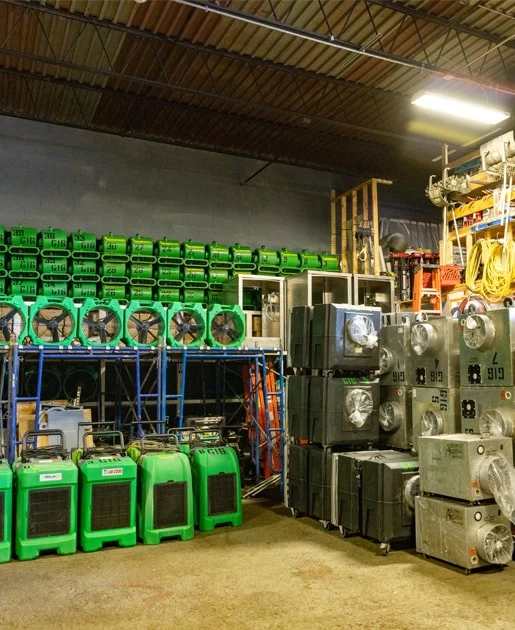
Once the source is identified and contained, extraction begins. Industrial-grade equipment pulls standing water out fast, and then the focus shifts to what the water left behind. Thermal imaging and professional moisture meters locate saturation inside walls, under flooring, and in insulation that looks dry to the naked eye. In a home built in the 1950s or earlier which describes a large share of Amityville’s housing stock that step also includes an assessment for asbestos-containing materials in any disturbed areas before demolition or reconstruction begins.
From there, structural drying, mold remediation, and reconstruction happen under one roof. If your job requires a building permit through the Village of Amityville’s Building Department, we know the process. Throughout the entire job, we handle insurance documentation and communicate directly with your adjuster whether you’re filing under a standard homeowners policy or an NFIP flood policy, which many Amityville homeowners carry given the village’s coastal exposure.
Basement Flooding Remediation Services, Amityville NY
From Bay Street to Broadway Full-Scope Cleanup, One Company
We handle the complete range of basement flooding events that hit Amityville homes from a burst pipe in the middle of February to storm surge intrusion after a nor’easter pushes Great South Bay water toward the harbor. Emergency water extraction, structural drying, sewage backup remediation, mold testing and removal, asbestos and lead abatement, and full basement reconstruction are all handled in-house. You don’t get handed off to a subcontractor mid-job.
The hazmat-capable scope is especially relevant in Amityville. When flooding disturbs the walls or flooring of a home built before 1980 which is the majority of homes in this village there’s a real possibility of encountering asbestos floor tiles, pipe insulation, or joint compound, and lead-based paint on walls and trim. Our environmental licensing covers all of it legally and safely, which is something most competitors in local search results simply cannot say.
Direct insurance billing is standard on every job. We provide the documentation your adjuster needs, communicate with the carrier on your behalf, and keep the process moving so your claim doesn’t stall. For homeowners near Amityville Harbor or in any of the lower-lying streets south of Merrick Road areas that carry documented flood zone exposure that insurance coordination isn’t a convenience. It’s a critical part of getting your home back to normal without the financial uncertainty dragging the process out.
Why does my Amityville basement keep flooding even when it barely rains?
This is one of the most common frustrations for homeowners in Amityville, and the answer is more straightforward than most people expect. The village’s municipal storm sewer system has been officially identified as deficient in the NY Rising Community Reconstruction Program plan developed after Superstorm Sandy. That means during moderate or sustained rainfall events not just major storms the system gets overwhelmed and water has nowhere to go except toward residential foundations and into basements.
If your basement floods regularly during rain events that don’t seem severe, the problem likely isn’t your waterproofing alone. It’s the combination of a high South Shore water table, low-lying street elevations in parts of Amityville, and a storm sewer system that wasn’t built for current demand. A proper flooded basement cleanup addresses the immediate water intrusion, but understanding the source is what helps you make smarter decisions about long-term prevention. We can assess what’s happening and give you a clear picture of what you’re dealing with.
How quickly does mold actually start growing after a basement floods?
Mold can begin establishing itself within 24 to 48 hours of a flooding event and that timeline doesn’t reset just because the water looks like it’s receding. The moisture that matters most is the moisture you can’t see: inside wall cavities, under subfloor material, and in insulation that absorbed water and held it. That hidden saturation is what drives mold growth for days or weeks after a flooding event appears to be over.
In Amityville, where nor’easters can push bay water into neighborhoods for 24 to 48 hours at a stretch, the exposure window is often longer than a single rainfall event. By the time a storm passes and you’re able to assess the damage, mold may already have a head start. Professional moisture detection using thermal imaging and calibrated moisture meters, not just a visual check is the only reliable way to confirm that a basement is actually dry after flooding. That’s a standard part of every job we do, not an add-on.
Does my homeowners insurance cover basement flooding from a storm in Amityville?
It depends entirely on the source of the water, and this is where a lot of Amityville homeowners get caught off guard. Standard homeowners insurance typically covers sudden and accidental water damage a burst pipe, an appliance failure, that kind of thing. It generally does not cover flooding caused by storm surge, rising groundwater, or overland water flow. For that type of damage, you need a separate NFIP flood insurance policy.
After Superstorm Sandy in 2012, many South Shore homeowners learned this distinction the hard way. A significant number of Amityville residents now carry both a standard homeowners policy and an NFIP flood policy particularly those in or near FEMA-designated flood zones, which include areas around Amityville Harbor and the lower-lying streets south of Merrick Road. Navigating two policies, two adjusters, and two sets of documentation after a flooding event is genuinely complicated. We handle that process directly, billing your insurance carrier and managing adjuster communication so you’re not doing it alone while your basement is still wet.
Is it safe to go into my flooded basement before a cleanup crew arrives?
In most cases, you should limit your time in a flooded basement until the water source is identified and the electrical situation is confirmed safe. If there’s any chance water has reached electrical panels, outlets, or wiring which is common in older Amityville homes where electrical systems haven’t been fully updated the risk of electrocution is real. Turn off the power to the basement at the breaker before entering, and if you’re not certain the breaker panel itself is dry, don’t touch it.
Beyond the electrical concern, the type of water matters. If your basement flooded from a storm sewer backup which happens in Amityville when the municipal system is overwhelmed that water is classified as Category 3 contaminated water. It contains bacteria and sewage and should be treated as a health hazard, not just a mess. Limiting contact until a professional crew can assess and contain it is the safer call. Our 24/7 availability means you don’t have to wait long to get someone on-site who can make that determination quickly.
Should I be worried about asbestos in my Amityville home during a basement flood?
If your home was built before 1980 which describes the majority of homes in Amityville, where the median construction year is 1959 it’s a legitimate concern worth taking seriously. Asbestos was commonly used in pipe insulation, floor tiles, ceiling tiles, and joint compound during that era. Under normal conditions, these materials aren’t dangerous. The risk comes when they’re disturbed which is exactly what happens during a flooding event that damages walls, flooring, or exposed pipe insulation.
A standard water damage company isn’t licensed to handle asbestos-containing materials. If they encounter them during demolition or cleanup, they’re legally required to stop work. We hold NYS DOL Asbestos certification, which means our team can assess, contain, and properly abate any asbestos-containing materials discovered during the cleanup process without stopping the job or handing you off to a separate contractor. In a village with Amityville’s housing age profile, that capability isn’t a specialty add-on it’s something that comes up on a regular basis.
How long does a full flooded basement cleanup and restoration take in Amityville?
The honest answer is that it depends on what the water revealed. A straightforward water extraction and structural drying job in a finished basement where no hazardous materials are involved and the flooding source was clean water typically takes three to five days for the drying phase, followed by reconstruction that can range from a few days to a couple of weeks depending on the scope of damage.
When the flooding involved sewage backup, mold growth behind walls, or disturbed asbestos-containing materials all of which are realistic scenarios in Amityville’s older housing stock the timeline extends accordingly. Mold remediation adds time. Asbestos abatement follows specific NYS DOL protocols that can’t be rushed. And reconstruction of a finished basement space requires permits through the Village of Amityville’s Building Department, which adds a scheduling layer that a good contractor builds into the timeline upfront rather than treating as a surprise. What we can tell you clearly from the first assessment is what the job actually involves, how long it will realistically take, and what your insurance is likely to cover so you’re not guessing at any point in the process.