Baldwin Harbor basements don’t flood the same way other neighborhoods do. Between the canals, the tidal connection to Middle Bay, and a water table that’s already near the surface before a storm even starts — when water gets in, it gets in fast. We handle flooded basement cleanup in Baldwin Harbor from extraction through full restoration, with the licenses to manage whatever your 1940s home is hiding underneath that water.
I needed a professional consultation explanation of procedure for safe removal of Asbestos in my apartment complex. Without having an account yet, I was very impressed with the caring, knowledgeable and generous advice offered by Jessica, and will look forward to doing business in the future. Thank you so much! I feel much more informed about a sometimes scary endeavor. Peace. Nancy Silva Mineola, NY.
Mia Munoz
Used this company to clean up some water flood in my house. They were fast and easy to work with.very professional, Would recommend to anyone!
Nini Valle
Great company, had a flood and they responded quickly and efficiently. Billed my insurance company directly. I highly recommend this company!
joe colapietro, jr
I had pipe freeze in my basement right before a snow storm and they made to within an hour to help start the clean up process. They we by our side throughout the entire process and even helped with the insurance company. They did such a great job with the cleanup, repair, remidiation, I contracted them to perform the repairs and finishes in the basement. They came with enough manpower and material to get the job done. Leo and Jessica were nothing but a pleasure to deal with!!
Cristian Arredondo c
I had some water damage in my home and Green Island was able to take care of my issue quickly and effectively. I am very pleased with the work they did. They responded quickly and were very professional.
Michael M
Outstanding service! From the office to the field crew everyone was friendly, helpful and responsive. I highly recommend Green Island Group.
Dry Basement. No Mold. No Surprises Behind the Walls.
The goal isn’t just getting the water out. It’s making sure what you can’t see — moisture locked inside your walls, under your subfloor, behind original insulation — doesn’t turn into a mold problem three weeks from now. Baldwin Harbor’s coastal humidity doesn’t forgive shortcuts. Older wood framing, plaster walls, and the damp air that comes with living near the bay create conditions where mold can take hold faster than it would anywhere inland.
Most homes in Baldwin Harbor were built around 1948. That means there’s a real chance your basement floor tiles, pipe insulation, or ceiling materials contain asbestos — materials that sit quietly until floodwater disturbs them. A cleanup that doesn’t account for that isn’t a complete cleanup. It’s a liability waiting to surface.
What you should walk away with is a dry, documented, and fully restored basement — with moisture readings that back it up, not just a crew that pulled the water and left. That’s the difference between a job that’s done and a job that’s actually finished.
Licensed Basement Flooding Remediation, Nassau County
The License Stack That Baldwin Harbor Actually Needs
We hold credentials that most restoration companies in Nassau County don’t carry — and in a community like Baldwin Harbor, that gap matters. NYS DOL Mold License. NYS DOL Asbestos License. USEPA Lead and RRP certifications. IICRC Water Damage certification. Nassau County General Contractor license. These aren’t extras. In a pre-1960s waterfront community, they’re the baseline for doing this job right.
When your basement floods near Bay Colony or along the Milburn Creek corridor, you’re not dealing with a simple water event. You may be dealing with saltwater intrusion from the bay, hazardous materials in disturbed flooring, or sewage backup from an aging combined sewer system that couldn’t keep up with the storm. We’re equipped and licensed for all of it — which means one call, one company, and a full restoration handled under one contract without you coordinating between multiple contractors.
From Standing Water to Finished Basement — Here's the Sequence
It starts the moment you call. We respond 24/7 because the 72-hour window before mold becomes a serious risk doesn’t care what time it is when your sump pump fails. The first thing that happens on-site is an assessment — not just of the visible water, but of the source. In Baldwin Harbor, that matters. Canal overflow, groundwater intrusion, storm surge from Middle Bay, and sewage backup through a floor drain are four different problems that require four different approaches.
Once the source is identified, water extraction begins using industrial-grade equipment. After extraction, the drying phase is where most companies cut corners — and where the real damage hides. We use professional moisture meters to find what’s trapped inside walls, under flooring, and behind insulation. If your home was built before 1978, materials are assessed for asbestos and lead before any demolition happens, as required by New York State law and our own licensing standards.
If structural repairs are needed — drywall replacement, flooring restoration, framing — those happen under the same contract. We hold the Nassau County General Contractor license to pull permits through the Town of Hempstead and see the job through from first extraction to final walkthrough. You don’t have to find a second company or manage a handoff.
Basement Water Damage Restoration, Baldwin Harbor NY
What's Actually Included When Baldwin Harbor Floods
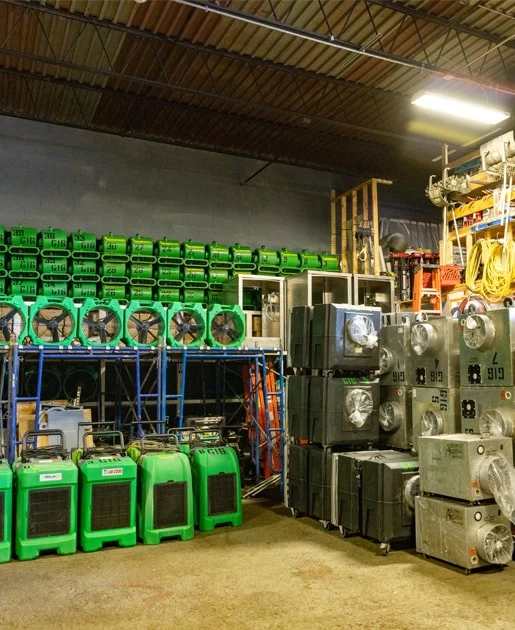
Flooded basement cleanup in Baldwin Harbor covers more ground than most people expect — and it has to, given what this community’s homes and geography throw at a restoration crew. Water extraction is the starting point, but it’s followed by structural drying with industrial air movers and dehumidifiers, moisture mapping throughout the affected area, and a full assessment of materials that may have been compromised by the water event.
For canal-adjacent and waterfront properties — particularly in Bay Colony and along the southern sections of the hamlet — saltwater intrusion is assessed separately. Bay water behaves differently than freshwater from a burst pipe. It’s corrosive to metals, more damaging to wood framing, and requires specific drying protocols that account for the salt content left behind after the water recedes. This isn’t something every restoration company is trained for. It’s a standard part of how we approach South Shore coastal flooding.
For homes with pre-1960s construction, hazardous material assessment is included before any demolition begins. If mold is found, we handle remediation under our NYS DOL Mold License — the state-required credential that many companies operating in Nassau County don’t actually hold. Insurance documentation support is also part of the process, whether your claim runs through a standard homeowners policy or an NFIP flood insurance policy. Baldwin Harbor homeowners near the water often carry both, and navigating which one applies — and how to document it — is something we’ve done many times before.
How do I know if my Baldwin Harbor basement flooding is covered by insurance?
This is one of the most common points of confusion for South Shore homeowners, and it’s worth understanding before you file anything. Standard homeowners insurance covers sudden and accidental water damage — things like a burst pipe, a failed water heater, or an appliance leak. It does not cover natural flooding, which includes storm surge, canal overflow, or groundwater intrusion from a rising water table.
If your home is near the canals or bay in Baldwin Harbor, your mortgage lender may have required you to carry a separate NFIP flood insurance policy. That policy covers natural flooding events — but it has its own documentation requirements, its own adjuster process, and its own limitations on what it pays out. Many Baldwin Harbor homeowners near the water carry both types of coverage without fully understanding which one applies to a given event. We assist with damage documentation and can help you understand what you’re working with before you file — which matters, because filing under the wrong policy or with incomplete documentation can slow your claim significantly.
How fast does mold actually grow after a basement flood in Baldwin Harbor?
The EPA’s guidance puts it at 24 to 48 hours for mold to begin developing in the right conditions — and Baldwin Harbor’s environment checks every box. Coastal humidity, older building materials like original wood framing and plaster walls, and the naturally damp air that comes with living near Middle Bay all accelerate the process. The 72-hour mark is the critical threshold. After that point, what started as a water damage job frequently becomes a mold remediation job on top of it.
The part that catches people off guard is that mold doesn’t always start where the water was visible. It starts where moisture is trapped — inside wall cavities, under subflooring, behind insulation. That’s why professional moisture mapping after extraction isn’t optional. It’s how you find the problem before it becomes visible, which is always better than finding it after. If you’re a Baldwin Harbor homeowner who commutes to the city and discovered the flooding after returning home, the clock may already be running. Calling immediately is the most important thing you can do.
My basement has old floor tiles — could they contain asbestos after flooding?
If your Baldwin Harbor home was built before the mid-1970s, the answer is possibly yes — and it’s worth taking seriously. The 9×9 vinyl floor tiles common in homes built in the 1940s and 1950s frequently contained asbestos as a binding material. Pipe insulation, ceiling tiles, and certain drywall compounds from that era can also contain it. Under normal conditions, these materials are generally stable. The problem is that flooding disturbs them. Water saturates, loosens, and breaks apart materials that were previously intact — and once that happens, the risk changes.
New York State requires a licensed asbestos contractor for any disturbance or removal of suspect materials. We hold the NYS DOL Asbestos License and assess for these materials before any demolition begins. This is not a standard credential in the restoration industry — most water damage companies are not licensed for asbestos work and will either skip the assessment or refer you to a third party, adding time and coordination to an already stressful situation. With us, that step is built into the process.
What's the difference between freshwater and saltwater basement flooding in Baldwin Harbor?
It’s a bigger difference than most people realize, and it affects how the cleanup has to be done. Freshwater flooding — from a burst pipe, a failed sump pump, or heavy rain — is categorized based on contamination level but doesn’t carry the corrosive properties of bay water. Saltwater intrusion from storm surge or tidal flooding is a different animal. Salt is corrosive to metal components like your HVAC system, water heater, electrical panels, and structural fasteners. It’s also more damaging to wood framing because it draws moisture back into the material even after drying appears complete.
For Baldwin Harbor properties along the canals and near the bay — especially in Bay Colony — storm surge events push actual bay water into basements. That water has to be extracted and treated with protocols that account for the salt content, not just the volume. Surfaces that came into contact with saltwater need to be thoroughly cleaned and treated before drying begins, or residual salt will continue pulling atmospheric moisture into your structure long after the equipment is gone. This is a coastal-specific problem, and it requires coastal-specific knowledge.
How much does flooded basement cleanup typically cost in Baldwin Harbor, NY?
The range is wide because the scope varies significantly depending on what type of water you’re dealing with, how long it sat, and what it affected. For a straightforward clean-water event — say, a failed sump pump with no contamination and prompt response — costs typically run in the $1,600 to $4,000 range for extraction and drying. Once you add contaminated water, structural repairs, mold remediation, or hazardous material handling, the number climbs. Sewage backup events, which are a real risk in Baldwin Harbor given the aging combined sewer infrastructure, can push total costs to $8,000 to $15,000 or more depending on the extent of the contamination.
For Baldwin Harbor specifically, the age of the housing stock is a cost factor that doesn’t apply the same way in newer communities. Pre-1960s homes often require asbestos and lead assessment before demolition can begin, which adds a step that most restoration companies aren’t equipped to handle in-house. The upside is that handling it correctly the first time is always less expensive than dealing with a mold problem, a failed insurance claim, or a hazmat issue discovered during a future renovation. We provide clear documentation throughout the process so you know exactly what was done and why.
Does Green Island Group handle sewage backup cleanup in Baldwin Harbor basements?
Yes — and it’s worth understanding why sewage backup is categorized differently from other flooding events. When water comes in from a burst pipe or storm surge, the cleanup protocol depends on the contamination level of that water. Sewage backup is automatically Category 3, which the industry calls black water. It contains bacteria, pathogens, and waste that make it a biohazard — not just a mess. Standard extraction and drying procedures are not sufficient. The affected area requires full decontamination, proper disposal of porous materials that absorbed the sewage, and treatment protocols that protect the health of everyone in the home.
Baldwin Harbor’s aging combined sewer systems, built for a mid-century population, are prone to backing up during heavy storm events when the volume of water overwhelms the system’s capacity. This isn’t a rare edge case here — it’s a known risk, particularly during the nor’easters that hit the South Shore in spring and fall. We’re licensed and equipped for Category 3 cleanup, with trained personnel and the proper protective protocols to handle it safely. If you’re dealing with sewage in your basement, this is not a situation to approach with a wet-vac and household cleaning products.