When Baldwin Harbor Backs Up, You Need More Than a Wet-Vac
South Shore flooding doesn’t wait for business hours — and neither do we. We respond 24/7 to flooded basement cleanup in Baldwin, NY, from canal overflow to burst pipes.
I needed a professional consultation explanation of procedure for safe removal of Asbestos in my apartment complex. Without having an account yet, I was very impressed with the caring, knowledgeable and generous advice offered by Jessica, and will look forward to doing business in the future. Thank you so much! I feel much more informed about a sometimes scary endeavor. Peace. Nancy Silva Mineola, NY.
Mia Munoz
Used this company to clean up some water flood in my house. They were fast and easy to work with.very professional, Would recommend to anyone!
Nini Valle
Great company, had a flood and they responded quickly and efficiently. Billed my insurance company directly. I highly recommend this company!
joe colapietro, jr
I had pipe freeze in my basement right before a snow storm and they made to within an hour to help start the clean up process. They we by our side throughout the entire process and even helped with the insurance company. They did such a great job with the cleanup, repair, remidiation, I contracted them to perform the repairs and finishes in the basement. They came with enough manpower and material to get the job done. Leo and Jessica were nothing but a pleasure to deal with!!
Cristian Arredondo c
I had some water damage in my home and Green Island was able to take care of my issue quickly and effectively. I am very pleased with the work they did. They responded quickly and were very professional.
Michael M
Outstanding service! From the office to the field crew everyone was friendly, helpful and responsive. I highly recommend Green Island Group.
A Dry Basement — And No Hidden Surprises Left Behind
When the water’s gone, the real work begins. Standing water is the part you can see. What causes the most damage is what hides inside your walls, under your subfloor, and in the concrete after the floor looks dry. That’s where mold starts — quietly, within 24 to 48 hours — and in Baldwin’s South Shore humidity, it doesn’t take long to spread.
For homeowners in Baldwin Harbor, where the canals connect directly to South Oyster Bay, basement flooding after a storm isn’t just water — it’s tidal water mixed with whatever those canals carry. That’s a different problem than a burst pipe, and it requires a completely different response. The same goes for the older homes throughout the main hamlet, many of which were built before modern waterproofing standards existed and sit on a water table that’s already a few feet below the surface on a calm day.
What you get when this is done right isn’t just a dry basement. It’s documentation your insurance carrier will accept, a home that doesn’t smell like mildew six weeks later, and the confidence that whoever handled the job was actually licensed to do it — mold remediation, asbestos, lead, all of it — under one roof.
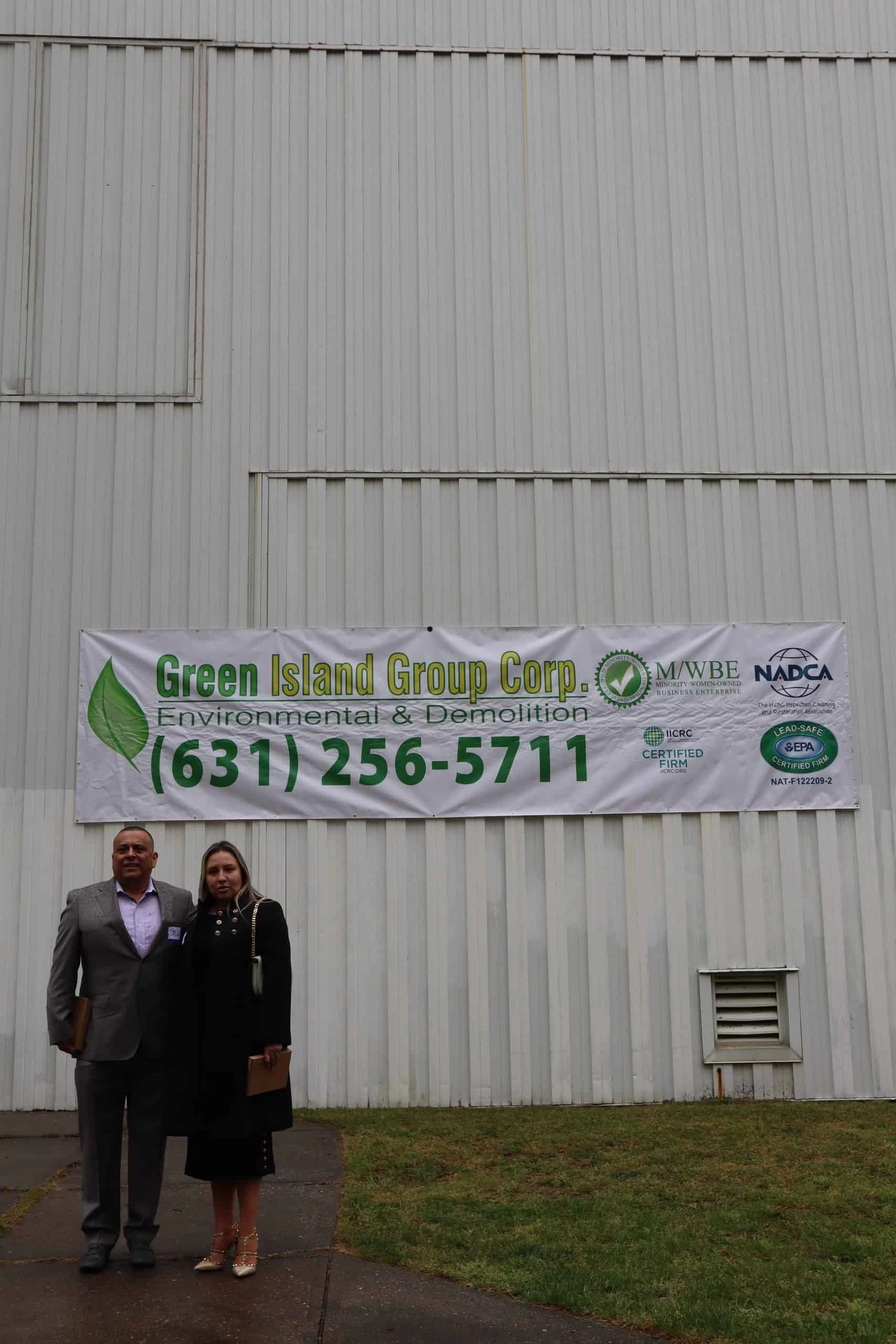
We hold the full stack: NYS Department of Labor Mold Remediation License, NYS DOL Asbestos Contractor License, USEPA Lead Abatement and RRP certifications, IICRC Water Damage Certification, NADCA HVAC Cleaning, and General Contractor licenses for Nassau County, Suffolk County, and New York City. Most restoration companies in the Baldwin market hold one or two of these. We hold all of them.
That matters here specifically. Baldwin’s housing stock — the pre-war Victorians near Merrick Road, the post-war Cape Cods and high ranches throughout the hamlet, the older homes in North Baldwin — frequently contains asbestos floor tiles, asbestos pipe insulation, and lead paint. When a flooded basement cleanup disturbs those materials without proper licensing, you’re not just dealing with water damage anymore. You’re dealing with a hazmat situation and potential liability that can outlast the flood itself.
We’re also certified as a NYS Minority Business Enterprise and Women’s Business Enterprise — a reflection of who we are and the communities we serve, including Baldwin’s.
What Actually Happens From First Call to Final Walkthrough
When you call, the first thing we do is assess the water source and category. That distinction matters. A burst pipe is Category 1 — clean water, contained scope. Groundwater seeping through your foundation after a nor’easter is Category 2. Tidal backflow from a Baldwin Harbor canal during a storm surge is Category 3 — black water — and it requires full decontamination protocols, not just extraction and drying. Getting that classification right from the start determines everything that follows.
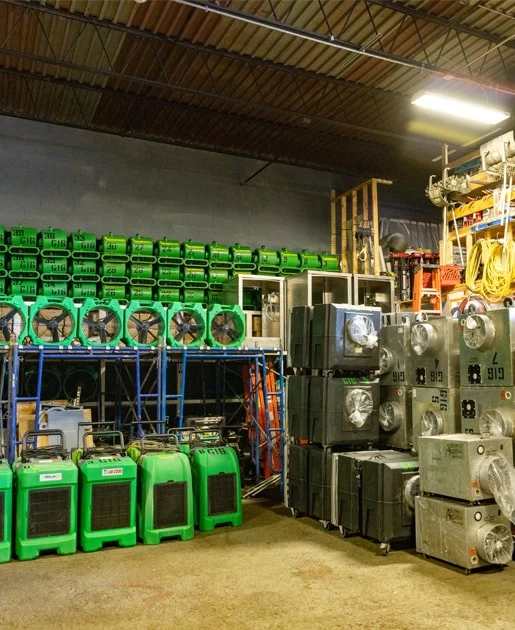
Once the source is identified, our team extracts standing water using industrial-grade pumps, then sets up commercial dehumidifiers and air movers to begin the structural drying process. This isn’t rental equipment from a hardware store — it’s the same class of machinery used in commercial disaster recovery. Moisture meters go into the walls, under the subfloor, and into the concrete to find what the eye can’t see. In Baldwin’s older homes, where foundation walls may have no waterproofing membrane at all, that hidden moisture detection step is what separates a complete job from one that leads to a mold call six weeks later.
If asbestos or lead materials are disturbed during the process — which is a real possibility in any pre-1978 home in this hamlet — we handle that in-house under the appropriate NYS DOL and USEPA licenses. And because we hold a Nassau County General Contractor license, we can take the job all the way through structural repairs: drywall, flooring, framing. One team, start to finish.
Built for What South Shore Basements Actually Face
Flooded basement cleanup in Baldwin isn’t a single-size job. A finished basement in the main hamlet that took on two feet of water from a failed sump pump during a spring storm is a different scope than a Baldwin Harbor home where tidal canal water came in under the door during Sandy-level surge. We handle both — and everything in between.
The core service covers water extraction, structural drying, moisture mapping, and mold prevention treatment. For homes where contaminated water was involved — sewage backup, tidal flooding, or groundwater carrying biological material — we include full decontamination. If your home is pre-1978, we conduct a hazardous materials assessment before any demolition work begins, because disturbing asbestos floor tiles or lead-painted surfaces without the proper licenses isn’t just dangerous — it’s illegal under New York State law and can void your insurance claim.
We also assist with insurance documentation throughout the process. Standard homeowners insurance in New York covers sudden accidental events — a burst pipe, a failed appliance — but does not cover natural flooding from storm surge, groundwater rise, or tidal water. Many Baldwin homeowners find this out at the worst possible moment. Having detailed, professionally documented damage records gives you the strongest possible position with your carrier, whether the claim is covered or contested.
Does homeowners insurance cover basement flooding in Baldwin, NY?
This is the question most Baldwin homeowners ask first — and the answer is more complicated than most people expect. Standard homeowners insurance covers sudden, accidental water damage: a pipe bursts, a water heater fails, an appliance malfunctions. That type of event is typically covered. What standard homeowners insurance does not cover is natural flooding — storm surge, tidal water, groundwater rise, or water that enters from outside the structure.
That’s a significant problem for Baldwin specifically. A large portion of the basement flooding that happens in this hamlet — particularly in Baldwin Harbor, where canals connect directly to South Oyster Bay — is tidal in origin. Nor’easter surge, heavy rain combined with a high tide, canal overflow: none of that is covered under a standard policy. Flood insurance through the National Flood Insurance Program (NFIP) is a separate policy, and many Baldwin homeowners don’t carry it until after their first flood. If you’re in that situation, our detailed damage documentation can still support a claim review and helps establish the full scope of loss for any future coverage conversations.
How quickly does mold start growing after a basement flood on Long Island?
Mold can begin developing within 24 to 48 hours of water intrusion. The EPA’s guidance and the restoration industry’s accepted standard both point to 72 hours as the critical window — after that point, conditions that support mold growth are typically established, and what was a water damage job becomes a water-and-mold job.
In Baldwin, that window is tighter in practice than it sounds on paper. The South Shore’s naturally high humidity, the shallow water table, and the older construction in much of the hamlet — foundations without waterproofing membranes, subfloors that absorb moisture readily — all create conditions where mold can take hold faster than in drier, higher-elevation areas. A basement that looks dry to the naked eye after a surface cleanup can still have moisture trapped inside wall cavities and under flooring, and that’s exactly where mold establishes itself first. That’s why we use commercial moisture meters as a standard part of every job — not just to confirm the visible surface is dry, but to confirm the structure itself is dry.
My Baldwin home was built in the 1950s — should I be worried about asbestos in my basement?
Yes, and it’s worth taking seriously before any cleanup or demolition work begins. Homes built before 1978 — which describes a significant portion of Baldwin’s housing stock, from the post-war Cape Cods and high ranches throughout the hamlet to the older Victorians near Merrick Road — commonly contain asbestos in floor tiles, pipe insulation, ceiling tiles, and joint compound. Lead paint is also common in the same era of construction.
Under New York State law, asbestos abatement requires a contractor to hold a valid NYS Department of Labor Asbestos Contractor License. Disturbing asbestos-containing materials without that license — even during what looks like a routine flooded basement cleanup — is illegal and can expose you to liability well beyond the original water damage. We hold the NYS DOL Asbestos License, USEPA Lead Abatement certification, and USEPA RRP certification. If your home requires hazmat assessment or abatement as part of the cleanup, we handle it in-house — no subcontracting, no coordination between separate companies, no gap in accountability.
Why does my Baldwin basement keep flooding even after it's been cleaned up?
If your basement floods repeatedly, the cleanup isn’t the problem — the underlying water management is. In Baldwin, the most common structural causes are a failed or undersized sump pump, cracked or deteriorated drain tile (the perimeter drainage system around your foundation), and hydrostatic pressure from a water table that’s already sitting close to the surface before any storm event begins.
The South Shore’s geology makes this worse than it sounds. Sandy soil allows groundwater to travel laterally toward your foundation, while clay pockets trap moisture against basement walls. Drainage systems installed in Baldwin homes 40 to 60 years ago were not designed for the rainfall intensities that storms produce today, and many have simply reached the end of their useful life. A flooded basement cleanup addresses the immediate damage — but if the drain tile is cracked, the sump pump is undersized, or the foundation has no waterproofing membrane, the next heavy rain or high tide will produce the same result. Our assessment process identifies those underlying conditions so you’re not just treating the symptom.
What's the difference between Category 1, 2, and 3 water damage — and why does it matter?
Water damage is classified into three categories based on the contamination level of the water involved, and that classification directly determines what the cleanup requires. Category 1 is clean water from a known, sanitary source — a supply line, a pipe, a clean appliance. Category 2 is gray water — it carries some contamination, like a sump pump discharge or a washing machine overflow. Category 3 is black water — it’s grossly contaminated, and it includes sewage, tidal water, and floodwater from natural sources.
This matters a great deal for Baldwin Harbor homeowners in particular. When a storm pushes tidal water from South Oyster Bay through the canal network and into your basement, that’s Category 3 by definition — regardless of how it looks or smells. Category 3 flooding requires full biohazard decontamination protocols: not just extraction and drying, but treatment of all affected surfaces, removal of porous materials that cannot be decontaminated, and proper disposal. A standard cleanup approach applied to Category 3 water leaves biological contamination behind that poses real health risks. We classify the water source correctly from the first assessment and respond accordingly.
How much does flooded basement cleanup typically cost in the Baldwin area?
Cost varies based on the size of the space, the category of water involved, whether mold remediation is needed, and whether any hazardous materials like asbestos or lead are present. For a straightforward clean-water event in a smaller unfinished basement, costs can start around $1,500 to $3,000. A larger finished basement with contaminated water, mold development, and structural repairs can reach $10,000 to $15,000 or more. Homes where asbestos abatement is required add to that scope.
In Baldwin, the presence of pre-1978 housing throughout the hamlet means hazardous materials assessments are a real part of the cost conversation — not an edge case. The tidal flooding risk in Baldwin Harbor also means Category 3 events are more common here than in inland Nassau County communities, and those jobs carry higher remediation costs by nature. What we can tell you is that the cost of delayed or incomplete cleanup consistently exceeds the cost of doing it right the first time — mold remediation added to an already-damaged basement, or an insurance claim that gets denied because the work wasn’t performed by a licensed contractor, both carry price tags that dwarf the original job. Getting an accurate scope assessment early is the best way to understand what you’re actually dealing with.