When Reynolds Channel Comes Inside, You Need More Than a Wet-Vac
Flooding in Barnum Island isn’t a plumbing accident — it’s tidal surge, storm water, and decades-old drainage pushed past its limit. We handle flooded basement cleanup from water out to walls back in, 24/7.
I needed a professional consultation explanation of procedure for safe removal of Asbestos in my apartment complex. Without having an account yet, I was very impressed with the caring, knowledgeable and generous advice offered by Jessica, and will look forward to doing business in the future. Thank you so much! I feel much more informed about a sometimes scary endeavor. Peace. Nancy Silva Mineola, NY.
Mia Munoz
Used this company to clean up some water flood in my house. They were fast and easy to work with.very professional, Would recommend to anyone!
Nini Valle
Great company, had a flood and they responded quickly and efficiently. Billed my insurance company directly. I highly recommend this company!
joe colapietro, jr
I had pipe freeze in my basement right before a snow storm and they made to within an hour to help start the clean up process. They we by our side throughout the entire process and even helped with the insurance company. They did such a great job with the cleanup, repair, remidiation, I contracted them to perform the repairs and finishes in the basement. They came with enough manpower and material to get the job done. Leo and Jessica were nothing but a pleasure to deal with!!
Cristian Arredondo c
I had some water damage in my home and Green Island was able to take care of my issue quickly and effectively. I am very pleased with the work they did. They responded quickly and were very professional.
Michael M
Outstanding service! From the office to the field crew everyone was friendly, helpful and responsive. I highly recommend Green Island Group.
A Dry Basement Isn't the Finish Line — It's the Starting Point
Most homeowners think the job is done when the water is gone. It isn’t. The real damage — the kind that costs you tens of thousands of dollars — happens in the days and weeks after, when moisture hides inside wall cavities, under original subfloors, and inside the concrete block foundations common in Barnum Island’s older bungalow stock. That’s where mold takes hold. And in a coastal environment like this one, where humidity stays elevated even on dry days, mold doesn’t wait long.
When basement flooding comes from tidal surge or storm backup through Reynolds Channel — which is Category 3 contaminated water — the cleanup isn’t just about drying. It requires full biohazard decontamination, antimicrobial treatment, and proper disposal protocols. A company that treats storm surge like a burst pipe isn’t equipped for what South Shore flooding actually brings into a home.
What you get at the end of a properly completed flooded basement cleanup isn’t just a dry floor. It’s confirmed moisture readings throughout the structure, documentation ready for your NFIP flood insurance claim, and the confidence that nothing was left behind to become a problem three weeks from now. That’s the difference between a cleanup and a restoration.
Licensed Basement Flooding Remediation Nassau County
Every License the Job Requires — Under One Roof
We serve all of Nassau County, and Barnum Island specifically — not as a territory on a map, but as a community with a flooding history that demands a different level of preparation. The homes here, many of them original summer bungalows from the 1920s converted to year-round residences, contain materials that most water damage companies aren’t licensed to handle. Asbestos floor tiles. Lead-based paint. Aging pipe insulation. When those materials get hit with contaminated floodwater from Reynolds Channel or tidal backup events, the scope of the job changes fast.
That’s why the credential stack matters here more than it does almost anywhere else in Nassau County. We hold an IICRC Water and Fire Damage Certification, a NYS Department of Labor Mold Remediation License, a NYS DOL Asbestos License, USEPA Lead and RRP certifications, and a Nassau County General Contractor license — all under one company, one contract, and one point of accountability. You’re not coordinating three separate contractors after a flood. You’re making one call.
Flooded Basement Cleaning Process Barnum Island NY
From the First Call to the Final Moisture Reading — Here's What Happens
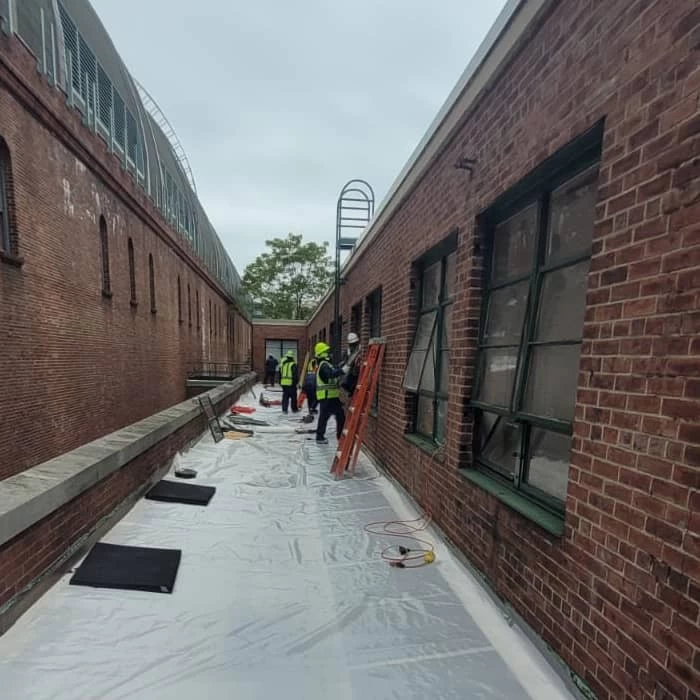
When you call, you reach a real person. Not a form, not a callback queue — someone who can dispatch a crew immediately, because in Barnum Island, the 72-hour window before mold becomes likely doesn’t accommodate a next-morning response. The first crew on site focuses on one thing: stopping the damage from getting worse. That means industrial water extraction, identifying the contamination category of the water — clean, gray, or Category 3 black water from tidal or sewage backup — and getting the right equipment in place.
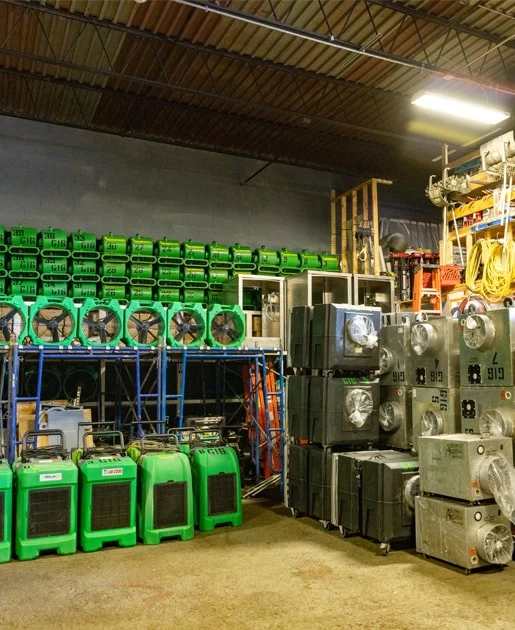
Once extraction is complete, the drying phase begins with professional-grade dehumidifiers and air movers placed based on moisture meter readings, not guesswork. In Barnum Island’s older housing stock, moisture hides in places that look dry to the eye — inside concrete block walls, beneath original hardwood, inside insulation that absorbed tidal water. Thermal imaging helps locate what standard inspection misses. If asbestos or lead-containing materials are identified during this phase, the crew is already licensed to handle them — no subcontractors, no delays, no gap in the work.
Reconstruction follows once the structure is confirmed dry. Drywall, flooring, framing — covered under our Nassau County General Contractor license. Throughout the process, damage is documented in a format that supports both homeowners insurance and NFIP flood insurance claims, which many Barnum Island homeowners carry simultaneously. The job isn’t finished until the moisture readings confirm it’s finished.
What's Actually Included When South Shore Flooding Hits Your Home
Flooded basement cleanup in Barnum Island covers more ground than it does in most of Nassau County — and that’s not a sales pitch, it’s geography. When storm surge from Reynolds Channel or a tidal backup event puts contaminated water in your basement, the job involves water extraction, biohazard decontamination, structural drying, mold assessment, potential asbestos and lead handling, and full reconstruction. We handle every one of those phases without handing the project off to anyone else.
The specific scope depends on what the water brought in and what it touched. A clean-water event from a failed sump pump during a heavy rain is a different job than a Category 3 surge event following a coastal storm. Both are handled, but the protocols, equipment, and licensing requirements are different — and knowing that difference before work starts is what separates a complete restoration from a partial one that comes back to haunt you. Every job includes a moisture assessment, a contamination category determination, and documentation prepared for your insurance carrier.
For Barnum Island homeowners carrying NFIP flood insurance alongside a standard homeowners policy, the documentation piece is especially important. The two policies cover different types of events, have different claim requirements, and don’t always communicate well with each other without proper damage categorization upfront. Getting that right from the start — rather than trying to reconstruct it after the fact — can make a significant difference in your claim outcome.
How quickly does mold grow after a basement floods in Barnum Island?
The EPA recommends that water damage cleanup begin within 24 to 48 hours of a flooding event. In practice, if a basement isn’t fully dried within 72 hours, mold growth becomes likely — and in Barnum Island’s coastal environment, where ambient humidity stays elevated even between storms, that window can close faster than it would in an inland community. Mold doesn’t need a lot to get started: residual moisture inside a wall cavity or under a subfloor is enough.
This is why the response time matters as much as the work itself. A company that can’t dispatch until the next business morning in a community that experiences tidal flooding events at all hours isn’t set up for this environment. Once mold establishes itself in a structure, you’re no longer dealing with a water damage job — you’re dealing with a mold remediation project, which is a separate, more involved, and more expensive scope of work. Getting the basement dried completely and correctly the first time is what prevents that escalation.
Does my homeowners insurance cover flooded basement cleanup, or do I need flood insurance?
This is one of the most important questions Barnum Island homeowners face after a flooding event — and the answer depends entirely on what caused the water to enter your home. Standard homeowners insurance typically covers sudden, accidental water damage from internal sources: a burst pipe, a failed water heater, an overflowing appliance. It does not cover flooding from external sources, which includes tidal surge, storm surge from Reynolds Channel, and natural flooding events.
That type of flooding — which is the most common cause of basement water damage in Barnum Island — is covered under a separate National Flood Insurance Program (NFIP) policy. Many Barnum Island homeowners carry both, which is the right call given the community’s flood exposure. But carrying both policies doesn’t automatically mean both will pay out smoothly. The damage needs to be properly categorized and documented from the start, with a clear record of what happened, when, and what it affected. We prepare that documentation as part of the restoration process, which helps you navigate both claims without having to reconstruct the evidence after the fact.
What is Category 3 water damage, and is that what floods Barnum Island basements?
Water damage is classified in three categories based on contamination level. Category 1 is clean water — a burst supply line, for example. Category 2, or gray water, carries some contamination — a washing machine overflow or sump pump failure with standing water. Category 3, called black water, is the most serious: it includes sewage, bacteria, pathogens, and any water that has contacted external flood sources, including storm surge and tidal intrusion.
When Barnum Island experiences a significant coastal flooding event — the kind that has put two to eight feet of water across the island during a storm like Sandy — the water entering basements is almost always Category 3. Even during smaller tidal backup events, water traveling through the community’s drainage system and into homes carries contamination that requires full biohazard decontamination protocols, not just extraction and drying. This is not a job for a wet-vac and some fans. It requires proper PPE, antimicrobial treatment, and disposal procedures that meet NYS and USEPA standards. A company that doesn’t distinguish between water categories is not equipped to handle what South Shore flooding actually produces.
My Barnum Island home was built in the 1950s — does that affect the cleanup process?
Yes, significantly. Homes built before 1978 — which covers a large portion of Barnum Island’s housing stock, including many of the original summer bungalows converted to year-round residences — may contain asbestos floor tiles, asbestos pipe insulation, and lead-based paint. Under normal circumstances, these materials are stable and don’t pose an immediate risk. But when a basement floods, those materials can be disturbed, saturated, or damaged in ways that release hazardous particles into the air and water.
New York State requires a dedicated DOL Asbestos License to legally perform asbestos abatement, and USEPA RRP certification is required for work involving lead-based paint. Most water damage companies do not hold both of these credentials. If a crew without the proper licensing disturbs asbestos or lead materials during a cleanup — even unintentionally — the hazard doesn’t go away when they leave. We hold both the NYS DOL Asbestos License and USEPA Lead and RRP certifications, which means if these materials are present in your home, the crew already on site is licensed to handle them. No separate contractor, no delay, no gap in the work.
Can I clean up a flooded basement myself after a storm in Barnum Island?
For a minor, clean-water event — a small amount of water from a sump pump failure on a rain-heavy day — a capable homeowner with the right equipment can manage the initial extraction. But for the kind of flooding that Barnum Island experiences from coastal storms, tidal surge, or drainage backup, DIY cleanup carries real risks that go beyond what most homeowners are prepared to handle.
Category 3 contaminated water requires protective equipment and decontamination protocols that go well beyond a shop vac and rubber boots. Hidden moisture in walls, floors, and foundations requires professional moisture meters and thermal imaging to locate — and if it’s left behind, it becomes mold within days. In older Barnum Island homes, disturbing flooring or wall materials without knowing what’s underneath can expose you to asbestos or lead. Beyond the physical risks, improper cleanup creates problems with insurance claims: if the damage isn’t documented correctly before work begins, and if the work doesn’t meet the standards required by your NFIP carrier, you can lose coverage you paid for. Professional restoration isn’t just about the physical result — it’s about doing it in a way that holds up to scrutiny.
How much does flooded basement cleanup typically cost for a Barnum Island home?
Costs vary based on the size of the space, the category of water involved, and what the water touched. For a clean-water event in a smaller basement, total costs can run from $1,500 to $3,000. For a Category 3 contaminated-water event — which is the scenario most Barnum Island homeowners face after a coastal storm or tidal backup — costs typically range from $5,000 to $12,000 or more, depending on the extent of structural damage, whether mold remediation is needed, and whether asbestos or lead materials require handling.
For Barnum Island specifically, the older housing stock and the frequency of Category 3 flooding events mean that the lower end of those ranges is less common than in inland Nassau County communities. FEMA data puts the average NFIP flood claim payment near $46,000 for significant events, which reflects the full scope of damage that a serious South Shore flooding event can produce. The more important number, though, is what the job costs if it’s done incompletely the first time — mold remediation added after the fact, structural repairs that weren’t caught during drying, or insurance claims that don’t pay out because the damage wasn’t documented properly. Getting the full scope done correctly from the start is where the real cost savings live.