When the Canal Comes Inside, Here's What Happens Next
Bay Park basements don’t just flood — they flood fast, and sometimes with more than water. We respond 24/7 with licensed flooded basement cleanup built for exactly what South Shore homes face. When storm surge pushes through the Western Bays or the canal system backs up during a nor’easter, your basement is often the first place that takes the hit. We know this neighborhood. We’ve worked here since before Sandy, and we understand what flooding in Bay Park actually looks like.
I needed a professional consultation explanation of procedure for safe removal of Asbestos in my apartment complex. Without having an account yet, I was very impressed with the caring, knowledgeable and generous advice offered by Jessica, and will look forward to doing business in the future. Thank you so much! I feel much more informed about a sometimes scary endeavor. Peace. Nancy Silva Mineola, NY.
Mia Munoz
Used this company to clean up some water flood in my house. They were fast and easy to work with.very professional, Would recommend to anyone!
Nini Valle
Great company, had a flood and they responded quickly and efficiently. Billed my insurance company directly. I highly recommend this company!
joe colapietro, jr
I had pipe freeze in my basement right before a snow storm and they made to within an hour to help start the clean up process. They we by our side throughout the entire process and even helped with the insurance company. They did such a great job with the cleanup, repair, remidiation, I contracted them to perform the repairs and finishes in the basement. They came with enough manpower and material to get the job done. Leo and Jessica were nothing but a pleasure to deal with!!
Cristian Arredondo c
I had some water damage in my home and Green Island was able to take care of my issue quickly and effectively. I am very pleased with the work they did. They responded quickly and were very professional.
Michael M
Outstanding service! From the office to the field crew everyone was friendly, helpful and responsive. I highly recommend Green Island Group.
There’s a difference between a basement that looks dry and one that actually is. Moisture hides inside concrete block walls, under old tile floors, and behind the framing of Bay Park’s bungalows and Cape Cods — homes that were never designed to handle the kind of water exposure they face sitting this close to Hewlett Bay and the canal system. When that hidden moisture gets missed, mold follows. Usually within 48 hours.
What you get from a proper flooded basement cleanup isn’t just the water gone — it’s verified dryness, documented with professional moisture meters at every stage. It’s knowing the walls aren’t silently growing a problem you’ll deal with in three weeks. For a home you may have already raised on a slab after Sandy, already renovated, already invested in — that level of thoroughness isn’t optional. It’s the whole point.
And in Bay Park specifically, flooding doesn’t always mean clean water. When storm surge pushes through the Western Bays, when the canal overtops, or when a heavy nor’easter overwhelms the drainage system, what ends up in your basement can be Category 3 contamination — the kind that requires full decontamination protocols, not just a wet-vac and a dehumidifier. That’s a different job, and it requires a different level of licensing to do it legally and safely.
Every License the Job Actually Requires — Under One Roof
We hold the NYS DOL Mold License, NYS DOL Asbestos License, USEPA Lead and RRP certifications, IICRC Water Damage certification, and a Nassau County General Contractor license. That’s not a list of credentials for show — it’s what legally qualifies a company to handle every layer of what a flooded basement in Bay Park can involve. Most restoration companies hold one or two of those. We hold all of them.
That matters here more than it does in most places. Bay Park’s housing stock is older — prewar through the 1950s — which means asbestos floor tiles, lead-based paint, and aging concrete block walls are part of the picture on a lot of jobs. A company that’s only licensed for water extraction isn’t equipped for what’s underneath. We are.
We serve Nassau County as a core part of our work, and we hold the county-level General Contractor license that lets us pull permits and complete the full restoration — not just the emergency phase. From the first water extraction call to the finished wall, you’re working with one accountable team. We’ve built our business around the specific challenges Bay Park homeowners face, which means we don’t treat your flood like a generic water event. We treat it like what it actually is.
What a Real Cleanup Looks Like From Start to Finish
When you call, someone picks up — any time of day or night. We ask a few quick questions about what you’re seeing, what type of water is involved, and how long it’s been sitting. That last part matters more than most people realize. The EPA’s guidance puts the mold window at 24 to 48 hours. After 72, you’re likely looking at remediation on top of cleanup. We move fast specifically because of that window.
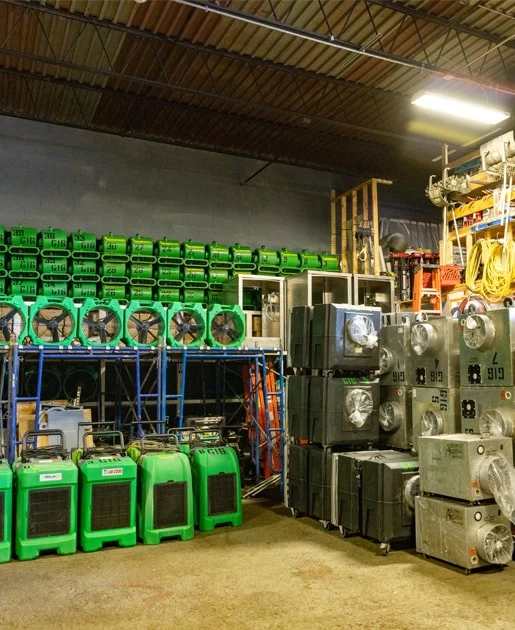
On arrival, the first step is always assessment — not just of what’s visible, but of what the moisture meters show inside your walls and under your floors. In Bay Park’s older homes, water travels in ways that aren’t obvious. Concrete block absorbs it. Old subfloor holds it. We map it before we start so nothing gets missed. Then comes extraction, followed by industrial drying with commercial dehumidifiers and air movers — not rental equipment. That process runs until the readings confirm the structure is actually dry, not just surface-dry.
If the water source involves sewage, tidal backflow, or canal intrusion — which is a real and documented scenario in this neighborhood — the process shifts to full biohazard decontamination protocols before any drying work begins. Once the space is clean, dry, and verified, we handle the rebuild under our Nassau County GC license: drywall, flooring, framing, whatever the job requires. We also document everything for your insurance claim, whether that’s a standard homeowners policy or an NFIP flood insurance claim, which many Bay Park homeowners carry given the community’s FEMA flood zone status.
Built for What Bay Park Basements Actually Deal With
The full scope of what we do here goes well beyond water extraction. It starts there — commercial-grade pumps, industrial dehumidifiers, high-velocity air movers — but it doesn’t stop until the structure is verified dry and restored. Every job includes professional moisture mapping before and after, so you have documented proof the work was done right. That documentation matters when you’re filing an NFIP flood insurance claim, which is a different process than a standard homeowners claim and one we help you navigate.
For Bay Park homes specifically, we’re equipped to handle the full range of what flooding in this area can introduce. That means mold remediation under our NYS DOL Mold License when growth is present or likely. It means asbestos and lead-safe handling when flooring, insulation, or paint in a pre-1978 home gets disturbed — which is common in the bungalows and ranch homes that make up most of this neighborhood. And it means Category 3 sewage and biohazard cleanup when the water source isn’t clean, which anyone who lived through Sandy knows is a real possibility here, not a theoretical one.
The rebuild is included. Under our Nassau County General Contractor license, we replace drywall, repair framing, restore flooring, and return your basement to usable condition. You don’t need to find a second contractor for the reconstruction phase. One call covers the emergency response, the remediation, and the finished restoration — start to finish.
Does flood insurance actually cover basement cleanup costs in Bay Park, NY?
It depends on the type of policy you have and what caused the flooding. Many Bay Park homeowners carry National Flood Insurance Program policies — NFIP — because of the community’s FEMA flood zone designation. NFIP policies are separate from standard homeowners insurance, and they have their own documentation requirements, adjuster processes, and coverage limits. Standard homeowners insurance typically covers sudden, accidental water damage like a burst pipe. NFIP flood insurance covers flooding from external water sources — storm surge, tidal overflow, canal backflow — which is exactly the kind of flooding Bay Park faces.
The critical thing to understand is that NFIP claims require proper documentation of the damage and the remediation work. An underdocumented claim can result in a reduced payout or a denial. We assist with damage documentation, photo records, moisture readings, and carrier communication throughout the entire process — specifically because we’ve worked with both types of claims and understand the difference. If you’re not sure which policy applies to your situation, we can help you sort that out when we arrive.
How quickly does mold start growing after a basement floods on Long Island?
The EPA puts the window at 24 to 48 hours from initial water exposure. After 72 hours, mold growth becomes likely — especially in a humid, poorly ventilated space like an unfinished basement. On Long Island’s South Shore, where the ambient humidity is already higher than inland areas and the water table in communities like Bay Park sits close to the surface, that window can close even faster than the national guidance suggests.
What makes this worse is that surface drying doesn’t tell the whole story. A basement can feel dry to the touch while moisture is still trapped inside concrete block walls, under tile, or in the insulation of older homes. That hidden moisture is where mold takes hold. Professional moisture meters are the only way to confirm a space is genuinely dry — not just dry-looking. If you’re more than 48 hours out from when the flooding started, mold assessment should be part of the cleanup process, not an afterthought.
What's the difference between clean water flooding and sewage backup cleanup?
Water damage is classified in three categories based on contamination level, and the cleanup process is completely different depending on which one you’re dealing with. Category 1 is clean water — a burst pipe, an appliance overflow, rainwater with no contamination. Category 2 is gray water — washing machine discharge, sump pump overflow, mild contamination. Category 3 is black water — sewage backup, tidal or canal intrusion, floodwater that’s been in contact with waste. Category 3 is a biohazard situation, not just a water damage situation.
In Bay Park, Category 3 is not a remote possibility. The 2012 flooding of the Bay Park Sewage Treatment Plant released approximately 100 million gallons of untreated sewage into the streets and residential basements of this neighborhood. That’s a documented event, not a hypothetical. Any time storm surge pushes through the Western Bays or the canal system backs up during a major storm, the water entering your basement can carry contamination. Category 3 cleanup requires full decontamination protocols, personal protective equipment, and licensed remediation — not just extraction and drying. We’re equipped and licensed for all three categories.
My Bay Park home was built in the 1950s — does that affect the cleanup process?
Yes, significantly. Homes built before 1978 — which covers most of Bay Park’s housing stock — may contain asbestos-containing materials and lead-based paint. Common locations include vinyl floor tiles, pipe insulation, joint compound, and certain exterior and interior paints. When a basement floods, those materials can get disturbed, damaged, or saturated. Handling them without the proper licensing isn’t just unsafe — it’s illegal under New York State and EPA regulations.
Most water damage restoration companies are not licensed to handle asbestos or lead. We hold both the NYS DOL Asbestos License and the USEPA Lead Abatement and RRP certifications, which means we can legally and safely address those materials as part of the cleanup — without you needing to bring in a separate contractor, wait for additional scheduling, or worry about whether the work was handled correctly. For a pre-war or mid-century Bay Park home, that integrated capability isn’t a bonus. It’s a necessity.
Do I need a licensed contractor for mold cleanup in Nassau County, NY?
Yes. New York State is one of only a handful of states in the country that requires a dedicated mold remediation contractor license — issued through the NYS Department of Labor. Any contractor performing mold remediation in Nassau County without that license is operating illegally, regardless of what certifications they advertise. This is a consumer protection law designed specifically to prevent unqualified operators from doing incomplete or harmful work on homes where mold exposure is a real health risk.
After a basement flood in Bay Park — where mold can begin growing within 48 hours, the humidity is high, and many homes have older construction that holds moisture — this matters. You can verify a contractor’s NYS DOL Mold License directly through the Department of Labor’s online database before anyone sets foot in your home. We hold this license. We’d encourage you to check it, and to check any other contractor you’re considering as well.
How much does flooded basement cleanup typically cost in Bay Park, NY?
The honest answer is that it depends on several factors: how much water, how long it sat, what type of water it was, and what the structure looks like once the drying is done. Industry averages run roughly $4 to $12 per square foot for water damage cleanup, with total project costs typically ranging from around $1,600 on the low end for a minor clean-water event to $12,000 or more for contaminated-water scenarios. Basements with sewage involvement, significant mold growth, or materials that require licensed abatement — asbestos tile, lead paint — can run higher.
In Bay Park specifically, a few factors push jobs toward the more involved end of that range more often than in inland Nassau County communities. The housing stock is older, which increases the likelihood of hazardous materials. The flood risk is higher, which means events here tend to involve more water and longer exposure times before the water recedes. And the proximity to tidal waterways means contamination is more frequently a factor. The most expensive outcome isn’t a thorough professional cleanup — it’s a cheap one that misses hidden moisture, skips mold assessment, and sends you back to square one six weeks later.