When Jamaica Bay Comes Inside, Here's What to Do First
Your basement is underwater. The clock on mold is already running. We respond to Bayswater 24/7 licensed for the full job, from water extraction to finished restoration.
I needed a professional consultation explanation of procedure for safe removal of Asbestos in my apartment complex. Without having an account yet, I was very impressed with the caring, knowledgeable and generous advice offered by Jessica, and will look forward to doing business in the future. Thank you so much! I feel much more informed about a sometimes scary endeavor. Peace. Nancy Silva Mineola, NY.
Mia Munoz
Used this company to clean up some water flood in my house. They were fast and easy to work with.very professional, Would recommend to anyone!
Nini Valle
Great company, had a flood and they responded quickly and efficiently. Billed my insurance company directly. I highly recommend this company!
joe colapietro, jr
I had pipe freeze in my basement right before a snow storm and they made to within an hour to help start the clean up process. They we by our side throughout the entire process and even helped with the insurance company. They did such a great job with the cleanup, repair, remidiation, I contracted them to perform the repairs and finishes in the basement. They came with enough manpower and material to get the job done. Leo and Jessica were nothing but a pleasure to deal with!!
Cristian Arredondo c
I had some water damage in my home and Green Island was able to take care of my issue quickly and effectively. I am very pleased with the work they did. They responded quickly and were very professional.
Michael M
Outstanding service! From the office to the field crew everyone was friendly, helpful and responsive. I highly recommend Green Island Group.
A Dry, Safe Basement Before Mold Makes the Decision for You
Living on the Rockaway Peninsula means you already know what flooding looks like. Whether it’s a nor’easter pushing Jamaica Bay water toward Mott Basin, a combined sewer backup overwhelming your floor drain during a summer storm, or a sump pump that gave out at the worst possible moment the result is the same: water where it shouldn’t be, and a timeline that doesn’t care how busy you are. Mold establishes itself within 72 hours. In Bayswater’s coastal humidity, it often moves faster.
What you get on the other side of a proper cleanup isn’t just a dry floor. It’s walls that have been checked for hidden moisture with thermal imaging because salt air and a high water table mean moisture hides in places a fan can’t reach. It’s the peace of mind that comes from knowing nothing was missed, no shortcuts were taken, and your home is genuinely safe to live in again.
For homes built between 1940 and 1969 which describes a significant portion of Bayswater’s housing stock a basement flood can also mean disturbed asbestos pipe insulation or lead paint suspended in floodwater. Most cleanup companies aren’t licensed to handle that. The outcome you actually need is a company that covers the full scope, not one that stops where their license does.
Licensed Basement Flooding Remediation in Queens, NY
30 Years In. Licensed for Everything Bayswater's Basements Can Throw at Us.
We’ve been working in the New York environmental and restoration market for over 30 years. That’s not a number on a banner it’s decades of real jobs, real homes, and real problems solved across Queens, Long Island, and New York City. We know Bayswater specifically because we’ve worked here through multiple storm seasons, nor’easters, and the kind of water table issues that are unique to the Rockaway Peninsula.
What matters most for Bayswater: we hold an active NYC General Contractor license. That means we can legally complete every phase of your restoration from pulling water out of your basement to closing up the walls and finishing the floor without handing you off to a second contractor mid-project. A lot of Long Island-based restoration companies can’t say that, because they’re not licensed to do reconstruction work inside New York City limits.
We also carry the NYS DOL Mold License (legally required for any mold remediation in New York State), IICRC Water Damage certification, and both NYS DOL Asbestos and USEPA Lead credentials which are directly relevant to the older homes that give Bayswater its character, from the Victorians near Bayswater Point to the mid-century colonials along Bay 32nd Street.
Flooded Basement Cleaning Process in Bayswater, NY
From the First Call to a Finished Basement No Handoffs, No Gaps
It starts with a call. Our emergency line runs 24 hours a day, seven days a week and we understand that getting to Bayswater means crossing the Cross Bay Veterans Memorial Bridge, sometimes in the middle of a storm. We plan for that. Documented response times put our crews on-site within an hour, and that urgency is intentional, because every hour matters when the 72-hour mold window is already counting down.
Once on-site, the first priority is assessment and water extraction. Industrial-grade pumps and vacuums remove standing water, and thermal imaging equipment scans walls, subfloors, and cavities for moisture that visual inspection misses entirely. In a neighborhood with Bayswater’s water table and coastal humidity, this step isn’t optional it’s what separates a real cleanup from one that looks finished until mold appears six months later.
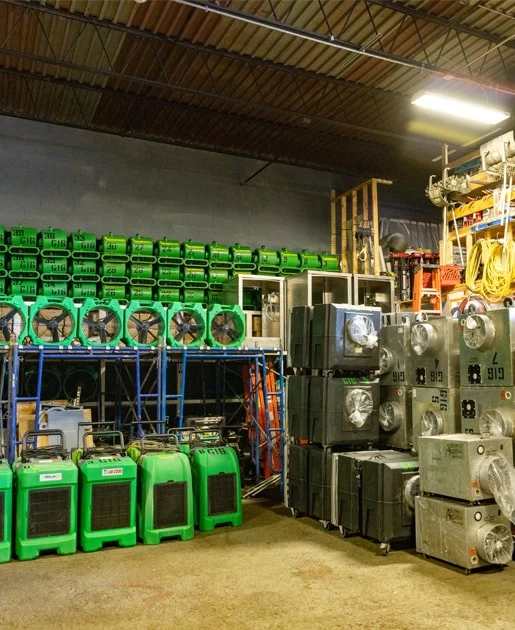
From there, structural drying begins using commercial dehumidifiers and air movers calibrated to the specific moisture readings in your space. If the flood involved sewage backup a real risk when the Rockaway Peninsula’s combined sewer system is overwhelmed during heavy rain the protocol shifts to Category 3 black water handling, which requires licensed waste disposal and full sanitization. If asbestos or lead materials were disturbed, those are handled under the appropriate certifications before any reconstruction begins. When the space is clean, dry, and cleared, the rebuild starts and we handle that too, under our NYC General Contractor license, so you’re dealing with one company from start to finish.
Basement Water Damage Restoration in Bayswater, Queens
Every License, Every Phase Built for How Bayswater Homes Actually Flood
Bayswater doesn’t flood the way most of Queens does. You’re not dealing with a burst pipe from a cold snap or a slow leak from an aging appliance you’re dealing with Jamaica Bay storm surge, tidal infiltration, groundwater pressure from a water table that’s been high since this neighborhood was built on what the original developer called “roughly half swampland,” and a combined sewer system that backs up when the peninsula gets hit hard. The service we deliver here is built around that reality.
The full scope includes emergency water extraction, thermal imaging moisture detection, structural drying, mold prevention treatment, content assessment and restoration, and complete reconstruction under our NYC General Contractor license. For homes in Bayswater’s older housing stock pre-1970 construction is common throughout the neighborhood the service also includes licensed asbestos and lead handling when those materials are present, which is more often than most homeowners expect after a flood.
Insurance is handled directly. We bill your carrier and work with your adjuster whether that’s a standard homeowners policy or a National Flood Insurance Program claim through FEMA, which applies to many properties in Bayswater’s coastal flood zone. The average NFIP claim runs around $52,000. Having a company that understands how to document and present that claim properly isn’t a convenience it’s often the difference between a fully covered recovery and a gap you’re paying out of pocket.
Does flood insurance actually cover basement cleanup costs in Bayswater, NY?
It depends on the type of policy and what was damaged, but for many Bayswater homeowners the answer is yes at least in part. Because a significant number of properties on the Rockaway Peninsula sit in FEMA-designated high-risk coastal flood zones, many homeowners here carry National Flood Insurance Program (NFIP) policies in addition to or instead of standard homeowners insurance. NFIP policies do cover structural damage, including flooring, walls, and mechanical systems in your basement but they have specific exclusions around personal property stored below grade, so it’s important to understand what your policy covers before assuming everything is included.
The documentation piece is where a lot of claims run into trouble. NFIP adjusters require detailed scope-of-loss reports, moisture readings, and itemized remediation records. We handle that documentation as part of the job and work directly with your adjuster throughout the process. If you’re not sure whether your property is in a FEMA flood zone, that information is publicly available through FEMA’s Flood Map Service Center using your Bayswater address.
How fast does mold actually grow after a basement floods in a coastal area like Bayswater?
The standard answer is 24 to 72 hours, but in a coastal environment like Bayswater where ambient humidity is already elevated year-round due to proximity to Jamaica Bay and the Atlantic mold can begin establishing itself on the faster end of that window. The combination of standing water, warm temperatures, and salt-air humidity creates near-ideal conditions for mold growth, particularly in wall cavities, under subfloor assemblies, and behind baseboards where moisture lingers long after the visible water is gone.
This is why thermal imaging is part of the process, not an add-on. A basement that looks dry to the eye can still have moisture readings in the walls that will produce a mold problem within weeks. Acting within the first few hours gives you the best outcome at the lowest total cost.
My Bayswater home was built in the 1950s does that change the cleanup process?
Yes, meaningfully. Homes built before the mid-1970s commonly contain asbestos in pipe insulation, floor tiles, and ceiling materials. Homes built before 1978 may have lead-based paint on basement walls and trim. When a basement floods, those materials can be disturbed asbestos fibers can become airborne, and lead paint chips can end up suspended in floodwater. That changes the cleanup from a standard water damage job into one that requires licensed hazardous materials handling.
Most water damage companies are not licensed to address asbestos or lead. We hold both NYS DOL Asbestos certification and USEPA Lead and RRP credentials, which means we can handle the full scope of what a flooded basement in a pre-1970 Bayswater home can contain legally and safely without requiring you to bring in a separate hazmat contractor. If you’re not sure whether your home has these materials, a proper assessment at the start of the job will tell you before anything gets disturbed further.
What's the difference between a flooded basement from storm surge versus a pipe burst?
The source of the water determines the contamination category, and the contamination category determines the entire cleanup protocol. A burst pipe is typically Category 1 clean water, straightforward extraction and drying. Storm surge from Jamaica Bay, or sewage backup from an overwhelmed sewer line during heavy rain on the Rockaway Peninsula, is Category 3 black water, which carries bacteria, pathogens, and contaminants that require a fundamentally different response. You can’t treat a Category 3 event the way you’d treat a burst pipe.
Category 3 cleanup involves licensed waste disposal, full sanitization of all affected surfaces, and in many cases removal of porous materials drywall, insulation, carpet that can’t be adequately sanitized. The cost and scope are higher, but so is the health risk of cutting corners. In Bayswater, where combined sewer backups during heavy storms are a documented risk, it’s worth knowing upfront that the water in your basement may not be as clean as it looks.
How long does a full flooded basement cleanup and restoration take?
Emergency water extraction typically happens within the first few hours. Structural drying getting moisture levels in walls, floors, and framing down to acceptable ranges usually takes three to five days depending on the severity of the flood, the construction type, and ambient humidity conditions. In Bayswater’s coastal environment, where humidity is consistently higher than inland neighborhoods, drying can take longer than the industry average, which is something a good restoration company will account for rather than rush past.
After drying is confirmed with moisture readings, any mold treatment, hazardous materials work, and reconstruction follows. For a straightforward event with no hazmat complications, total project time from emergency call to finished basement can run one to three weeks. For more complex situations significant structural damage, asbestos or lead involvement, or extensive reconstruction it can take longer. We’ll give you a clear timeline after the initial assessment so you’re not guessing.
Why does it matter if my cleanup company has a New York City contractor license?
Bayswater is in New York City Queens Community District 14 which means any structural repair or reconstruction work following water damage falls under NYC Department of Buildings jurisdiction. Performing that work without a valid NYC General Contractor license is illegal, and it creates real problems for you as the homeowner: unpermitted work can complicate future property sales, void your insurance coverage, and leave you liable if something goes wrong.
A lot of restoration companies that serve Long Island and Nassau County are not licensed to do construction work inside New York City limits. They can extract water and run dehumidifiers, but when it comes to opening walls, replacing structural elements, or rebuilding finished spaces, they either stop the job or bring in an unlicensed sub neither of which is a good outcome for you. We hold an active NYC General Contractor license, which means we can take your basement from flooded to fully restored under one roof, one contract, and one accountable company.