Bayville basements don’t flood like the rest of Nassau County — and the cleanup can’t be treated like it does. We respond 24/7 with the licenses and equipment to handle what storm surge actually leaves behind.
I needed a professional consultation explanation of procedure for safe removal of Asbestos in my apartment complex. Without having an account yet, I was very impressed with the caring, knowledgeable and generous advice offered by Jessica, and will look forward to doing business in the future. Thank you so much! I feel much more informed about a sometimes scary endeavor. Peace. Nancy Silva Mineola, NY.
Mia Munoz
Used this company to clean up some water flood in my house. They were fast and easy to work with.very professional, Would recommend to anyone!
Nini Valle
Great company, had a flood and they responded quickly and efficiently. Billed my insurance company directly. I highly recommend this company!
joe colapietro, jr
I had pipe freeze in my basement right before a snow storm and they made to within an hour to help start the clean up process. They we by our side throughout the entire process and even helped with the insurance company. They did such a great job with the cleanup, repair, remidiation, I contracted them to perform the repairs and finishes in the basement. They came with enough manpower and material to get the job done. Leo and Jessica were nothing but a pleasure to deal with!!
Cristian Arredondo c
I had some water damage in my home and Green Island was able to take care of my issue quickly and effectively. I am very pleased with the work they did. They responded quickly and were very professional.
Michael M
Outstanding service! From the office to the field crew everyone was friendly, helpful and responsive. I highly recommend Green Island Group.
When water comes in off the Long Island Sound — the way it did during Sandy, the way it does every time a nor’easter pushes hard against Bayville’s north-facing shore — it doesn’t behave like a burst pipe. It’s category 3 water: storm surge carrying bacteria, marine debris, and sewage contamination. Pulling it out with a wet-vac and calling it done is how a water problem becomes a mold problem six weeks later.
The real outcome you’re after isn’t just a dry floor. It’s a basement that’s been properly extracted, decontaminated, moisture-mapped with professional equipment, and dried down to safe levels inside the walls — not just on the surface. That’s the difference between a restoration and a surface cleanup that fails quietly behind your drywall.
For homes on Bayville Avenue, near Oak Neck Point, or anywhere along the peninsula’s waterfront edge, there’s another layer to this: more than 44% of Bayville’s housing stock was built before 1960. When floodwater disturbs old floor tiles, pipe insulation, or wall materials in a home that age, you’re potentially dealing with asbestos and lead — not just water. The cleanup has to account for all of it, not just what’s visible.
One Contractor Holds Every License This Work Requires
We serve Nassau County, Suffolk County, and the New York City metro area with a credential stack that’s genuinely rare in this industry. NYS DOL Mold License. NYS DOL Asbestos License. USEPA Lead and RRP certifications. IICRC Water and Fire Damage certification. Nassau County General Contractor license. Most restoration companies operating on Long Island hold one or two of these. We hold all of them.
That matters in Bayville specifically. The village sits in a FEMA-designated flood hazard area, participates in the National Flood Insurance Program, and has a housing stock where hazardous materials in flood-affected spaces are a real and common concern — not a remote possibility. When you call us, you’re not patching together multiple contractors to handle what the water touched. You get one team, fully licensed for the complete job, from water extraction through structural restoration.
What Actually Happens From First Call to Final Walkthrough
The call comes in — day or night — and a real person picks up. Given Bayville’s peninsula geography, we dispatch with North Shore access routes in mind. When the Bayville Bridge is the only way in and road conditions on the peninsula are compromised after a storm, local knowledge isn’t a nice-to-have. It’s what gets our crew to your door inside the window that matters.
On arrival, the first priority is water categorization. Storm surge from the Sound is not clean water, and the extraction and decontamination process reflects that. Industrial pumps and extraction equipment remove standing water, then professional moisture meters and thermal imaging map what’s moved into walls, subfloor, and insulation — the moisture you can’t see but that drives mold growth. If the home was built before 1978, materials are assessed for asbestos and lead before anything gets disturbed.
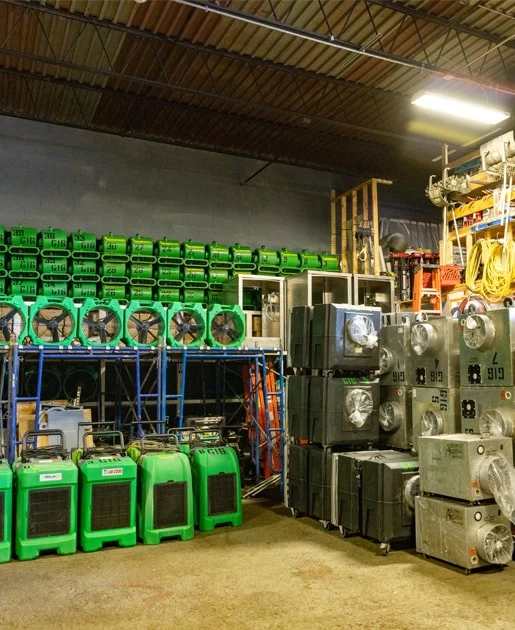
Drying comes next, using commercial-grade air movers and dehumidifiers — not the kind you rent from a hardware store. The goal is to get the structure below safe moisture thresholds within 72 hours, because that’s the window before mold colonization becomes likely. Throughout the process, damage is documented in a format that supports insurance claims — including NFIP flood insurance claims, which many Bayville homeowners carry separately from their standard homeowners policy. When the drying is complete and clearance readings confirm the job is done, you get a full walkthrough before anything is signed off.
Basement Flooding Remediation Services Bayville NY
Built for Coastal Flooding, Not Just Pipe Bursts
The flooded basement cleanup we perform in Bayville is designed around what actually floods here — not the standard inland scenario of a sump pump failure or a slow pipe leak. Storm surge events, nor’easter-driven inundation, and high-water-table seepage through aging foundation walls are the conditions this service is built for. That means category 3 biohazard protocols, not just water removal. It means decontamination of affected surfaces, not just drying. And it means a licensed mold assessment after the fact — because in a coastal home that’s taken on significant water volume, the question isn’t whether mold risk exists, it’s whether it’s been properly eliminated.
For Bayville homes built before 1960 — which represents a substantial portion of the village’s housing stock — our service includes hazardous material assessment before any demolition or material removal begins. Asbestos-containing floor tiles, pipe insulation, and ceiling materials are common in homes of that era, and disturbing them without a licensed abatement contractor creates both a health hazard and legal exposure for the homeowner. Our NYS DOL Asbestos and USEPA Lead certifications mean that work is handled in-house, under the same contractor, without delays waiting for a separate licensed team.
The service also includes full insurance documentation support. Bayville participates in FEMA’s Community Rating System, and many residents here carry both standard homeowners insurance and a separate NFIP flood policy. Filing correctly with both carriers — and documenting damage to NFIP standards — is something we handle as part of the job, not as an add-on.
Does flood insurance actually cover basement cleanup in Bayville, NY?
This is one of the most common points of confusion for Bayville homeowners, and it’s worth being clear about. Standard homeowners insurance covers water damage from sudden, accidental events — a burst pipe, a failed appliance, that kind of thing. It does not cover flooding from storm surge, groundwater, or natural flood events. That coverage falls under a separate NFIP flood insurance policy.
Because the Village of Bayville participates in FEMA’s National Flood Insurance Program and actively encourages residents to carry flood coverage — even those not in a designated flood zone — many homeowners here are dealing with two separate policies after a flooding event. Each carrier has different documentation requirements, and NFIP claims in particular require specific damage records that go beyond a few photos on your phone. We provide professional damage documentation throughout the cleanup process specifically to support both types of claims. It’s part of the job, not something you have to figure out on your own afterward.
How quickly does mold start growing after a basement floods?
Mold can begin colonizing within 24 to 48 hours under the right conditions — and a wet basement after a Long Island Sound storm surge event provides exactly those conditions: moisture, warmth, and organic material in the walls and subfloor. The commonly cited threshold is 72 hours: get the structure fully dried within that window, and mold growth is unlikely. Miss it, and you’re likely looking at remediation on top of restoration — a significantly larger project in both cost and time.
This is why response speed matters so much in Bayville specifically. When a nor’easter or storm surge event affects the peninsula, multiple homes flood at the same time, and demand for cleanup services spikes immediately. Having a contractor who can respond at 2 AM, navigate the Bayville Bridge, and arrive with industrial drying equipment — not rental gear — is what makes the difference between catching that window and losing it. We offer 24/7 emergency response for exactly this scenario.
What makes storm surge cleanup different from a regular basement flood?
When water comes in from the Long Island Sound during a storm event, it’s categorized as category 3 water — what the industry calls black water. It carries bacteria, sewage contamination, marine debris, and chemical runoff. This is fundamentally different from a clean-water pipe burst, which is category 1. The cleanup protocols are different, the decontamination requirements are different, and the health risks of not handling it correctly are different.
A contractor who treats storm surge the same way they’d treat a burst pipe is leaving dangerous contamination behind, even if the basement looks and smells dry. Our category 3 protocols include full decontamination of affected surfaces, proper disposal of contaminated materials, and air quality assessment after drying — not just extraction and fans. For Bayville homeowners who’ve lived through Sandy or any of the major nor’easters that have hit the North Shore, this distinction is not abstract. It’s the difference between a basement that’s actually safe and one that just looks that way.
My Bayville home was built in the 1950s — does that change anything about the cleanup?
Yes, it changes quite a bit. Homes built before 1960 — which covers a large portion of Bayville’s housing stock — commonly contain asbestos in floor tiles, pipe insulation, ceiling materials, and joint compounds. They also frequently have lead paint on walls and trim. When floodwater saturates these materials or when they need to be removed as part of the cleanup, you’re entering regulated hazardous material territory.
In New York State, disturbing asbestos-containing materials without a NYS DOL Asbestos license is illegal. The same applies to lead paint under USEPA RRP regulations. Most general restoration companies operating in Nassau County do not hold these certifications — which means they either can’t legally perform certain parts of the job, or they’re doing it without the required credentials. We hold both the NYS DOL Asbestos license and USEPA Lead and RRP certifications, so if your pre-1960 Bayville home has hazardous materials in flood-affected areas, the full scope of the work stays with one licensed team from start to finish.
How much does flooded basement cleanup typically cost in Nassau County?
The honest range for professional flooded basement cleanup runs roughly $4 to $12 per square foot, which puts most residential jobs somewhere between $1,600 and $12,000 or more depending on the size of the space, the category of water involved, and whether hazardous materials or mold remediation are part of the scope. Storm surge events — the kind that affect Bayville — tend to land toward the higher end of that range because of the category 3 contamination protocols involved.
The more useful frame, though, is what inadequate cleanup costs. A basement that appears clean but has residual moisture in the walls will develop mold, often within weeks. Mold remediation on top of a flood cleanup job that wasn’t done correctly can easily run two to three times the cost of doing it right the first time — and that’s before factoring in structural repairs or the health impacts of prolonged mold exposure. For a Bayville home, where property values are significant and many residents carry NFIP flood insurance that may cover a substantial portion of the cleanup cost, the right investment is a thorough job the first time.
Do I need a licensed mold contractor in New York after my basement floods?
New York State is one of only a handful of states in the country that requires a dedicated mold contractor license — the NYS DOL Mold License — to legally perform mold remediation. This isn’t a voluntary certification. It’s a state law, and it exists specifically to protect homeowners from unlicensed operators performing work that directly affects indoor air quality and structural integrity.
After a significant basement flooding event, especially one involving storm surge or prolonged moisture exposure, a licensed mold assessment is the responsible next step — even if you don’t see visible mold growth. In Bayville, where the combination of coastal humidity, older housing stock, and the volume of water that can enter a home during a Sound storm event creates elevated mold risk, skipping that step is a real gamble. We hold the NYS DOL Mold License and perform mold assessment as part of the post-flood process. If remediation is needed, it’s handled under the same contractor — no handoff, no scheduling gap, no window for the problem to get worse while you wait.