When the Water Rises in Beechhurst, Every Hour Counts
Beechhurst sits between the East River and Long Island Sound and when a nor’easter hits or a pipe lets go at 2 a.m., your basement doesn’t wait for business hours. We respond within the hour, handle your insurance, and don’t leave until the job is done right.
I needed a professional consultation explanation of procedure for safe removal of Asbestos in my apartment complex. Without having an account yet, I was very impressed with the caring, knowledgeable and generous advice offered by Jessica, and will look forward to doing business in the future. Thank you so much! I feel much more informed about a sometimes scary endeavor. Peace. Nancy Silva Mineola, NY.
Mia Munoz
Used this company to clean up some water flood in my house. They were fast and easy to work with.very professional, Would recommend to anyone!
Nini Valle
Great company, had a flood and they responded quickly and efficiently. Billed my insurance company directly. I highly recommend this company!
joe colapietro, jr
I had pipe freeze in my basement right before a snow storm and they made to within an hour to help start the clean up process. They we by our side throughout the entire process and even helped with the insurance company. They did such a great job with the cleanup, repair, remidiation, I contracted them to perform the repairs and finishes in the basement. They came with enough manpower and material to get the job done. Leo and Jessica were nothing but a pleasure to deal with!!
Cristian Arredondo c
I had some water damage in my home and Green Island was able to take care of my issue quickly and effectively. I am very pleased with the work they did. They responded quickly and were very professional.
Michael M
Outstanding service! From the office to the field crew everyone was friendly, helpful and responsive. I highly recommend Green Island Group.
There’s a difference between a basement that looks dry and one that actually is. Moisture trapped inside wall cavities and beneath older flooring keeps working long after the visible water is gone and in Beechhurst’s pre-war and mid-century homes, where pipe insulation and floor tiles from the 1940s and 50s are still common, that hidden moisture doesn’t just feed mold. It can disturb materials that become a serious health hazard the moment they’re wet.
What you get when the job is done correctly is straightforward: no standing water, no residual moisture behind your walls, no mold starting to form in the dark, and no surprise call from a second contractor because the first one couldn’t legally finish the work. That last part matters more in Beechhurst than most people realize. Homes built before 1980 frequently contain asbestos and lead and most water damage companies in Queens are not licensed to handle them. We are.
Beechhurst also recorded the highest rainfall total in Queens during at least one documented storm event. That’s not a coincidence it’s geography. The neighborhood’s position at the confluence of the East River, Little Bay, and the Long Island Sound means water accumulates here faster and drains slower than in inland parts of the borough. Getting the right team in quickly isn’t just smart. In this neighborhood, it’s the difference between a manageable cleanup and a $60,000 restoration.
Licensed Basement Flooding Remediation in Beechhurst
More Licenses Than Any Competitor Will Show You
We hold over 17 active certifications including the NYS DOL Mold License and NYS DOL Asbestos License that New York State legally requires for this work. We also carry the IICRC Water and Fire Damage certification, USEPA Lead and RRP credentials, and a NYC General Contractor license that allows us to pull permits and complete full reconstruction inside city limits. That matters when you’re in Queens, not Long Island.
We serve Beechhurst and the surrounding waterfront communities directly from the single-family homes along Powells Cove Boulevard to the gated communities at Le Havre on the Water and Cryder House. When a storm closes the Throgs Neck Bridge and your basement is taking on water, you need a company that already knows this neighborhood, not one figuring out the Cross Island Parkway at midnight.
Available 24 hours a day, seven days a week. No answering service. No next-day callbacks.
From the First Call to a Finished Basement Here's What Happens
When you call, someone picks up. From there, a crew is dispatched immediately and based on documented response times, we’re typically at your door within the hour. The first thing we do is assess the water source and contamination category, because not all basement floods are the same. A burst pipe is handled differently than a sewage backup, and both are handled differently than storm surge seeping through a foundation wall which is a real and recurring scenario in Beechhurst’s waterfront geography.
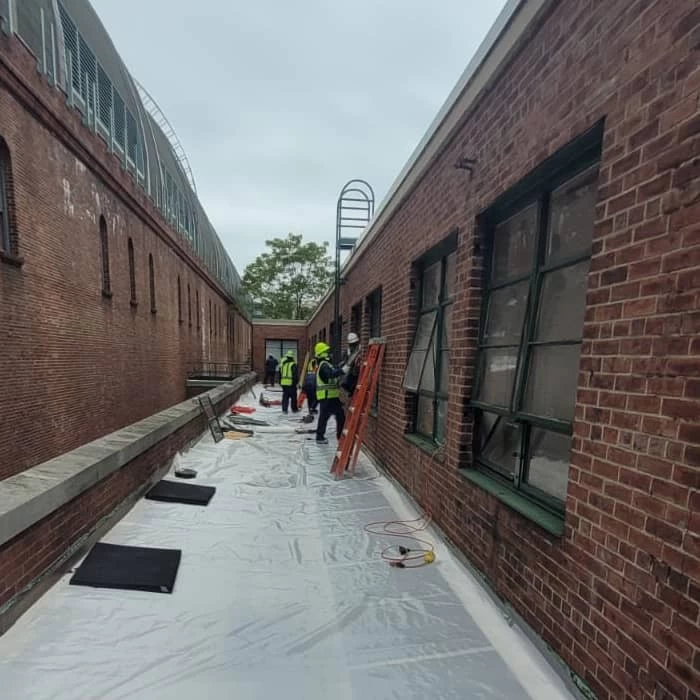
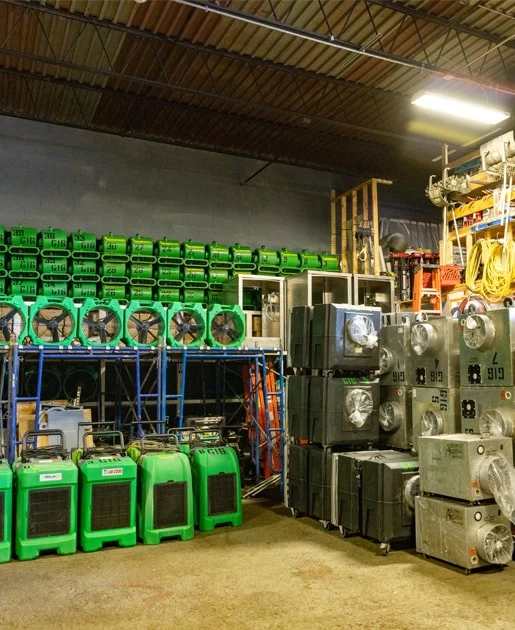
Once the source is identified and contained, extraction begins. Industrial pumps and vacuums remove standing water fast. Then the drying phase starts and this is where most companies cut corners. We use thermal imaging to find moisture hiding inside wall cavities and beneath flooring that a visual inspection would miss entirely. In Beechhurst’s older homes, that step isn’t optional. It’s the difference between a job that’s actually done and one that looks done until mold shows up three weeks later.
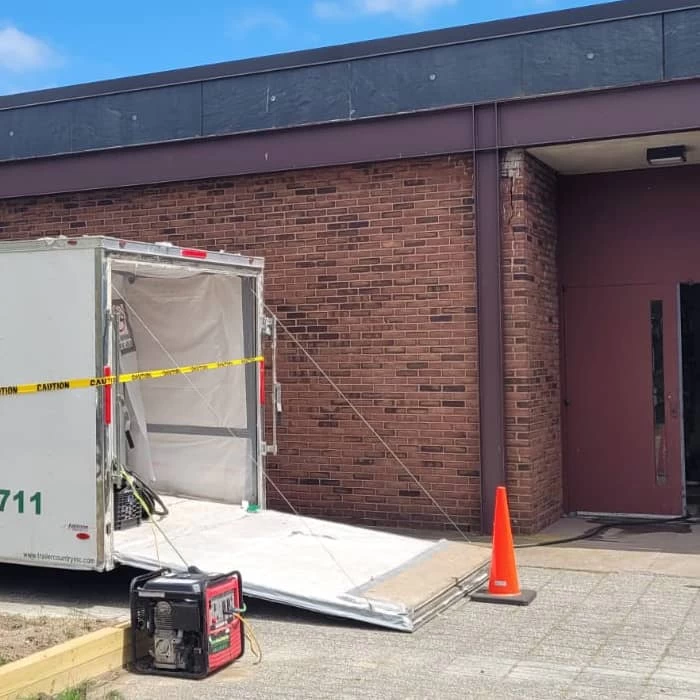
If asbestos or lead materials are encountered during the process which is a genuine possibility in any Beechhurst home built before 1980 our team is already licensed to handle it. No stoppage. No referral to a separate contractor. No gap in the timeline. After remediation, if reconstruction is needed, we hold the NYC General Contractor license to complete it legally, including any permits required by the NYC Department of Buildings. One company, start to finish.
Flooded Basement Remediation Services in Beechhurst, NY
Everything a Beechhurst Basement Flood Actually Requires
A flooded basement in Beechhurst involves more variables than most homeowners expect going in. Beyond the water itself, you’re potentially dealing with tidal groundwater pressure pushing through foundation walls, storm surge contamination, aging drainage systems, and in any home built before 1980 the real possibility of asbestos pipe insulation or lead paint that flood water has now disturbed. The service we provide is built around that reality, not a generic checklist.
The full scope covers emergency water extraction, structural drying with thermal imaging verification, mold prevention treatment, sewage backup cleanup when applicable, asbestos and lead assessment and remediation if encountered, and complete reconstruction through our licensed general contracting team. For residents of gated communities like Le Havre, Wildflower Estates, or Clearview Gardens, our crew arrives with the documentation and insurance credentials that building management requires no delays at the gate, no back-and-forth with your HOA.
Insurance coordination is handled directly by us. We document the damage thoroughly, bill your insurance company, and work with the adjuster on your behalf. The average water damage insurance claim runs close to $14,000 and in a neighborhood where home values regularly exceed $700,000, having someone in your corner during that process isn’t a nice-to-have. It’s part of the job. Costs for flooded basement cleanup typically range from $1,600 to $12,000 or more depending on water category and square footage, and waiting beyond 72 hours adds $2,000 to $8,000 in mold remediation costs on top of that.
Does homeowners insurance cover flooded basement cleanup in Beechhurst, NY?
It depends on the source of the water, and this distinction matters a lot in Beechhurst. Most standard homeowners insurance policies in New York cover sudden and accidental water damage a burst pipe, an appliance failure, an overflowing fixture. What they typically do not cover is flooding from an external source, like storm surge or surface water entering through a foundation. In Beechhurst, where the neighborhood sits between the East River and Long Island Sound and has documented exposure to coastal storm events, that distinction can be significant.
If you have a separate flood insurance policy through the National Flood Insurance Program (NFIP) or a private flood insurer, storm surge and groundwater intrusion may be covered under that policy. The best move after a basement flood is to call us before you call your insurance company not to delay the claim, but because thorough, professional documentation of the damage strengthens your position with the adjuster. We handle that documentation and work directly with insurance carriers, which takes the back-and-forth off your plate during an already stressful situation.
How fast does mold grow after a basement flood, and why does it matter?
Mold can begin establishing itself within 24 to 48 hours of a water event, and by 72 hours it’s actively growing in any space with sufficient moisture and organic material. This timeline is the documented threshold that insurance adjusters and remediation professionals use to assess whether mold remediation will be required in addition to water damage cleanup. Waiting beyond that window doesn’t just create a health problem. It creates a more expensive one.
In practical terms, delaying professional drying and remediation beyond 72 hours typically adds $2,000 to $8,000 in mold remediation costs on top of the underlying water damage bill. In Beechhurst’s older housing stock where wall cavities, subflooring, and insulation from the 1940s and 50s provide ideal conditions for mold growth that risk is higher than in newer construction. Thermal imaging during the drying phase is the only reliable way to confirm that moisture has been fully removed from inside walls and floors before mold has a chance to take hold.
What makes basement flooding in Beechhurst different from other parts of Queens?
Geography, mostly. Beechhurst is bounded by water on three sides the East River to the north, Little Bay to the east, and the westernmost reach of Long Island Sound. That coastal position creates flood exposure that most inland Queens neighborhoods don’t face: storm surge from nor’easters and tropical storm remnants, tidal influence on the groundwater beneath basements, and a water table that sits closer to the surface than in elevated areas like Forest Hills or Kew Gardens.
During Superstorm Sandy, both the Throgs Neck Bridge and the Whitestone Bridge which frame Beechhurst’s eastern and western edges were closed due to storm conditions. The neighborhood was directly in the path of that event. More recently, the National Weather Service documented that Beechhurst recorded the highest rainfall total in the entire borough during a significant Queens storm 2.28 inches, more than any other neighborhood measured. That’s a function of where Beechhurst sits. Basement flooding remediation here needs to account for that reality, including the possibility of contaminated water from combined sewer overflow during heavy rainfall events.
Do older Beechhurst homes really need asbestos or lead testing during basement cleanup?
If your home was built before 1980 and the majority of detached single-family homes in Beechhurst were built between 1940 and 1969 then yes, the possibility of asbestos or lead is real and worth taking seriously. Asbestos was commonly used in pipe insulation, floor tiles, ceiling tiles, and joint compound in homes of that era. Lead paint was standard in pre-1978 construction. Under normal conditions, these materials are not necessarily dangerous. But a basement flood changes that.
Flood water that saturates older pipe insulation or disturbs floor tiles can release asbestos fibers into the air. Water stripping lead paint creates dust and residue that spreads through the space. In New York State, any contractor who encounters these materials during remediation is legally required to hold a NYS DOL Asbestos License and USEPA Lead and RRP certifications to continue working. Most water damage companies in Queens do not hold these credentials meaning they have to stop work and refer you to a specialist, adding time and cost to an already urgent situation. We hold both licenses, so the job doesn’t stop mid-process.
How long does flooded basement cleanup and restoration take in Queens?
For a straightforward water extraction and structural drying job with no contamination or hazardous materials, the active cleanup phase typically takes three to five days. That timeline accounts for extraction, drying, and verification that moisture levels are back within acceptable ranges confirmed through thermal imaging, not just visual inspection. If mold remediation is required, add time depending on the extent of growth. If reconstruction is needed drywall, flooring, framing the full project can extend to several weeks.
In Beechhurst specifically, a few factors affect that timeline. Older homes with plaster walls, original hardwood flooring, or finished basement spaces take longer to dry than newer construction with modern materials. If asbestos or lead is identified and requires proper remediation, that adds a step though with our licensed team, it doesn’t require stopping work and starting over with a different company. Gated community access, like at Le Havre or Cryder House, can also affect scheduling logistics, and we coordinate directly with building management to minimize delays.
How do I choose a legitimate flooded basement cleanup company in Beechhurst?
Start with licensing, because in New York it’s not optional. Any company performing mold remediation in New York State is legally required to hold an active NYS DOL Mold License. If a company can’t show you that credential, they are not legally authorized to do that work here and hiring them could void your insurance claim. Beyond mold licensing, look for IICRC Water and Fire Damage certification, which tells you the technicians follow documented, industry-standard protocols rather than improvised ones.
For Beechhurst homeowners specifically, the asbestos and lead question is worth asking directly. Given the age of the housing stock in this neighborhood, any remediation company you hire should hold a NYS DOL Asbestos License and USEPA Lead and RRP certifications or they may have to walk off the job partway through if those materials are found. Also ask whether the company holds a NYC General Contractor license, because if reconstruction is needed, an unlicensed contractor cannot legally pull permits with the NYC Department of Buildings. After a major storm or flood event, unlicensed operators do show up in neighborhoods like this one. The credentials are the filter.