When the Sound Storms In, Belle Terre Homes Need More Than a Mop
We respond to flooded basements in Belle Terre around the clock with the environmental licensing your home’s age actually requires. The moment water gets into your basement, the clock starts. Mold can take hold in as little as 24 to 48 hours and on a peninsula surrounded by Port Jefferson Harbor and the Long Island Sound, the ambient humidity after a storm doesn’t exactly work in your favor.
I needed a professional consultation explanation of procedure for safe removal of Asbestos in my apartment complex. Without having an account yet, I was very impressed with the caring, knowledgeable and generous advice offered by Jessica, and will look forward to doing business in the future. Thank you so much! I feel much more informed about a sometimes scary endeavor. Peace. Nancy Silva Mineola, NY.
Mia Munoz
Used this company to clean up some water flood in my house. They were fast and easy to work with.very professional, Would recommend to anyone!
Nini Valle
Great company, had a flood and they responded quickly and efficiently. Billed my insurance company directly. I highly recommend this company!
joe colapietro, jr
I had pipe freeze in my basement right before a snow storm and they made to within an hour to help start the clean up process. They we by our side throughout the entire process and even helped with the insurance company. They did such a great job with the cleanup, repair, remidiation, I contracted them to perform the repairs and finishes in the basement. They came with enough manpower and material to get the job done. Leo and Jessica were nothing but a pleasure to deal with!!
Cristian Arredondo c
I had some water damage in my home and Green Island was able to take care of my issue quickly and effectively. I am very pleased with the work they did. They responded quickly and were very professional.
Michael M
Outstanding service! From the office to the field crew everyone was friendly, helpful and responsive. I highly recommend Green Island Group.
Getting the right crew in fast isn’t just about the water you can see. It’s about what’s happening inside the walls, under the subfloor, and behind the framing long after the puddles are gone.
For Belle Terre homeowners, there’s a layer to this that most restoration companies quietly skip over. A significant portion of the homes here from the Tudor-style builds in the English section to the mid-century ranches were constructed before 1980. That means when water damage requires removing drywall, flooring, or ceiling materials, there’s a real chance you’re dealing with asbestos insulation or lead paint behind those walls. A contractor without the proper environmental certifications can’t legally or safely touch that work. We hold both NYS DOL Asbestos and USEPA Lead/RRP certifications, so we don’t have to stop mid-job and call someone else in.
What you end up with isn’t just a dry basement. It’s a fully documented, properly remediated, permit-ready space handled start to finish by one licensed team that knows exactly what North Shore homes are made of.
Licensed Basement Flood Cleanup Company Belle Terre
12 Years In, and New York State Trusts Us With Its Own Buildings
We’ve been handling environmental restoration and remediation across Long Island and New York City for over 12 years, completing more than 5,000 projects across the state. We hold General Contractor licenses in Suffolk County, Nassau County, and New York City which means we can legally pull permits with the Belle Terre Building Inspector and see a job through from first extraction to final reconstruction without handing it off.
We’re also an approved emergency response contractor for the New York State Office of General Services. That’s not a marketing line it means New York State independently reviewed our licensing, insurance, and track record and decided we meet the bar for responding to public building emergencies. We’re also certified by New York State as both a Minority Business Enterprise and a Woman-Owned Business Enterprise, led by CEO Jessica Dussan and VP Leo Torres.
For a community like Belle Terre where roughly 300 households share a gated peninsula and word travels fast that kind of third-party accountability matters. You’re not vouching for an unknown crew at the gatehouse on Cliff Road. You’re calling a company that New York State has already vetted.
Flooded Basement Remediation Process Belle Terre NY
What Actually Happens From Your First Call to a Finished Basement
It starts the moment you call. Our team is available 24 hours a day, every day, and we move fast customer reviews consistently describe arrival times under an hour, including during nor’easters and winter storm events. Once on-site, we assess the damage and categorize the water source. That distinction matters more than most people realize. Clean water from a burst pipe is handled very differently than Category 3 water from a sewage backup or outside storm flooding, which is classified as a biohazard and requires full containment and OSHA-compliant disposal protocols.
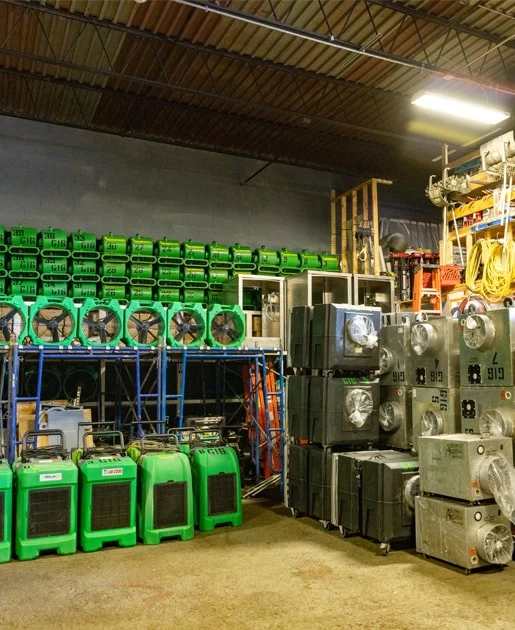
From there, we extract standing water using industrial-grade equipment, then set up commercial dehumidifiers and air movers to begin structural drying. We don’t guess at dry we monitor with moisture meters and thermal imaging cameras until the readings confirm the space is actually dry, not just dry to the touch. If materials need to come out, we assess for asbestos and lead before anything gets disturbed. In Belle Terre, where so much of the housing stock predates modern hazmat regulations, that step isn’t optional it’s the law.
Once the space is clean and dry, we handle antimicrobial treatment, remove unsalvageable materials, and move into reconstruction. Because we hold a Suffolk County General Contractor license, we can pull any permits required under Belle Terre’s building code including Chapter 78 and Chapter 86, which govern construction and flood damage prevention and carry the job through to a finished, certificate-of-occupancy-ready result. We also document everything for your insurance carrier and bill them directly, so you’re not left managing paperwork during an already stressful situation.
Basement Flooding Remediation Services Belle Terre NY
One License Stack That Covers Everything Your Home Might Have
Most water damage companies handle the water. We handle everything the water touches including what’s behind the walls in a home that was built when asbestos was still standard. Our full scope covers emergency water extraction, structural drying, moisture monitoring, mold remediation, asbestos abatement, lead-safe work practices, debris removal, and complete reconstruction. That’s not a list of subcontractors we call. That’s work we perform under our own licenses, with our own crews, under one contract.
For Belle Terre specifically, that matters in a few concrete ways. The village’s strict building code requires permits for structural alterations following water damage, and our Suffolk County General Contractor license means we can pull those permits legally and deliver work that passes inspection. If you’re in one of the older homes near the English section or anywhere in the lower-elevation areas closer to the harbor, there’s a meaningful chance your basement remediation will involve hazardous materials and we’re licensed to handle them without stopping the job.
We also work directly with your insurance carrier. We document the damage, communicate with your adjuster, and handle the billing. Given that standard homeowners insurance typically covers sudden water damage from things like burst pipes but excludes external flooding, having someone in your corner who understands how to document and present a claim correctly can make a real difference in what gets covered.
Does homeowners insurance cover a flooded basement in Belle Terre, NY?
It depends entirely on what caused the flooding. Standard homeowners insurance typically covers sudden, accidental water damage a burst pipe in the middle of a January cold snap, for example, which is one of the most common calls we get from North Shore homeowners after a hard freeze. What it generally does not cover is flooding from an external source, like storm surge from Long Island Sound or groundwater intrusion during a nor’easter. That type of flooding typically falls under a separate flood insurance policy, often through FEMA’s National Flood Insurance Program.
The documentation you provide at the start of a claim matters enormously. How the damage is described, what photos are taken, and how the water source is categorized can affect whether a claim gets approved or denied. We document everything from the moment we arrive water source, affected materials, moisture readings, photos and we bill your insurance carrier directly. If you’re unsure what your policy covers, we can help you understand what we’re seeing on-site so you can have an informed conversation with your adjuster.
How quickly does mold start growing after a basement floods on Long Island?
Mold can begin developing within 24 to 48 hours of water intrusion under the right conditions and on the North Shore, those conditions are often already in place. Belle Terre sits on a peninsula surrounded by water on three sides, and the ambient humidity during and after storm events is consistently high. That combination of moisture in the structure and humidity in the air accelerates mold growth faster than you’d see in a drier inland environment.
The critical window is the first 48 to 72 hours. If water is extracted quickly and structural drying begins within that timeframe, mold can typically be prevented rather than remediated. Once mold is established, the scope of work and the cost increases significantly. A cleanup that might run $3,000 to $5,000 in the first 24 hours can become an $8,000 to $12,000 project if mold remediation is required on top of the water damage restoration. Speed isn’t just about convenience. It’s about keeping a manageable problem from becoming a much larger one.
My Belle Terre home was built in the 1960s do I need to worry about asbestos during cleanup?
Yes, and it’s worth taking seriously. Homes built before 1980 which includes a significant portion of Belle Terre’s housing stock, from the Tudor-era builds in the English section to the mid-century ranches commonly contain asbestos in pipe insulation, floor tiles, ceiling tiles, and roofing materials. Lead paint is also prevalent in homes from that era. When a flooded basement requires removing drywall, flooring, or other building materials, there’s a real possibility of disturbing those materials.
Under New York State law, contractors performing this type of work must hold NYS DOL Asbestos certification and USEPA Lead/RRP certification. A company that proceeds without those licenses isn’t just cutting corners they’re exposing you and your family to health risks and potentially creating a liability issue for your property. We hold both certifications. Before any material removal begins in an older Belle Terre home, we assess for hazardous materials and handle abatement as part of the same job, without stopping work to bring in a separate licensed subcontractor.
Do I need a permit for basement restoration work after flooding in Belle Terre?
Potentially, yes. Belle Terre is a fully incorporated village with its own building inspector and municipal code, and Chapter 78 of that code requires a permit for any structural alterations to a building which can include replacing framing, drywall, flooring systems, or other structural elements damaged by water. Chapter 86, the village’s Flood Damage Prevention ordinance, adds additional requirements for construction work in flood-prone areas of the village.
This is one of the reasons it matters that your restoration contractor holds a General Contractor license in Suffolk County. Without that license, a company cannot legally pull permits with the Belle Terre Building Inspector. Work performed without required permits can result in code violations, failed inspections, and certificate of occupancy problems that become very complicated when you eventually want to sell a property worth well over a million dollars. We hold a Suffolk County General Contractor license and handle permitting as part of the restoration process, so you’re not left managing that piece on your own.
What's the difference between water mitigation and full basement water damage restoration?
Water mitigation is the emergency phase extracting the water, drying out the structure, and stopping further damage from spreading. It’s critical and it needs to happen fast, but it’s not the whole job. Water damage restoration is everything that comes after: removing materials that can’t be saved, treating for mold, addressing any hazardous materials that were disturbed, and rebuilding the space back to finished condition.
A lot of companies stop at mitigation. They get the space dry, hand you a report, and leave you to find a general contractor for the reconstruction. In a community like Belle Terre, where you’re dealing with high-value finishes, older building materials, and a village code that requires permits for structural work, that handoff creates real problems. We handle both phases under one contract. You don’t manage the transition between a mitigation crew and a reconstruction crew we carry the job from the first pump to the final inspection.
How long does flooded basement cleanup and drying actually take in a North Shore home?
The honest answer is that it depends on how much water entered, how long it sat before cleanup began, and what materials are involved. For a straightforward clean-water event a burst pipe caught within a few hours extraction and structural drying typically takes three to five days using commercial-grade dehumidifiers and air movers, with moisture readings confirming when the space has reached acceptable levels. We don’t pull equipment based on a calendar. We pull it when the meters say the job is done.
For homes in Belle Terre that experienced storm-related flooding or sewage backup, or where water sat for an extended period before anyone called, the timeline extends. If mold has begun developing, remediation adds time. If hazardous materials are present which is a real consideration in the older homes on the peninsula abatement adds another phase before reconstruction can begin. The full process from emergency response to a finished, permit-ready basement can range from one week to several weeks depending on scope. What we can tell you is that every phase is documented, every step is communicated, and you’ll know exactly where the job stands at all times.