When Your Bellerose Basement Floods, You Need a Contractor Licensed on Both Sides of the Border
We respond within the hour licensed in Queens and Nassau County, certified for hazardous materials, and ready to handle your insurance claim from start to finish. When water is in your Bellerose basement, the jurisdiction question matters as much as the equipment. We already know which side of Jericho Turnpike you’re on, and we’re legally authorized to work there.
I needed a professional consultation explanation of procedure for safe removal of Asbestos in my apartment complex. Without having an account yet, I was very impressed with the caring, knowledgeable and generous advice offered by Jessica, and will look forward to doing business in the future. Thank you so much! I feel much more informed about a sometimes scary endeavor. Peace. Nancy Silva Mineola, NY.
Mia Munoz
Used this company to clean up some water flood in my house. They were fast and easy to work with.very professional, Would recommend to anyone!
Nini Valle
Great company, had a flood and they responded quickly and efficiently. Billed my insurance company directly. I highly recommend this company!
joe colapietro, jr
I had pipe freeze in my basement right before a snow storm and they made to within an hour to help start the clean up process. They we by our side throughout the entire process and even helped with the insurance company. They did such a great job with the cleanup, repair, remidiation, I contracted them to perform the repairs and finishes in the basement. They came with enough manpower and material to get the job done. Leo and Jessica were nothing but a pleasure to deal with!!
Cristian Arredondo c
I had some water damage in my home and Green Island was able to take care of my issue quickly and effectively. I am very pleased with the work they did. They responded quickly and were very professional.
Michael M
Outstanding service! From the office to the field crew everyone was friendly, helpful and responsive. I highly recommend Green Island Group.
What Changes When the Water Is Actually Gone for Good
A flooded basement in Bellerose isn’t just a wet floor problem. In a neighborhood where more than 84% of homes were built between 1940 and 1969, water gets into places that don’t dry on their own wall cavities, subfloor assemblies, the space behind original cast-iron pipes that have been in place since Eisenhower was president. If those areas aren’t properly dried and treated, mold starts colonizing within 24 to 48 hours. Most homeowners don’t find out until the smell hits, or until an inspector does.
What you actually get from a proper flooded basement cleanup is a home that’s safe again not just surface-dry. Moisture levels brought back to normal. Hidden pockets of water found with thermal imaging before they become mold pockets. Structural materials assessed so you know exactly what needs to go and what can stay. That’s the difference between a cleanup and a real recovery.
There’s also the jurisdiction reality that’s unique to Bellerose. The Queens–Nassau border runs right through this neighborhood and a contractor licensed only in Nassau County cannot legally perform mold remediation on the Queens side of that line. We hold contractor licenses in both New York City and Nassau County, along with the NYS DOL Mold License that New York State law requires for any professional mold work. No matter which side of Jericho Turnpike your Bellerose home sits on, you’re covered completely and legally.
Licensed Basement Flooding Remediation Bellerose, NY
17 Certifications Deep Built for Bellerose's Specific Challenges
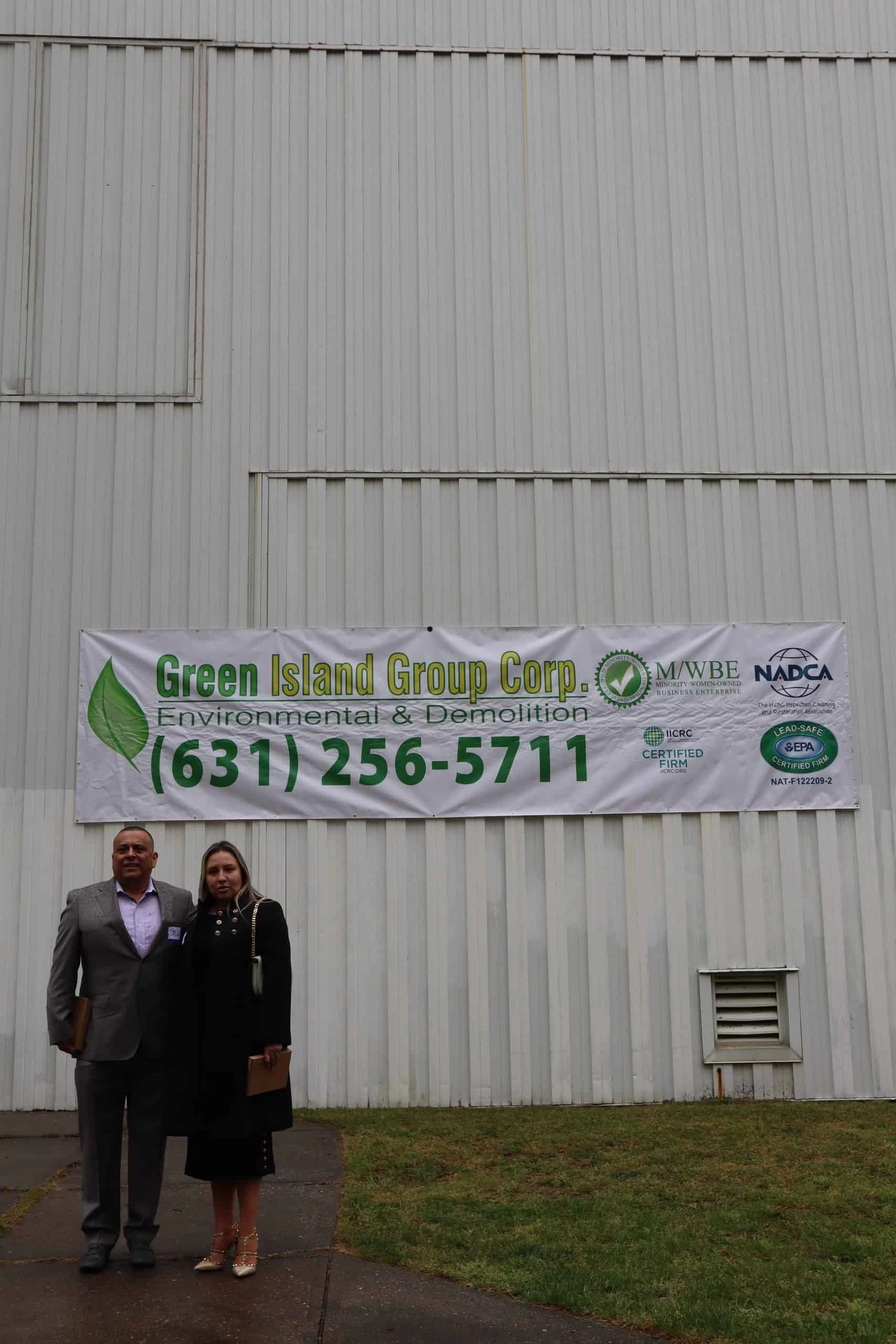
We’ve been doing environmental remediation and restoration work in the New York market for over 30 years combined. The certification stack IICRC Water Damage, NYS DOL Mold, NYS DOL Asbestos, USEPA Lead, USEPA RRP, Nassau County General Contractor, NYC General Contractor wasn’t built to look good on a website. It was built because the work in Bellerose and the surrounding area actually requires it. The housing stock here is old, the jurisdictional lines are real, and the stakes for getting it wrong are high.
When a pipe freezes and bursts in a 1955 Cape Cod two blocks from the Cross Island Parkway, or a sump pump fails during a nor’easter while you’re trying to get home from the Bellerose LIRR station, the last thing you need is a contractor who has to figure out which county they’re standing in before they can legally do the work. We already know. We’ve been here, and we’re ready to move the moment you call.
From Standing Water to Finished Basement Here's the Full Picture
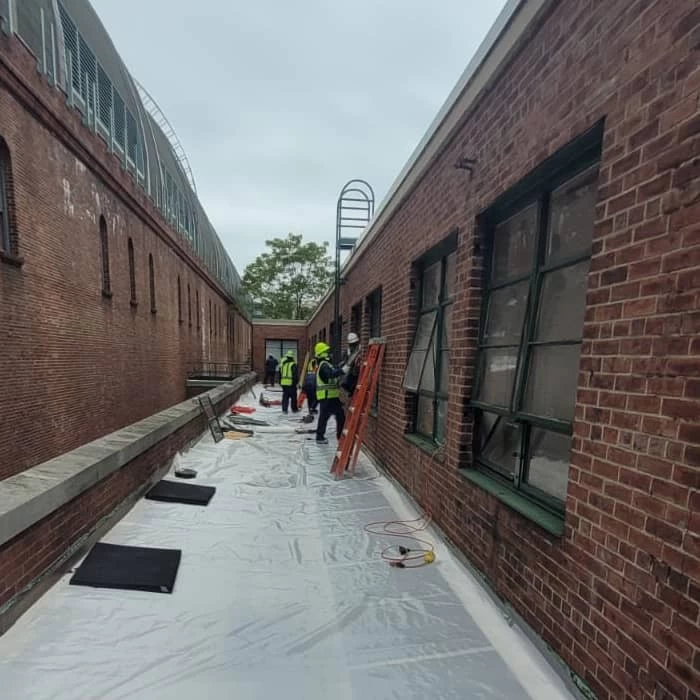
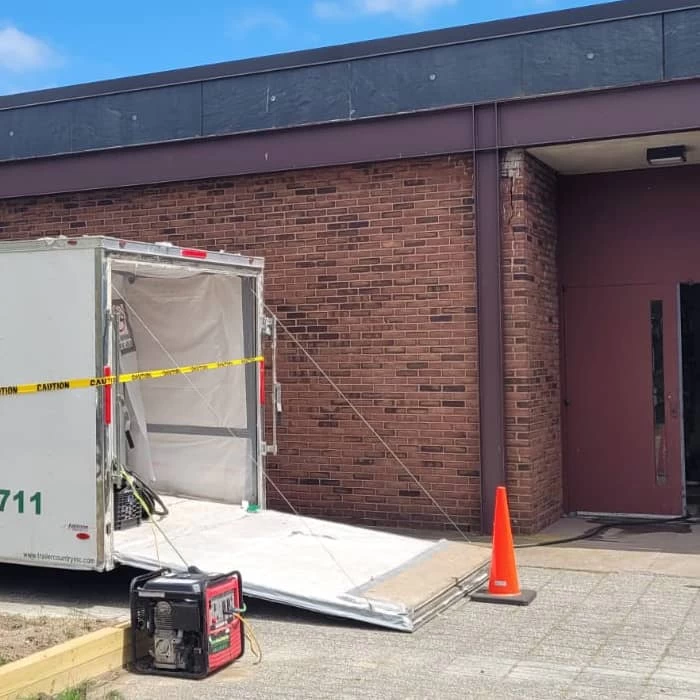
The first call triggers our emergency response. We operate 24 hours a day, seven days a week, and our goal is to be on-site within the hour. Customers have confirmed this including one whose pipe froze right before a snowstorm and had our crew at the door within 60 minutes. When our team arrives, the first priority is assessment: where did the water come from, how far has it traveled, and what’s actually wet versus what just looks wet. Thermal imaging equipment finds the moisture your eyes can’t see, which matters enormously in a 1950s Bellerose home where water can wick into wall assemblies and floor systems before you’ve even called anyone.
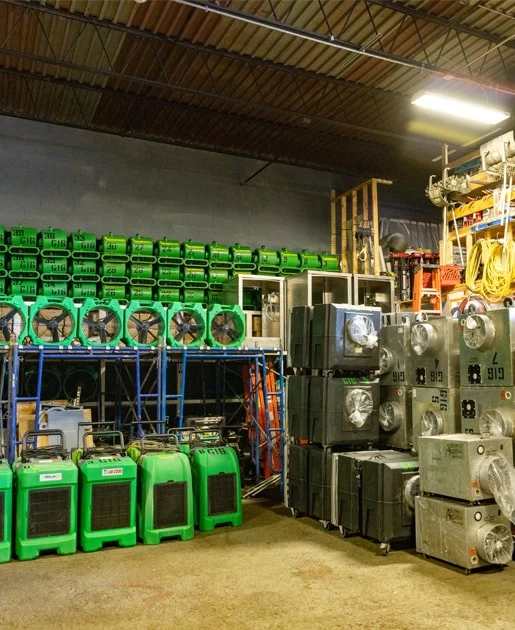
Once the scope is clear, water extraction begins followed by industrial drying equipment staged to pull moisture out of the structure, not just the surface. If the flooding involved sewage backup or a contaminated source, that’s handled under a separate containment protocol. And because so many Bellerose homes predate 1980, our team checks for asbestos-containing materials and lead paint before any demolition or removal begins. We hold the NYS DOL Asbestos and USEPA Lead certifications required to handle those materials legally most restoration companies in this market do not.
From there, damaged materials are removed, affected areas are treated for mold prevention, and reconstruction begins. We handle the entire arc no handoffs, no second contractor, no gap between the cleanup crew and the rebuild crew. If your insurance company needs documentation, we work directly with your adjuster and bill the carrier on your behalf.
Flooded basement cleanup in Bellerose covers a lot of ground depending on what caused the flooding and what the water touched. A sump pump failure during a spring thaw common here given Long Island’s shallow water table and the sheer number of aging sump basins in homes built 60 to 80 years ago looks different from a sewage backup or a burst pipe inside a finished basement. We handle all of it. Emergency water extraction, structural drying, moisture mapping, mold prevention treatment, content evaluation, hazardous material assessment, debris and damaged material removal, and full reconstruction of affected areas.
For homes in the Queens portion of Bellerose, work is performed under NYC Department of Buildings jurisdiction. For homes on the Nassau County side Bellerose Village, Bellerose Terrace, Bellerose Manor it falls under Town of Hempstead building codes. Any reconstruction that requires permits gets pulled from the right jurisdiction, by a contractor licensed to work in that jurisdiction. That’s not something you want to figure out after the fact with an unlicensed crew.
The mold piece deserves its own mention. New York State law requires an active NYS DOL Mold License for any professional mold remediation. It’s not optional, and it’s not a formality operating without it is illegal and can compromise your insurance claim. We hold that license. When you’re vetting any company for basement flood cleanup in Bellerose, that’s the first credential to ask for.
Does homeowners insurance cover flooded basement cleanup in Bellerose, NY?
It depends on the cause of the flooding, and this is where a lot of Bellerose homeowners get tripped up. Standard homeowners insurance typically covers sudden and accidental water damage a burst pipe, a failed appliance, an overflow situation. It generally does not cover flooding that comes from outside the home, like groundwater rising through your foundation during a heavy rain event. For that kind of damage, you’d need a separate flood insurance policy through the National Flood Insurance Program or a private carrier.
The good news is that many of the most common basement flooding causes in Bellerose sump pump failure, pipe bursts, sewage backup are coverable events under standard policies, sometimes with a rider. We bill your insurance company directly and work with your adjuster throughout the process, so you’re not navigating claim documentation on your own during an already stressful situation. Before you assume something isn’t covered, let our team assess the damage and help you understand what your policy actually applies to.
How quickly does mold start growing after a basement floods?
Mold can begin colonizing within 24 to 48 hours of water exposure and it doesn’t wait for visible damage to show up first. It starts in the hidden spaces: inside wall cavities, behind baseboards, under flooring, in the insulation around pipes. In a Bellerose home built in the 1940s or 1950s, those spaces are often original construction meaning there’s no modern vapor barrier, no treated framing, and plenty of organic material for mold to feed on.
The 72-hour window is the number most restoration professionals cite as the point of no return. Get the water out and the drying process started within 72 hours, and you’re managing a water damage job. Wait longer, and you’re likely looking at a mold remediation job on top of it which adds anywhere from $2,000 to $8,000 or more to the total cost. That’s why the response time matters as much as the credentials. Our goal is to be on-site within the hour, every time.
My Bellerose basement has old floor tiles is that an asbestos risk during cleanup?
It’s a legitimate concern, and it’s one that most restoration companies in this market aren’t equipped to address. Nine-inch and twelve-inch floor tiles manufactured before 1980 extremely common in homes built during Bellerose’s primary construction era of 1940 to 1969 frequently contain asbestos. So does the mastic adhesive used to install them, pipe insulation, ceiling tiles, and certain drywall compounds from that period. When a basement floods and those materials get wet, disturbed, or need to be removed, you’re potentially dealing with a regulated hazardous material.
New York State requires specific licensing to legally handle asbestos-containing materials. We hold the NYS DOL Asbestos certification and the USEPA Lead credential meaning we can assess, contain, and properly remove those materials as part of the cleanup process rather than stopping work and telling you to call someone else. If you’re in a home built before 1980 anywhere in the Bellerose area, this isn’t a hypothetical risk. It’s worth asking any contractor you’re considering whether they’re actually licensed for it.
What causes most basement floods in Bellerose, and can they be prevented?
The most common causes in this area break down into a few categories. Sump pump failure is at the top of the list Long Island has a naturally shallow water table, and when a nor’easter or heavy spring rain hits, that water table rises fast. If the power goes out during the storm (which it often does) and your sump pump doesn’t have a battery backup, the basement fills. A lot of Bellerose homes have original sump basins that haven’t been serviced or upgraded in years.
After that, it’s aging infrastructure: cast-iron drain pipes that have corroded or taken on root intrusion over 60 to 70 years, foundation waterproofing systems that have degraded, and basement windows that weren’t designed to handle the kind of rainfall events that come through the Hook Creek Watershed during a major storm. Prevention is real battery backup sump pumps, foundation crack sealing, updated drain lines but none of that helps once the water is already in. If you’re in the middle of a flood event right now, the call comes first. Prevention conversations can happen after the basement is dry.
How long does flooded basement cleanup typically take from start to finish?
The emergency extraction and initial drying setup usually happens within the first few hours of our crew arriving. But the drying process itself takes time industrial air movers and dehumidifiers typically run for three to five days minimum, and we monitor moisture levels throughout to confirm the structure is actually drying, not just the surface. In an older Bellerose home with plaster walls and original wood framing, that monitoring phase matters more than it does in a newer build with modern materials.
If mold remediation is needed, that adds time to the timeline. If damaged materials need to be removed and the space needs to be rebuilt flooring, drywall, framing the full project can run several weeks depending on scope. The cleaner the initial response and the faster the drying begins, the shorter the overall timeline tends to be. We handle every phase in-house, which means there’s no waiting for a second contractor to pick up where the first one left off. That continuity typically shortens the total project duration significantly.
Does Green Island Group work in both the Queens and Nassau County parts of Bellerose?
Yes and this is actually one of the more important practical questions to ask any contractor you’re considering for this area. Bellerose is one of the few communities in the New York metro where the municipal boundary runs directly through the neighborhood. The Queens–Nassau line cuts through here, and Jericho Turnpike marks much of that divide. A contractor licensed only in Nassau County cannot legally perform mold remediation or reconstruction work on the Queens side of that line. The same is true in reverse.
We hold contractor licenses in both New York City and Nassau County, along with the NYS DOL Mold License required statewide for mold remediation work. That means whether your home is in the 11426 ZIP code on the Queens side, in Bellerose Village, Bellerose Terrace, or Bellerose Manor on the Nassau side, we’re authorized to complete the full scope of work legally, without interruption, and without you having to figure out which jurisdiction your basement happens to fall in.