When your Bellmore basement floods, every hour counts. We respond 24/7 with the licenses, equipment, and local knowledge to stop the damage before it becomes a much bigger problem.
I needed a professional consultation explanation of procedure for safe removal of Asbestos in my apartment complex. Without having an account yet, I was very impressed with the caring, knowledgeable and generous advice offered by Jessica, and will look forward to doing business in the future. Thank you so much! I feel much more informed about a sometimes scary endeavor. Peace. Nancy Silva Mineola, NY.
Mia Munoz
Used this company to clean up some water flood in my house. They were fast and easy to work with.very professional, Would recommend to anyone!
Nini Valle
Great company, had a flood and they responded quickly and efficiently. Billed my insurance company directly. I highly recommend this company!
joe colapietro, jr
I had pipe freeze in my basement right before a snow storm and they made to within an hour to help start the clean up process. They we by our side throughout the entire process and even helped with the insurance company. They did such a great job with the cleanup, repair, remidiation, I contracted them to perform the repairs and finishes in the basement. They came with enough manpower and material to get the job done. Leo and Jessica were nothing but a pleasure to deal with!!
Cristian Arredondo c
I had some water damage in my home and Green Island was able to take care of my issue quickly and effectively. I am very pleased with the work they did. They responded quickly and were very professional.
Michael M
Outstanding service! From the office to the field crew everyone was friendly, helpful and responsive. I highly recommend Green Island Group.
What Your Bellmore Basement Looks Like When the Job Is Done Right
A dried-out basement isn’t the finish line — it’s the starting point. The real goal is a basement that’s structurally sound, free of hidden moisture, and safe for your family to be in. No lingering smell, no discoloration creeping up the walls six weeks later, no surprise mold discovery when you go to sell.
For Bellmore homeowners, that standard matters more than it does in most places. A significant portion of the homes here were built between the 1940s and 1960s — cottages, Cape Cods, and ranch-style houses that have been family properties for generations. When water gets into a basement like that, it doesn’t just wet the floor. It saturates concrete block walls, soaks into old insulation, and can disturb materials — floor tile adhesives, pipe wrap, wall finishes — that were installed before modern safety standards existed. Getting the basement truly clean means addressing all of it, not just what’s visible.
And in south Bellmore especially, where the canal network connects directly to the Great South Bay, flooding isn’t always clean water from a broken pipe. Storm surge and tidal backflow carry contaminants that require a different level of cleanup entirely. The end result you should expect isn’t just “dry” — it’s documented, tested, and restored to a condition you can actually trust.
We’re a full-service disaster restoration and environmental remediation company serving Nassau County, Suffolk County, and the broader New York metro area. What sets us apart isn’t a single credential — it’s the full stack. NYS DOL Mold Contractor, NYS DOL Asbestos Contractor, USEPA Lead Certification, USEPA RRP, IICRC Water and Fire Damage, and General Contractor licenses for Nassau County, Suffolk County, and New York City — all held simultaneously, all verifiable.
That matters in Bellmore because the homes here demand it. When you’re dealing with a flooded basement in a 1958 Cape Cod off Jerusalem Avenue or a ranch on Winthrop Avenue, there’s a real chance that water damage and hazardous materials are part of the same problem. Most restoration companies in Nassau County can handle one or the other. We handle both — legally, safely, and without handing you off to a subcontractor mid-job.
Customers consistently note the same thing in reviews: we communicate clearly, show up when we say we will, and handle the insurance side without putting the burden back on the homeowner. That consistency — from the first phone call through the final walkthrough — is what we’re actually built on.
From Standing Water to Solid Ground — Here's Our Process
It starts the moment you call. Our emergency response team is available around the clock, and for good reason — the window between a flooded basement and a mold problem is 24 to 72 hours. The first step on arrival is a full assessment: how much water, what category of water, and what materials have been affected. In older Bellmore homes, that assessment includes checking for asbestos-containing materials and lead paint that may have been disturbed, because those findings change the scope of the work and the safety protocols required.
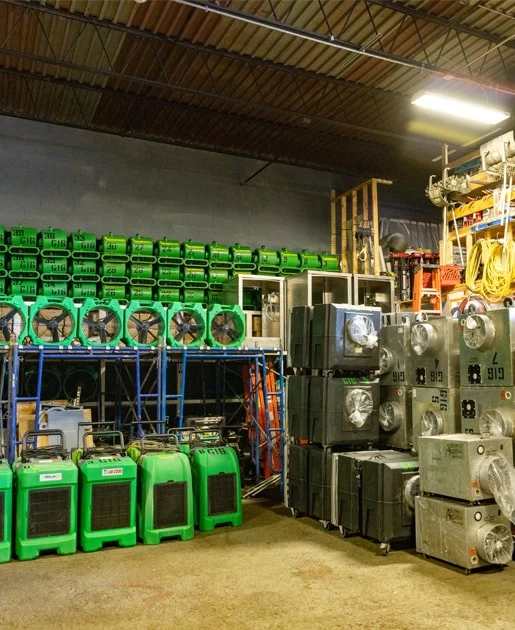
Once the assessment is complete, extraction begins. Industrial pumps and vacuums remove standing water far faster than anything available at a hardware store. After extraction, the structural drying phase starts — commercial dehumidifiers and air movers are positioned specifically to dry inside walls, under subfloor, and within concrete block cavities where moisture hides long after the floor looks dry. Moisture readings are taken throughout to confirm that drying is complete, not just surface-level.
From there, any affected materials — drywall, insulation, flooring — are removed and disposed of properly. If mold is present, we handle remediation under our NYS DOL Mold Contractor license. Structural repairs and rebuilding are handled in-house under our Nassau County General Contractor license, so you’re not coordinating three separate companies to get your basement back. Throughout the process, we document everything for your insurance carrier and can bill directly to your insurer, which removes one of the most stressful parts of the whole experience.
Built for Bellmore's Basements — Not Just Any Basement
Flooded basement cleanup in Bellmore isn’t a one-size-fits-all job, and we don’t treat it like one. Our service covers the full scope: emergency water extraction, structural drying, moisture mapping, mold inspection and remediation, hazardous material assessment and abatement, and full reconstruction — all under licenses that are required by New York State and Nassau County to perform this work legally.
The asbestos and lead piece is worth understanding if you own an older home here. New York State requires a dedicated DOL Mold Remediation Contractor license for any mold work — and a separate Asbestos Contractor license for abatement. These aren’t optional. A company without them is operating outside compliance, and a homeowner who unknowingly hires one could be left with a liability and a health hazard on top of the original flood damage. We hold both, along with USEPA Lead and RRP certifications, which means we can legally address every hazard that a flooded basement in a pre-1978 Bellmore home is likely to contain.
For south Bellmore properties in the canal zone — the area south of Merrick Road and Sunrise Highway that took the hardest hit during Hurricane Sandy — Category 3 contamination protocols apply when tidal or storm surge water is involved. That means full biohazard-level decontamination, not just extraction and drying. We’re equipped and licensed for that level of response, which most local competitors are not.
Does homeowners insurance cover basement flooding from a storm in Bellmore?
This is one of the most common points of confusion after a flooding event, and it’s especially relevant in Bellmore given the community’s history with coastal storms. The short answer is: it depends on what caused the flooding. Standard homeowners insurance typically covers sudden, accidental water damage — a burst pipe, a failed water heater, an appliance malfunction. It does not cover flooding caused by storm surge, groundwater, or rising water from an outside source. That type of damage falls under flood insurance, which is a separate policy issued through the National Flood Insurance Program or a private carrier.
After Hurricane Sandy, many Bellmore homeowners discovered this distinction the hard way. If your basement flooded because a storm pushed water in through the Great South Bay and into the south Bellmore canal network, that’s likely a flood insurance claim, not a homeowners claim. If your sump pump failed during a power outage and groundwater backed up, coverage depends on whether you have a sump pump rider on your policy. We help document the damage thoroughly and can communicate directly with your carrier to make sure the claim is filed correctly — which matters a lot when the coverage determination isn’t straightforward.
How quickly does mold start growing after a basement floods?
Mold can begin growing within 24 to 48 hours of water exposure under the right conditions — and basements on Long Island’s south shore tend to provide exactly those conditions. The combination of warm temperatures, high ambient humidity, and organic materials like drywall, wood framing, and insulation gives mold everything it needs to establish quickly. The 72-hour mark is the critical threshold: if a basement is professionally dried within that window, mold growth is unlikely. After 72 hours, you’re typically looking at a more extensive remediation job on top of the water damage cleanup.
What makes this especially important in Bellmore is that coastal floodwater — the kind that comes in during a storm through the canal zone — carries organic material and contaminants that accelerate mold growth compared to clean water from a pipe. The faster professional extraction and drying begins, the less likely you are to end up with a mold problem layered on top of the original flood damage. That’s why our 24/7 emergency response isn’t just a convenience — it’s the difference between a cleanup job and a full remediation project.
My Bellmore basement flooded after a storm — can I clean it up myself?
For minor, clean-water events — a small pipe leak, a slow seep — a homeowner with the right equipment can sometimes manage the initial cleanup. But for anything involving storm water, tidal water, sewage backup, or a significant volume of standing water, DIY cleanup carries real risks that are worth understanding before you grab a wet-vac.
The first issue is hidden moisture. Surface water evaporates; moisture inside concrete block walls, behind drywall, and under subfloor does not. A basement that looks and smells dry after a few days of fans running can still have enough moisture in the structure to grow mold within weeks. The second issue is hazardous materials. If your home was built before 1978 — which describes most of Bellmore’s housing stock — floodwater may have disturbed asbestos-containing materials or lead paint. Disturbing those materials further during DIY cleanup without proper protocols creates a health hazard that’s worse than the flood itself. And if the water came in from outside during a storm, it may be Category 3 contaminated water, which requires licensed biohazard handling. Professional cleanup isn’t just about equipment — it’s about knowing what you’re actually dealing with.
What does flooded basement cleanup typically cost in Nassau County?
The range is wide because the scope varies significantly depending on what the cleanup involves. A straightforward water extraction and structural drying job in a small, unfinished basement might fall in the $2,500 to $5,000 range. A larger job involving a finished basement, significant water volume, mold remediation, and partial reconstruction can run $15,000 to $40,000 or more. In older Bellmore homes where asbestos abatement or lead paint handling is required, that adds to the scope and the cost.
The more useful number to keep in mind is what delayed or incomplete cleanup costs. One inch of standing water can cause approximately $25,000 in property damage. A mold problem that establishes in the walls because the basement wasn’t dried properly can require full remediation and reconstruction — and can complicate a home sale with disclosure obligations. In a market where detached homes in Bellmore average close to $870,000 in value, the cost of professional cleanup is a fraction of what deferred damage can cost. Most of our jobs are also billable directly to insurance, which changes the out-of-pocket picture significantly depending on your coverage.
Does your company handle mold found after a basement flood in Bellmore?
Yes — and this is one of the areas where the licensing distinction matters most. New York State requires a dedicated NYS Department of Labor Mold Remediation Contractor license to legally perform mold remediation. This isn’t a voluntary certification — it’s a state legal requirement, and a company without it is operating outside compliance. We hold this license, which means we can handle mold remediation as part of the same job, without bringing in a separate contractor or leaving the mold work to someone less qualified.
In Bellmore specifically, post-flood mold is a realistic concern rather than a theoretical one. The south shore’s naturally high humidity, the prevalence of older homes with organic materials in the basement structure, and the history of significant flooding events — particularly in the south Bellmore canal zone — create conditions where mold can take hold quickly after water intrusion. Our process includes moisture mapping to find hidden wet areas before mold establishes, mold testing where indicated, and full remediation with proper containment and air filtration if mold is already present. The goal is to resolve the entire problem, not just the part that’s visible on day one.
How do I know if my older Bellmore home has asbestos in the basement?
You generally can’t know by looking. Asbestos was used in dozens of building materials through the 1970s — floor tile adhesives, pipe insulation, ductwork wrap, ceiling tiles, and joint compound are among the most common in basements of the era. In Bellmore, where a large share of the housing stock dates from the 1940s through the 1960s, the presence of asbestos-containing materials in older basements is common enough that it should be assumed until testing confirms otherwise.
The critical point is that asbestos is typically not a health hazard when it’s intact and undisturbed. It becomes a hazard when it’s disturbed — which is exactly what happens during a flood cleanup if materials are damaged, moved, or demolished without proper protocols. This is why hiring a contractor without a NYS DOL Asbestos Contractor license for basement flood cleanup in an older home is a genuine risk, not just a technical compliance issue. We hold this license and include a hazardous material assessment as part of the initial evaluation on any job involving pre-1978 construction. If asbestos-containing materials are present and affected, they’re handled under the correct protocols — contained, removed, and disposed of properly — before any further cleanup or reconstruction work proceeds.