When the Bay Pushes Back, Your Bellport Basement Pays First
Bellport sits right on the Great South Bay and when a nor’easter or storm surge hits, basements here don’t just get wet, they get wrecked. We respond fast, handle your insurance claim directly, and we’re licensed for everything hiding behind the walls of an older South Shore home. Most water damage companies in this area aren’t equipped for what a flooded basement in Bellport actually requires.
I needed a professional consultation explanation of procedure for safe removal of Asbestos in my apartment complex. Without having an account yet, I was very impressed with the caring, knowledgeable and generous advice offered by Jessica, and will look forward to doing business in the future. Thank you so much! I feel much more informed about a sometimes scary endeavor. Peace. Nancy Silva Mineola, NY.
Mia Munoz
Used this company to clean up some water flood in my house. They were fast and easy to work with.very professional, Would recommend to anyone!
Nini Valle
Great company, had a flood and they responded quickly and efficiently. Billed my insurance company directly. I highly recommend this company!
joe colapietro, jr
I had pipe freeze in my basement right before a snow storm and they made to within an hour to help start the clean up process. They we by our side throughout the entire process and even helped with the insurance company. They did such a great job with the cleanup, repair, remidiation, I contracted them to perform the repairs and finishes in the basement. They came with enough manpower and material to get the job done. Leo and Jessica were nothing but a pleasure to deal with!!
Cristian Arredondo c
I had some water damage in my home and Green Island was able to take care of my issue quickly and effectively. I am very pleased with the work they did. They responded quickly and were very professional.
Michael M
Outstanding service! From the office to the field crew everyone was friendly, helpful and responsive. I highly recommend Green Island Group.
The moment water enters your basement, a clock starts. Mold begins growing within 24 to 48 hours and in a Bellport home that’s been sitting unoccupied through a November nor’easter, that clock may have already been running for days before you even walked through the door. Getting the water out is only the first step. What matters is what happens after: complete structural drying, moisture readings behind walls, and a basement that’s actually safe not just visually dry.
For Bellport homeowners, there’s an added layer most cleanup companies won’t tell you about. A significant portion of the village’s housing stock was built before 1980, and some homes in and around the Historic District date back to the 1800s. When water disturbs old pipe insulation, vinyl floor tiles, or textured surfaces in a home like that, you may be dealing with asbestos or lead not just water damage. Most water damage companies operating in this area are not licensed to handle those materials. We are.
If you’re a seasonal resident who’s returned to find water damage that’s been sitting, the scope of what you’re dealing with is almost certainly larger than it looks. Hidden moisture behind walls, mold colonies under flooring, and compromised insulation don’t announce themselves. What you get with our flooded basement cleanup isn’t just extraction it’s a full picture of what happened, what it touched, and what it’s going to take to make it right.
Licensed Basement Water Cleanup Contractor Bellport
New York State Vetted Us Before You Had To
We’re an approved emergency response contractor for the NYS Office of General Services meaning the State of New York independently reviewed our licensing, insurance, and operational capability before putting us on that list. That’s not a badge we printed ourselves. It’s a third-party signal that carries real weight, especially when you’re trying to figure out who to trust at 2 AM with water rising in your Bellport basement.
We’re independently owned and operated, led by CEO Jessica Dussan and VP Leo Torres both of whom show up by name in real customer reviews, not just on an About page. We hold a Suffolk County General Contractor license, NYS DOL Mold and Asbestos licenses, and USEPA Lead and RRP certifications. For the older homes along South Country Road and throughout the Bellport Village Historic District, that full licensing stack isn’t a bonus it’s a requirement.
Over 12 years and more than 5,000 completed restoration projects across New York State, we’ve worked through the same South Shore conditions Bellport residents face: high water tables, storm surge events, and the kind of flooding that doesn’t wait for business hours.
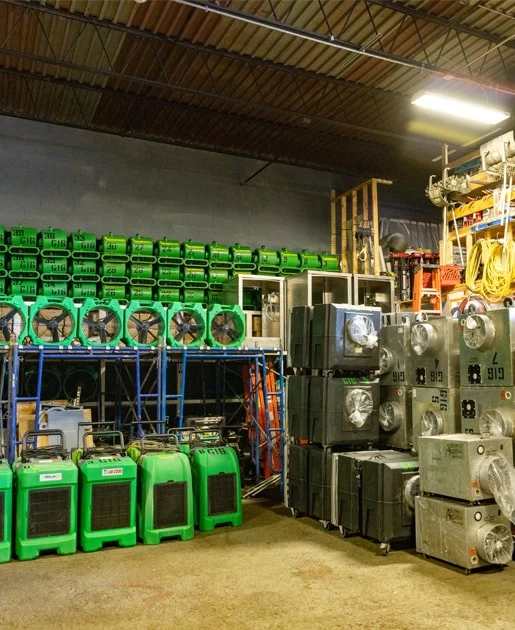
When you call, the first thing that happens is a rapid response not a callback window, not a next-day appointment. We show up, assess the water source and category, and begin extraction with industrial-grade equipment that a shop vac and box fans simply cannot replicate. Water category matters here: a clean water pipe burst is handled differently than a sewage backup after a storm overwhelmed Bellport’s drainage system. We categorize it correctly from the start, which protects both your health and your insurance claim.
After extraction, we move into structural drying and this is where a lot of companies cut corners. We use moisture meters and thermal imaging to find water that has migrated behind walls, under flooring, and into insulation. In an older Bellport home with plaster walls and original wood framing, that step is especially critical because historic materials hold moisture differently than modern drywall. If those materials test positive for asbestos or lead, we handle the assessment and remediation in-house licensed and legal rather than leaving it for someone else or ignoring it entirely.
Throughout the process, we document everything for your insurance claim. We bill your carrier directly, and we understand the difference between a standard homeowners policy and an NFIP flood policy which matters in a FEMA Zone AE community like Bellport Village. Once drying is confirmed and any hazardous materials are addressed, we move into reconstruction under our Suffolk County General Contractor license, so you’re not managing three separate crews to get your basement back.
Basement Water Damage Cleanup Services Bellport NY
Everything the Job Actually Requires Nothing Left Incomplete
A flooded basement cleanup in Bellport isn’t a single service it’s a sequence. Emergency water extraction gets the visible water out. Industrial drying equipment handles what’s left in the structure. Moisture monitoring confirms the job is actually done, not just done enough. Antimicrobial treatment addresses what the water left behind before it becomes a mold problem. And if materials need to come out insulation, drywall, flooring we remove, document, and dispose of them properly, including any hazardous materials that require licensed handling under New York State law.
For homes in and around the Bellport Village Historic District, we approach material removal carefully. A 19th-century plaster wall is not the same as modern drywall, and unnecessary demolition in a historic home isn’t just wasteful it can affect your property’s character and value. Where targeted drying can preserve original materials, that’s the approach we take. Where removal is necessary, we document it thoroughly for both your insurance claim and any required Town of Brookhaven building permits that reconstruction work may trigger.
If the flooding involved sewage which can happen when major storm events push back through aging infrastructure, something the village has been actively working on with water main replacements along Country Club Road that’s a Category 3 event requiring full containment, OSHA-compliant handling, and proper disposal. We’re equipped and licensed for that work. Most cleanup companies in this area are not.
Does homeowners insurance actually cover flooded basement cleanup in Bellport, NY?
It depends on where the water came from and that distinction is more complicated in Bellport than in most places. Standard homeowners insurance typically covers sudden, internal water damage: a burst pipe, a failed water heater, an appliance leak. It generally does not cover flooding from external sources like storm surge or rising groundwater. For that, you’d need a separate flood insurance policy through NFIP, which many Bellport Village homeowners carry because the residential core sits in a FEMA Zone AE flood designation.
The reason this matters practically is that the documentation requirements are different for each policy. Filing under the wrong one or filing without the right documentation can result in a denied or underpaid claim. When we respond to a flooded basement in Bellport, we assess the water source as part of the initial evaluation, document it correctly, and bill the appropriate carrier directly. You don’t have to figure out which policy applies on your own at the worst possible moment.
How quickly does mold actually start growing after a basement floods?
Mold can begin colonizing within 24 to 48 hours of a flooding event under the right conditions and basements on Long Island’s South Shore tend to provide exactly those conditions: warmth, humidity, and organic materials like wood framing and drywall that mold feeds on. By 72 hours, you’re looking at active growth. By the time a week has passed in an untreated basement, the remediation scope and cost has expanded significantly.
This is a particular concern for Bellport’s seasonal homeowners. If a storm floods your basement in October while the house is closed up, and you don’t return until Thanksgiving, you’re not dealing with a water damage job anymore. You’re dealing with a mold remediation job that also has water damage underneath it. The difference in cost is real mold remediation on top of a delayed flood cleanup can add thousands to the total. Calling us the moment you discover it, even weeks after the fact, still matters. The sooner we assess and contain it, the less it spreads.
What makes flooded basement cleanup different in a home built before 1980?
Older homes carry materials that weren’t a concern when they were built but are regulated hazards today. Asbestos was commonly used in pipe insulation, 9×9 vinyl floor tiles, textured ceiling coatings, and joint compound in homes built before the late 1970s. Lead-based paint was standard on walls, trim, and window frames in homes built before 1978. When a basement floods and those materials get wet, disturbed, or damaged, you have a hazardous condition that requires licensed handling not just a water damage crew with extraction equipment.
A large portion of Bellport’s housing stock, including many homes in and around the Historic District on South Country Road and the surrounding streets, falls into this category. Most water damage companies operating in the area hold water mitigation certifications but are not licensed under the NYS Department of Labor for asbestos or under the USEPA for lead. We hold both, which means we can assess, remediate, and document those hazards in-house rather than leaving them unaddressed or requiring you to hire a separate contractor.
How do I know if my basement is actually dry after cleanup, or just looks dry?
Visual dryness and actual dryness are two different things and the gap between them is where mold problems start. Water migrates. It travels through concrete block walls, wicks into wood framing, saturates insulation, and sits behind drywall long after the visible surface looks and feels dry. Without moisture meters and thermal imaging equipment, there’s no reliable way to know what’s still holding moisture inside the structure.
Our drying process doesn’t end when the floor looks dry. We use calibrated moisture meters to test wall cavities, subfloor materials, and structural framing, and we use thermal imaging to identify cold spots that indicate trapped moisture. Drying is confirmed with readings, not visual inspection. In an older Bellport home with plaster walls and original wood framing materials that absorb and hold moisture differently than modern construction this step is especially important. We don’t close out a job until the numbers say it’s done.
Can I clean up a flooded basement myself if the water is already out?
You can remove standing water and run fans, but that’s not the same as drying a basement. Consumer-grade dehumidifiers and box fans don’t generate the air exchange rates or dehumidification capacity of commercial restoration equipment. What looks dry on the surface may still have significant moisture content inside walls, under flooring, and in structural framing and that hidden moisture is exactly what leads to mold growth, structural deterioration, and eventually a failed insurance claim.
There’s also the hazardous materials question, which is especially relevant in Bellport’s older housing stock. If your home was built before 1980 and the flooding disturbed insulation, floor tiles, or wall surfaces, you may have been exposed to asbestos or lead without knowing it. Attempting a DIY cleanup in that environment without proper testing and containment isn’t just incomplete it can create a health risk for your family and a liability issue if the home is ever sold. Professional assessment after a basement flood isn’t an upsell. In a home like many in this village, it’s the responsible call.
Why should I call Green Island Group instead of a national franchise for basement flooding in Bellport?
The honest answer is licensing. National franchise operators in this market including those serving the Patchogue and Brookhaven area are typically certified for water mitigation and structural drying. That’s the core of what they do, and they do it under a national brand standard. What most of them are not is licensed under the NYS Department of Labor for asbestos abatement, certified under the USEPA for lead, or authorized to pull building permits and manage reconstruction under a Suffolk County General Contractor license.
In a community like Bellport Village, where a meaningful percentage of homes predate 1980 and some date back to the 1800s, that licensing gap matters. If a franchise crew extracts water from your basement and leaves without addressing the asbestos-containing pipe insulation they disturbed, you have an unresolved hazardous condition and a potential problem when your insurance adjuster or a future buyer’s inspector shows up. We handle the full scope water out, structure dried, hazards assessed and remediated, reconstruction permitted and completed under one contract, with licensed professionals at every step. That’s not a pitch. It’s just what the job actually requires in a place like this.