When Newtown Creek Backs Up, Your Blissville Basement Pays for It
Blissville flooding isn’t a freak accident it’s a documented pattern. We respond within the hour, handle the contamination properly, and see the job through to a fully restored space.
I needed a professional consultation explanation of procedure for safe removal of Asbestos in my apartment complex. Without having an account yet, I was very impressed with the caring, knowledgeable and generous advice offered by Jessica, and will look forward to doing business in the future. Thank you so much! I feel much more informed about a sometimes scary endeavor. Peace. Nancy Silva Mineola, NY.
Mia Munoz
Used this company to clean up some water flood in my house. They were fast and easy to work with.very professional, Would recommend to anyone!
Nini Valle
Great company, had a flood and they responded quickly and efficiently. Billed my insurance company directly. I highly recommend this company!
joe colapietro, jr
I had pipe freeze in my basement right before a snow storm and they made to within an hour to help start the clean up process. They we by our side throughout the entire process and even helped with the insurance company. They did such a great job with the cleanup, repair, remidiation, I contracted them to perform the repairs and finishes in the basement. They came with enough manpower and material to get the job done. Leo and Jessica were nothing but a pleasure to deal with!!
Cristian Arredondo c
I had some water damage in my home and Green Island was able to take care of my issue quickly and effectively. I am very pleased with the work they did. They responded quickly and were very professional.
Michael M
Outstanding service! From the office to the field crew everyone was friendly, helpful and responsive. I highly recommend Green Island Group.
When a basement floods in Blissville, the water coming in isn’t clean. The neighborhood sits directly against Newtown Creek a federally designated EPA Superfund site and the combined sewer system that serves this area is built to handle a different era’s rainfall. When those pipes overflow during a heavy storm, what backs up into your basement is a mix of stormwater and raw sewage. That’s not a gray area situation. That’s black water, and it requires licensed professionals, proper containment, and regulated disposal under NYC DEP guidelines.
The outcome you’re looking for isn’t just a dry floor. It’s a basement that’s been properly extracted, dried to verified moisture levels, tested for mold, and cleared of any hazardous material that the water may have disturbed. In Blissville’s older building stock most of it built before 1980 that means accounting for asbestos pipe insulation, lead paint, and materials that become a liability the moment they get wet and disturbed.
What changes after a proper cleanup is simple: you stop worrying. You’re not watching for mold showing up in the walls three months later. You’re not dealing with a second contractor who doesn’t know what the first one did. The job gets done right, documented for your insurance claim, and finished so you can move on.
More Licenses Than Any Competitor Serving Blissville
We hold over 17 active certifications including the NYS DOL Mold License that New York State legally requires for any mold remediation work, the NYS DOL Asbestos License, USEPA Lead, USEPA RRP, IICRC Water and Fire Damage certification, and a General Contractor license for New York City. In a neighborhood like Blissville, where the flooding risk is tied to a Superfund site and the building stock predates modern safety standards, those aren’t resume items. They’re the legal minimum for doing this work correctly.
Most restoration companies that operate in the Long Island City and western Queens market hold one or two of these credentials. We hold all of them. That means when a flooded basement in Blissville turns up asbestos-containing floor tiles or disturbed pipe insulation, the job doesn’t stop. It gets handled by the same crew, under the same contract, without handing you off to someone else.
We’ve been doing environmental and restoration work across Queens County and the surrounding region for decades. We know the infrastructure challenges here, we understand the contamination profile of Newtown Creek-adjacent properties, and we bill insurance directly so you’re not navigating that process alone.
From the First Call to a Finished Basement Here's the Sequence
The process starts the moment you call. We’re available 24 hours a day, seven days a week, and our documented response times in the Queens area run under an hour including during active storms, which is exactly when Blissville’s combined sewer system is most likely to back up. When our crew arrives, the first priority is assessing the water category. In most Blissville flooding scenarios, that assessment confirms black water contamination, which determines how extraction, containment, and disposal are handled from that point forward.
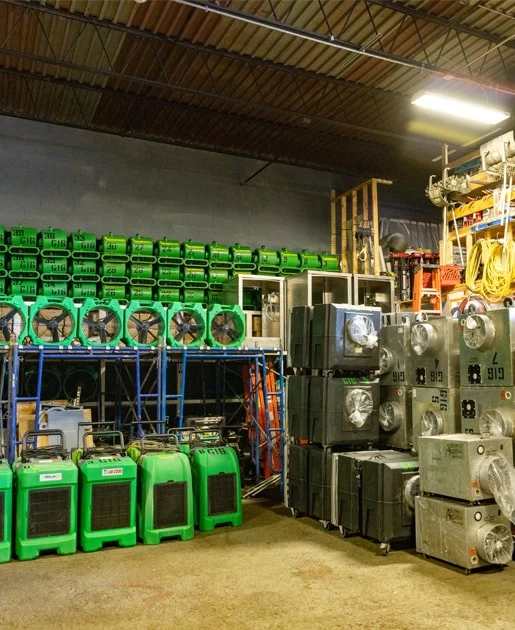
After extraction, we deploy industrial drying equipment dehumidifiers, air movers, and where needed, thermal imaging to locate moisture that’s migrated into wall cavities, beneath the slab, or behind tile. In Blissville’s older buildings, water doesn’t stay where you can see it. It moves into the framing and insulation of structures that were built without modern moisture barriers, and it stays there long enough to grow mold if it isn’t found and addressed. Thermal imaging closes that gap.
Once the space is dried to verified levels, we document everything moisture readings, photos, scope of damage in the format your insurance adjuster needs. If mold remediation, asbestos abatement, or reconstruction is required, we handle that too. You don’t need to find a second contractor. The job runs from emergency extraction to finished restoration under one roof, one license, and one point of contact.
Standard water damage companies are set up for burst pipes and appliance leaks clean water events in newer homes. That’s not Blissville’s reality. Here, the most common flooding scenarios involve sewage-contaminated water from combined sewer overflows, groundwater intrusion from a creek system that carries over a century of industrial pollutants, and building materials that were installed before anyone was required to label them hazardous. The service we deliver in this neighborhood is built around that reality, not around a generic checklist.
Every flooded basement cleanup in Blissville includes water category assessment, full extraction, industrial drying with moisture verification, and complete documentation for insurance purposes. When the situation calls for it and in this neighborhood, it often does the scope expands to include mold remediation under the NYS DOL Mold License, asbestos testing and abatement under the NYS DOL Asbestos License, lead-safe work practices under USEPA RRP certification, and full reconstruction under the NYC General Contractor license. All of it happens within the same engagement.
We also serve commercial and mixed-use properties, which matters in Blissville where the majority of the neighborhood’s built environment is industrial or commercial. Whether the flooded space is a residential unit, a warehouse, or a multi-use building near Borden Avenue, the crew and the licensing are the same. MBE, WBE, and MWBE certifications mean we’re also qualified for publicly owned facilities and government contracts in the Long Island City area.
Is the water in my flooded Blissville basement actually safe to be around?
Probably not and that’s not meant to alarm you, it’s just the honest answer given where Blissville sits. The neighborhood borders Newtown Creek, a federally designated EPA Superfund site with documented petroleum contamination from over a century of industrial activity. The area is also served by a combined sewer system, which means that during heavy rain events, stormwater and raw sewage share the same pipes. When those pipes overflow which has been happening with increasing frequency as rainfall intensity in the region grows the water backing up into Blissville basements is classified as black water under industry standards. That classification means it carries biological and chemical hazards that require licensed handling, proper containment, and regulated disposal.
You should not be walking through it in sandals, running fans on it, or assuming it will dry out safely on its own. The right move is to stay out of the space, turn off electricity to the affected area if you can do so safely, and call us immediately. The longer contaminated water sits, the deeper it penetrates into walls, flooring, and framing and the more expensive the cleanup becomes.
How quickly does mold start growing after a basement flood in Blissville?
Mold can begin developing within 24 to 48 hours of a water intrusion event, and in Blissville’s conditions where flooding water is often sewage-contaminated and the buildings are old enough to have organic materials like wood framing and plaster walls that timeline can run even shorter. The 72-hour mark is the critical threshold. After three days without professional drying and remediation, mold remediation costs typically increase by $2,000 to $8,000 or more on top of the base cleanup cost. After a week, structural damage to walls, subfloor assemblies, and framing can push total repair costs into five figures.
This is why response time matters as much as it does. It’s not just about getting the water out it’s about stopping the clock on a secondary damage process that compounds fast. Our documented sub-one-hour response times in the Queens area exist precisely because every hour of delay has a real dollar cost attached to it. If you’re already past the 72-hour window, that doesn’t mean it’s too late it means the scope of work needs to be assessed honestly, and remediation needs to start today.
Does my insurance cover sewage backup flooding in a Blissville basement?
It depends on your specific policy, and the answer is often more complicated than people expect. Standard homeowners or renters insurance typically covers sudden, internal water damage a burst pipe, for example. But external flooding from storm surge or sewer backup is frequently excluded from standard coverage and requires a separate endorsement or a standalone flood insurance policy through the National Flood Insurance Program. In Blissville, where the most common flooding scenario involves combined sewer overflow rather than a burst pipe, this distinction matters enormously.
The good news is that you don’t have to figure this out alone while standing in a flooded basement. We handle direct insurance billing and work alongside adjusters on your behalf. We know what documentation insurers require, how to categorize the damage correctly, and how to present the claim in a way that supports maximum coverage. Before you assume your policy won’t cover it or that it will let us assess the situation and help you understand what you’re actually working with.
Could my flooded Blissville basement contain asbestos or lead?
If your building was constructed before 1980 which covers the vast majority of Blissville’s residential stock, given that most of the neighborhood was built during the late 19th and early 20th centuries then yes, asbestos-containing materials and lead-based paint are a real possibility. Pre-1980 construction in New York City commonly includes asbestos pipe insulation, asbestos floor tiles, asbestos joint compound, and lead-based paint on walls and trim. Under dry, undisturbed conditions, these materials are generally not an immediate hazard. But when a basement floods and water saturates them, the risk of disturbance and fiber release increases significantly.
Under New York State law, any contractor performing mold remediation must hold a NYS DOL Mold License. Asbestos abatement requires a separate NYS DOL Asbestos License. And renovation work in pre-1978 buildings that may disturb lead paint requires USEPA RRP certification. We hold all three. If hazardous materials are identified during your basement cleanup, the work doesn’t stop and you don’t need to find a different contractor it gets handled correctly, legally, and within the same project scope.
Why does Blissville flood so often, and is it going to keep getting worse?
Blissville’s flooding problem is structural, not random. The neighborhood sits in a triangle formed by the Long Island Expressway to the north, Calvary Cemetery to the east, and Newtown Creek to the south a physical enclosure that limits drainage and traps water with nowhere to go. The area is served by New York City’s combined sewer system, which was designed for a different era’s rainfall patterns. As storms have intensified New York City experienced five so-called “five-year storms” in a single year in 2023, and the region saw a 54% increase in rainfall that drove a 32% jump in confirmed sewer backup complaints the system simply cannot keep pace.
Community leaders in Blissville have explicitly called flooding “the new normal,” and federal officials agree enough to have proposed a multi-million-dollar Army Corps of Engineers storm gate project specifically designed to protect Blissville and adjacent neighborhoods from East River storm surge coming up through the creek. That infrastructure is not yet built. In the meantime, the flooding risk is real, it is documented, and it is not going away on its own. Having a licensed restoration company you can call within the hour is the most practical response available to Blissville residents right now.
What's the actual cost of flooded basement cleanup in Blissville, NY?
The honest range for flooded basement cleanup runs from roughly $1,600 to $12,000 or more, and where your job lands within that range depends primarily on two things: the category of water involved and how quickly remediation begins. Clean water events a burst pipe, a supply line failure sit at the lower end. Black water events involving sewage contamination, which are the most common flooding scenario in Blissville given the neighborhood’s combined sewer overflow problem, sit at the higher end. When you factor in the potential for asbestos abatement, mold remediation, and reconstruction in an older Blissville building, total project costs can climb further.
The comparison that matters is not the cost of cleanup versus doing nothing it’s the cost of calling immediately versus waiting. Every day of delay adds mold risk, structural damage risk, and remediation cost. A job that runs $4,000 today can become a $10,000 to $15,000 project if it sits for a week. We provide direct insurance billing and adjuster advocacy, which means the out-of-pocket cost to you is often significantly lower than the total project cost suggests but only if the claim is filed correctly and the damage is documented properly from the start.