When your basement fills with water, the clock starts immediately and in a town where so many homes were built decades before modern waterproofing existed, what’s hiding behind your walls matters just as much as what’s on the floor. We respond 24/7 with the licensing and equipment to handle all of it.
I needed a professional consultation explanation of procedure for safe removal of Asbestos in my apartment complex. Without having an account yet, I was very impressed with the caring, knowledgeable and generous advice offered by Jessica, and will look forward to doing business in the future. Thank you so much! I feel much more informed about a sometimes scary endeavor. Peace. Nancy Silva Mineola, NY.
Mia Munoz
Used this company to clean up some water flood in my house. They were fast and easy to work with.very professional, Would recommend to anyone!
Nini Valle
Great company, had a flood and they responded quickly and efficiently. Billed my insurance company directly. I highly recommend this company!
joe colapietro, jr
I had pipe freeze in my basement right before a snow storm and they made to within an hour to help start the clean up process. They we by our side throughout the entire process and even helped with the insurance company. They did such a great job with the cleanup, repair, remidiation, I contracted them to perform the repairs and finishes in the basement. They came with enough manpower and material to get the job done. Leo and Jessica were nothing but a pleasure to deal with!!
Cristian Arredondo c
I had some water damage in my home and Green Island was able to take care of my issue quickly and effectively. I am very pleased with the work they did. They responded quickly and were very professional.
Michael M
Outstanding service! From the office to the field crew everyone was friendly, helpful and responsive. I highly recommend Green Island Group.
Standing water is the part you can see. The part that causes the most damage saturated wall cavities, soaked subfloor, moisture trapped inside insulation is the part most contractors miss because they’re working visually instead of scientifically. We use moisture meters and thermal imaging to find water that a flashlight and a pair of eyes won’t catch. When we leave, you get documented moisture readings that prove the job was done right, not just a basement that looks dry.
For Bohemia homeowners specifically, that thoroughness isn’t optional it’s essential. A lot of homes in this area were built in the 1950s, ’60s, and ’70s, and many sit above a water table that rises fast when a nor’easter rolls through or when the ground saturates after a heavy spring rain. That combination of aging construction and high groundwater means water intrusion here tends to go deeper and spread further than it would in a newer home with modern drainage. Getting it fully dry the first time is what keeps you from calling a mold remediation company six weeks later.
And if the flood disturbed walls, flooring, or old pipe insulation? In a pre-1980 home, that’s a real asbestos and lead consideration one that requires specific state licensing to handle legally. Most water damage contractors in this market aren’t licensed for that. We are.
We are an approved emergency response contractor for the New York State Office of General Services. That’s not a self-declared credential it’s an independent, government-level vetting that confirms our licensing, insurance, and operational standards meet the bar New York State sets for emergency work. The same accountability that applies to public emergency response applies to every job we take in Bohemia, NY 11716.
We hold a Suffolk County General Contractor license, a NYS DOL Mold Remediation license, a NYS DOL Asbestos license, and USEPA Lead and RRP certifications. For homeowners in the Town of Islip whether you’re near the Connetquot River State Park Preserve, off Veterans Memorial Highway, or anywhere else in Bohemia that full licensing stack means one company can take your basement from emergency extraction to finished reconstruction without handing you off to four different contractors.
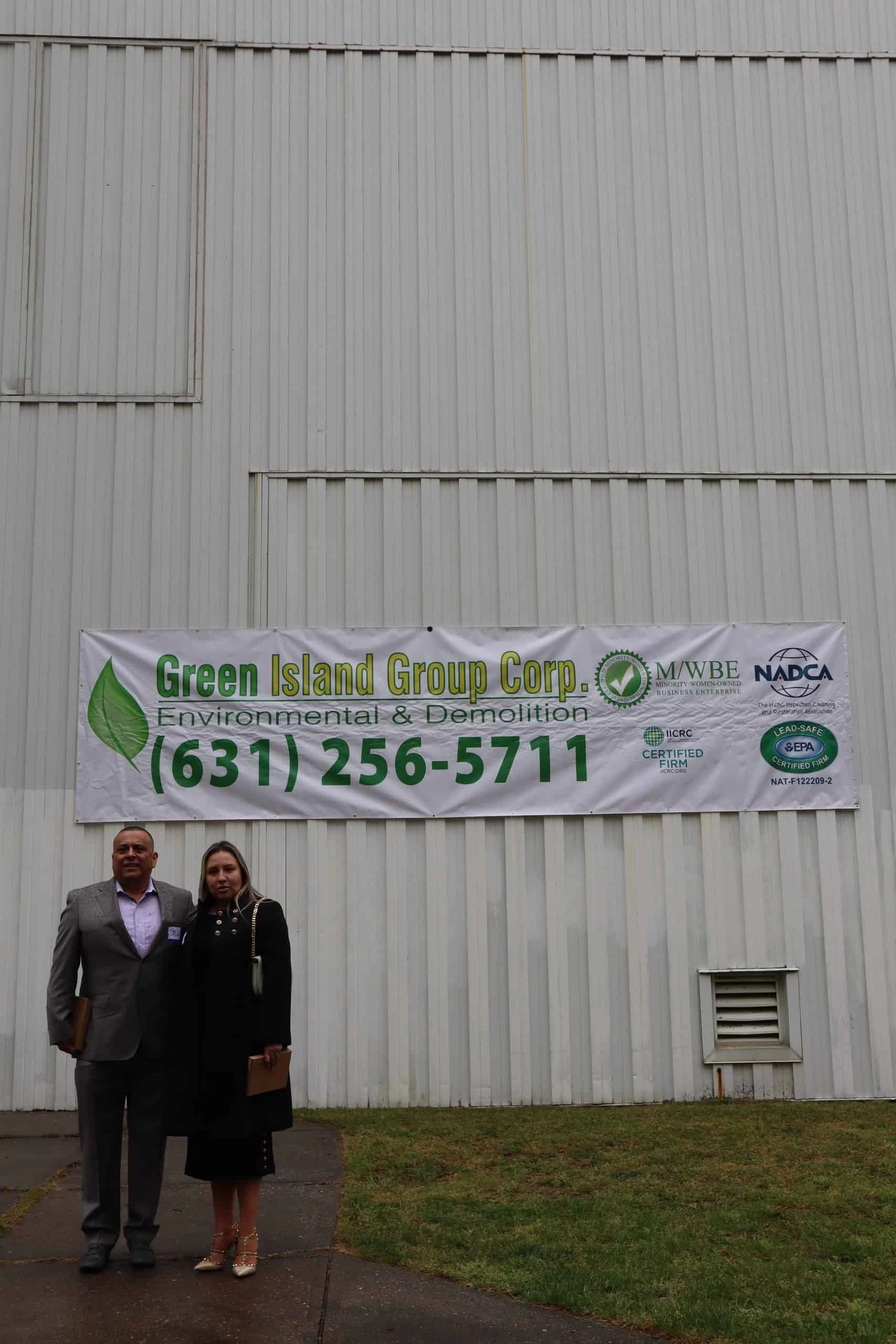
We are also independently certified by New York State as a Minority Business Enterprise and Woman-Owned Business Enterprise. CEO Jessica Dussan and VP Leo Torres are named, reachable people who appear by name in customer reviews. That’s not a franchise model. That’s a company where someone owns the outcome.
From the Call to the Finished Basement Here's the Honest Walkthrough
It starts the moment you call. Our emergency line at 631-613-8945 is answered 24 hours a day, every day including during the nor’easters and overnight storms that tend to be the reason Bohemia homeowners are calling in the first place. We ask a few quick questions to understand what you’re dealing with, and then we move. Independent customers have confirmed sub-one-hour response times, including during bad weather.
When we arrive, the first thing we do is assess not just visually, but with moisture meters and thermal imaging equipment that identifies water migration behind walls, under flooring, and inside structural cavities. This step matters more in older Bohemia homes than most contractors acknowledge, because water in a 1960s-era foundation travels differently than water in a newer build. If there’s any indication that the flood disturbed asbestos-containing materials or lead paint common in pre-1980 construction throughout this area we identify that before any demolition begins, because the handling protocol changes completely.
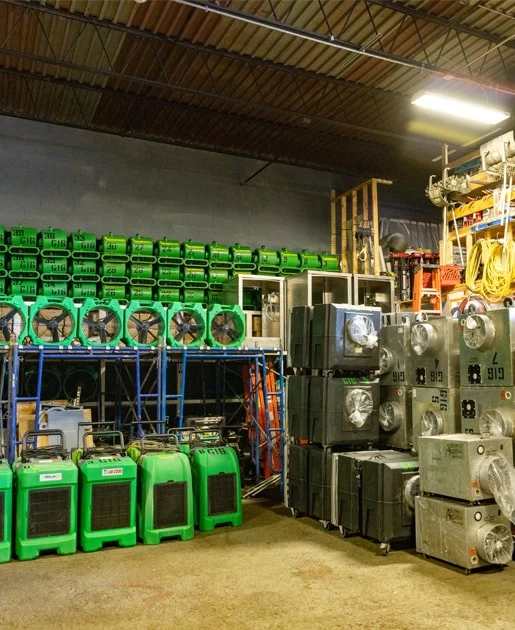
From there, we extract standing water, deploy industrial-grade dehumidifiers and air movers, and begin the structural drying process. We monitor moisture levels throughout not just once and we document every reading. If mold remediation, asbestos abatement, or reconstruction is needed, we handle that under the same contract. The Town of Islip Building Department requires permits for structural repairs following flood damage, and our Suffolk County General Contractor license covers that entire process. You don’t manage the paperwork. We do.
What's Actually Included When Bohemia Calls Green Island Group
Every flooded basement job starts with a thorough assessment not an estimate designed to get us in the door and upsell you later. We identify the water source, classify the contamination level (clean water from a burst pipe is handled very differently from sewage backup, which is a documented public health hazard requiring full containment and decontamination), and map the full extent of moisture migration before we touch anything.
Water extraction and structural drying are the foundation of every job. But in Bohemia, where a meaningful portion of homes are on private septic systems rather than public sewer connections, sewage backup events carry additional complexity that goes beyond what a standard restoration company is equipped to handle. We’re licensed and equipped for Category 3 black water events the kind that require hazmat-level protocols, not just a mop and a disinfectant spray.
From there, the scope expands based on what the assessment finds. Mold remediation, asbestos abatement, lead-safe demolition, full drywall and structural reconstruction all of it falls under our license stack and our Suffolk County General Contractor coverage. We also bill insurance companies directly, provide the damage documentation your adjuster needs, and communicate with your carrier throughout the process. For Bohemia homeowners navigating a claim under a standard homeowners policy, that direct billing capability removes the single most stressful administrative burden of the entire experience. One company, one contract, one point of contact from start to finish.
Why does my Bohemia basement flood every time it rains heavily?
Bohemia sits above a notably high water table, and the soil in this part of Suffolk County doesn’t drain quickly. When a heavy rain event hits whether it’s a summer thunderstorm or a nor’easter coming off the South Shore the ground saturates fast, and water has nowhere to go except against your foundation. Hydrostatic pressure then pushes through floor cracks, wall joints, and slab penetrations, often before you even realize what’s happening.
This problem is compounded in homes built in the 1950s, ’60s, and ’70s, which make up a significant portion of Bohemia’s housing stock. Those homes were built without modern waterproofing systems, and decades of ground movement and aging materials mean the original barriers have long since broken down. If your basement floods repeatedly during rain events, the underlying issue is almost always a combination of high groundwater, saturated soil, and an aging foundation that needs more than a better sump pump to address properly.
Does homeowners insurance cover flooded basement cleanup in Bohemia, NY?
It depends on the cause, and that distinction matters a lot. Standard homeowners insurance typically covers sudden, accidental water damage a burst pipe, a failed water heater, an appliance overflow. What it generally does not cover is flooding caused by groundwater rising from outside, which is technically flood damage and falls under a separate NFIP (National Flood Insurance Program) policy.
For Bohemia homeowners, this is a genuinely important distinction because the most common cause of basement flooding here is exactly that: groundwater rise driven by the high water table and saturated soil during heavy rain events. If you’re not sure what your policy covers, don’t guess call your carrier before you assume you’re on your own, and document everything in the meantime. We bill insurance companies directly and provide the detailed damage documentation that adjusters require, so if you do have coverage, we handle the process on your behalf. We’ll also help you understand what’s covered based on how the damage occurred.
How quickly does mold start growing after a basement floods?
Mold can begin colonizing within 24 to 48 hours of a flooding event and that clock doesn’t pause because it’s the middle of the night or because the water looks like it’s starting to recede. In Bohemia’s climate, with hot, humid summers and the kind of ambient moisture that comes with living near the Great South Bay and the Connetquot River watershed, conditions for mold growth are often already favorable before a flood adds standing water to the equation.
The part most homeowners miss is that mold doesn’t need visible water to grow. It needs moisture and moisture hides inside wall cavities, under subfloors, and inside insulation long after the floor looks dry. That’s why visual drying is not the same as structural drying. If a contractor extracts the standing water and leaves without monitoring and documenting moisture levels inside your walls, you may be looking at a mold remediation job within a month. We use moisture meters and thermal imaging throughout the drying process specifically to prevent that outcome.
Is asbestos a real concern during basement flood cleanup in older Bohemia homes?
Yes and it’s one that most water damage contractors in this market are not legally equipped to handle. Homes built before 1980 commonly contain asbestos in pipe insulation, floor tiles, ceiling tiles, and wall insulation. When a basement floods and water penetrates those materials, or when cleanup requires removing damaged flooring or walls, there’s a real risk of disturbing asbestos-containing materials and releasing fibers into the air.
Under New York State law, any disturbance of suspect asbestos-containing materials requires work to be performed by a NYS DOL-licensed asbestos contractor. Most water damage companies including many franchise operations do not hold this license, which means they either skip the assessment entirely or stop work and hand you off to a separate abatement contractor. We hold the NYS DOL Asbestos license and the USEPA Lead and RRP certifications needed to identify and handle these materials as part of the same job. In a Bohemia home built in the 1960s or ’70s, that’s not a niche concern it’s a realistic part of what a thorough basement flood cleanup involves.
What should I do in the first hour after my Bohemia basement floods?
First, if there’s any chance the water has reached electrical outlets, your panel, or any wiring near the floor, don’t go in cut power to that area from a dry location and wait for a professional. Water and live electrical current in a basement is a serious safety risk, and it’s not worth the risk of finding out the hard way.
If it’s safe to enter, try to identify the source. A burst pipe or failed water heater is a different situation than groundwater coming up through the floor and knowing the source helps the cleanup crew respond correctly from the moment they arrive. Take photos and video of everything before anything is moved or touched, because that documentation is what your insurance adjuster will want. Then call us at 631-613-8945. Our emergency line is answered 24/7, and we can walk you through what to do while we’re on the way. In Bohemia, where power outages often accompany the storms that cause basement flooding, don’t wait until morning the mold clock starts regardless of whether the lights are on.
How does Green Island Group handle the insurance claim process for Bohemia homeowners?
We bill insurance companies directly, which means you’re not fronting the cost and waiting for reimbursement while also managing the stress of a flooded home. From the moment we assess the damage, we document everything in the format that insurance adjusters require moisture readings, photos, scope of work, material classifications and we communicate with your carrier throughout the process.
For Bohemia homeowners, this matters because water damage claims here often involve questions about cause and the cause determines coverage. Groundwater intrusion, storm-driven flooding, and burst pipes are all handled differently under standard homeowners policies, and having a contractor who understands those distinctions and documents accordingly can make a real difference in how your claim is processed. We’ve completed over 5,000 restoration projects across New York State, and a significant part of that experience is knowing how to document damage in a way that gives your claim the best possible foundation. You deal with your family and your home. We handle the insurance side.