When the Harbor Pushes Back, Your Bowling Green Basement Pays First
At the southern tip of Manhattan, flooding isn’t a possibility it’s a pattern. We respond 24/7 with licensed crews ready to handle everything a flooded basement in Bowling Green uncovers. Storm surge from New York Harbor, combined sewer backups during heavy rain, groundwater intrusion through century-old masonry we’ve managed all of it in this neighborhood, and we know exactly what’s hiding behind the walls.
I needed a professional consultation explanation of procedure for safe removal of Asbestos in my apartment complex. Without having an account yet, I was very impressed with the caring, knowledgeable and generous advice offered by Jessica, and will look forward to doing business in the future. Thank you so much! I feel much more informed about a sometimes scary endeavor. Peace. Nancy Silva Mineola, NY.
Mia Munoz
Used this company to clean up some water flood in my house. They were fast and easy to work with.very professional, Would recommend to anyone!
Nini Valle
Great company, had a flood and they responded quickly and efficiently. Billed my insurance company directly. I highly recommend this company!
joe colapietro, jr
I had pipe freeze in my basement right before a snow storm and they made to within an hour to help start the clean up process. They we by our side throughout the entire process and even helped with the insurance company. They did such a great job with the cleanup, repair, remidiation, I contracted them to perform the repairs and finishes in the basement. They came with enough manpower and material to get the job done. Leo and Jessica were nothing but a pleasure to deal with!!
Cristian Arredondo c
I had some water damage in my home and Green Island was able to take care of my issue quickly and effectively. I am very pleased with the work they did. They responded quickly and were very professional.
Michael M
Outstanding service! From the office to the field crew everyone was friendly, helpful and responsive. I highly recommend Green Island Group.
Basement Water Damage Restoration, Lower Manhattan
Dry Basement. Clean Air. Documented Proof It's Done Right.
When the water is gone, the real work begins. Moisture hides inside century-old masonry walls, migrates through shared building systems, and starts growing mold within 24 to 48 hours whether you can see it or not. The outcome you need isn’t just a dry floor. It’s a space that’s been properly dried, tested, and cleared so you’re not dealing with a bigger problem three weeks from now.
In a building that’s been standing since the early 1900s the kind that defines the blocks around Bowling Green Park that process gets more complicated fast. Many of these structures still have original asbestos pipe insulation, lead paint on basement walls, and drainage systems that weren’t designed for today’s rainfall events. A water damage company that can only extract water and run fans isn’t equipped for what these basements actually contain.
What you get with a complete remediation isn’t just peace of mind it’s written clearance documentation, verified air quality, and a record that protects you whether you’re a building manager fielding tenant complaints or an owner managing a property with real financial exposure. That paper trail matters in this market.
We’re a fully licensed environmental contracting and restoration company serving New York City and the surrounding metro area. We hold active New York State Department of Labor licenses for mold remediation, asbestos abatement, and lead abatement alongside our water damage restoration and general contracting credentials. That combination is genuinely rare, and in a neighborhood like Bowling Green, it’s the difference between a job that gets completed and one that stalls the moment something unexpected turns up behind the wall.
With over 5,000 completed jobs across the NYC metro, we’ve worked in the specific building types that define this part of Lower Manhattan converted commercial towers, pre-war masonry structures, mixed-use buildings where one flooded mechanical room can affect dozens of units. We bill insurance carriers directly, handle the documentation, and don’t leave until post-remediation testing confirms the space is clear. That’s not a promise it’s our standard process.
What Actually Happens From the First Call to Final Clearance
When you call, someone picks up around the clock, every day. A crew gets dispatched to your location in Bowling Green, and the first thing we do on arrival isn’t pull out equipment. It’s assess. We identify the water source, determine the contamination category, and map moisture levels using calibrated meters and thermal imaging. In Lower Manhattan’s below-grade spaces, what looks like a simple water intrusion is often Category 3 contamination sewage-laced water from a surcharging combined sewer system. That changes the entire protocol, and skipping this step is how jobs get done wrong.
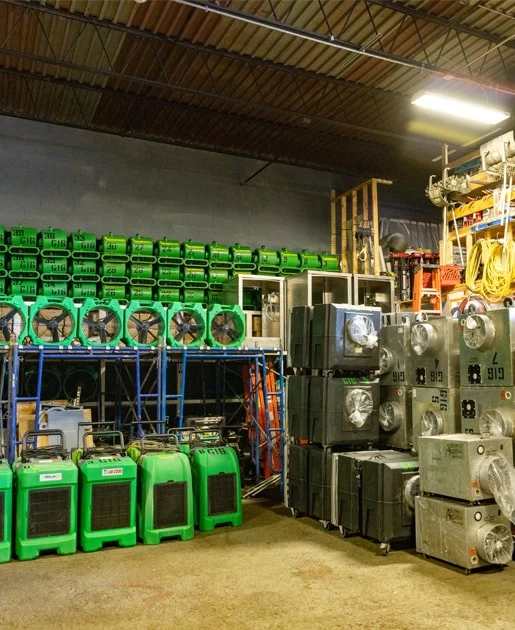
Once the scope is clear, extraction begins. Industrial-grade equipment pulls standing water fast, and structural drying follows with air movers and dehumidifiers positioned based on the actual moisture readings not just placed at random. In buildings with shared walls, HVAC systems, and adjacent occupied units, the drying plan accounts for how moisture travels through the structure, not just what’s visible on the surface.
Before anything is declared done, post-remediation air quality testing is conducted. New York State requires that mold assessment and mold remediation be handled by separately licensed parties, and we operate in compliance with that requirement throughout. The final clearance report is documented, written, and yours to keep for your insurance carrier, your building’s legal counsel, or your own records.
Basement Flooding Remediation Services, Bowling Green
Built for What Bowling Green Basements Actually Contain
Most water damage companies are equipped for one thing: water. We’re licensed to handle what a flooded basement in this part of Manhattan typically reveals once the water is out. Asbestos pipe insulation in a building from 1910. Lead paint on masonry walls that haven’t been touched since the 1960s. Mold colonizing behind a wall that looked fine from the outside. These aren’t edge cases in the Financial District they’re the norm, and they require separate licensing, separate protocols, and a contractor who doesn’t have to stop work and call someone else.
Our scope of service covers water extraction, structural drying with moisture mapping, mold remediation under NYS Labor Law Article 32, asbestos abatement, lead abatement, and post-remediation clearance testing. For building managers and condo boards overseeing multi-unit properties between Battery Place and Wall Street, we also handle insurance documentation and bill carriers directly removing one of the most time-consuming parts of a flooding event from your plate entirely.
Every job is sized to what’s actually there. The Stone Street Historic District, the converted towers along Broadway, the below-grade mechanical rooms that now sit beneath occupied residential units these buildings all get a scope of work built around their specific conditions, not a one-size package applied regardless of what’s found.
How quickly does mold actually start growing after a basement floods?
Mold can begin colonizing wet building materials within 24 to 48 hours of a flooding event that’s the EPA’s guidance, and it’s not a worst-case scenario. It’s the standard timeline. After 72 hours without professional drying, materials that could have been dried in place often need to be removed and replaced entirely, which escalates both cost and timeline significantly.
In a Bowling Green building, this timeline matters even more than it does in a freestanding home. Moisture doesn’t stay in one space it migrates through shared walls, floors, and HVAC systems into adjacent units and common areas. A flooded mechanical room in a converted office building on Broadway isn’t just a basement problem. It becomes a building-wide liability the longer it sits. The fastest decision you make after a flooding event is the most consequential one.
Does my building insurance actually cover basement flooding in Lower Manhattan?
It depends on the cause, and the answer varies more than most building managers expect. Standard commercial and residential property policies typically cover sudden and accidental water damage a burst pipe, for example but they often exclude flood damage caused by storm surge or rising groundwater unless a separate flood policy is in place. Given that Bowling Green sits in a FEMA-designated high-risk flood zone at the southern tip of Manhattan, flood insurance through the National Flood Insurance Program is worth reviewing if you don’t already have it.
Sewage backup is another category that frequently surprises people. When Lower Manhattan’s combined sewer system surcharges during a heavy rainfall event and water backs up through floor drains, that’s typically classified as a sewer backup which may require its own endorsement to be covered. We work directly with insurance carriers and handle the documentation and adjuster communication on your behalf, which removes a significant burden during an already stressful situation and helps ensure the claim is submitted with the right supporting evidence.
What is Category 3 water damage and is it common in Financial District basements?
Category 3 water also called black water is water that carries sewage, bacteria, or other pathogens. It’s the most contaminated classification in the IICRC’s water damage standards, and it requires a completely different cleanup protocol than a clean water pipe burst. You can’t dry Category 3-affected materials in place the way you might with a Category 1 event. Contaminated materials typically need to be removed, and surfaces need to be treated with antimicrobial agents before any drying or reconstruction begins.
In Lower Manhattan, Category 3 events are not rare. The area’s combined sewer infrastructure which handles both stormwater runoff and sanitary sewage in the same pipes regularly surcharges when rainfall exceeds its capacity. That’s exactly what happened during Hurricane Ida in 2021, when extreme rainfall overwhelmed sewer systems across the city. When that happens, sewer water backs up through floor drains in below-grade spaces throughout the Financial District. If you’ve ever noticed a foul smell in your basement after a heavy rain, there’s a good chance you’ve already had a low-grade Category 3 event and didn’t know it.
Do I need to worry about asbestos in my basement if my building is old?
If your building was constructed before 1980 which covers virtually every structure in the Bowling Green area asbestos-containing materials are a real possibility in below-grade spaces. Pipe insulation, floor tiles, joint compound, and ceiling materials from that era frequently contain asbestos. Under normal conditions, these materials aren’t a hazard. But when a basement floods and those materials are disturbed, soaked, or damaged, they can become a regulated concern that requires a licensed asbestos abatement contractor before any other work can proceed.
Most water damage companies are not licensed for asbestos abatement. When they encounter it, they stop work and refer out which adds days or weeks to your timeline while the building sits wet. We hold an active NYS Department of Labor asbestos abatement license, which means we can assess, contain, and remediate asbestos materials as part of the same job, without the delay of bringing in a separate contractor. In a building from 1905 or 1920 in the Financial District, that’s not a hypothetical situation it’s a realistic part of the scope.
How does storm surge from New York Harbor affect basement flooding risk in Bowling Green?
Bowling Green sits at the southernmost point of Manhattan, surrounded by water on three sides the Hudson River to the west, New York Harbor to the south, and the East River to the east. That geography makes it one of the most directly exposed locations in the city during major storm events. Superstorm Sandy in 2012 demonstrated exactly what that exposure looks like in practice: storm surge reached six feet on several Financial District streets, the Brooklyn-Battery Tunnel entrance on West Street was completely submerged, and below-grade spaces throughout the area were flooded with saltwater.
Saltwater flooding is more damaging than freshwater flooding. It corrodes metal, degrades concrete, and leaves behind salt deposits that continue to draw moisture into building materials long after the water recedes. The city has committed $900 million to the Lower Manhattan Coastal Resiliency project specifically because this risk is ongoing and increasing with sea-level rise. If your building is in the Bowling Green area and you haven’t reviewed your flood preparedness or your contractor relationships, the city’s own investment in flood barriers is a reasonable signal that it’s worth doing.
As a condo board member in Bowling Green, what's my liability if a flooded basement causes mold in tenant units?
Under New York City housing law, building owners and managers have a documented duty to address mold conditions that affect tenant health. If a flooded basement in your building is not properly remediated and mold spreads into occupied units through shared walls, floors, or HVAC systems, the board’s exposure is real and the fact that you hired someone to “clean it up” won’t protect you if that contractor wasn’t licensed or didn’t produce clearance documentation proving the job was done correctly.
New York State’s mold law, Labor Law Article 32, requires that mold assessment and mold remediation be performed by separately licensed contractors. That’s not optional, and it’s not a technicality it’s the regulatory standard that governs remediation work in buildings across Manhattan. We hold both licenses and operate in compliance with that separation requirement throughout every job. When the work is complete, you receive written post-remediation clearance documentation the kind of objective, verifiable record that protects the board if a tenant files a complaint with NYC’s Department of Housing Preservation and Development or if the situation ever reaches legal review.