Briarwood's Older Homes Don't Forgive a Slow Response
When a basement floods in a 1940s Tudor off Manton Street or a co-op unit near Parkway Village, the clock starts immediately. We respond 24/7 with the licenses, equipment, and clearance to handle everything from water extraction to full reconstruction.
I needed a professional consultation explanation of procedure for safe removal of Asbestos in my apartment complex. Without having an account yet, I was very impressed with the caring, knowledgeable and generous advice offered by Jessica, and will look forward to doing business in the future. Thank you so much! I feel much more informed about a sometimes scary endeavor. Peace. Nancy Silva Mineola, NY.
Mia Munoz
Used this company to clean up some water flood in my house. They were fast and easy to work with.very professional, Would recommend to anyone!
Nini Valle
Great company, had a flood and they responded quickly and efficiently. Billed my insurance company directly. I highly recommend this company!
joe colapietro, jr
I had pipe freeze in my basement right before a snow storm and they made to within an hour to help start the clean up process. They we by our side throughout the entire process and even helped with the insurance company. They did such a great job with the cleanup, repair, remidiation, I contracted them to perform the repairs and finishes in the basement. They came with enough manpower and material to get the job done. Leo and Jessica were nothing but a pleasure to deal with!!
Cristian Arredondo c
I had some water damage in my home and Green Island was able to take care of my issue quickly and effectively. I am very pleased with the work they did. They responded quickly and were very professional.
Michael M
Outstanding service! From the office to the field crew everyone was friendly, helpful and responsive. I highly recommend Green Island Group.
Here’s what most people don’t realize until it’s too late: the water you can see is rarely the whole problem. In Briarwood’s prewar and mid-century homes most of them built between 1936 and the late 1960s plaster walls, original subfloor assemblies, and concrete block foundations absorb moisture and hold it long after the floor looks dry. That hidden moisture is where mold starts, usually within 24 to 48 hours and almost always inside wall cavities where you won’t see it coming.
Queens’ combined sewer infrastructure makes this worse. When heavy rain overwhelms the system and it does, regularly sewage can back up through basement floor drains. That’s not just water damage. That’s black water contamination, and it requires a completely different level of cleanup than a burst pipe does. If you’re in the lower-elevation stretch of Briarwood near the Van Wyck corridor, your groundwater pressure during a storm is higher than it is on the elevated side near Main Street. That difference matters when you’re trying to understand why your basement keeps taking on water.
What life looks like after a proper cleanup is simple: no lingering odor, no hidden moisture reading above acceptable levels, no mold growth appearing three weeks later, and documentation your insurance company will actually accept. That’s the outcome worth paying for.
We’re a full-service environmental remediation and restoration contractor serving Briarwood, Queens, and the broader New York metro area, available 24 hours a day, every day of the year. What separates us from most operators in this market isn’t the equipment it’s the credentials behind the work.
New York State requires a NYS DOL Mold License for any professional performing mold remediation. That’s not optional, and a lot of contractors working in Briarwood don’t have it. We do. We also hold NYS DOL Asbestos licensure, USEPA Lead and RRP certification, IICRC Water Damage certification, and a NYC General Contractor license which means we can legally handle the hazardous materials hiding inside Briarwood’s pre-1980 building stock and pull the permits required for full reconstruction when the damage goes deeper than the floor drain.
For Briarwood’s co-op boards and apartment building owners including properties like the Arlington or the older garden-style complexes throughout the neighborhood that full-service capability under one roof matters more than most people think until they need it.
What Actually Happens From First Call to Final Walkthrough
When you call, a team is dispatched immediately not scheduled for the next morning, not routed through a call center. Response times under one hour have been documented in the Queens market, and the 24/7 commitment doesn’t change based on whether it’s a Tuesday afternoon or 2 AM during a January freeze.
On arrival, the first priority is assessment not just the visible water, but what’s behind it. Thermal imaging technology identifies moisture pockets inside walls, beneath floors, and within structural cavities that a standard inspection would miss entirely. In Briarwood’s older housing stock, this step isn’t optional. A home built in 1948 with original plaster walls and a concrete block foundation requires a different moisture map than a newer build would. If there’s any indication of asbestos-containing materials pipe insulation, floor tiles, wall plaster that gets flagged and handled through the proper NYC DEP permitting process before any demolition or removal begins. Skipping that step carries fines starting at $5,000 per day under city regulations, and it puts your health at risk.
After extraction and structural drying, we move through mold prevention treatment, content assessment, and if needed full reconstruction using our NYC General Contractor license. You don’t hand off to a second company. The same team that dried your basement can rebuild it. At the end, you get documented clearance: moisture readings, photos, and a report your insurance adjuster can use.
Flooded basement cleanup in Briarwood isn’t a one-size situation. A sewage backup in a 1947 Parkway Village co-op unit involves different protocols than a burst pipe in a single-family home near Parsons Boulevard. We handle both and everything between with the full-service scope that most local operators simply aren’t licensed to offer.
The core service includes emergency water extraction, industrial-grade structural drying, thermal imaging moisture detection, mold prevention treatment, and sewage decontamination when black water is involved. For Briarwood’s pre-1980 properties, that also means a proper asbestos and lead assessment before any demolition or material removal begins a step that’s legally required under NYC DEP regulations and one that unlicensed contractors routinely skip. If reconstruction is needed after the cleanup, our NYC General Contractor license covers that too: framing, drywall, flooring, finishes the full rebuild, permitted and inspected.
On the insurance side, we document everything from the moment we arrive photos, moisture readings, scope of damage and work directly with your adjuster so you’re not stuck translating between a contractor and an insurance company at the worst possible time. If you’re a building owner or co-op board member managing a property with more than ten units, we’re also fully equipped to meet the requirements of NYC Local Laws 55 and 61, which mandate licensed mold contractors for covered buildings. Whatever the situation looks like in your Briarwood property, the scope of service matches it.
Does homeowners insurance cover a flooded basement in Briarwood, NY?
It depends entirely on what caused the flooding, and this is where a lot of Briarwood homeowners get caught off guard. Standard homeowners insurance typically covers sudden, internal water damage a burst pipe, a failed water heater, an appliance malfunction. What it usually does not cover is flooding that enters from outside, like groundwater seeping through your foundation during a storm or water backing up from the street. For that, you’d need a separate flood insurance policy, typically through the National Flood Insurance Program.
The sewage backup situation is its own category. Some homeowners policies include sewer backup coverage as an endorsement; many don’t. Given that South Jamaica directly south of Briarwood is one of Queens’ highest-volume sewer backup complaint zones, and that Briarwood’s sewer laterals in many cases date back to the 1940s and 1950s, this is worth checking on your policy before something happens. We document the damage thoroughly from the moment we arrive photos, moisture readings, written scope and work directly with your adjuster to make sure the claim reflects the full picture.
How fast does mold actually grow after a basement floods in Queens?
Faster than most people expect. Under the right conditions which a wet basement in a humid Queens summer absolutely provides mold can begin establishing itself within 24 to 48 hours. Visible surface growth typically appears between 24 and 72 hours, but by the time you see it, colonies are often already developing inside wall cavities and beneath subfloor assemblies where airflow is limited and moisture lingers.
The 72-hour window matters financially, not just medically. Mold remediation costs increase significantly once growth is established often by $2,000 to $8,000 or more depending on the scope because the work shifts from prevention to active removal and clearance testing. In Briarwood’s older housing stock, where plaster walls and original wood subfloors hold moisture longer than modern materials do, waiting even a day or two to see if things dry out on their own can turn a manageable cleanup into a much larger project. The right move is to call immediately and let a professional assess the moisture situation with proper detection equipment, not to wait and see.
What does sewage backup cleanup actually involve, and is it dangerous?
Sewage backup is classified as black water contamination the most hazardous category of water damage because it contains bacteria, pathogens, and other biological contaminants that pose real health risks. You cannot treat it the same way you’d treat a clean water leak from a pipe. It requires licensed, PPE-equipped contractors, proper containment, and regulated disposal. This is not a situation where a shop-vac and some bleach gets the job done safely.
The cleanup process involves removing all contaminated materials that can’t be fully sanitized which often includes flooring, drywall, and insulation depending on how far the water traveled followed by disinfection, antimicrobial treatment, and air quality verification. Queens’ combined sewer system is documented to back up into basements during heavy rain events, and Briarwood properties particularly those with older sewer lateral connections are not immune to this. If your basement flooded and the water has any discoloration, odor, or came up through a floor drain during or after a rainstorm, treat it as black water until a professional tells you otherwise.
My Briarwood home was built in the 1950s do I need to worry about asbestos during cleanup?
Yes, and this is one of the most important things to understand before any cleanup or demolition work begins in a home of that age. Buildings constructed before 1980 which covers virtually all of Briarwood’s residential housing stock commonly contain asbestos in pipe insulation, boiler wrap, floor tiles, ceiling materials, and wall plaster. When a basement floods, water infiltration can disturb these materials. Disturbing them without proper protocols releases fibers that are hazardous when inhaled.
Under NYC DEP regulations, no renovation or repair work affecting building materials in pre-1987 buildings can legally proceed without a certified asbestos investigation first. Emergency permits are available for casualty events like floods, but they must be issued before abatement work begins violations carry fines starting at $5,000 per day. Most cleanup-only contractors in Queens are not licensed to handle this. We hold the NYS DOL Asbestos License and USEPA Lead certification, meaning we can assess, contain, and abate hazardous materials discovered during your flood cleanup without stopping the job to bring in a separate hazmat contractor.
How long does flooded basement cleanup and drying take in a Queens home?
The honest answer is that it varies, and anyone who gives you a flat number without seeing the property first isn’t being straight with you. A clean water leak caught within a few hours in a partially finished basement might be dried and cleared within three to five days. A sewage backup in a fully finished basement with plaster walls, wood framing, and original flooring the kind of setup common throughout Briarwood’s mid-century housing stock can take one to three weeks depending on the extent of material removal needed and how long the water was present before cleanup began.
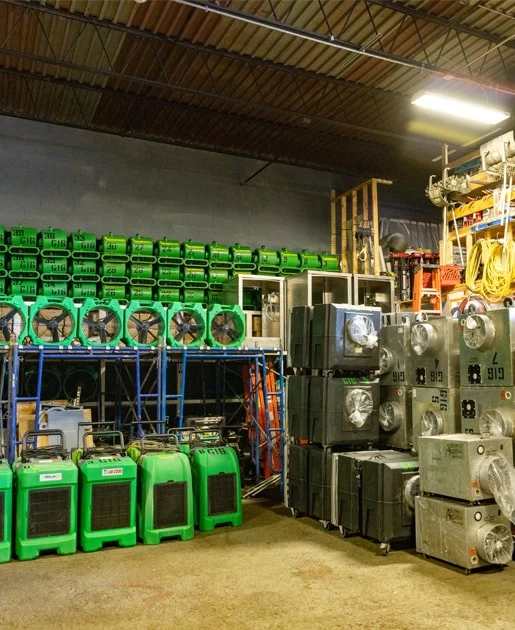
The drying timeline is driven by moisture readings, not appearance. Industrial drying equipment runs continuously, and technicians return daily to monitor readings with moisture meters until the structure reaches acceptable levels. Rushing that process or stopping equipment early because things look dry is how hidden moisture problems and mold growth develop weeks later. If reconstruction is needed after drying, that timeline extends further, but having a contractor like us who handles both phases means there’s no gap waiting for a second company to schedule.
Can I handle flooded basement cleanup myself instead of hiring a professional in NY?
For minor, clean water incidents a small leak caught immediately, no structural materials affected, no sign of contamination some homeowners do manage basic cleanup themselves. But in Briarwood specifically, the conditions that typically cause basement flooding make DIY a genuinely risky approach. If the water came from a sewer backup, it’s black water and requires licensed contractors and regulated disposal. If your home predates 1980, disturbing basement materials without an asbestos assessment is a legal violation under NYC DEP rules, not just a safety concern. And if you’re in a co-op or apartment building subject to NYC Local Laws 55 and 61, mold remediation over ten square feet legally requires a licensed contractor regardless of who owns the unit.
Beyond the regulatory side, the practical limitation of DIY is moisture detection. Consumer fans and dehumidifiers can dry surface materials while leaving moisture trapped inside wall assemblies and subfloor cavities exactly the conditions that produce mold growth weeks after you think the problem is resolved. Thermal imaging equipment, industrial drying capacity, and clearance testing are not things most homeowners have access to. For a flooded basement in Briarwood’s older housing stock, professional remediation isn’t just the safer choice in most real scenarios here, it’s the only one that actually finishes the job.