When the Canal Rises, Brightwaters Basements Pay the Price
Water in your basement moves fast and so does the damage. We respond 24/7 to flooded basement cleanup in Brightwaters, NY, with the licenses to handle whatever’s behind your walls.
I needed a professional consultation explanation of procedure for safe removal of Asbestos in my apartment complex. Without having an account yet, I was very impressed with the caring, knowledgeable and generous advice offered by Jessica, and will look forward to doing business in the future. Thank you so much! I feel much more informed about a sometimes scary endeavor. Peace. Nancy Silva Mineola, NY.
Mia Munoz
Used this company to clean up some water flood in my house. They were fast and easy to work with.very professional, Would recommend to anyone!
Nini Valle
Great company, had a flood and they responded quickly and efficiently. Billed my insurance company directly. I highly recommend this company!
joe colapietro, jr
I had pipe freeze in my basement right before a snow storm and they made to within an hour to help start the clean up process. They we by our side throughout the entire process and even helped with the insurance company. They did such a great job with the cleanup, repair, remidiation, I contracted them to perform the repairs and finishes in the basement. They came with enough manpower and material to get the job done. Leo and Jessica were nothing but a pleasure to deal with!!
Cristian Arredondo c
I had some water damage in my home and Green Island was able to take care of my issue quickly and effectively. I am very pleased with the work they did. They responded quickly and were very professional.
Michael M
Outstanding service! From the office to the field crew everyone was friendly, helpful and responsive. I highly recommend Green Island Group.
A Dry Basement and No Hidden Surprises Left Behind
The moment water enters your basement, the clock starts. Mold can begin growing within 24 to 48 hours, and in Brightwaters surrounded by tidal canal water, spring-fed lakes, and a South Shore water table that never really rests that window closes faster than it would almost anywhere else on Long Island. Getting the water out is only part of the job. What matters is what gets done after.
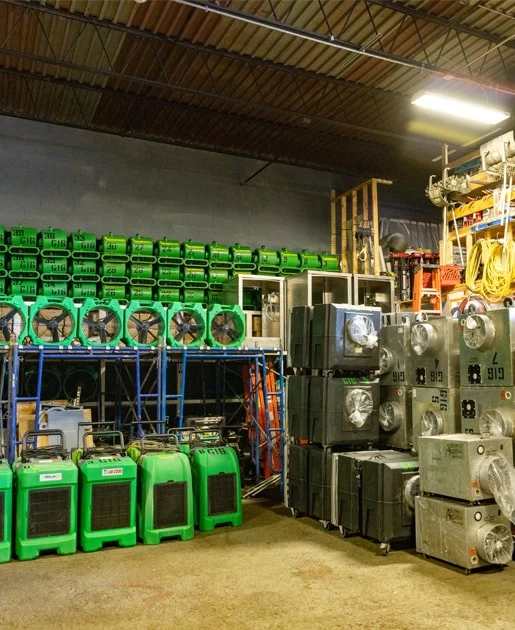
When the cleanup is finished, you should be able to walk back into that basement knowing the moisture is gone not just from the floor, but from inside the walls, behind the framing, and beneath the subfloor. That means industrial extraction equipment, calibrated moisture meters, thermal imaging, and structural drying that follows the science, not just what looks dry to the eye.
For Brightwaters homeowners, there’s another layer that most water damage companies won’t talk to you about. With over 40% of homes in the village built before 1940, floodwater doesn’t just damage drywall it can disturb asbestos pipe insulation, asbestos floor tiles, and lead-based paint that are common in pre-war construction. A company that isn’t licensed to handle those materials legally cannot complete the job. We hold NYS DOL Asbestos licensure and USEPA Lead certification, which means you get the full picture handled not a crew that stops work when things get complicated.
We’ve completed more than 5,000 restoration projects across New York State, and the South Shore of Long Island including Brightwaters and the broader Town of Islip corridor is territory we know well. We understand what canal-adjacent flooding looks like on the Concourse. We know what the spring-fed lakes do to the water table in the northern part of Brightwaters. We’ve worked in pre-war homes throughout southwestern Suffolk County, and we know what’s likely inside those walls before we ever open them.
CEO Jessica Dussan and VP Leo Torres lead every project. That’s not a marketing line it shows up in customer reviews, where clients name them directly. When something needs to be handled or a question needs an answer, you’re reaching people who are personally accountable for the outcome of your job.
We’re also an approved emergency response contractor for the NYS Office of General Services a designation that required independent state vetting of our licensing, insurance, and operational capability. We hold Suffolk County General Contractor licensure, NYS DOL Mold and Asbestos licenses, and USEPA Lead and RRP certifications. That’s not a stack of credentials for the wall. It’s what makes us the only call you need to make.
Flooded Basement Cleaning Process, Brightwaters NY
What Actually Happens From the Moment You Call Us
You call. We’re available 24 hours a day, every day of the year and customer reviews consistently confirm we arrive within the hour. That matters in Brightwaters, where a nor’easter hitting the canal at high tide doesn’t wait for business hours and neither should your response.
When we arrive, the first thing we do is assess the full scope of the damage not just what’s visible on the floor. We use moisture meters and thermal imaging to identify water that has migrated into walls, insulation, and structural cavities. In a pre-war Brightwaters home, that assessment also includes a look at what building materials are present. If there’s suspected asbestos or lead in the affected area, we identify it early and handle it within the same job no stopping work, no calling in a separate vendor, no gap in the timeline that lets mold get a foothold.
From there, we extract standing water, set up industrial drying equipment, and monitor the drying process until moisture readings confirm the structure is genuinely dry. If mold remediation is needed, we handle that under our NYS DOL Mold license. If reconstruction is required new drywall, subfloor repair, framing our Suffolk County General Contractor license covers it. We also document everything for your insurance carrier and can bill directly, which matters when you’re navigating a flood claim and don’t want to manage paperwork on top of everything else. One company, one contract, start to finish.
Water Damage Restoration Services, Brightwaters NY
Built for Pre-War Homes in a Flood-Prone Village
Flooded basement cleanup in Brightwaters isn’t a standard job, and we don’t treat it like one. The combination of canal proximity, bay storm surge exposure, spring-fed lake influence on the water table, and a housing stock that’s overwhelmingly pre-1940 creates a situation that most water damage companies aren’t equipped to handle completely. We are.
Every flooded basement cleanup we perform includes water extraction, structural drying with moisture verification, and a full assessment of what the water contacted. For homes in the BFE zone which applies throughout much of Brightwaters given its coastal designation any reconstruction work must meet Base Flood Elevation compliance standards. Our Suffolk County General Contractor license covers that requirement, so you’re not scrambling to find a second contractor for the rebuild.
When pre-war materials are involved, we handle asbestos and lead under our state and federal certifications, keeping the job legal and keeping your family safe. If sewage backup is part of the picture which happens in older drainage systems during heavy storm events we handle Category 3 decontamination as well. And when it’s all done, we provide complete documentation for your insurance claim. Whether you’re carrying an NFIP flood policy, standard homeowners coverage, or both, we work directly with your adjuster so the claim process doesn’t become a second job for you.
Does flooding near the Brightwaters Canal require a different cleanup approach?
Yes, and it’s worth understanding why. When floodwater enters your basement from a canal-connected source especially one tied to Great South Bay tidal movement it’s classified as Category 3 water, which means it carries contaminants, bacteria, and potentially sewage material. That changes the entire cleanup protocol. It’s not just about extracting water and running fans. Category 3 flooding requires full decontamination of all affected surfaces, removal of porous materials that can’t be safely cleaned, and antimicrobial treatment throughout the space.
Homes on East Concourse and West Concourse are particularly exposed to this type of event. During the January nor’easter that Brightwaters Mayor John Valdini compared to Hurricane Sandy, Concourse West flooded directly from canal overflow combined with storm surge and heavy rain. If your basement took on water during a similar event, the cleanup needs to be treated accordingly not as a simple wet-floor situation. We assess the water source and contamination category on arrival and adjust the scope of work from there.
How quickly does mold start growing after a basement floods in an older home?
Mold can begin growing within 24 to 48 hours of a flood event and in a basement that’s already surrounded by water on multiple sides, that timeline can move even faster. Brightwaters homes near the canal or the four spring-fed lakes north of Montauk Highway tend to have naturally higher ambient humidity levels, which creates a more favorable environment for mold to establish quickly once moisture enters the structure.
In a pre-war home, the risk compounds. Older construction often includes organic materials wood framing, plaster, cellulose insulation that absorb moisture deeply and hold it longer than modern materials. That means mold can be growing inside a wall cavity while the floor looks and feels dry. The only way to know the actual moisture state of your structure is with calibrated meters and thermal imaging, not a visual inspection. Waiting more than 48 to 72 hours to begin professional drying significantly increases the likelihood of mold growth and adds thousands of dollars to the remediation scope. If your basement flooded, the time to act is now not after the weekend.
Is asbestos a real concern when my Brightwaters basement floods?
For a significant portion of Brightwaters homes, yes. More than 40% of housing units in the village were built before 1940, and asbestos was a standard building material through the late 1970s. In pre-war construction, it commonly appears as pipe insulation wrapped around basement heating pipes, as floor tile adhesive or the tiles themselves, and in certain types of ceiling and wall insulation board. When floodwater saturates these materials or the cleanup process disturbs them cutting, pulling, or scrubbing asbestos fibers can become airborne.
A water damage company that isn’t licensed for asbestos abatement either doesn’t identify the risk or stops work when they encounter it, leaving you to coordinate a separate contractor while the clock on mold growth keeps running. We hold NYS DOL Asbestos licensure, which means we can identify, contain, and properly remediate asbestos-containing materials within the same job. You don’t lose time, you don’t lose continuity, and you don’t end up with a half-finished basement and two separate contractors pointing at each other.
Will my insurance cover flooded basement cleanup in Brightwaters, NY?
It depends on the source of the water, and the distinction matters. Standard homeowners insurance typically covers sudden and accidental water damage a burst pipe, a failed water heater, an appliance overflow. It generally does not cover flooding from an external source, which includes storm surge, canal overflow, and groundwater intrusion. For that type of flooding, you need a separate flood insurance policy, either through the National Flood Insurance Program or a private carrier.
Because Brightwaters has confirmed Base Flood Elevation requirements as part of its building code reflecting its coastal and canal-proximate geography many homeowners in the village carry flood insurance in addition to their standard policy. If you have both, you may be navigating two separate claims processes simultaneously. We handle insurance documentation directly and communicate with adjusters on your behalf. We photograph and document the damage in detail before any work begins, which is exactly what adjusters need to process a claim accurately. We also bill carriers directly, so you’re not fronting the cost and waiting for reimbursement while your basement is still being dried out.
How much does flooded basement cleanup typically cost in Brightwaters?
The range is wide because the scope varies significantly depending on how much water entered, how long it sat, what materials were affected, and what the water source was. For a relatively contained event a sump pump failure or a minor appliance leak caught within a few hours cleanup costs can run $2,000 to $3,500. For a more significant event involving several inches of standing water, extended saturation, or contaminated water from canal or storm surge intrusion, the total including extraction, drying, and any necessary mold remediation typically falls between $4,000 and $8,000 or more.
In Brightwaters specifically, the pre-war housing stock adds a variable that doesn’t apply in newer communities. If asbestos-containing materials are disturbed or lead-based paint is affected, proper abatement is legally required and that adds to the cost. Skipping it isn’t a cost savings; it’s a liability. We give you a clear, documented scope before any work begins. No surprises mid-job, and no padding the invoice after the fact.
Can I clean up a flooded basement myself in a pre-1940 Brightwaters home?
You can handle very minor moisture a small seep along a wall after heavy rain, for example with a wet vac and a dehumidifier if you act within a few hours and the water source is clean. But for anything beyond that, DIY cleanup in a pre-war Brightwaters home carries real risks that go beyond just missing some moisture.
The first issue is hidden saturation. Water travels through wall cavities, under flooring, and into insulation in ways that aren’t visible to the eye. Without moisture meters and thermal imaging, you can dry what you see and leave active moisture inside the structure which becomes mold within days. The second issue is material safety. In a home built before 1940, disturbing floor tiles, pipe insulation, or wall materials without knowing what’s in them is a genuine hazard. Asbestos and lead don’t announce themselves. Scrubbing, cutting, or pulling materials that contain them without proper containment and protective equipment creates an exposure risk for you and your family. For a home worth $800,000 or more in a village where the housing stock is irreplaceable, the cost of professional cleanup is not the risk. Doing it wrong is.