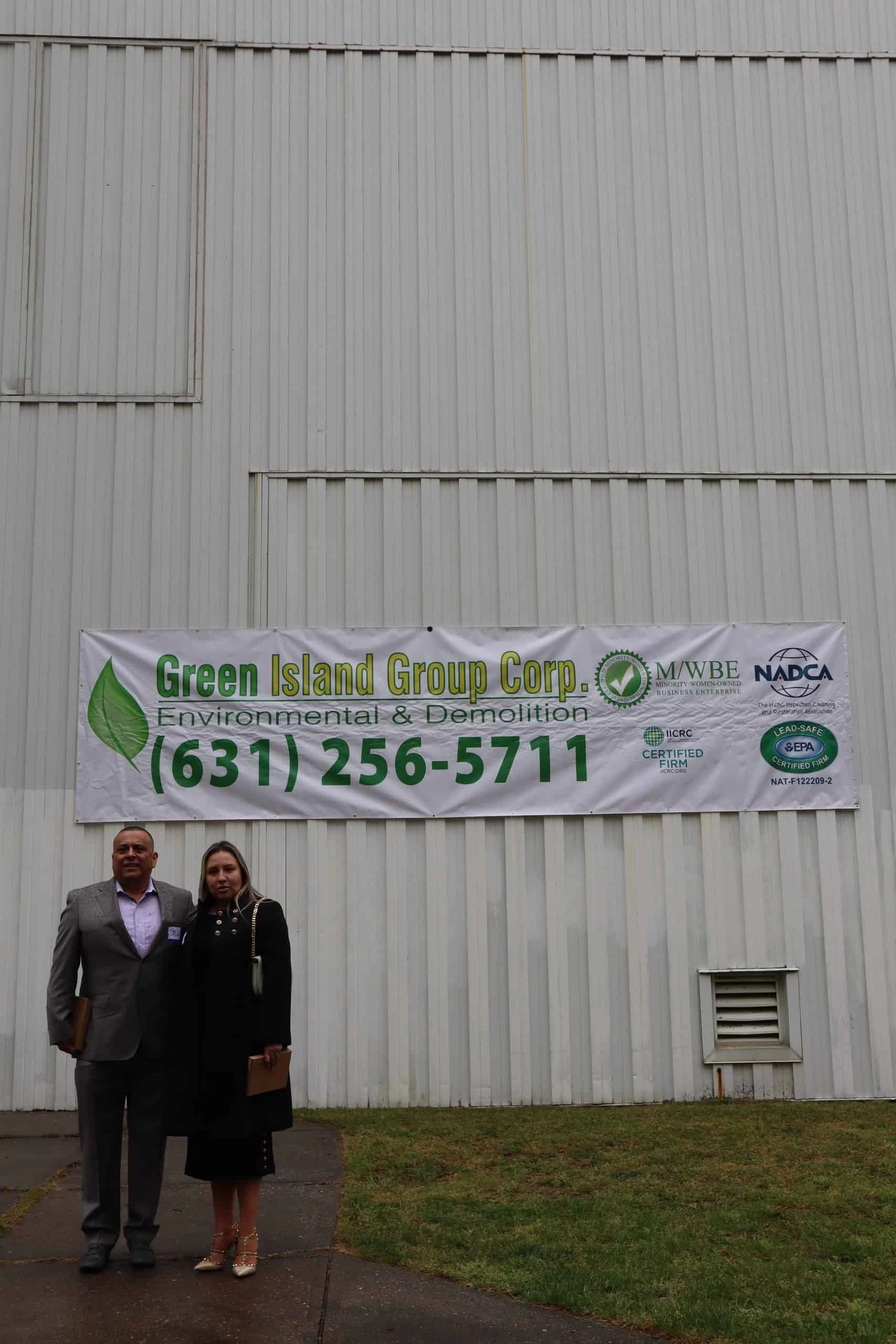
In a neighborhood where more than half the homes were built before 1939, a flooded basement isn’t just an inconvenience it’s a hazardous materials situation waiting to be handled wrong. We respond fast, work clean, and finish the job completely.
I needed a professional consultation explanation of procedure for safe removal of Asbestos in my apartment complex. Without having an account yet, I was very impressed with the caring, knowledgeable and generous advice offered by Jessica, and will look forward to doing business in the future. Thank you so much! I feel much more informed about a sometimes scary endeavor. Peace. Nancy Silva Mineola, NY.
Mia Munoz
Used this company to clean up some water flood in my house. They were fast and easy to work with.very professional, Would recommend to anyone!
Nini Valle
Great company, had a flood and they responded quickly and efficiently. Billed my insurance company directly. I highly recommend this company!
joe colapietro, jr
I had pipe freeze in my basement right before a snow storm and they made to within an hour to help start the clean up process. They we by our side throughout the entire process and even helped with the insurance company. They did such a great job with the cleanup, repair, remidiation, I contracted them to perform the repairs and finishes in the basement. They came with enough manpower and material to get the job done. Leo and Jessica were nothing but a pleasure to deal with!!
Cristian Arredondo c
I had some water damage in my home and Green Island was able to take care of my issue quickly and effectively. I am very pleased with the work they did. They responded quickly and were very professional.
Michael M
Outstanding service! From the office to the field crew everyone was friendly, helpful and responsive. I highly recommend Green Island Group.
Your Brooklyn Manor Basement Restored Before the Mold Clock Runs Out
Mold starts growing within 24 to 48 hours of water intrusion. In Brooklyn Manor’s pre-war buildings with thick masonry walls, original plaster, and steam pipe insulation that hasn’t been touched in decades that window closes faster than most people realize. By the time you get off the J train and walk through your front door, the damage has already had hours to settle in.
That’s the reality of living in a neighborhood with some of the longest commutes in the country. You’re not home when it happens. You find it at 7 p.m. when the floor is already soaked. What happens in the next few hours determines whether you’re looking at a manageable cleanup or a mold remediation bill that’s several thousand dollars heavier than it needed to be.
When the job is done right, you get back a dry, safe, fully restored basement not just a space that looks dry on the surface. We use thermal imaging to find the moisture hiding inside your walls, not just what’s visible. In buildings as old as the ones throughout Brooklyn Manor, that’s not optional. It’s the difference between a real fix and a problem that comes back in three months.
We’ve been serving Brooklyn Manor and the surrounding Queens area for over 30 combined years. We hold more than 17 active certifications, including the NYS DOL Mold License that New York State law requires for any mold remediation work, NYC General Contractor licensing, NYS DOL Asbestos certification, USEPA Lead, and IICRC Water/Fire Damage credentials. These aren’t framed certificates on a wall they’re verifiable public records you can look up before you ever pick up the phone.
For Brooklyn Manor specifically, those credentials matter in a way they don’t in newer neighborhoods. The pre-war building stock throughout Richmond Hill and the surrounding area means asbestos-containing materials pipe insulation, floor tiles, old plaster are a real possibility the moment water starts moving through your basement. Most water damage companies in Queens are not legally authorized to touch those materials. We are.
We operate 24 hours a day, 365 days a year, and we handle everything from emergency water extraction through finished reconstruction one contractor, one call, no handoffs.
What Actually Happens From First Call to Finished Basement
The process starts the moment you call. We’re available around the clock, and our documented response time puts a licensed crew at your door in Brooklyn Manor, Richmond Hill, and the surrounding Queens Community Board 9 area typically within the hour. That matters when the mold clock is already running.
Once on-site, our first priority is stopping the water source and assessing what you’re dealing with. In Brooklyn Manor’s older buildings, that assessment includes checking for hazardous materials. If there’s asbestos-containing pipe insulation or lead paint in the affected area which is common in pre-1939 construction those materials have to be identified and handled under NYC DEP permit before any remediation begins. Skipping that step isn’t just dangerous, it’s illegal, and it can void your insurance claim. We handle the required filings as part of the job.
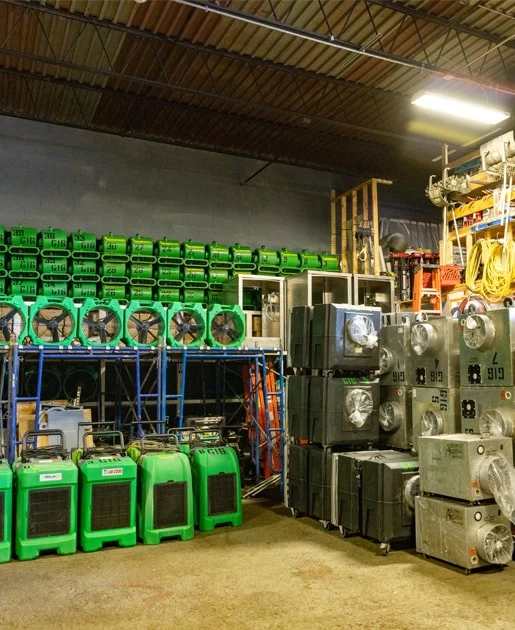
From there, it’s water extraction, structural drying with industrial equipment, thermal imaging to locate hidden moisture inside walls and under floors, and air quality testing. If mold is present, a licensed NYS DOL mold assessor documents it and provides a written remediation plan before any work begins as state law requires. After remediation is complete, a post-clearance assessment confirms the space is clean. Then, if reconstruction is needed, our General Contractor license means we can pull the permits and finish the work ourselves. You don’t start over with a new contractor.
Built for Brooklyn Manor's Basements Not a Generic Checklist
Flooded basement cleanup in Brooklyn Manor isn’t the same job it is in a newer neighborhood. The buildings here were constructed before modern waterproofing standards existed. The sewer laterals running beneath these streets are clay pipes that are 80 to 100 years old and when they back up, the water entering your basement is black water: raw sewage, bacteria, and pathogens that require strict containment and disposal protocols, not just a wet vac and a fan.
Our scope covers the full range of what Brooklyn Manor basements actually deal with. Emergency water extraction and structural drying. Sewage backup cleanup and black water remediation. Mold assessment and remediation under NYS DOL licensing, with all required NYC DEP filings handled for qualifying multi-family buildings under NYC Local Law 61. Asbestos survey and abatement for pre-war materials disturbed during the flood. Full reconstruction once the space is clean and dry, including permit filing through NYC’s Department of Buildings.
If you own or manage a multi-family building along Jamaica Avenue, Atlantic Avenue, or anywhere in the 11418 ZIP code, the regulatory requirements here are not optional. Mold work in buildings with 10 or more units requires a licensed contractor, a filed remediation plan, and a post-remediation certification. Non-compliance carries penalties between $800 and $10,000. Every job we complete is done to full legal standard so when it’s over, it’s actually over.
Does homeowners insurance cover a flooded basement in Brooklyn Manor, NY?
It depends on what caused the flooding, and this is where a lot of Brooklyn Manor homeowners get caught off guard. Standard homeowners insurance typically covers sudden, internal water damage a burst pipe, a failed water heater, a washing machine overflow. It does not cover flooding from external sources like storm surge or overland water, which requires a separate flood insurance policy through FEMA’s National Flood Insurance Program or a private carrier.
The problem in central Queens is that the line between “internal” and “external” flooding gets complicated fast. Hurricane Ida in September 2021 caused catastrophic basement flooding throughout Brooklyn Manor when the city’s sewer system designed to handle about 1.75 inches of rain per hour was hit with 3.5 inches per hour. Whether that qualifies as a covered sewer backup event or an uncovered flood event depends on your specific policy language. We work directly with insurance adjusters and handle billing on your behalf, which means we can help you navigate that distinction and document the damage in a way that supports your claim.
How fast does mold actually grow after a basement floods?
Mold can begin developing within 24 to 48 hours of water intrusion under the right conditions and a sealed, warm basement in a pre-war Brooklyn Manor building qualifies as exactly those conditions. The thick masonry walls and dense original plaster common in this neighborhood’s housing stock retain moisture far longer than modern drywall, which means the window for preventing mold growth is shorter than most people expect.
Waiting more than 72 hours before beginning professional cleanup typically adds $2,000 to $8,000 or more in mold remediation costs on top of the base water damage repair. Given that many Brooklyn Manor residents commute over an hour each way and may not discover a basement flood until hours after it starts, calling immediately even before you’ve assessed the full damage is always the right move.
Do I need a licensed contractor for mold remediation in New York City?
Yes, and this is one of the most important things to understand before you hire anyone. New York State law requires that mold assessment and mold remediation be performed by separate NYS DOL-licensed professionals. The same contractor cannot legally assess and remediate those have to be two distinct licensed entities. The assessor must provide a written mold remediation plan before any work begins, and after the job is complete, a licensed assessor must return to perform a post-remediation clearance.
In Brooklyn Manor, there’s an additional layer: NYC Local Law 61 of 2018 applies to buildings with 10 or more dwelling units, which covers a significant share of the neighborhood’s multi-family housing stock. That law requires filing a Mold Remediation Work Plan with the NYC Department of Environmental Protection before work starts and a Post-Remediation Certification after completion. Penalties for non-compliance run from $800 to $10,000. Hiring an unlicensed contractor doesn’t just put you at regulatory risk it can also void your insurance coverage for the remediation work entirely.
My Brooklyn Manor home was built before 1940 does that mean there's asbestos in my basement?
Not definitively, but the probability is high enough that it should be treated as a real possibility before any remediation work begins. Pre-war construction in Brooklyn Manor and throughout the Richmond Hill area commonly included asbestos in pipe insulation especially on steam heating systems, which were standard in buildings of that era as well as in floor tiles, tile adhesive, ceiling tiles, plaster, and joint compounds. These materials were standard building products until the late 1970s and early 1980s.
When a basement floods and remediation work requires cutting, disturbing, or removing any of these materials, New York City requires an asbestos survey by a certified investigator before work begins, and a NYC DEP permit before any abatement can take place. Only NYCDEP-certified contractors may legally perform the removal. This is why hiring a water damage company that is not certified for asbestos abatement creates real legal and health risk in a neighborhood like Brooklyn Manor they either skip the survey and put you at risk, or they stop the job and tell you to find someone else. We hold NYS DOL Asbestos certification and handle the full scope in-house.
What is black water flooding and is it dangerous to be around?
Black water is the most hazardous category of basement flooding, and it’s more common in Brooklyn Manor than most homeowners realize. It refers to water contaminated with raw sewage typically from a backed-up sewer lateral or a municipal sewer overflow. The clay sewer pipes running beneath many of Brooklyn Manor’s pre-war streets are 80 to 100 years old, making them highly susceptible to root intrusion, cracking, and blockage. When they back up, sewage enters the basement through floor drains, toilets, or cracked foundation walls.
Black water contains bacteria, viruses, and pathogens that pose serious health risks respiratory issues, skin contact exposure, and gastrointestinal illness are all documented consequences of unprotected exposure. You should not enter a space with black water flooding without proper protective equipment, and you should not attempt to clean it up without professional containment and disposal protocols. This is not a job for a general handyman or a standard cleaning service. It requires licensed contractors trained in biohazard remediation, which is part of what our team is equipped and certified to handle.
How much does flooded basement cleanup typically cost in Queens, NY?
The range is wide because the scope varies significantly depending on the source of the flood, how long the water sat, and what materials were affected. For a straightforward pipe burst with no mold and no hazardous materials, professional water extraction and structural drying in a Queens basement typically runs in the range of $2,500 to $7,500. Add mold remediation if growth has already started, and that number climbs. Add asbestos abatement which is a real possibility in Brooklyn Manor’s pre-1939 building stock and the scope expands further. Full reconstruction after a contaminated basement flood can reach $30,000 to $60,000 or more in serious cases.
The most important cost factor is time. Every hour water sits in a sealed basement is an hour closer to mold establishment, and every day past 72 hours adds thousands to the remediation side of the bill. The second most important factor is insurance. We handle direct insurance billing and communicate with adjusters on your behalf, which means you’re not navigating the claim process alone while also trying to manage a flooded basement. Getting an accurate scope documented early before materials are disturbed or discarded is critical to maximizing what your policy actually covers.