Century-Old Buildings, Real Hazards, One Call to Fix It
When your basement floods in a century-old Chinatown tenement, you’re not dealing with a simple cleanup you’re dealing with contaminated water, decades-old materials, and a building that was never designed to handle what’s coming up through that floor drain. We handle all of it.
I needed a professional consultation explanation of procedure for safe removal of Asbestos in my apartment complex. Without having an account yet, I was very impressed with the caring, knowledgeable and generous advice offered by Jessica, and will look forward to doing business in the future. Thank you so much! I feel much more informed about a sometimes scary endeavor. Peace. Nancy Silva Mineola, NY.
Mia Munoz
Used this company to clean up some water flood in my house. They were fast and easy to work with.very professional, Would recommend to anyone!
Nini Valle
Great company, had a flood and they responded quickly and efficiently. Billed my insurance company directly. I highly recommend this company!
joe colapietro, jr
I had pipe freeze in my basement right before a snow storm and they made to within an hour to help start the clean up process. They we by our side throughout the entire process and even helped with the insurance company. They did such a great job with the cleanup, repair, remidiation, I contracted them to perform the repairs and finishes in the basement. They came with enough manpower and material to get the job done. Leo and Jessica were nothing but a pleasure to deal with!!
Cristian Arredondo c
I had some water damage in my home and Green Island was able to take care of my issue quickly and effectively. I am very pleased with the work they did. They responded quickly and were very professional.
Michael M
Outstanding service! From the office to the field crew everyone was friendly, helpful and responsive. I highly recommend Green Island Group.
When the water is gone, the real work is just starting. Hidden moisture inside century-old brick walls, under original flooring, and behind decades of accumulated material doesn’t show up until it becomes mold and in Chinatown’s pre-war tenements, where ventilation is limited and ambient humidity is already high, that can happen faster than the 48-hour window the EPA warns about. Getting the space truly dry means using calibrated moisture meters and thermal imaging, not just running equipment and calling it done.
For a building on Mott Street or East Broadway where the basement sits beneath a working kitchen or occupied apartments, the stakes are higher than they’d be in a suburban house. A flooded basement in Chinatown affects multiple tenants, multiple uses, and in many cases multiple insurance policies. The outcome you need isn’t just a dry floor it’s written clearance documentation, moisture readings at goal, and a paper trail that satisfies your insurance carrier and keeps HPD off your back.
That’s the standard we work to on every job. Not because it’s a premium add-on, but because in this neighborhood, anything less isn’t actually finished.
We've Been Inside These Basements Long Enough to Know What's There
We’ve been working in Chinatown’s building stock long enough to know that no two basements in this neighborhood look the same but most of them have the same story. Brick foundations from the 1890s. Original pipe insulation. Lead paint on framing that’s been painted over six times. When a contractor walks into one of these buildings and acts surprised, that’s a problem. We don’t.
With active New York State Department of Labor licenses for water damage restoration, mold remediation, asbestos abatement, and lead abatement, we can handle the full scope of what a flooded basement in Chinatown actually contains legally, safely, and without stopping work to hand you off to someone else. That matters in a neighborhood where nearly half the buildings predate the 1940s and the hazardous materials aren’t an edge case. They’re the baseline.
From the Two Bridges area to the blocks around Columbus Park, this is the work we do every day.
What Actually Happens From First Call to Clearance
When you call, the first thing that happens is a real conversation not a form submission that goes into a queue. We find out what you’re dealing with, how long the water has been there, and whether the source is clean water, stormwater, or what’s coming up through a floor drain connected to the city’s combined sewer system. That last one is Category 3 contamination, and in Lower Manhattan’s sewer infrastructure, it’s more common than most people realize. The response protocol for that is different from a burst pipe, and it starts the moment we arrive.
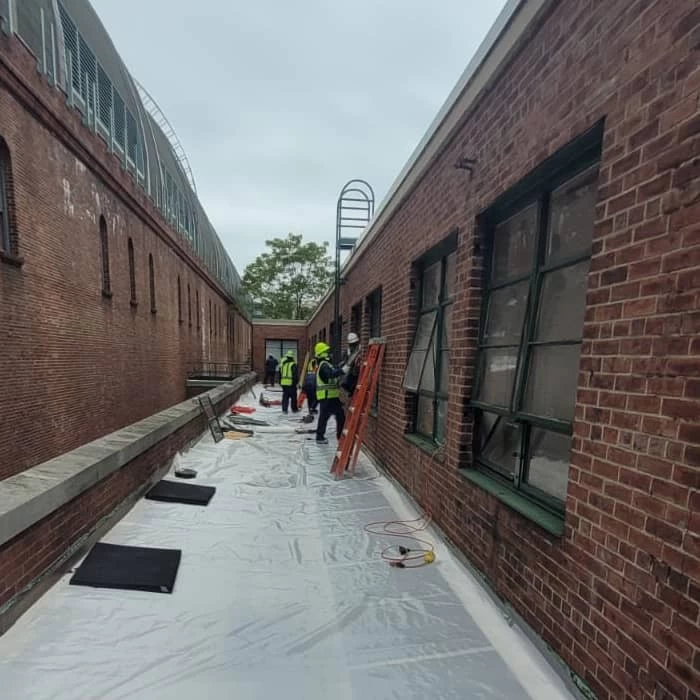
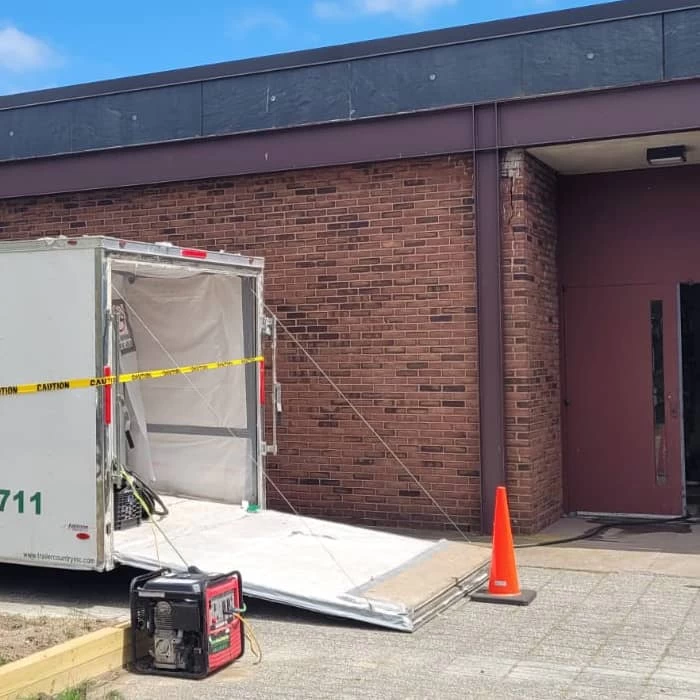
On-site, we assess the water category, identify the moisture boundaries using thermal imaging and meters, and contain the area if hazardous materials are present which in a pre-1980 Chinatown building, we assume until proven otherwise. Extraction, structural drying, and antimicrobial treatment follow in sequence. If water-damaged framing, flooring, or walls need to come out, we handle the selective demolition in-house. No referrals, no scheduling a second crew, no gap in accountability.
Before we close the job, we verify. Moisture readings at drying goals, post-remediation air quality testing where mold is a factor, and written documentation your insurance adjuster and your tenants can actually use. In a building where NYC Local Law compliance and HPD documentation matter, that final step is as important as the first one.
Basement Flooding Remediation Services Chinatown NY
Full-Scope Work Built for Pre-War Manhattan Buildings
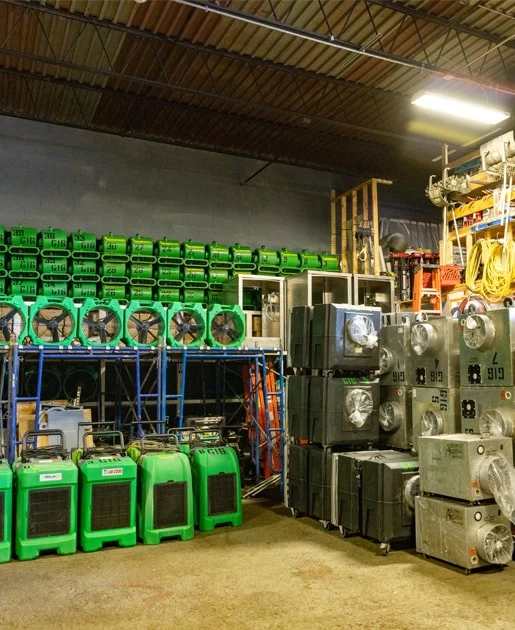
Most water damage companies are equipped for one thing: extracting water and setting drying equipment. That works fine in a post-war suburban house. It doesn’t work in a Chinatown tenement where the basement has asbestos pipe insulation in the mechanical room, lead paint on the original framing, and a foundation wall that’s been absorbing moisture for a hundred years. Our scope covers the entire picture water extraction, structural drying, mold remediation, asbestos abatement, lead abatement, and selective demolition all under one roof, one license, and one contract.
For mixed-use buildings along Canal Street or the blocks between the Bowery and Baxter Street, where a single flooding event can disrupt a ground-floor restaurant and the residential units above it simultaneously, we coordinate across the full scope of damage without requiring you to manage multiple contractors. We also handle direct insurance billing and adjuster communication, which matters when you’re dealing with commercial and residential policies on the same claim.
Every job includes moisture mapping on arrival, category assessment for the water source, containment protocols where hazardous materials are present, and written clearance documentation at completion. In Chinatown’s regulatory environment where NYC DOB permits, Local Law 1 lead paint requirements, and NYS DOL asbestos licensing all come into play having one licensed contractor who knows this framework isn’t a convenience. It’s the only way to do the job right.
Why does my Chinatown basement keep flooding even in moderate rain?
The short answer is that your building’s drainage system and the city’s sewer infrastructure are both working against you. Lower Manhattan runs on a combined sewer system one set of pipes handles both stormwater and sewage. When rainfall hits a certain volume, that system surcharges, meaning it reaches capacity and starts pushing water backward. In a basement with a floor drain connected to that system, the water doesn’t just come in from outside. It comes up from below, carrying whatever the sewer carries.
This is a documented, recurring condition in Chinatown and the surrounding Lower Manhattan area, not a freak event. The city’s own leadership has acknowledged that the sewer system isn’t built to manage the rainfall intensity that’s now becoming normal. Until major infrastructure upgrades happen which is a decades-long timeline the practical reality for property owners in Chinatown is that basement flooding during moderate to heavy rain is a structural risk, not a one-time problem. Proper drainage assessment, sump systems, and backflow prevention are worth discussing after any remediation job.
Is the water in my flooded basement safe to be around or clean up myself?
It depends entirely on the source, and in Chinatown that determination matters a lot. Water from a burst pipe is Category 1 clean water, lower immediate health risk. Water that’s been sitting for more than 24 hours or came in through a floor drain connected to the city’s combined sewer system is Category 3 it contains bacteria, pathogens, and in many cases raw sewage. That’s a hazmat situation, not a mop-and-bucket situation.
Beyond the water itself, there’s the building to consider. In a pre-war tenement, disturbing wet flooring, wall materials, or pipe insulation without knowing what’s in them can release asbestos fibers or lead dust both of which are serious health hazards. New York State requires a licensed contractor to handle those materials, and for good reason. Attempting a DIY cleanup in a Chinatown building without knowing what’s behind the walls or under the floor is a risk that goes well beyond the water damage itself. A professional assessment on arrival costs far less than the health and liability consequences of getting it wrong.
How quickly does mold start growing after a basement floods in NYC?
The EPA’s documented threshold is 24 to 48 hours on wet building materials. In practice, that window can be shorter in a Chinatown pre-war basement, where ambient humidity is already elevated, ventilation is limited, and the building materials original wood framing, brick, plaster are highly porous and absorb moisture deeply. Mold doesn’t need much. It needs organic material, moisture, and time. All three are present in abundance in this building stock.
What this means practically is that the timing of your first call matters as much as who you call. A job that’s addressed within the first 24 hours is almost always a water extraction and drying job. The same job at 72 hours often involves mold remediation as well, which takes longer and costs significantly more. After a week, materials that could have been dried in place need to be removed. The cost difference between acting immediately and waiting a few days is not marginal it’s often the difference between a two-day job and a two-week project.
Does homeowner's or building insurance cover basement flooding in New York City?
Standard homeowner’s and building property insurance policies in New York typically cover sudden and accidental water damage a burst pipe, for example but most exclude flooding caused by surface water, groundwater intrusion, or sewer backup unless you’ve added specific endorsements. Sewer backup coverage is a separate rider that many NYC property owners don’t realize they’re missing until they need it. Given how frequently Chinatown basements flood due to combined sewer surcharging, that endorsement is worth reviewing on your current policy.
For mixed-use buildings, the claims picture gets more complex. A single flooding event may involve the building owner’s property policy, a commercial tenant’s business interruption coverage, and individual renters’ contents insurance all with different carriers and different documentation requirements. We bill insurance carriers directly and manage the adjuster communication process, which removes a significant burden from property owners who are already dealing with the physical damage. We document the job from arrival to clearance in a format that’s designed to hold up with NYC-area carriers and satisfy their specific requirements.
Does a flooded basement in a pre-war building always mean asbestos or lead paint is involved?
Not always, but in Chinatown the probability is high enough that it should be assumed until a proper assessment says otherwise. The neighborhood’s median construction year is 1946, and nearly half of its buildings were constructed before the 1940s. Asbestos was commonly used in pipe insulation, floor tiles, ceiling materials, and joint compound in buildings of that era. Lead paint was standard on interior surfaces in pre-1978 construction. Both are present in the vast majority of Chinatown’s basement mechanical rooms and structural spaces.
The issue with a flooding event is that water-damaged materials often need to be disturbed or removed and that’s exactly when asbestos fibers and lead dust become airborne. New York State law requires a licensed contractor to perform that work. A company without NYS DOL asbestos and lead abatement licenses is legally required to stop work when they encounter those materials, which means your job stalls while you find a second contractor. We hold both licenses and handle abatement as part of the same scope of work, so there’s no pause, no handoff, and no gap in the chain of accountability.
How long does a flooded basement cleanup actually take in a Chinatown building?
The honest answer is that it depends on what the assessment finds when we arrive, and in Chinatown’s building stock, the scope can expand once we’re inside. A straightforward Category 1 water extraction and structural drying job in a clean basement typically takes two to four days to reach drying goals. Add mold remediation and that extends the timeline. Add asbestos abatement which requires proper containment, removal, and disposal under NYS DOL protocols and you’re looking at additional days depending on the extent of the affected materials.
For mixed-use buildings, the timeline is also shaped by the operational needs of the tenants. A ground-floor restaurant that needs to resume service, or residential tenants who need access to shared building systems, affects how the work is sequenced. We account for that from the start. What doesn’t change regardless of scope is the endpoint: the job isn’t complete until moisture readings confirm drying goals are met, post-remediation testing clears where applicable, and written documentation is in your hands. In a neighborhood where HPD compliance and insurance documentation carry real weight, that clearance paperwork is part of the deliverable not an afterthought.