When Lower Manhattan's Old Buildings Flood, You Need More Than a Wet Vac
Church Street’s pre-war buildings hide decades of pipe insulation, original tile, and materials that turn a flooded basement into a licensed contractor’s job fast. We handle flooded basement cleanup near Church Street, NY and everything the water finds behind the walls.
I needed a professional consultation explanation of procedure for safe removal of Asbestos in my apartment complex. Without having an account yet, I was very impressed with the caring, knowledgeable and generous advice offered by Jessica, and will look forward to doing business in the future. Thank you so much! I feel much more informed about a sometimes scary endeavor. Peace. Nancy Silva Mineola, NY.
Mia Munoz
Used this company to clean up some water flood in my house. They were fast and easy to work with.very professional, Would recommend to anyone!
Nini Valle
Great company, had a flood and they responded quickly and efficiently. Billed my insurance company directly. I highly recommend this company!
joe colapietro, jr
I had pipe freeze in my basement right before a snow storm and they made to within an hour to help start the clean up process. They we by our side throughout the entire process and even helped with the insurance company. They did such a great job with the cleanup, repair, remidiation, I contracted them to perform the repairs and finishes in the basement. They came with enough manpower and material to get the job done. Leo and Jessica were nothing but a pleasure to deal with!!
Cristian Arredondo c
I had some water damage in my home and Green Island was able to take care of my issue quickly and effectively. I am very pleased with the work they did. They responded quickly and were very professional.
Michael M
Outstanding service! From the office to the field crew everyone was friendly, helpful and responsive. I highly recommend Green Island Group.
A flooded basement near Church Street is rarely just a water problem. The buildings along this corridor and throughout the Financial District and Tribeca were built in an era when asbestos pipe insulation, lead paint, and original masonry construction were standard. When water gets into those sub-grade spaces whether from a storm surge off the Hudson, a sewer backup through the combined system, or a burst pipe in a century-old mechanical room it doesn’t just sit on the floor. It migrates into walls, insulation, and materials that require more than extraction equipment to address legally.
What you get when the job is done right is a space that’s structurally dry, verified clean, and documented. Moisture readings at drying goals, air quality clearance, written reports your building management company or co-op board will actually accept. Not just a crew that packs up and says it looks good.
The EPA puts it plainly: mold starts growing on wet building materials within 24 to 48 hours. In lower Manhattan’s dense, humid environment where sub-grade spaces in converted loft buildings often have limited ventilation and original organic materials in the walls that window can move fast. Getting a licensed crew in quickly isn’t just about convenience. It’s the difference between a water cleanup and a water-plus-mold remediation, which is a very different job and a very different invoice.
Licensed Basement Flood Remediation near Church Street
Every License the Job Requires, Under One Roof
We hold active New York State Department of Labor licenses for water damage restoration, mold remediation, asbestos abatement, lead abatement, and demolition simultaneously, and covering both New York City and Long Island. That combination matters here more than almost anywhere else in the metro area.
The buildings on and around Church Street from the cast-iron loft conversions in Tribeca to the pre-war towers in the Financial District are exactly the kind of structures where a water damage crew hits asbestos-containing pipe insulation mid-job and legally has to stop. With us, that doesn’t happen. The same contractor who starts the job is licensed to finish it, regardless of what the water disturbed.
We work directly with insurance carriers, bill them directly, and handle adjuster communication so you’re not stuck in the middle of a claim while your basement sits wet. We’ve been doing this across the NYC market long enough to know what lower Manhattan flooding actually looks like and what it takes to close it out completely.
Basement Flooding Remediation Process near Church Street
What Actually Happens From First Call to Final Clearance
The first step is assessment and in a pre-war building near Church Street, that assessment goes deeper than most. We use moisture meters and thermal imaging to map where the water actually traveled, not just where it’s visible. In Tribeca loft conversions and Financial District co-op buildings, water routinely moves into original plaster walls, under period flooring, and into mechanical spaces that haven’t been touched in decades. What you can’t see is often what causes the mold problem three weeks later.
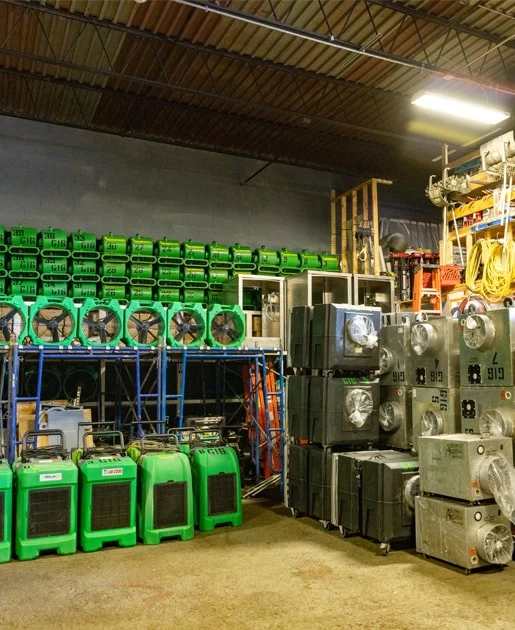
Once the scope is clear, extraction and structural drying begin. Industrial-grade equipment pulls standing water and residual moisture from materials simultaneously. If the water is Category 3 sewage-contaminated, which is common in lower Manhattan’s combined sewer system during heavy rain events like what Ida’s remnants produced in 2021 the protocol shifts to full containment and pathogen-level decontamination. That’s not an upgrade. It’s what the job actually requires, and it’s applied from the start.
If the assessment turns up asbestos-containing materials or lead paint disturbed by the water realistic in any pre-1980 building in this corridor we handle abatement under our active NYS DOL licenses. No pause, no referral, no second contractor. When the remediation is complete, post-clearance testing confirms the space is safe, and you receive written documentation. That’s what your building management company needs, what your insurer needs, and what gives you actual confidence the job is done.
Flooded Basement Cleaning Services near Church Street, NY
Built for the Buildings That Line This Corridor
The flooded basement cleanup service we provide near Church Street, NY is designed around the specific realities of lower Manhattan’s building stock not a suburban template applied to a city address. Sub-grade spaces in this area range from residential storage units in luxury Financial District condominiums to original freight elevator pits and loading dock areas in Tribeca’s converted industrial buildings. Each presents different flooding behavior, different material composition, and different regulatory requirements under the NYC Department of Environmental Protection’s asbestos control program and NYC Local Law 76.
Every job includes water extraction, structural drying to verified moisture goals, and post-remediation clearance documentation. If mold is present and in a space that’s been wet for more than 48 hours in this climate, it often is we handle mold remediation in-house under our active NYS DOL mold license. If the water has disturbed asbestos-containing materials or lead paint, we handle abatement by the same crew under our respective state licenses. There are no subcontractors, no handoffs, and no gaps in accountability.
We also work directly with insurance carriers throughout the process, which matters especially in co-op and condo buildings where multiple policies and building management approvals may be involved before work can begin or a claim can close. The documentation we produce moisture logs, air quality results, written clearance reports meets the standards that NYC building management companies and co-op boards actually require.
How quickly does mold grow after a basement floods near Church Street?
The EPA’s guidance is 24 to 48 hours that’s how long it takes for mold to begin colonizing wet building materials under normal conditions. In lower Manhattan’s environment, that timeline can compress. Sub-grade spaces in Tribeca loft buildings and Financial District pre-war towers typically have limited natural ventilation, original organic materials in wall cavities, and ambient humidity influenced by the surrounding waterways. Those conditions are more hospitable to mold growth than a well-ventilated suburban basement.
The practical implication is that waiting to see if things dry out on their own is rarely a safe bet in this building stock. After 72 hours without professional drying equipment, materials that could have been dried in place original wood framing, plaster, insulation may need to be physically removed instead. That’s a more invasive job, a longer timeline, and a higher cost. Calling a licensed remediation crew within the first 24 hours is the single most effective thing you can do to limit the scope of the problem.
Does my insurance cover flooded basement cleanup near Church Street, NY?
It depends on the cause of the flooding and the specific policy language, but many standard homeowner and condo policies do cover sudden and accidental water damage including burst pipes, appliance failures, and certain types of water intrusion. What’s typically excluded is flooding from external storm surge or rising groundwater, which requires separate flood insurance. Given Church Street’s proximity to the Hudson River and its documented history with Hurricane Sandy’s 2012 storm surge, flood insurance is worth reviewing if you don’t already carry it.
For co-op and condo owners in the Financial District or Tribeca, the coverage picture is more layered the building’s master policy may cover damage to common areas and structural elements, while your individual unit policy covers personal property and interior finishes. We work directly with insurance carriers and handle adjuster communication throughout the process, which is particularly useful in multi-unit buildings where multiple policies may be involved. We can help document the damage in the format insurers and co-op boards require, which makes the claims process significantly less complicated.
What is Category 3 water damage and why does it matter in this area?
Water damage is classified by the IICRC into three categories based on contamination level. Category 1 is clean water from a supply line or appliance. Category 2 is gray water with some contamination. Category 3 often called black water is sewage-contaminated water that contains pathogens, bacteria, and biological material. It requires a fundamentally different remediation protocol: full containment, personal protective equipment, and pathogen-level decontamination of all affected surfaces and materials.
In lower Manhattan, Category 3 flooding is common rather than exceptional. The area’s combined sewer system handles both stormwater and sewage in the same pipes. During heavy rainfall events like the record 3.46 inches per hour that fell during Hurricane Ida’s remnants in September 2021 that system gets overwhelmed, and sewage-contaminated water backs up through floor drains into basements throughout the neighborhood. If your basement flooded during a major storm event near Church Street, there’s a real possibility the water was Category 3, regardless of how it looked or smelled. A licensed remediation crew will assess water category on arrival and apply the appropriate protocol from the start.
Should I be worried about asbestos in my flooded Church Street building basement?
If your building was constructed before 1980 which describes a large portion of the building stock on and around Church Street then yes, it’s a reasonable concern and one worth taking seriously. Asbestos-containing materials were commonly used in pipe insulation, floor tiles, ceiling materials, and textured plaster coatings in buildings from that era. The cast-iron loft buildings that define Tribeca’s streetscape were built primarily between the 1860s and 1900s. Many Financial District towers date from the early 20th century. These buildings frequently contain asbestos in their sub-grade mechanical rooms and original utility spaces.
When a basement floods, water migrates into those materials and can disturb them creating a regulated hazardous material situation that most water damage companies are not licensed to handle. Under the NYC Department of Environmental Protection’s asbestos control program and NYC Local Law 76, any disturbance of asbestos-containing materials requires a licensed contractor and specific compliance procedures. A company without an active NYS DOL asbestos abatement license cannot legally continue work once those materials are identified. We hold that license, which means we never have to stop mid-job and refer you elsewhere.
How long does flooded basement cleanup typically take in a Manhattan building?
The honest answer is that it depends on what the water found. A straightforward extraction and structural drying job in a finished basement with no hazardous materials and Category 1 water can typically be completed in three to five days, including drying time verified by moisture readings. That timeline extends when the job involves mold remediation, asbestos or lead abatement, Category 3 decontamination, or significant material removal all of which are more common in the pre-war building stock along Church Street than in newer construction.
In a co-op or condo building in the Financial District or Tribeca, the timeline can also be affected by building management approval requirements, insurance adjuster scheduling, and access coordination in elevator buildings with shared mechanical systems. Our experience working in NYC multi-unit buildings means we understand these logistics and can work within building management protocols without adding unnecessary delays. Post-remediation clearance testing adds time at the end of the job, but it’s not optional it’s what produces the documentation your building management company and insurer will require before the space is reoccupied.
What documentation do I need after basement flood cleanup in a NYC co-op or condo?
In most New York City co-op and condo buildings, the building management company or co-op board will require written documentation confirming that the remediation was completed properly before a sub-grade space can be reoccupied or a unit can be resold. That documentation typically includes moisture readings confirming materials were dried to acceptable goals, air quality test results confirming mold spore counts are within normal range, and a written clearance report from the remediation contractor. If asbestos or lead abatement was performed, compliance documentation under NYC DEP and NYS DOL requirements will also be needed.
Insurance carriers have their own documentation requirements as well, particularly for claims involving mold remediation or hazardous material abatement. We produce all of this documentation as a standard part of our process it’s not an add-on or an upgrade. For building owners and managers in the Financial District and Tribeca, where co-op board governance and building management oversight are part of everyday property ownership, having a contractor who understands what the paperwork needs to look like and produces it without being asked makes a meaningful difference in how smoothly the claim and the reoccupancy process go.