When Pre-War Basements Flood, the Problem Goes Deeper
Water in your basement is one thing. Water in a building that’s been standing since before your grandparents were born is something else entirely. We handle flooded basement cleanup in Cooper, NY and everything that comes with it.
I needed a professional consultation explanation of procedure for safe removal of Asbestos in my apartment complex. Without having an account yet, I was very impressed with the caring, knowledgeable and generous advice offered by Jessica, and will look forward to doing business in the future. Thank you so much! I feel much more informed about a sometimes scary endeavor. Peace. Nancy Silva Mineola, NY.
Mia Munoz
Used this company to clean up some water flood in my house. They were fast and easy to work with.very professional, Would recommend to anyone!
Nini Valle
Great company, had a flood and they responded quickly and efficiently. Billed my insurance company directly. I highly recommend this company!
joe colapietro, jr
I had pipe freeze in my basement right before a snow storm and they made to within an hour to help start the clean up process. They we by our side throughout the entire process and even helped with the insurance company. They did such a great job with the cleanup, repair, remidiation, I contracted them to perform the repairs and finishes in the basement. They came with enough manpower and material to get the job done. Leo and Jessica were nothing but a pleasure to deal with!!
Cristian Arredondo c
I had some water damage in my home and Green Island was able to take care of my issue quickly and effectively. I am very pleased with the work they did. They responded quickly and were very professional.
Michael M
Outstanding service! From the office to the field crew everyone was friendly, helpful and responsive. I highly recommend Green Island Group.
The buildings around Cooper Square aren’t new. Many of them were built in an era when asbestos was standard insulation and lead paint was on every wall. When those basements flood whether from a burst pipe in January or a sewer backup during a heavy summer storm the water doesn’t just soak the floor. It moves into original plaster walls, wicks into century-old wood framing, and sits inside cavities that have never fully dried out in their entire existence. Surface cleanup doesn’t touch that.
What you actually need after a basement flood in Cooper is someone who can follow the water wherever it went, dry what’s hidden, and deal with whatever it disturbed along the way. That means licensed mold remediation, asbestos assessment if the materials warrant it, and documentation thorough enough to satisfy your insurance carrier whether that’s a renter’s policy, a co-op master policy, or both.
When the job is done right, the smell is gone. The moisture readings confirm the walls are dry. There’s written clearance you can hand to your building board or adjuster. And the mold that would have shown up six months later never gets the chance.
We hold active New York State Department of Labor licenses for water damage restoration, mold remediation, asbestos abatement, lead abatement, and demolition all under one roof. That’s not common. Most contractors are licensed for one or two of those things, which means the moment they find something they can’t legally handle, the job stops and you’re making more phone calls.
In a neighborhood like Cooper Square, where the building stock ranges from 1880s tenements to mid-century walk-ups, that full-scope licensing isn’t a bonus feature. It’s the only way to complete a basement flooding job correctly and legally. We’ve completed over 5,000 jobs across New York City. We’ve been in buildings exactly like the ones on Third Avenue, the Bowery, and the side streets running through the East Village. We know what’s inside those walls.
We also bill insurance carriers directly. If you’re dealing with overlapping policies which is common in Cooper Square’s mix of renters, co-op owners, and condo holders we manage that process so you’re not stuck in the middle.
No Guesswork Here's What Happens From the First Call
When you call, the first thing we do is get someone to your building fast. In a multi-unit structure, a flooded basement isn’t a private inconvenience it can affect the boiler room, the electrical panel, shared storage, and multiple tenants at once. Every hour matters, and the 24-to-48-hour mold growth window the EPA documents is real. The response is emergency-level because the situation calls for it.
Once on-site, our crew assesses the water category before anything else. In the Cooper Square area, basement flooding frequently comes from combined sewer overflow meaning the water isn’t clean. New York City’s sewer system is roughly 60 percent combined, so when heavy rainfall overwhelms capacity, what backs up into basements is classified as Category 3 black water. That requires a different level of sanitization than a burst supply line, and the protocol changes accordingly.
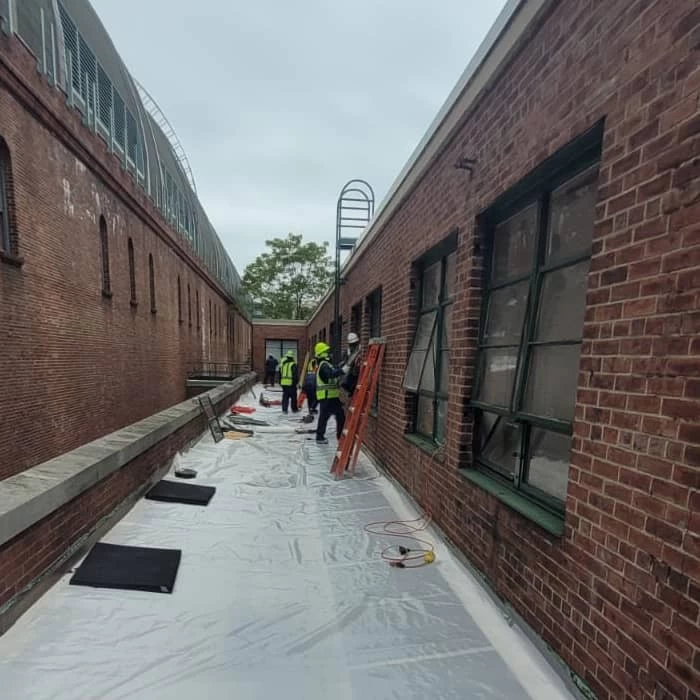
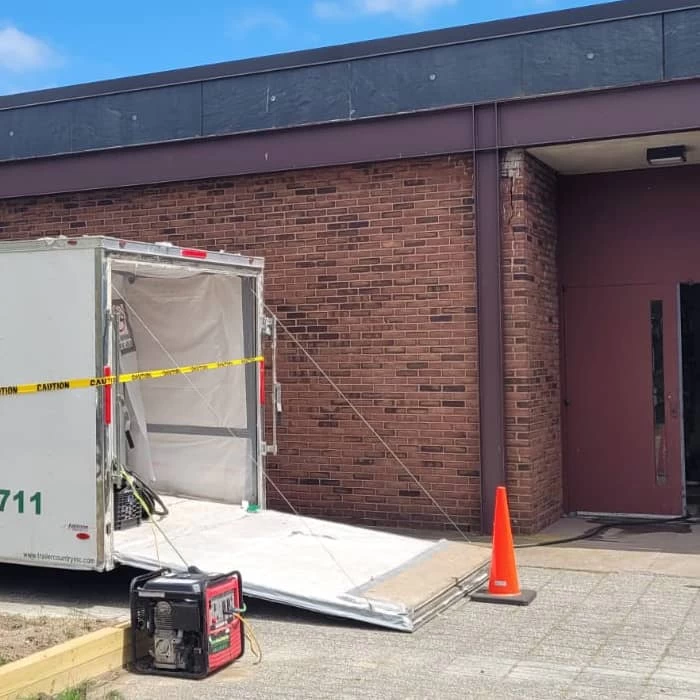
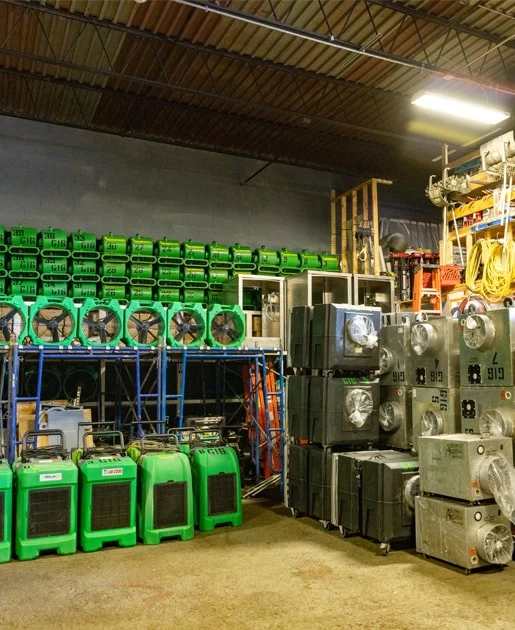
After extraction, the work shifts to what’s hidden. Moisture meters and thermal imaging map where water traveled inside wall assemblies and under flooring because in a pre-war building, what you can see is rarely the full picture. Drying equipment runs until readings confirm the structure has hit its targets. If mold is found, remediation happens as part of the same job. If materials test positive for asbestos or lead, those are handled under the appropriate NYS DOL licenses before the space is cleared. Post-remediation testing and written clearance documentation close the job out not a handshake and a departed van.
Flooded Basement Cleaning Services East Village NYC
Built for Old Buildings, Not Just Basic Water Calls
What we deliver in Cooper Square goes well beyond water extraction and a few dehumidifiers. The full scope includes emergency water removal, structural drying with moisture verification, mold assessment and licensed remediation, asbestos testing and abatement where required, lead-safe practices compliant with NYC Local Law 1 and Local Law 31, and complete insurance documentation from first contact through final clearance.
The lead paint and asbestos piece matters more here than it does almost anywhere else in the city. NYC Local Law 31 accelerated the timeline for lead paint testing in multiple dwellings, and Local Law 1 imposes specific obligations on building owners when flooding disturbs painted surfaces in pre-1960 buildings which describes a significant portion of the Cooper Square residential stock. A contractor who isn’t licensed to handle those materials isn’t just cutting corners. They’re creating a legal and health liability for you and your building.
If the flooding is severe enough to require structural teardown before rebuilding, our demolition license covers that too. The entire job from the first emergency call to the final air quality test runs through one company, one point of contact, and one invoice that goes directly to your insurance carrier. For building managers and co-op boards juggling tenant concerns and adjuster timelines simultaneously, that single-source accountability makes a real operational difference.
Does flooded basement cleanup in Cooper Square involve asbestos or lead concerns?
In most cases involving pre-war or mid-century buildings near Cooper Square, yes it’s a legitimate concern worth taking seriously. Buildings constructed before 1978 may contain lead paint, and buildings from the 1950s and 1960s commonly have asbestos in pipe insulation and floor tile adhesive. When a basement floods and those materials get disturbed even just from water contact and swelling they can become a regulated hazard that requires licensed handling.
NYC Local Law 1 and Local Law 31 both impose specific obligations on building owners when lead paint is disturbed in covered buildings, and New York State has its own licensing requirements for asbestos abatement. If your contractor isn’t licensed for both, they either don’t touch those materials (leaving the hazard in place) or they handle them without the proper credentials (creating liability for you). We hold active NYS DOL licenses for both asbestos abatement and lead abatement, so when these materials show up during a flooding job in Cooper and in this neighborhood, they often do the work doesn’t stop.
How quickly does mold start growing after a basement floods in an NYC building?
The EPA’s documented window is 24 to 48 hours under the right conditions and in a pre-war building in Cooper Square or anywhere near the East Village, conditions are almost always right. Original plaster walls, old-growth wood framing, and decades of organic material inside wall cavities give mold exactly what it needs to establish quickly once moisture is introduced. The problem is that most of that growth happens where you can’t see it.
This is why response time isn’t just a convenience issue it’s the difference between a water extraction job and a full mold remediation job that costs significantly more and takes significantly longer. If you’re calling after the water has been sitting for more than a day, mold assessment needs to happen alongside the drying process, not after it. We operate 24/7 for exactly this reason. Getting there fast isn’t a marketing angle it’s what keeps the scope of work from expanding while you wait.
My basement flooded during a rainstorm is that covered by regular homeowner or renter's insurance?
It depends on the source of the water, and that distinction matters more than most people realize. If the flooding came from a burst pipe or an internal plumbing failure, standard homeowner or renter’s insurance typically covers it. If it came from surface water intrusion, groundwater, or sewer backup which is a common scenario in the Cooper area given New York City’s aging combined sewer infrastructure standard policies often exclude it unless you have a specific sewer backup rider or separate flood insurance.
In Manhattan’s multi-unit residential buildings, the picture gets more complicated. A co-op or condo master policy may cover certain structural elements while your individual unit policy covers contents and interior finishes. Knowing which policy covers which portion of the damage is genuinely confusing, and insurance companies don’t always make it easy. We work directly with insurance carriers and handle the documentation and adjuster communication process on your behalf. We’ve navigated the multi-policy environment that’s standard in Cooper Square buildings before, and we can help you understand what you’re actually covered for before the claim gets complicated.
What is Category 3 water damage, and why does it matter for my Cooper Square basement?
Water damage is classified on a scale from Category 1 (clean water from a supply line) to Category 3 (grossly contaminated water containing pathogens, bacteria, and biological material). Category 3 sometimes called black water requires a completely different level of response. You can’t just extract it and run a dehumidifier. The affected surfaces need full antimicrobial treatment, and anything porous that absorbed Category 3 water may need to be removed entirely.
In the Cooper Square area, Category 3 events are more common than most residents realize. New York City’s sewer system is approximately 60 percent combined, meaning sanitary sewage and stormwater share the same pipes. When a significant rainfall event overwhelms system capacity which Hurricane Ida demonstrated in September 2021 when it delivered rainfall at more than twice the city’s sewer capacity that combined flow backs up into basements throughout lower Manhattan. What enters your basement in that scenario isn’t stormwater. It’s diluted sewage, and it needs to be treated accordingly. We assess water category on arrival and adjust the entire remediation protocol based on what we’re actually dealing with.
How do I know the basement is actually dry after the cleanup crew leaves?
You shouldn’t have to take anyone’s word for it. Proper structural drying isn’t confirmed by how the space looks or smells it’s confirmed by calibrated moisture meter readings taken inside wall assemblies, under flooring, and at the structural framing level. In a pre-war building with original plaster walls and old-growth wood, moisture can persist inside wall cavities long after the surface feels dry to the touch. Thermal imaging helps map where water traveled and where it’s still sitting, even when nothing visible indicates a problem.
We use both tools as a standard part of the drying process, not as an add-on. Drying equipment stays in place until readings confirm the structure has reached its drying targets not until the crew decides it looks good enough. When the job is complete, you receive written clearance documentation that includes the final moisture data. For co-op shareholders who need to report to a building board, or for building managers who need to document compliance with NYC’s mold remediation requirements, that paperwork isn’t optional. It’s what closes the loop.
Can one company really handle water damage, mold, and asbestos in a single job near Cooper Square?
Most can’t and that’s the honest answer. The typical water damage contractor is licensed for extraction and drying. The moment they find mold, they refer out. The moment they find asbestos, they stop entirely. That handoff process adds weeks to the timeline, creates gaps in accountability, and leaves you coordinating between multiple contractors while your building stays out of commission.
We hold active New York State Department of Labor licenses for water damage restoration, mold remediation, asbestos abatement, lead abatement, and demolition simultaneously. In the Cooper Square area where buildings from the 1880s through the 1960s are the norm and where virtually every basement flooding job has the potential to involve more than just water that full-scope licensing is what makes it possible to take a job from emergency extraction all the way through post-remediation clearance without stopping, referring out, or leaving anything unresolved. One call, one crew, one contractor responsible for the entire outcome.