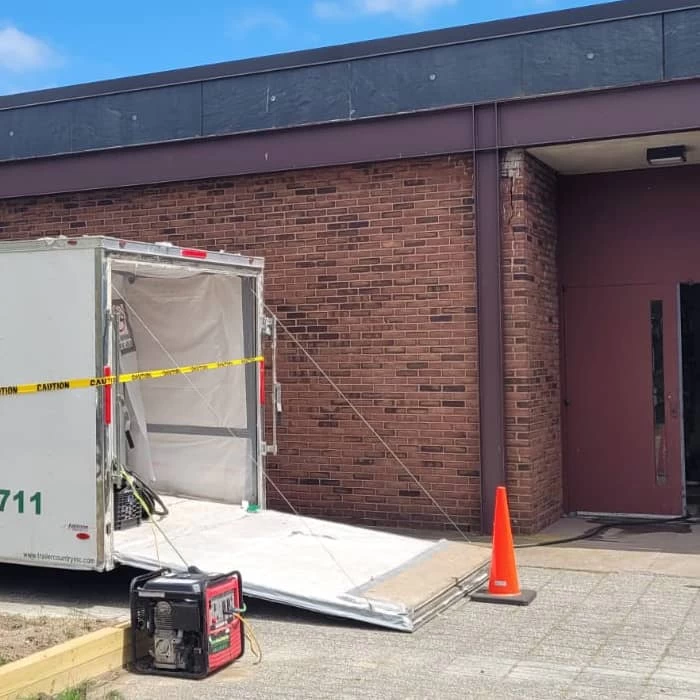
When your basement is taking on water, every hour you wait makes the damage worse and the bill bigger. Green Island Group responds fast day or night with the licenses, equipment, and experience to handle flooded basement cleanup in Coram, NY from start to finish.
I needed a professional consultation explanation of procedure for safe removal of Asbestos in my apartment complex. Without having an account yet, I was very impressed with the caring, knowledgeable and generous advice offered by Jessica, and will look forward to doing business in the future. Thank you so much! I feel much more informed about a sometimes scary endeavor. Peace. Nancy Silva Mineola, NY.
Mia Munoz
Used this company to clean up some water flood in my house. They were fast and easy to work with.very professional, Would recommend to anyone!
Nini Valle
Great company, had a flood and they responded quickly and efficiently. Billed my insurance company directly. I highly recommend this company!
joe colapietro, jr
I had pipe freeze in my basement right before a snow storm and they made to within an hour to help start the clean up process. They we by our side throughout the entire process and even helped with the insurance company. They did such a great job with the cleanup, repair, remidiation, I contracted them to perform the repairs and finishes in the basement. They came with enough manpower and material to get the job done. Leo and Jessica were nothing but a pleasure to deal with!!
Cristian Arredondo c
I had some water damage in my home and Green Island was able to take care of my issue quickly and effectively. I am very pleased with the work they did. They responded quickly and were very professional.
Michael M
Outstanding service! From the office to the field crew everyone was friendly, helpful and responsive. I highly recommend Green Island Group.
Dry Basement. Documented Claim. No Mold Left Behind.
Most Coram homes were built in the 1970s. That era of construction means original drainage systems, aging sump pumps, and building materials that were standard at the time but create real complications the moment floodwater gets involved. When water hits a 1974 ranch home on the north side of Middle Country Road, you’re not just dealing with a wet floor you may be looking at disturbed asbestos floor tiles, saturated insulation, and a mold clock that started ticking the minute the water came in.
What you get on the other side of our process is a basement that’s been properly dried, tested, and cleared not just mopped up and left to your imagination. That means industrial drying equipment running until moisture readings hit safe levels, not until it looks dry to the eye. It means a written scope of work your insurance adjuster can actually use, handled by a team that talks to carriers every single day.
Coram’s ridge-and-valley terrain means lower-lying sections of the hamlet drain differently than properties sitting higher on the grade. If your home sits in one of those lower pockets or if your sump pump gave out during a storm the water that came in didn’t just sit on the surface. It moved into walls, under flooring, and into framing. Getting that out takes more than a shop vac. It takes the right process, done completely.
Green Island Group is a Long Island-based environmental restoration company with 12-plus years of experience and over 5,000 completed projects across New York State. We’re not a franchise. CEO Jessica Dussan and VP Leo Torres run this company directly, and our names show up in real customer reviews not as figureheads, but as people who were actually involved in solving problems.
We hold a Suffolk County General Contractor license, NYS DOL Mold and Asbestos certifications, USEPA Lead and RRP credentials, and we’re an approved emergency response contractor for the NYS Office of General Services. That last one matters: New York State independently vetted us before putting us on that list. We didn’t just apply for a badge.
For Coram homeowners specifically, that licensing stack is the difference between a contractor who can legally handle what’s behind your walls and one who can’t. Over 60% of homes in Coram were built before 1990 which means asbestos, lead paint, and aging infrastructure are realistic findings on any given job. We handle all of it in-house, without subcontracting the parts that make contractors nervous.
What Actually Happens From Your First Call to a Finished Basement in Coram
When you call, you reach someone not a voicemail, not an answering service. We ask a few quick questions to understand what you’re dealing with: where the water came from, how long it’s been there, and what’s in the space. That conversation helps us arrive with the right equipment the first time, not a standard truck and a guess.
On-site, our first step is stopping any active water source and assessing the full scope of damage not just what’s visible. Moisture meters go into walls, under flooring, and into framing cavities, because water travels. In Coram’s older housing stock, that often means finding saturation in places that look fine on the surface. If there’s any indication of asbestos-containing materials floor tiles, pipe insulation, ceiling panels common in pre-1980 construction we identify and address that before any demolition begins. That’s not optional under New York State law, and it’s not something most water damage companies are equipped to handle.
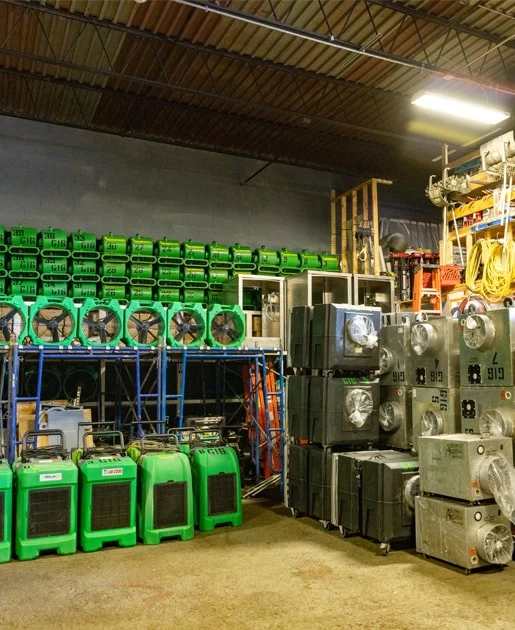
From there, industrial drying equipment goes in and stays until readings confirm the structure is genuinely dry. We document everything throughout photos, moisture logs, a written scope because your insurance claim depends on that paper trail. We communicate directly with your adjuster so you’re not stuck translating between a contractor and a carrier. When the drying is done, any damaged materials get removed and replaced by our team. One company, one call, one point of contact from the first pump to the last coat of paint.
Built for Coram's Homes Not a Generic Cleanup Checklist
Flooded basement cleanup in Coram isn’t a one-size job. A finished basement in the W-section that took on water from a failed sump pump is a different job than a raw utility basement in an older home near Route 112 that backed up with sewage during the August 2024 storm. Both need immediate attention. Both need the right response. What they don’t need is a company that treats every job the same way because it’s easier for them.
Every job we take in Coram includes water extraction and removal, structural drying with commercial-grade dehumidifiers and air movers, moisture mapping throughout the affected area, mold inspection and remediation where needed, and full documentation for your insurance carrier. If the flooding involved sewage a realistic scenario in parts of central Suffolk County where private septic systems are common we handle the Category 3 contamination protocols that situation legally requires. If your home was built before 1978 and we’re removing drywall or flooring, our USEPA Lead and RRP certifications mean that work is done in compliance with federal renovation rules, not around them.
The Brookhaven Town Building Department requires permits for any structural work that follows a cleanup new framing, drywall, electrical. Our Suffolk County General Contractor license covers that process. You don’t have to find a second contractor to finish what we started.
Does homeowners insurance cover flooded basement cleanup in Coram, NY?
It depends on what caused the flooding, and the distinction matters more than most people realize. Standard homeowners insurance policies in New York typically cover sudden and accidental water damage a burst pipe, a washing machine overflow, an appliance failure. What they generally don’t cover is flooding that originates from outside the home, like groundwater rising through the foundation or storm surge, which falls under a separate flood insurance policy through FEMA’s National Flood Insurance Program.
For Coram homeowners, the August 2024 storm that triggered a federal disaster declaration for Suffolk County created a lot of confusion about this exact question. Many residents who had water come in through windows or foundation cracks during that event found themselves in a coverage gray area. The honest answer is that you need someone to look at the damage, document the source accurately, and communicate that clearly to your adjuster because how the claim is written affects whether it gets paid. We handle that documentation and adjuster communication on every job, which is often the difference between a covered claim and a denied one.
How fast does mold actually start growing after a basement floods?
Mold can begin developing within 24 to 48 hours of a flooding event and in a Suffolk County summer, with the humidity levels Long Island sees from June through September, that window can be even shorter. By 72 hours, active mold growth in a wet basement is not a possibility, it’s a probability. The part most people don’t account for is that mold doesn’t just grow where the water was standing. It follows moisture into wall cavities, behind baseboards, and under subfloor material places you can’t see and won’t smell until it’s been growing for a while.
This is why the drying process matters as much as the water removal. Getting the visible water out fast is important. But if the framing and insulation behind your drywall are still holding moisture at 48 hours, you’ve bought yourself a mold problem that costs significantly more to fix than the original cleanup would have. We use calibrated moisture meters throughout the structure not visual checks to confirm the space is actually dry before we close anything up.
Are there asbestos risks in Coram homes during a basement flood cleanup?
Yes, and it’s more common than people expect. Roughly 33% of Coram’s homes were built in the 1970s, and another significant portion was built in the 1960s. Homes from that era routinely used asbestos in floor tiles, pipe insulation, joint compound, and ceiling materials all of which are typically found in basements. When floodwater disturbs those materials, or when a cleanup crew removes them without proper testing and handling, you’re looking at a potential hazmat situation that carries real legal and health consequences.
New York State law requires that any contractor disturbing asbestos-containing materials hold a NYS DOL Asbestos license. We do. Most general water damage companies operating in the Coram area do not, which means they either skip the testing step or subcontract it to someone else adding time, cost, and a gap in accountability to your job. We handle asbestos identification and abatement in-house, which means the cleanup doesn’t stop and restart every time a new material type is discovered.
What caused so many Coram basements to flood during the August 2024 storm?
The August 18th and 19th, 2024 storm was classified as a thousand-year rainfall event by meteorologists, and the National Weather Service issued flash flood warnings that named Coram specifically. The storm dropped an extraordinary volume of water in a very short window far more than the drainage infrastructure in central Suffolk County was designed to handle. Suffolk County declared a State of Emergency, and the damage across the county was later assessed at over 41 million dollars, ultimately leading to a federal disaster declaration.
For Coram specifically, the combination of factors made it particularly bad. The hamlet’s terrain includes lower-lying residential sections where water naturally collects. Many homes have sump pump systems that were installed decades ago and simply weren’t built to handle that volume of incoming water. And because so much of Coram’s housing stock is older construction, the foundation waterproofing on many homes is at or past its effective lifespan. The result was basements that flooded faster than pumps could keep up, with water that had nowhere to go. If your home was affected and you haven’t had a full moisture assessment done since then, it’s worth having one mold from that event may still be developing in spaces that appeared to dry out on their own.
Can I clean up a flooded basement myself instead of calling a professional?
For a small, contained water event say, a few gallons from a slow leak that you caught early you can manage cleanup yourself with a wet vac, fans, and a dehumidifier, assuming the water source is clean and the materials involved aren’t hazardous. But most basement flooding situations that prompt a phone call don’t fit that description. If the water has been sitting for more than a few hours, if it came from a sewage-related source, or if your home was built before 1980, DIY cleanup carries real risks that aren’t obvious until later.
In Coram, the older housing stock is the biggest variable. Removing wet drywall or pulling up saturated floor tiles in a pre-1978 home without testing for lead or asbestos first is a federal violation under EPA’s Renovation, Repair and Painting rule and it exposes your family to materials that are genuinely dangerous when disturbed. Beyond the hazmat concern, consumer-grade drying equipment doesn’t move enough air volume to dry wall cavities and subfloor systems the way commercial equipment does. You may think the space is dry when it isn’t, and mold will tell you otherwise in about three weeks.
How long does flooded basement cleanup and drying take in a typical Coram home?
For most jobs, the active drying phase runs three to five days but that’s a range, not a guarantee, because the actual timeline depends on how long the water was present, what materials got wet, and how the structure responds to drying equipment. A finished basement with drywall, insulation, and carpet holds moisture very differently than an unfinished utility space with a concrete floor. In Coram’s housing stock, where finished basements used for living space are common in the split-level and ranch homes built throughout the 1970s and 80s, jobs on the longer end of that range are typical.
Suffolk County’s humidity levels during summer months also affect drying time. Running industrial dehumidifiers in August in a basement that’s already saturated takes longer than the same job in October, simply because the air outside is already carrying more moisture. We monitor readings daily and adjust equipment placement as the structure dries it’s not a set-it-and-leave-it process. The job isn’t done when the floor feels dry. It’s done when the moisture meter confirms the framing, subfloor, and wall cavities are all within safe range. That’s the standard we hold to, because it’s the only one that actually prevents mold.