When Corona's Sewers Back Up, Your Basement Pays the Price
Corona’s aging combined sewer system wasn’t built for the storms hitting Queens today and your basement is where that problem shows up first. We respond in under an hour, handle sewage contamination, and restore your space from start to finish.
I needed a professional consultation explanation of procedure for safe removal of Asbestos in my apartment complex. Without having an account yet, I was very impressed with the caring, knowledgeable and generous advice offered by Jessica, and will look forward to doing business in the future. Thank you so much! I feel much more informed about a sometimes scary endeavor. Peace. Nancy Silva Mineola, NY.
Mia Munoz
Used this company to clean up some water flood in my house. They were fast and easy to work with.very professional, Would recommend to anyone!
Nini Valle
Great company, had a flood and they responded quickly and efficiently. Billed my insurance company directly. I highly recommend this company!
joe colapietro, jr
I had pipe freeze in my basement right before a snow storm and they made to within an hour to help start the clean up process. They we by our side throughout the entire process and even helped with the insurance company. They did such a great job with the cleanup, repair, remidiation, I contracted them to perform the repairs and finishes in the basement. They came with enough manpower and material to get the job done. Leo and Jessica were nothing but a pleasure to deal with!!
Cristian Arredondo c
I had some water damage in my home and Green Island was able to take care of my issue quickly and effectively. I am very pleased with the work they did. They responded quickly and were very professional.
Michael M
Outstanding service! From the office to the field crew everyone was friendly, helpful and responsive. I highly recommend Green Island Group.
A Dry Basement Isn't Enough Here's What Actually Needs to Happen
Getting the water out is step one. What most people don’t think about until it’s too late is what happens inside the walls, under the subfloor, and along the pipe insulation in the days that follow. Mold starts growing within 24 to 48 hours. In Corona’s older rowhouses and prewar brick buildings most of which were built before 1970 that moisture doesn’t just sit on the surface. It moves into concrete block walls, saturates insulation, and hides in places a standard cleanup crew won’t check.
Corona’s flooding problem is also different from what you’d see in a newer neighborhood. When the combined sewer system gets overwhelmed during a heavy storm the kind Queens has seen multiple times in recent years what backs up through your basement floor drain isn’t just water. It’s sewage. That’s black water contamination, and it requires a completely different level of response than a burst pipe does. Fans and bleach won’t cut it. You need licensed professionals with the right protocols, the right equipment, and the right certifications to handle it safely and legally.
When the job is done right, your basement is dry, sanitized, structurally sound, and cleared for occupancy. No lingering odor. No hidden moisture pockets. No mold showing up three weeks later because someone skipped the thermal scan.
Every Certification That Matters All Under One Roof
We’ve been handling environmental remediation and restoration across Queens and New York City for over 30 years. That means we’ve worked in buildings exactly like the ones lining 108th Street and Junction Boulevard in Corona prewar brick, cast iron pipes, boiler rooms with asbestos insulation, and basement walls painted before lead regulations existed. This isn’t a national franchise learning the area. We’re a team that already knows what’s inside your building.
What separates us from most companies showing up in a Queens search result is our certification stack. NYS DOL Mold License. NYS DOL Asbestos. USEPA Lead and RRP. IICRC Water Damage. NYC General Contractor. That combination means we can legally handle every hazardous material a flooded basement in a pre-1978 Corona building might expose and we can pull the permits to rebuild it when the remediation is done.
One company. One call. No subcontracting the parts that actually matter.
From the Emergency Call to a Finished Space Here's the Full Picture
When you call, someone picks up any hour, any day. Our documented response time in Queens is under one hour, and that clock starts the moment you call, not when a dispatcher finishes routing paperwork. In a neighborhood like Corona where a sewer backup can go from a slow drain to a flooded floor in under an hour, that speed is the difference between a manageable cleanup and a gut renovation.
Once our crew arrives, the first priority is assessing what you’re actually dealing with. Is it clean water from a burst pipe, or sewage backup from an overwhelmed sewer line? That distinction determines everything the safety protocols, the equipment used, the disposal requirements, and what your insurance claim will need to document. In Corona’s prewar and mid-century buildings, we also check for disturbed asbestos on pipe insulation and lead paint on basement surfaces, because those materials require licensed abatement before any restoration work begins. Skipping that step isn’t just dangerous it’s a code violation under NYC and EPA regulations.
After extraction comes structural drying, which is where thermal imaging earns its place. Hidden moisture inside shared walls common in Corona’s attached rowhouses and multi-family buildings gets identified and addressed before it becomes a mold problem that spreads to neighboring units. From there, we handle mold prevention, content restoration, and full reconstruction under the same contract. Your insurance company gets billed directly. You get one point of contact until the job is done.
What's Actually Included When the Whole Job Gets Done Right
Our flooded basement cleanup isn’t a mitigation-only service. We don’t extract the water, drop off equipment, and hand you a bill while you figure out the rest. The full scope covers emergency water extraction, structural drying with thermal imaging, black water and sewage decontamination, mold prevention treatment, hazardous materials assessment and abatement where required, content restoration, and complete structural reconstruction all permitted through the NYC Department of Buildings under our General Contractor license.
That last part matters more in Corona than most people realize. Any structural work done on a basement in New York City requires a DOB permit. Most water damage companies operating in Queens cannot pull those permits because they don’t hold a NYC General Contractor license. That means the work either doesn’t get permitted which creates problems when you sell the property or file an insurance claim or you end up hiring a second contractor to finish what the first one couldn’t. We eliminate that gap entirely.
For landlords managing multi-family buildings near LeFrak City or along the rowhouse blocks of North Corona, the ability to document damage properly for HPD and insurance purposes is equally important. We handle that documentation as part of the job, and we bill your insurance company directly including navigating coverage disputes over whether the damage qualifies as a sewer backup claim versus a flood claim, which is one of the most common points of confusion for Queens property owners after a storm event.
Does homeowners insurance cover flooded basement cleanup in Corona, NY?
It depends on what caused the flooding and this is where a lot of Corona homeowners get caught off guard. Standard homeowners insurance typically covers sudden, internal water damage like a burst pipe or a failed water heater. What it usually does not cover is flooding caused by external stormwater or sewer backup, which is the most common cause of basement flooding in Corona given the neighborhood’s combined sewer system.
If your basement flooded because the sewer backed up during a heavy storm which is exactly what happens when Queens’ aging infrastructure gets overwhelmed you’d need a separate sewer backup rider or flood insurance policy for that to be covered. Many residents in Corona don’t have those add-ons, and many didn’t know they needed them until after Hurricane Ida in 2021. We work directly with insurance companies and their adjusters, help document the damage in the format carriers require, and can help you understand what your policy actually covers before you’re stuck with a bill you weren’t expecting.
How quickly does mold grow after a basement flood in Queens?
Mold can begin colonizing wet building materials within 24 to 48 hours of a flooding event. In Corona’s prewar and mid-century buildings where basement walls are often concrete block, insulation is minimal, and ventilation is poor that timeline can move even faster. Once mold takes hold inside a wall cavity or under a subfloor, surface cleaning won’t reach it. You need professional remediation.
The 72-hour window is the industry benchmark, and it’s real. Waiting beyond that point doesn’t just mean more mold it typically adds $2,000 to $8,000 in remediation costs to an already expensive job. In a densely built neighborhood like Corona, where rowhouses share walls and apartment buildings share mechanical systems, mold that starts in one flooded unit can spread to adjacent spaces quickly. That’s why response time matters, and why a thermal imaging scan after water extraction isn’t optional it’s how you confirm the job is actually finished.
What does black water contamination mean and why is it dangerous?
Black water is the most hazardous category of water damage, and it’s the type most commonly associated with basement flooding in Corona. When Queens’ combined sewer system which carries both stormwater and raw sewage through the same pipes gets overwhelmed during a heavy rain event, the overflow pushes back through basement floor drains. That water contains bacteria, pathogens, and raw sewage. It is not safe to handle without proper protective equipment, and it cannot be cleaned with household products.
From a regulatory standpoint, black water remediation in New York City requires licensed professionals following specific disposal protocols. The contaminated water cannot be discharged to the street or storm drains without compliance with NYC DEP regulations. Any porous material drywall, insulation, carpet, wood framing that has been saturated with black water typically needs to be removed and properly disposed of, not dried in place. We’re equipped and certified for black water remediation, which is a meaningful distinction in a neighborhood where sewer backup is one of the leading causes of basement flooding.
My Corona basement has old pipes and insulation does that affect the cleanup?
Yes, and it’s one of the most important questions to ask before any contractor starts work. The majority of Corona’s housing stock was built between the 1920s and 1960s. Buildings of that era routinely contain asbestos pipe insulation on boiler lines and drain pipes, and lead-based paint on basement walls and structural elements. When a flood disturbs those materials whether through water saturation, physical damage, or the cleanup process itself they become active hazards that require licensed abatement before any restoration work can proceed.
Under New York State law, mold remediation requires an active NYS DOL Mold License. Under EPA regulations, any renovation work in a pre-1978 building that disturbs painted surfaces must comply with the Lead RRP Rule. We hold both of those credentials, along with NYS DOL Asbestos certification. Most water damage companies operating in Queens do not. If a contractor shows up to clean your flooded basement in a prewar Corona building and doesn’t ask about asbestos or lead, that’s a serious red flag both for your safety and for your legal exposure as a property owner.
How long does flooded basement cleanup and drying take in a Queens apartment building?
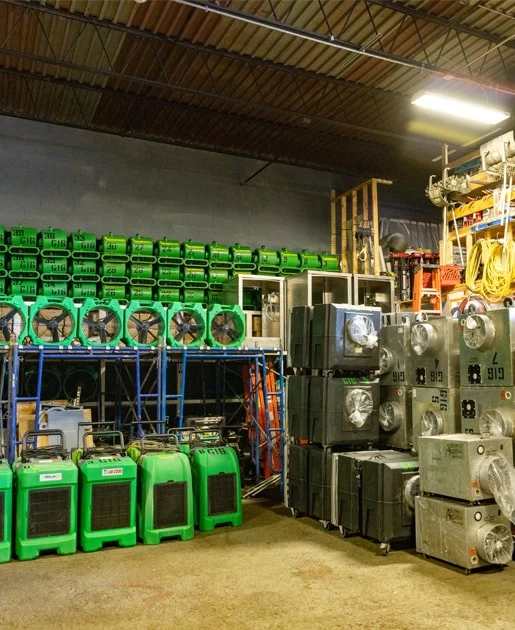
The timeline depends on the severity of the flooding, the type of water involved, and the construction of the building. For a straightforward clean water event in a finished basement, professional drying typically takes three to five days using industrial dehumidifiers and air movers. For sewage backup or black water contamination which is common in Corona after heavy storms the process takes longer because decontamination, material removal, and proper disposal all need to happen before drying equipment even goes in.
In multi-family buildings, which make up the majority of Corona’s housing stock, the timeline can also be affected by the need to assess shared wall assemblies, common mechanical areas, and adjacent units for moisture migration. We use thermal imaging to map hidden moisture before and after drying, which gives you a verifiable endpoint rather than a guess. The full process from emergency extraction through reconstruction varies by job, but most residential basement restorations in the Queens area are completed within one to three weeks when managed by a single contractor handling the full scope.
Is Green Island Group able to handle flooded basement jobs in Corona's older co-op buildings?
Yes and co-op and multi-family buildings in Corona present a specific set of challenges that not every restoration company is equipped to handle. Buildings like the Dorie Miller Residential Cooperative and Sherwood Village Co-Op have shared mechanical systems, common basement areas, and layered ownership structures where the line between individual unit responsibility and building responsibility isn’t always clear. Documenting the damage correctly from the start matters a lot in those situations, both for insurance purposes and for any HPD or building management requirements.
We hold a NYC General Contractor license, which means we can pull the permits required for structural work in New York City buildings something most mitigation-only companies cannot do. We also bill insurance companies directly and handle adjuster communications on behalf of clients, which is especially useful in a co-op setting where the board, the unit owner, and the insurance carrier may all be involved in the same claim. If you’re a unit owner or a building manager dealing with a flooded basement in a Corona co-op or multi-family property, the ability to work with one company through the entire process from the emergency call to the final inspection makes a real difference in how quickly and cleanly the situation gets resolved.