Your Deer Park Basement Doesn't Wait Neither Do We
When water hits your basement in Deer Park, the clock starts immediately. We respond within the hour, handle your insurance, and get it done right the first time.
I needed a professional consultation explanation of procedure for safe removal of Asbestos in my apartment complex. Without having an account yet, I was very impressed with the caring, knowledgeable and generous advice offered by Jessica, and will look forward to doing business in the future. Thank you so much! I feel much more informed about a sometimes scary endeavor. Peace. Nancy Silva Mineola, NY.
Mia Munoz
Used this company to clean up some water flood in my house. They were fast and easy to work with.very professional, Would recommend to anyone!
Nini Valle
Great company, had a flood and they responded quickly and efficiently. Billed my insurance company directly. I highly recommend this company!
joe colapietro, jr
I had pipe freeze in my basement right before a snow storm and they made to within an hour to help start the clean up process. They we by our side throughout the entire process and even helped with the insurance company. They did such a great job with the cleanup, repair, remidiation, I contracted them to perform the repairs and finishes in the basement. They came with enough manpower and material to get the job done. Leo and Jessica were nothing but a pleasure to deal with!!
Cristian Arredondo c
I had some water damage in my home and Green Island was able to take care of my issue quickly and effectively. I am very pleased with the work they did. They responded quickly and were very professional.
Michael M
Outstanding service! From the office to the field crew everyone was friendly, helpful and responsive. I highly recommend Green Island Group.
Most Deer Park homes were built in the 1950s and 1960s and that matters more than people realize when a basement floods. Aging foundations, original waterproofing that’s long past its prime, and plumbing systems that have been quietly corroding for decades all add up to a situation that’s rarely just “a little water.” When those basements take on water, the damage goes deeper than the floor.
The bigger issue is time. Mold starts growing within 24 to 48 hours of a flooding event and Deer Park’s humid Long Island climate doesn’t slow that down. If you discovered the flooding after getting home from a full day of work, that window is already shrinking. Getting the water out fast and getting industrial drying equipment running immediately is the difference between a cleanup job and a mold remediation job that costs two to three times as much.
What you’re left with after we finish isn’t just a dry basement. It’s documented moisture readings, a clear record for your insurance claim, and the confidence that nothing is hiding behind your walls waiting to become a problem in six weeks. That’s what a real cleanup looks like not just extraction, but proof it’s actually done.
5,000 Jobs Across Long Island. Real Licenses. Real People Answering.
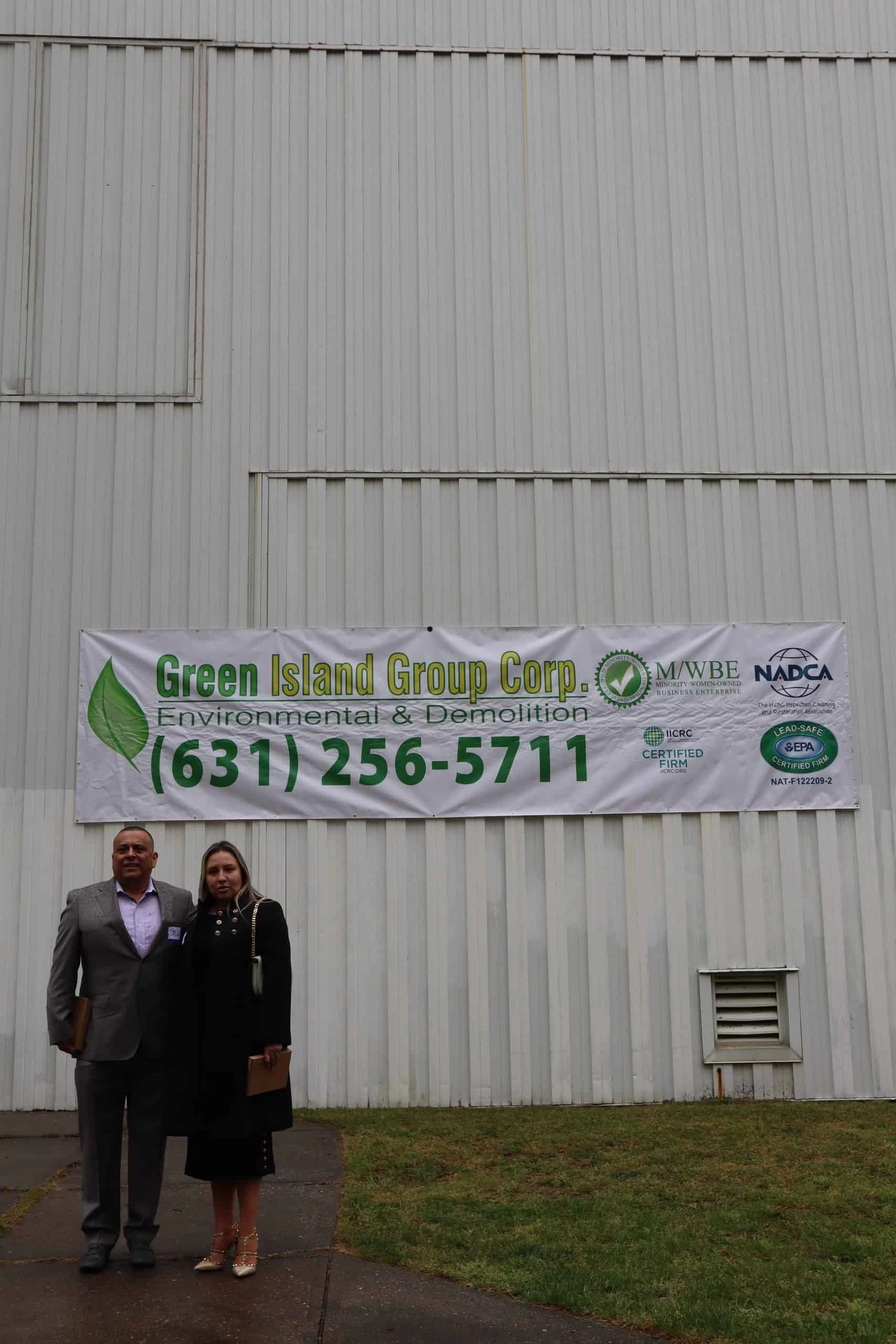
We’ve been doing restoration work across Long Island and New York City for over 12 years more than 5,000 completed projects, including communities throughout the Town of Babylon and western Suffolk County with the same post-war housing stock you’ll find throughout Deer Park. This isn’t a franchise routing your call through a national center. CEO Jessica Dussan and VP Leo Torres run this company directly, and their names show up in customer reviews because we’re actually involved in the work.
The licensing stack matters here, especially in Deer Park. We hold a Suffolk County General Contractor license, NYS DOL Mold and Asbestos licenses, USEPA Lead and RRP certifications, and are a New York State-approved emergency response contractor. In a neighborhood where a large portion of homes were built before 1970, that full environmental licensing isn’t a bonus it’s what makes it legal and safe to do the job completely. Many water damage companies can extract water. Far fewer can handle what’s actually inside the walls of a 1955 Cape Cod on a block off Deer Park Avenue.
What Actually Happens From Your First Call to Finished Job
When you call, someone picks up not a voicemail, not an answering service. You describe what you’re seeing, and we dispatch a crew immediately. In Deer Park, that typically means arrival within the hour. The first thing our team does on-site isn’t grab equipment it’s assess. Where is the water coming from? Is it a plumbing failure, a sump pump that gave out during last night’s storm, or groundwater pushing through a foundation that’s been fighting the Pine Barrens water table for sixty years? That answer shapes everything that follows.
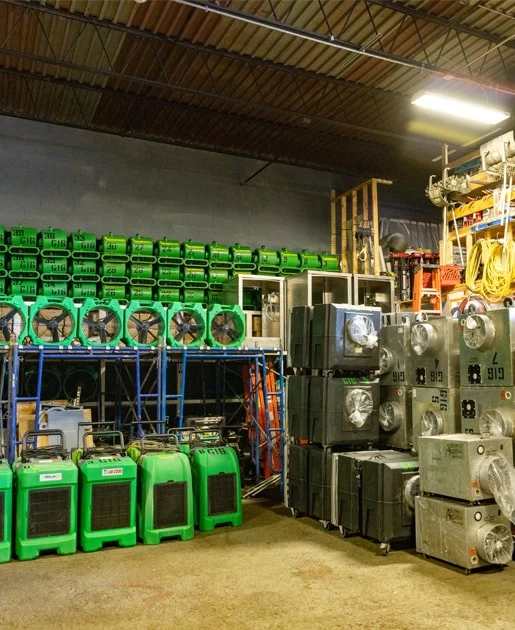
Once the source is identified and stopped, extraction begins. Industrial pumps pull standing water, and then the focus shifts to what you can’t see moisture trapped inside walls, under flooring, and in the subfloor. Thermal imaging and moisture meters find it. Then drying equipment goes in: commercial-grade dehumidifiers and air movers running continuously until readings confirm the space is genuinely dry, not just dry to the eye. In homes with older construction, this step takes longer and matters more, because 1950s drywall and original hardwood hold water in ways that newer materials don’t.
If asbestos pipe wrap, lead paint, or mold is found during the process which is a realistic possibility in Deer Park’s older housing stock we’re already licensed to handle it. You don’t get handed off to a second contractor. Throughout all of it, damage is being documented for your insurance claim, and we communicate directly with your adjuster so you’re not stuck in the middle of that conversation.
Flooded basement cleanup in Deer Park isn’t one-size-fits-all, and we don’t treat it that way. The scope of work depends on what caused the flooding, how long the water was sitting, and what’s inside the walls of your specific home. For a lot of Deer Park homeowners, that means a job that goes beyond water extraction into mold prevention, structural drying, and sometimes environmental remediation all of which we’re licensed to handle without bringing in outside contractors.
For homes with active mold growth which can happen quickly in Suffolk County’s climate our NYS DOL Mold license covers full remediation, not just surface treatment. For homes where flooding disturbed pipe insulation, floor tiles, or ceiling materials that may contain asbestos, our NYS DOL Asbestos license means that work gets handled correctly and legally. Our USEPA Lead and RRP certifications cover post-flood reconstruction in homes built before 1978, which describes a significant portion of the housing stock in this zip code. Our Suffolk County General Contractor license covers the full rebuild drywall, flooring, structural repairs so the job gets finished, not just started.
Insurance billing is handled directly. We document the damage, communicate with your adjuster, and submit to your carrier which means you’re not fronting thousands of dollars and waiting for reimbursement while your basement sits half-finished. That’s the full picture of what a flooded basement cleanup actually requires in Deer Park, and it’s what we deliver from start to finish.
Does homeowners insurance cover basement flooding in Deer Park, NY?
It depends on the cause and that distinction matters a lot. Standard homeowners insurance typically covers sudden, accidental water damage from internal sources: a burst pipe, a failed water heater, or a sump pump that gave out during a storm. What it generally doesn’t cover is water that enters from outside groundwater seeping through a foundation, surface water backing up through a drain, or storm-driven flooding. In Deer Park, where the Pine Barrens water table can rise quickly after heavy rain and the drainage infrastructure along some corridors has been historically stressed, that line between covered and not covered can get complicated fast.
This is exactly why having a restoration company that understands how to document the cause of loss accurately is so important. We communicate directly with your insurance adjuster, provide the documentation needed to support your claim, and handle the billing so you’re not navigating that process alone while also dealing with a flooded basement. If there’s any ambiguity about coverage, it’s better to have that conversation with your adjuster early, and we can help facilitate it.
How quickly does mold start growing after a basement floods?
Mold can begin growing within 24 to 48 hours of a flooding event and on Long Island, humidity accelerates that timeline. If your basement flooded overnight or while you were at work and you’re discovering it hours later, you’re already part of the way through that window. That’s not said to alarm you it’s said so you understand why calling immediately matters more than waiting to see if it dries on its own.
The other thing worth knowing is that mold doesn’t always start where you can see it. It grows inside walls, under flooring, and in insulation places that look fine on the surface but are holding moisture. Deer Park’s older homes, many with original drywall and wood subfloors from the 1950s, are particularly prone to this. We use thermal imaging and moisture meters to find moisture that a visual inspection would miss entirely, which is the only way to actually prevent a mold problem rather than just delay it.
What causes most basement flooding in Deer Park homes?
The most common causes in Deer Park fall into a few categories. Sump pump failure is at the top of the list and it tends to happen during the exact storms that also cause flooding, especially when the power goes out. Plumbing failures are close behind: homes built in the 1940s through 1960s frequently have galvanized steel supply lines and cast iron drain stacks that are now 60 to 80 years old, and when they fail, they can release a significant amount of water before anyone notices.
The other factor that’s specific to Deer Park is groundwater. Deer Park sits within the Long Island Pine Barrens, where the soil is sandy and highly permeable. That means rainwater moves through the ground quickly and the water table can rise fast after a heavy storm faster than in communities with clay-heavy soils. Foundations that have been in the ground for 60-plus years, with original waterproofing long since degraded, aren’t always equipped to handle that pressure. Deer Park Avenue itself has a documented history of flooding even during moderate rain events, which reflects the broader drainage reality across this part of western Suffolk County.
Should I try to clean up a flooded basement myself or call a professional?
For minor water intrusion a small seep, a slow drip a shop vac and a dehumidifier might be enough if you catch it immediately. But for anything involving standing water, a failed sump pump, a burst pipe, or water that’s been sitting for more than a few hours, professional cleanup is the safer and usually less expensive choice in the long run. The reason is simple: the equipment matters. Consumer-grade dehumidifiers don’t move enough air volume to dry out a basement properly, and without moisture meters, you won’t know if the walls and subfloor are actually dry or just dry on the surface.
In Deer Park specifically, there’s an added consideration for older homes. If your basement has pipe insulation, floor tiles, or ceiling materials that predate the 1980s, disturbing them during cleanup could release asbestos fibers. That’s not a risk worth taking without knowing what you’re working with. A professional assessment can identify that before anyone starts pulling things apart and we’re licensed to handle it if it’s present, which most water damage companies are not.
How long does it take to dry out a flooded basement in Deer Park?
A typical basement drying process takes anywhere from three to five days when commercial-grade equipment is running continuously but that timeline depends on several factors. How long the water was sitting, how much material absorbed it, and the construction of the home all affect how long it takes to reach safe moisture levels. In Deer Park’s older housing stock, where original hardwood floors, plaster walls, and wood framing are common, drying takes longer than it would in a newer home with modern materials.
The other factor is documentation. We don’t call a job complete based on how things look moisture readings are taken throughout the drying process and logged, so there’s a clear record showing the space reached safe levels before equipment was removed. That documentation also supports your insurance claim and gives you something concrete if any questions come up later. Rushing this step is the most common reason people end up with a mold problem weeks after what seemed like a successful cleanup.
Does Green Island Group handle insurance claims for flooded basement cleanup in Deer Park?
Yes and it’s one of the more practical reasons Deer Park homeowners call us over other companies. Insurance claims for water damage involve specific documentation: photos, moisture readings, a scope of work, and clear identification of the cause of loss. We handle all of that as part of the job and communicate directly with your adjuster throughout the process. You don’t have to be the go-between, and you don’t have to front the full cost and wait for reimbursement.
This matters especially in Deer Park because the line between what’s covered and what isn’t can be genuinely unclear when flooding involves both internal plumbing and groundwater intrusion which is a common scenario in homes with aging infrastructure and older foundations. Having a contractor who understands how to document each cause of loss accurately, and who has a working relationship with insurance carriers, can make a real difference in what gets approved. We’ve handled this process across thousands of restoration jobs in Suffolk County, and the documentation we provide is built specifically to support a successful claim.