When the Sewers Back Up on Your Block, You Need More Than a Wet Vac
East Elmhurst basements don’t flood from a leaky pipe. They flood from the city’s own sewer system and we’re one of the few companies in Queens legally equipped to clean it up the right way.
I needed a professional consultation explanation of procedure for safe removal of Asbestos in my apartment complex. Without having an account yet, I was very impressed with the caring, knowledgeable and generous advice offered by Jessica, and will look forward to doing business in the future. Thank you so much! I feel much more informed about a sometimes scary endeavor. Peace. Nancy Silva Mineola, NY.
Mia Munoz
Used this company to clean up some water flood in my house. They were fast and easy to work with.very professional, Would recommend to anyone!
Nini Valle
Great company, had a flood and they responded quickly and efficiently. Billed my insurance company directly. I highly recommend this company!
joe colapietro, jr
I had pipe freeze in my basement right before a snow storm and they made to within an hour to help start the clean up process. They we by our side throughout the entire process and even helped with the insurance company. They did such a great job with the cleanup, repair, remidiation, I contracted them to perform the repairs and finishes in the basement. They came with enough manpower and material to get the job done. Leo and Jessica were nothing but a pleasure to deal with!!
Cristian Arredondo c
I had some water damage in my home and Green Island was able to take care of my issue quickly and effectively. I am very pleased with the work they did. They responded quickly and were very professional.
Michael M
Outstanding service! From the office to the field crew everyone was friendly, helpful and responsive. I highly recommend Green Island Group.
When sewage backs up into your basement through a floor drain, you’re not dealing with water damage. You’re dealing with black water raw contamination that requires a completely different level of cleanup than a burst pipe or a roof leak. The difference matters for your health, your home’s structure, and your insurance claim.
East Elmhurst sits on what was historically tidal marshland feeding into Flushing Bay. That means a high water table, soils that saturate fast, and basement foundations that have been absorbing moisture for decades. When the combined sewer system overflows during a storm and it does, on 77th Street and the surrounding blocks, with documented regularity the water that comes up through your drain carries everything the city’s sewer lines carry. That’s not a cleanup you hand off to whoever shows up first.
What you need is a company that extracts the contaminated water, dries the structure properly using thermal imaging to find moisture hidden inside walls, handles any asbestos or lead paint that gets disturbed in your pre-1970s basement, and then rebuilds what needs to be rebuilt all under one roof. That’s what a real resolution looks like, and it’s what we deliver from the first call to the final walkthrough.
More Licenses Than Any Competitor in East Elmhurst
We hold over 17 active certifications including the NYS DOL Mold License that New York State legally requires for any mold remediation work, the NYS DOL Asbestos License, USEPA Lead and RRP certifications, IICRC Water Damage certification, and an active NYC General Contractor license. Most water damage companies in the Queens area hold two or three credentials. That gap matters when your basement walls contain asbestos insulation or lead paint, which is common in the pre-1970s housing stock throughout East Elmhurst and the surrounding Community District 3 neighborhoods.
We operate 24/7 and have responded to flooding emergencies throughout Queens including the aftermath of Hurricane Ida in 2021 and Tropical Storm Ophelia in 2023, both of which hit East Elmhurst hard. We understand the specific conditions here: the sewer backup mechanism, the high water table, the older building stock, and what it actually takes to restore a basement that’s been gutted by sewage water. This isn’t a company learning your neighborhood on your time.
Flooded Basement Cleaning Process in East Elmhurst
From Sewage on the Floor to a Finished Basement Here's the Full Picture
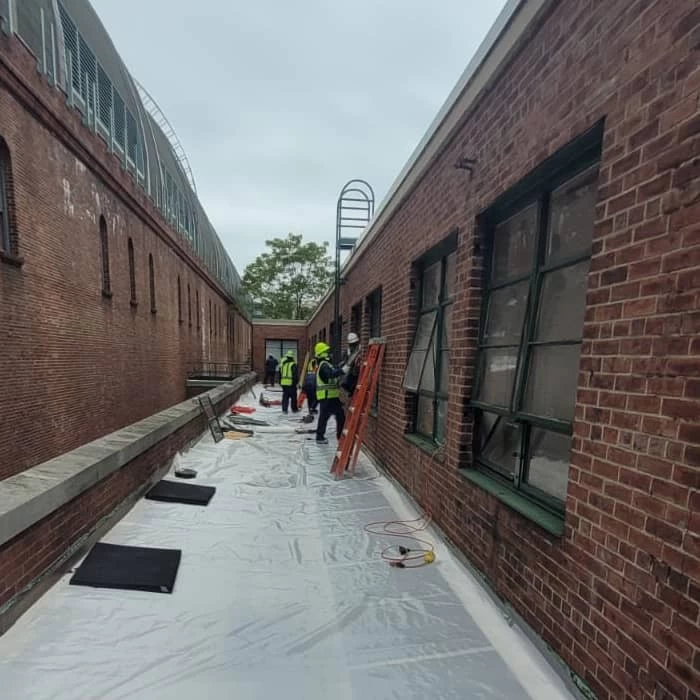
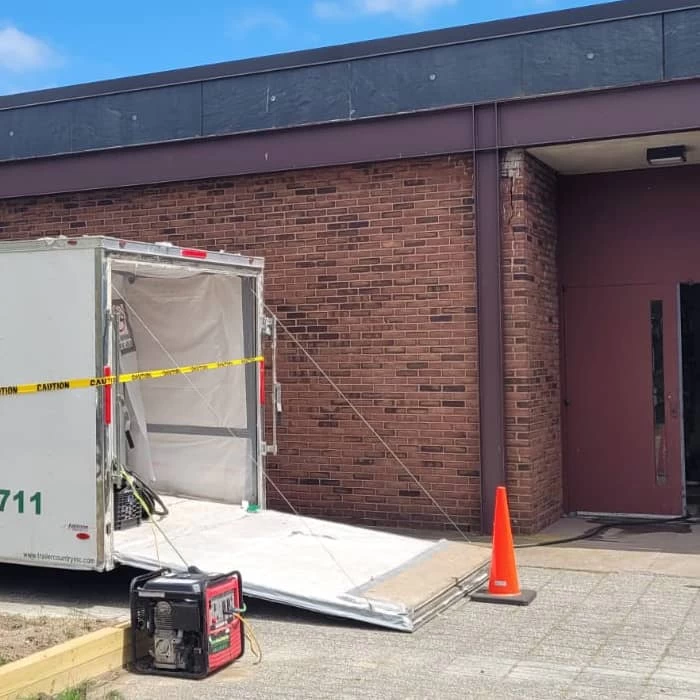
The first call triggers a same-day response. A crew arrives typically within the hour with industrial extraction equipment, not consumer fans from a hardware store. The first priority is removing the standing water and contaminated material safely, with proper containment and disposal protocols for black water. In East Elmhurst, where the flooding source is almost always sewer backup, this step requires handling the water as a hazardous material from the start.
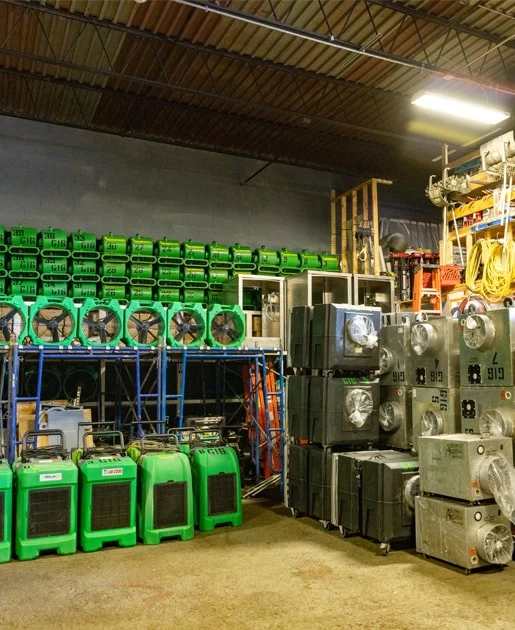
Once the water is out, the real assessment begins. Thermal imaging cameras scan the walls, subfloor, and foundation for hidden moisture pockets that visual inspection misses entirely. This matters especially in East Elmhurst’s older brick and concrete block basements, where water travels inside wall cavities and sits undetected for days. Industrial drying equipment goes in, and the drying process is monitored until moisture readings confirm the structure is genuinely dry not just surface-dry.
If walls, flooring, or insulation need to come out and after a sewage flood, they usually do we’re licensed to handle whatever’s behind them. That includes asbestos pipe insulation and lead-painted surfaces common in pre-1978 construction throughout this neighborhood. Once remediation is complete, our NYC General Contractor license covers the full rebuild. You don’t need to find a second contractor. The job gets finished.
Basement Flood Restoration Services in East Elmhurst, NY
Everything a Sewage-Flooded Basement in East Elmhurst Actually Requires
A flooded basement cleanup in East Elmhurst isn’t a single service it’s a sequence of licensed, regulated steps. It starts with emergency water extraction and black water containment, moves through structural drying and air quality restoration, and includes mold prevention treatment applied before any reconstruction begins. Every step is documented with photos and moisture readings, which matters when you’re filing an insurance claim and need proof of the scope and process.
Because East Elmhurst’s housing stock is predominantly pre-1970s construction Tudor homes, brick rowhomes, and older apartment buildings throughout the 11369 and 11370 ZIP codes basement cleanups here routinely involve materials that require licensed handling. Our NYS DOL Asbestos License and USEPA Lead certifications mean that when a technician pulls back drywall and finds asbestos floor tile or lead paint on a basement wall, the work doesn’t stop and you don’t get handed off to someone else. It gets handled correctly, on the spot, by the same crew.
For landlords managing multi-unit buildings along Astoria Boulevard or the surrounding blocks where a flooded basement means displaced tenants and immediate liability our ability to move from emergency response through full reconstruction under a single contract is a practical necessity, not a luxury. We handle direct insurance billing, detailed damage documentation, and adjuster communication as standard parts of every job.
Is the sewer backup flooding in East Elmhurst covered by homeowner's insurance?
Standard homeowner’s insurance policies in New York typically do not cover sewer backup flooding unless you’ve added a specific sewer backup rider to your policy. This is one of the most frustrating discoveries East Elmhurst homeowners make after a flood particularly residents on 77th Street and nearby blocks who have been dealing with this problem through multiple storm events. The city’s combined sewer system backing up into your basement is classified differently than a sudden internal plumbing failure, which is what standard policies are written to cover.
That said, the cleanup and restoration costs are still worth documenting thoroughly regardless of your coverage situation. If you do have a sewer backup endorsement, having an IICRC-certified contractor with detailed damage documentation moisture readings, photos, scope of work gives your adjuster everything they need to process the claim. We handle insurance billing directly and communicate with adjusters on your behalf, so you’re not left trying to explain the difference between black water and clean water damage to someone on the phone.
How quickly does mold start growing after a basement floods from sewage?
Mold can begin developing within 24 to 48 hours of water intrusion, and in a basement that’s been flooded with sewage-contaminated water, the conditions for growth are even more favorable than a standard water leak. The organic material in black water combined with East Elmhurst’s naturally humid conditions and the poor ventilation common in older basement structures throughout the neighborhood creates an environment where mold establishes quickly and spreads into wall cavities before it’s visible on the surface.
The 72-hour window is the number that matters most. Acting within that timeframe extraction, drying, and treatment can prevent mold remediation from becoming a separate, significant project on top of the underlying cleanup. Waiting beyond 72 hours typically adds thousands of dollars to the total cost. Our same-day response is specifically designed to get equipment running before that window closes. If you’re calling after a storm has already passed and you’re not sure how long the water has been sitting, call anyway a technician can assess the mold risk during the initial inspection and tell you exactly what you’re dealing with.
Do I need a licensed contractor for mold remediation in New York State?
Yes New York State law requires any contractor performing mold remediation to hold an active NYS DOL Mold License. This is not optional, and it’s not a technicality. Using an unlicensed contractor for mold work in New York is illegal, and it can directly affect your ability to collect on an insurance claim. Many carriers require proof of licensed remediation before approving a payout, and if the work was done without the proper license, the claim can be denied entirely.
This is worth knowing before you hire anyone after a flood in East Elmhurst. The neighborhood’s sewer backup flooding creates near-certain mold conditions sewage-contaminated water soaking into drywall, insulation, and concrete block foundations is exactly the scenario the mold licensing requirement was designed to address. We hold the NYS DOL Mold License and can provide the documentation your insurance carrier needs. Our license number is available on request and can be verified directly through the NYS Department of Labor’s contractor lookup.
Can asbestos or lead paint be a concern during basement flood cleanup in East Elmhurst?
In East Elmhurst, yes this is a real and common concern, not a remote possibility. The neighborhood’s housing stock is predominantly pre-1970s construction, and many of the Tudor homes, brick rowhomes, and older apartment buildings throughout the 11369 and 11370 ZIP codes were built when asbestos pipe insulation and lead-based paints were standard materials. When a sewage flood requires tearing out drywall, pulling up floor tiles, or disturbing pipe insulation which is almost always necessary after a black water event the risk of encountering these materials is significant.
A contractor who isn’t licensed to handle asbestos or lead cannot legally perform that work, and disturbing those materials without proper containment and disposal creates a serious secondary hazard. We hold the NYS DOL Asbestos License, USEPA Lead Certification, and USEPA RRP Certification, which means if a technician encounters hazardous materials during your basement cleanup, the work continues safely and legally without stopping the project or requiring a separate specialist. This is one of the clearest differences between us and most water damage companies operating in Queens.
What does flooded basement cleanup actually cost in East Elmhurst, NY?
The cost of flooded basement cleanup depends heavily on the type of water involved, the square footage affected, and how long the water has been sitting. For clean water damage a burst pipe, for example cleanup typically runs in the range of $4 to $8 per square foot. For black water, which is what East Elmhurst residents deal with in a sewer backup event, that range shifts upward significantly, often landing between $7 and $12 per square foot before reconstruction costs are factored in. A full basement cleanup and rebuild after a major sewage flood can reach $30,000 to $60,000 depending on the extent of the damage.
The most controllable cost factor is timing. Acting within 72 hours of the flood before mold establishes can save $2,000 to $8,000 or more in remediation costs that would otherwise be added on top of the cleanup bill. If you have a sewer backup rider on your homeowner’s policy, we’ll bill your insurance carrier directly and document the damage in the format adjusters require. If you’re not sure what your policy covers, we can walk you through what’s typically covered and what documentation you’ll need before the adjuster visit.
Why does East Elmhurst flood so often, and will it keep happening?
East Elmhurst floods repeatedly for three reasons that are structural, not accidental. First, the neighborhood was built on former tidal marshland the same creeks and wetlands that once fed into Flushing Bay and Bowery Bay are now underneath residential streets, and the soil has always saturated quickly. Second, the city’s combined sewer system in this area is aging and undersized for the rainfall volumes that climate change is now delivering. When moderate-to-heavy rain falls, the mains back up and push sewage water directly into basement drains it’s not a homeowner maintenance failure, it’s a system failure. Third, LaGuardia Airport’s hundreds of acres of impermeable runway and tarmac surface shed enormous volumes of stormwater rapidly into the local drainage system during any significant rain event.
New York City has been shortlisted for $100 million in federal funding for a cloudburst infrastructure project in East Elmhurst, and the NYC DEP has been investigating and cleaning sewers in the area. But that project is years from completion. In the meantime, the flooding risk is ongoing and residents who have already been through Ida in 2021 and Ophelia in 2023 know that waiting for the city to fix it isn’t a strategy. Waterproofing your basement, installing a backwater valve on your drain line, and having us on call before the next storm are the practical steps available to you right now.