When your basement floods in East Massapequa, every hour counts. We respond 24/7 with the licenses, equipment, and local knowledge to stop the damage before it becomes something far worse.
I needed a professional consultation explanation of procedure for safe removal of Asbestos in my apartment complex. Without having an account yet, I was very impressed with the caring, knowledgeable and generous advice offered by Jessica, and will look forward to doing business in the future. Thank you so much! I feel much more informed about a sometimes scary endeavor. Peace. Nancy Silva Mineola, NY.
Mia Munoz
Used this company to clean up some water flood in my house. They were fast and easy to work with.very professional, Would recommend to anyone!
Nini Valle
Great company, had a flood and they responded quickly and efficiently. Billed my insurance company directly. I highly recommend this company!
joe colapietro, jr
I had pipe freeze in my basement right before a snow storm and they made to within an hour to help start the clean up process. They we by our side throughout the entire process and even helped with the insurance company. They did such a great job with the cleanup, repair, remidiation, I contracted them to perform the repairs and finishes in the basement. They came with enough manpower and material to get the job done. Leo and Jessica were nothing but a pleasure to deal with!!
Cristian Arredondo c
I had some water damage in my home and Green Island was able to take care of my issue quickly and effectively. I am very pleased with the work they did. They responded quickly and were very professional.
Michael M
Outstanding service! From the office to the field crew everyone was friendly, helpful and responsive. I highly recommend Green Island Group.
A flooded basement in East Massapequa isn’t just an inconvenience — it’s a clock that starts ticking the moment water hits your floor. The EPA confirms mold begins growing within 24 to 48 hours of water exposure. Miss that window, and you’re no longer dealing with a cleanup. You’re dealing with a remediation, a rebuild, and a bill that can reach five figures fast.
Here’s what changes when the job gets done right: your basement is dry — not surface dry, actually dry. Hidden moisture behind your concrete block walls and under your subfloor gets found and eliminated before it quietly feeds a mold colony for weeks. For homes in East Massapequa built between the 1940s and 1960s, that matters even more, because the materials in those basements — older insulation, wood framing, original flooring — hold water longer than modern construction does.
If your home sits anywhere near South Oyster Bay or the canal systems on the southern end of the community, the water that came in wasn’t clean. Storm drain backups and tidal flooding carry bacteria and contaminants that require full decontamination — not just extraction. When that work is done properly, your basement is safe to be in again. Your home’s value is protected. And the air your family breathes isn’t carrying anything it shouldn’t be.
Every License New York Requires — We Hold Them All
New York State is one of the only states in the country that requires a dedicated Mold Contractor License from the Department of Labor. We hold that license — along with the NYS DOL Asbestos License, USEPA Lead and RRP certifications, IICRC Water Damage certification, and a Nassau County General Contractor license that covers every permit the Town of Oyster Bay requires for restoration work in East Massapequa.
That’s not a credential list for show. It’s the difference between a company that can legally complete your entire job — from water extraction through structural rebuild — and one that hands you off to someone else halfway through, or worse, skips the steps that New York law actually mandates.
We serve Nassau County’s South Shore as a primary service area. We know the shallow water table, the post-WWII housing stock, and the specific flooding patterns that affect East Massapequa differently than communities north of the Southern State Parkway. When you call us, you’re not explaining your neighborhood to someone who’s never been here.
Emergency Basement Flooding Remediation East Massapequa
From First Call to Final Walkthrough — No Guesswork
When you call, someone answers — day or night. We ask a few quick questions to understand what you’re dealing with: how much water, where it came from, and how long it’s been sitting. That information determines how we respond and what equipment we bring. A sump pump failure during a nor’easter is a different situation than a backed-up storm drain sending contaminated water through your foundation wall, and we treat them differently from the start.
Once on-site, the first step is water extraction — getting the standing water out fast. Then comes moisture mapping. In East Massapequa’s older homes, water doesn’t just sit on the floor. It moves into concrete block foundations, wicks up into wood framing, and saturates insulation that was installed decades ago. We use professional moisture detection equipment to find it all, not just what’s visible. Before any demolition or material removal begins, we assess for asbestos and lead — a step that’s legally required in pre-1978 homes and one that most restoration companies in this area skip entirely.
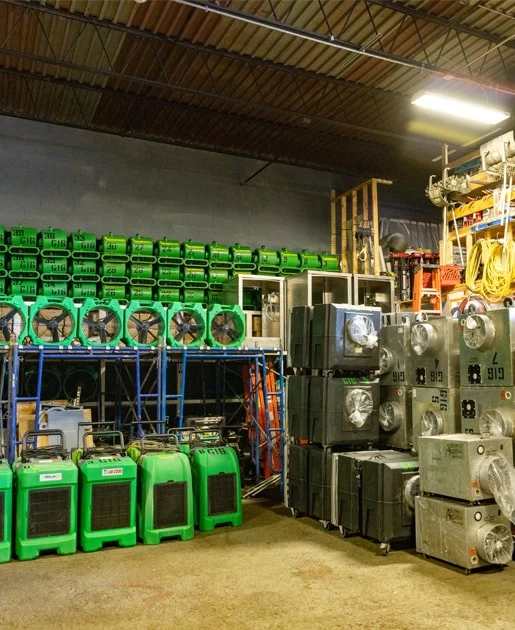
Drying equipment goes in, and we monitor progress until the structure meets the required dryness standards — not until it looks dry, until it actually is. If mold remediation or structural repairs are needed, we handle that too under the same roof. When the job is done, we walk you through everything and help you document the damage for your insurance claim, whether that’s a standard homeowners policy or an NFIP flood insurance policy for properties in a designated flood zone near the bay.
Flooded Basement Cleaning Services Nassau County NY
Built for the Basements That Actually Exist Here
Most of East Massapequa’s housing stock was built between 1940 and 1969. That means the basement you’re standing in — the one with water in it right now — was likely constructed with materials that predate modern building codes. Asbestos floor tiles. Lead paint on the walls. Aging plumbing. When water damage requires demolition and material removal, those hazards become a legal and health issue that the contractor you hire must be licensed to handle. We hold the credentials New York State requires to manage all of it in one job.
The scope of what we cover includes full water extraction, structural drying, moisture mapping, mold inspection and remediation under the NYS DOL Mold License, asbestos and lead assessment where applicable, and complete structural restoration under our Nassau County General Contractor license. For homes near South Oyster Bay and the canal systems in the southern portion of East Massapequa, that also means proper Category 2 and Category 3 water decontamination — because the water coming in from storm drain backups and tidal events isn’t clean, and treating it like it is creates health risks that don’t show up until weeks later.
We also assist with insurance documentation throughout the process. Whether your flooding event falls under your homeowners policy or your NFIP flood coverage — a distinction that matters significantly for properties in East Massapequa’s designated flood zones — we help you build a clear, accurate record of the damage so your claim reflects the full scope of what happened.
Does homeowners insurance cover basement flooding in East Massapequa, NY?
It depends entirely on what caused the flooding — and this distinction trips up a lot of homeowners. Standard homeowners insurance typically covers sudden, accidental water damage: a burst pipe, a failed water heater, an appliance malfunction. What it does not cover is flooding from natural sources — groundwater, storm surge, heavy rain, or the kind of tidal flooding that affects homes near South Oyster Bay and the canal systems in East Massapequa’s southern neighborhoods.
For that type of flooding, you need a separate flood insurance policy, typically through the National Flood Insurance Program. If your home sits in a FEMA-designated flood zone — which applies to a meaningful percentage of East Massapequa properties near the bay — your mortgage lender may have required you to carry it. If you’re not sure which policy applies to your situation, or whether both do, we can help you document the damage in a way that supports a clear and accurate claim under either coverage type.
How quickly does mold grow after a basement floods on Long Island?
The EPA’s guidance is 24 to 48 hours — that’s when mold spores begin to colonize wet surfaces. The practical threshold that restoration professionals work against is 72 hours. If structural drying isn’t completed within that window, mold growth becomes significantly more likely, and what started as a water damage job becomes a mold remediation project on top of it.
On Long Island’s South Shore, that window gets tighter during warm, humid months — late spring through early fall — when ambient conditions accelerate mold development. East Massapequa’s older housing stock makes it worse: concrete block foundations, wood framing, and original insulation from the 1950s and 1960s retain moisture longer than modern materials do. Getting a crew on-site fast isn’t just about limiting water damage. It’s about keeping the scope of the job — and the cost — from doubling.
Why is my East Massapequa basement flooding even when it hasn't rained that hard?
East Massapequa sits on Long Island’s South Shore, where the water table is naturally shallow. During extended wet periods — or even a moderate rain event after a stretch of wet weather — the ground becomes saturated quickly because there simply isn’t much soil depth between the surface and the water table below. When that happens, hydrostatic pressure builds against your foundation walls and floor, and water finds its way in through cracks, joints, and the floor-wall seam even without a dramatic storm.
This is different from the flooding risk in communities north of the Southern State Parkway, where most basement flooding comes from plumbing failures or surface runoff. In East Massapequa, the water table itself is a structural factor. Sump pump dependence is high here for exactly this reason — and when a pump fails during an extended rain event, even a modest one, the water can accumulate faster than most homeowners expect. If your basement is flooding regularly without an obvious cause, it’s worth having the foundation assessed alongside any cleanup work.
Do I need a permit for basement water damage repairs in the Town of Oyster Bay?
For basic water extraction and drying, no permit is required. But once the work moves into structural territory — replacing water-damaged drywall, framing, flooring, or any electrical or plumbing components — you’re in permit territory under Town of Oyster Bay jurisdiction. East Massapequa is an unincorporated hamlet governed by the Town of Oyster Bay, not an incorporated village with its own building department, so all permit applications go through the town directly.
Skipping permits on structural restoration work creates real problems down the road: insurance disputes, issues at the time of sale, and potential liability if the unpermitted work is ever flagged. We hold a Nassau County General Contractor license that covers restoration work in the Town of Oyster Bay. When permits are required, we pull them, we do the work to code, and we close them out properly. That’s not an add-on — it’s part of how the job gets done correctly.
My East Massapequa home was built in the 1950s — does that affect my basement cleanup?
Yes, and significantly. Homes built before 1978 may contain lead-based paint, and homes built before the mid-1980s frequently contain asbestos in floor tiles, pipe insulation, and other materials. In East Massapequa, where the dominant housing vintage is 1940 to 1969, both are statistically common. When a basement floods and water-damaged materials need to be removed — flooring, drywall, insulation — those materials have to be assessed before demolition begins.
Disturbing asbestos-containing materials without a NYS DOL Asbestos Contractor License is illegal in New York State. Working with lead paint in a pre-1978 home without USEPA RRP certification violates federal law. We hold both credentials. Most restoration companies operating in the Massapequa area do not. If a contractor shows up to your 1950s home and starts pulling up floor tiles without assessing them first, that’s not just cutting corners — it’s a legal and health issue that becomes your problem the moment they leave.
How much does flooded basement cleanup cost in East Massapequa, NY?
The range is wide because the variables are significant. A clean-water event — a burst pipe, a failed water heater — in a smaller basement can run $1,600 to $3,500 for extraction, drying, and basic restoration. A contaminated-water event involving storm drain backup or tidal flooding, which is common in East Massapequa’s southern neighborhoods near South Oyster Bay, adds decontamination to the scope and typically pushes costs into the $4,000 to $12,000 range depending on basement size and the extent of material damage.
If mold remediation is required because the water sat too long, or if asbestos or lead-containing materials need to be properly handled before demolition — both realistic scenarios in East Massapequa’s older housing stock — total costs can climb further. The most useful framing is this: the cost of professional cleanup is almost always a fraction of what delayed or incomplete cleanup costs. FEMA estimates that one inch of floodwater can cause approximately $25,000 in property damage. In a community where average home values sit around $675,000, the cost of getting it done right the first time is the better investment by a significant margin.