When Conscience Bay Storms Hit East Setauket Homes, You Need More Than a Shop Vac
We respond to flooded basements across East Setauket 24/7 with licensed technicians, direct insurance billing, and the credentials to handle whatever’s behind your walls.
I needed a professional consultation explanation of procedure for safe removal of Asbestos in my apartment complex. Without having an account yet, I was very impressed with the caring, knowledgeable and generous advice offered by Jessica, and will look forward to doing business in the future. Thank you so much! I feel much more informed about a sometimes scary endeavor. Peace. Nancy Silva Mineola, NY.
Mia Munoz
Used this company to clean up some water flood in my house. They were fast and easy to work with.very professional, Would recommend to anyone!
Nini Valle
Great company, had a flood and they responded quickly and efficiently. Billed my insurance company directly. I highly recommend this company!
joe colapietro, jr
I had pipe freeze in my basement right before a snow storm and they made to within an hour to help start the clean up process. They we by our side throughout the entire process and even helped with the insurance company. They did such a great job with the cleanup, repair, remidiation, I contracted them to perform the repairs and finishes in the basement. They came with enough manpower and material to get the job done. Leo and Jessica were nothing but a pleasure to deal with!!
Cristian Arredondo c
I had some water damage in my home and Green Island was able to take care of my issue quickly and effectively. I am very pleased with the work they did. They responded quickly and were very professional.
Michael M
Outstanding service! From the office to the field crew everyone was friendly, helpful and responsive. I highly recommend Green Island Group.
A Dry Basement Isn't the Finish Line It's Just the Start
Most homeowners think the job is done once the water is gone. It isn’t. The real damage mold, structural compromise, ruined insulation starts after the visible water disappears. Mold begins growing within 24 to 48 hours of a flood event. In the humid heat of a Long Island August, that clock runs even faster.
East Setauket’s housing stock tells its own story. A significant portion of homes here were built in the 1950s through 1970s, which means basements that flooded during the August 2024 disaster event when Governor Hochul’s emergency order specifically named this hamlet weren’t just dealing with water. They were dealing with water pushing against pipe insulation, floor tiles, and wall systems that may contain asbestos or lead. Most water damage companies aren’t licensed to touch those materials. We are.
When the job is done right, you’re not just looking at a dry floor. You’re looking at a basement that’s been properly extracted, dried to IICRC standards, assessed for hidden hazards, and documented for your insurance carrier. That’s the outcome that actually protects a home worth $700,000 or more and that’s what this process is built around.
Licensed Basement Flood Remediation in Suffolk County
New York State Vetted Us So You Don't Have To
We’re an approved emergency response contractor for the NYS Office of General Services. That’s not a membership or a self-declared badge it’s an independent government vetting process. New York State evaluated our licensing, our capabilities, and our track record before putting us on that list. No competitor serving East Setauket holds that status.
We’re led by CEO Jessica Dussan and VP Leo Torres, and we’ve completed more than 5,000 restoration projects across New York State over 12-plus years. Customers across Suffolk County including communities along the North Shore that saw real damage during the August 2024 flooding have named Jessica and Leo directly in their reviews. That’s not a coincidence. It’s what happens when the people running the company are actually accountable for the outcome.
We hold NYS DOL Mold and Asbestos licenses, USEPA Lead and RRP certifications, and a Suffolk County General Contractor license everything required to legally handle the full scope of a flood event in an older East Setauket home, without handing off to a subcontractor chain.
Emergency Basement Flooding Remediation East Setauket NY
From the First Call to a Fully Documented Dry-Out Here's What Actually Happens
When you call, you reach someone not a call center routing you to a queue. We operate 24/7/365, and customer reviews consistently cite arrival times under one hour. For a basement flooding event in East Setauket, where warm summer conditions or a nor’easter power outage can accelerate damage by the hour, that response time matters in real dollars.
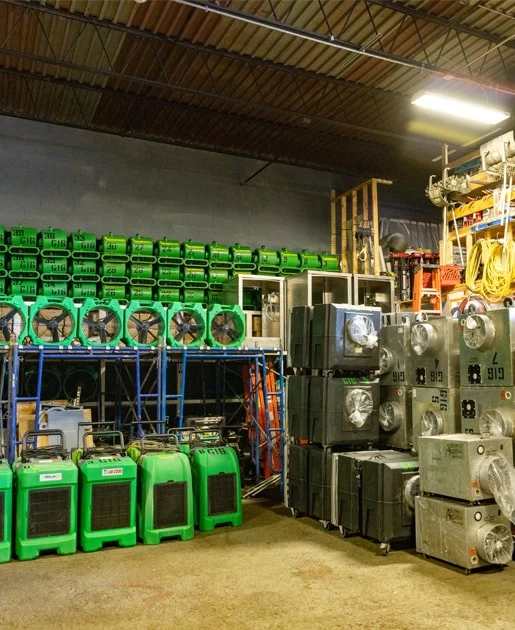
Once on site, our first priority is assessment not just of the standing water, but of what’s in it and what it’s touched. Category 3 water, which includes sewage backups and outside floodwater, requires OSHA-compliant containment and disposal that most general contractors can’t legally provide. We identify the water category, assess for hazardous materials in the surrounding building components, and begin extraction using industrial-grade equipment. For East Setauket’s older homes, that assessment step often reveals materials pipe insulation, floor tile adhesive, wall systems that require licensed hazmat handling before drying can begin.
Drying follows IICRC S500 standards, with moisture readings tracked across multiple days to confirm that wall cavities, subfloor materials, and structural members have reached acceptable levels. Throughout the process, every step is documented for your insurance carrier. We handle direct billing and adjuster communication so you’re not chasing paperwork while your basement is still being dried out.
Flooded Basement Cleaning and Mold Remediation East Setauket
Every License Needed for What East Setauket Basements Actually Hide
Flooded basement cleanup in East Setauket isn’t a simple pump-and-dry job not in a community where a meaningful share of the housing stock predates 1980 and where the August 2024 federal disaster event demonstrated exactly how severe North Shore flooding can get. What’s behind your basement walls matters as much as what’s on the floor.
Our scope covers the full event: water extraction, structural drying, mold assessment and remediation under NYS DOL Mold licensing, asbestos evaluation and abatement under NYS DOL Asbestos licensing, lead assessment under USEPA Lead and RRP certification, and full reconstruction under our Suffolk County General Contractor license. That means one company, one contract, and one point of accountability from the moment we arrive to the day your basement is restored. No stopping work to call a subcontractor. No gaps between vendors while moisture keeps spreading.
For East Setauket homeowners navigating both standard homeowners insurance and FEMA flood coverage especially those who filed claims after the August 2024 event and now understand exactly how documentation-dependent those claims are we manage the insurance process directly. We know what Suffolk County carriers require, and we build the documentation from day one with your claim outcome in mind.
Does homeowners insurance cover basement flooding in East Setauket, NY?
It depends entirely on the source of the water and this distinction matters more than most people realize when they’re standing in a wet basement at midnight. Standard homeowners insurance typically covers sudden and accidental water damage from internal sources, like a burst pipe or a failed water heater. It generally does not cover flooding from external sources storm surge, overland water, or groundwater intrusion which is exactly the type of flooding East Setauket experienced during the August 2024 disaster event.
For external flood coverage, you need a separate FEMA National Flood Insurance Program policy or a private flood insurance rider. Many East Setauket homeowners carry both, but the documentation requirements for each are different, and the coverage limits vary. We handle direct insurance billing and build claim documentation from the moment we arrive on site so whether you’re filing under a standard policy, a flood policy, or both, the paperwork reflects what actually happened and what it actually cost to fix it.
How fast does mold actually start growing after a basement floods?
Mold can begin colonizing within 24 to 48 hours of a flood event under normal conditions. In East Setauket’s summer climate where August temperatures regularly sit in the mid-80s and humidity is already elevated that window can be shorter. The August 2024 flooding event that hit this hamlet happened in peak summer conditions, which is exactly when post-flood mold risk is highest. Warm, humid air trapped in a partially dried basement is close to ideal for mold growth.
The more important number is 72 hours. If a basement isn’t properly dried and assessed within three days, the likelihood of mold colonization behind drywall, under flooring, and inside wall cavities increases significantly. The cost difference between a water extraction job handled immediately versus one that sat for 72-plus hours can be $2,000 to $8,000 or more in additional mold remediation work. Calling immediately isn’t panic it’s the financially rational decision for a high-value home.
What is Category 3 water damage, and does it apply to my basement?
Water damage is classified into three categories based on contamination level. Category 1 is clean water a burst supply line or a clean appliance overflow. Category 2 is gray water, which carries some contamination a washing machine drain or a dishwasher backup. Category 3 is black water, which is grossly contaminated and includes sewage backups, toilet overflows involving feces, and outside floodwater that has contacted the ground or traveled through drainage systems.
In East Setauket, Category 3 situations are more common than homeowners expect. The hamlet’s older sewer laterals many of them original clay pipe from the 1950s and 60s are prone to root intrusion and backup during heavy rain events. The August 2024 flooding overwhelmed drainage infrastructure across the hamlet, pushing outside water through floor drains and foundation cracks. Category 3 cleanup requires OSHA-compliant PPE, proper containment, and licensed disposal it cannot be safely handled as a DIY project, and many general contractors lack the licensing to manage it legally. We’re equipped and licensed for full Category 3 remediation.
My East Setauket home was built in the 1960s should I be worried about asbestos in my flooded basement?
Yes, and it’s worth taking seriously. Homes built between roughly 1940 and 1980 commonly contain asbestos in pipe insulation wrap, floor tile and tile adhesive, ceiling tile, and joint compound all materials that are frequently present in basements. When water intrudes and saturates these materials, it can disturb them and release asbestos fibers into the air. The risk isn’t just from the flood it’s from the cleanup process itself if the work is done without proper assessment.
New York State requires that asbestos abatement be performed by a contractor holding a NYS Department of Labor Asbestos license. We hold that license. Before drying begins, we assess the affected materials and, if asbestos-containing components are identified, we handle abatement in compliance with NYS DOL requirements so the restoration process doesn’t create a hazmat situation on top of a water damage situation. For East Setauket homeowners with older housing stock, this isn’t an edge case. It’s a real and common part of what basement flood cleanup involves in this community.
How much does flooded basement cleanup typically cost in Suffolk County?
The honest range for a straightforward water extraction and drying job clean water source, no hazmat materials, no mold runs approximately $2,000 to $5,000 depending on the size of the basement and the extent of saturation. Once you add mold remediation, that range shifts to $5,000 to $10,000 or more. If asbestos or lead is present and requires licensed abatement, or if structural reconstruction is needed, total project costs can reach $15,000 to $30,000 for a significant event.
In East Setauket, where median home values sit above $650,000, the calculus is straightforward: the cost of hiring a fully licensed contractor who documents everything correctly is almost always less than the cost of a denied insurance claim, a missed mold colony discovered six months later, or a future buyer’s inspection that flags an improperly remediated basement. The cheaper option on day one is frequently the more expensive option in the long run. We provide direct insurance billing and detailed documentation specifically because getting the claim right the first time is the most cost-effective outcome for the homeowner.
What caused the widespread basement flooding in East Setauket during August 2024?
The August 18th and 19th, 2024 rainfall event was a record-level storm that overwhelmed essentially every drainage system in Suffolk County simultaneously. In East Setauket specifically, the combination of saturated ground, high water table, and aging municipal infrastructure meant that water had nowhere to go it backed up through floor drains, pushed through foundation walls, and in some cases caused the sinkholes that Governor Hochul’s disaster emergency order specifically named this hamlet for. Two local dams were breached during the event, and more than 70 structures across Suffolk County sustained major damage.
What made East Setauket particularly vulnerable was the same thing that makes it vulnerable in any significant storm: the hamlet’s proximity to Conscience Bay and the Port Jefferson Harbor area creates coastal exposure from the north, while the Route 347 corridor and the clay-heavy soils common to this part of Long Island limit how quickly surface water can drain. Homes in the lower-lying sections near the water and those with aging sump pump systems especially any pump that lost power during the storm were hit hardest. If your basement flooded during that event and wasn’t fully dried and assessed at the time, it’s worth having a licensed contractor evaluate it now for residual moisture and mold before the next storm season arrives.